
Digital Panel Meters · Comparison
Panel Meter Refresh Rate vs Response Time: What Operators Actually See
Quick answer
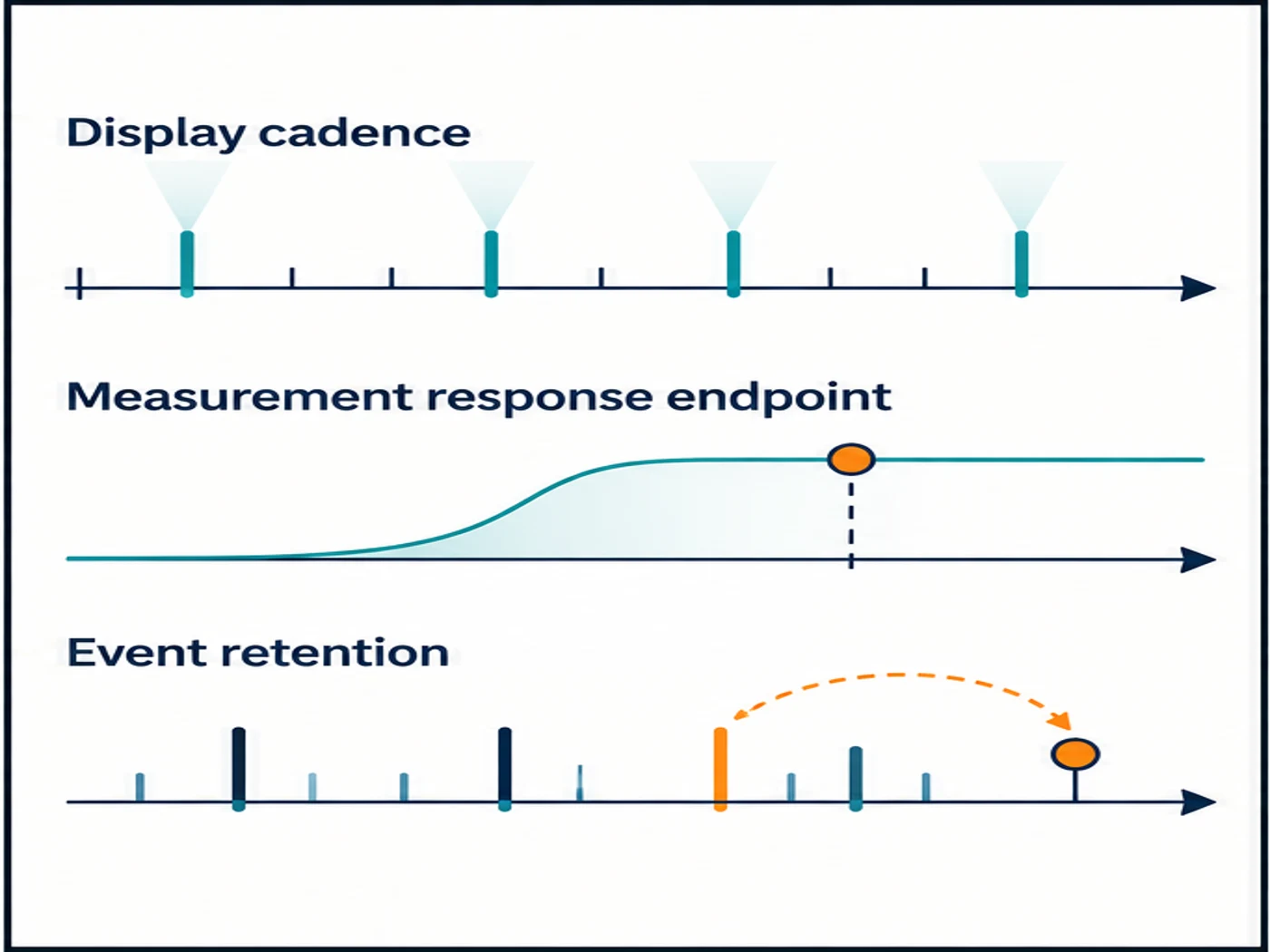
Refresh cadence, measurement response and event visibility are different. Updates per second describe presentation; response time needs an endpoint and conditions; a brief event may be filtered, averaged or not retained. Specify the exact definition for the selected D85 or AD16-22 rather than treating one number as all three. For this timing question, the buyer should identify the measured input, timing endpoint, filter state and storage destination before accepting a speed statement. A redraw interval cannot replace a documented response criterion or event-retention requirement.
Name the outcome
Decide whether the requirement is a stable display, a retained excursion, an alarm interval or a control value. Define input mode, event amplitude, duration and endpoint. A panel meter is not automatically a recorder or protection device. For this timing question, the buyer should identify the measured input, timing endpoint, filter state and storage destination before accepting a speed statement. A redraw interval cannot replace a documented response criterion or event-retention requirement.
Refresh cadence
A purely illustrative two-updates-per-second value corresponds to a nominal 0.5-second display interval. It does not prove measurement response, pulse capture or alarm behavior. Use the arithmetic only to clarify terminology. For this timing question, the buyer should identify the measured input, timing endpoint, filter state and storage destination before accepting a speed statement. A redraw interval cannot replace a documented response criterion or event-retention requirement.
Response endpoint
DwyerOmega gives a narrow example: 200 ms maximum to within 99% under one condition and 700 ms under another correction condition. These values belong to its named series, are not refresh periods and do not transfer to RITOKS products. For this timing question, the buyer should identify the measured input, timing endpoint, filter state and storage destination before accepting a speed statement. A redraw interval cannot replace a documented response criterion or event-retention requirement.
Read sources carefully
A detailed field can conflict with a summary. Preserve the field name and condition; do not combine numbers into a new claim or rank products on an unverified interpretation. For this timing question, the buyer should identify the measured input, timing endpoint, filter state and storage destination before accepting a speed statement. A redraw interval cannot replace a documented response criterion or event-retention requirement.

Filtering changes visibility
Filtering, zero correction and averaging can stabilize a display while delaying or smoothing a transient. Ask whether the value is updated before or after filtering and whether event storage exists. Do not advise changing live settings. For this timing question, the buyer should identify the measured input, timing endpoint, filter state and storage destination before accepting a speed statement. A redraw interval cannot replace a documented response criterion or event-retention requirement.
Human versus recorded data
An operator sees rendered values; a logger or controller may receive another stream. Identify endpoint, retention, resolution, timestamp and export behavior when an event record is required. For this timing question, the buyer should identify the measured input, timing endpoint, filter state and storage destination before accepting a speed statement. A redraw interval cannot replace a documented response criterion or event-retention requirement.
Timing register
Record exact configuration, measured input, update definition, response criterion, filter/correction state, step and conditions, event storage, observation duration, evidence owner and revision. Unknowns remain requests. For this timing question, the buyer should identify the measured input, timing endpoint, filter state and storage destination before accepting a speed statement. A redraw interval cannot replace a documented response criterion or event-retention requirement.
RITOKS products
RITOKS lists D85 AC voltage/current and AD16-22 LED voltage meters. Their pages anchor configuration-specific documentation requests; public family data does not establish timing or event retention. For this timing question, the buyer should identify the measured input, timing endpoint, filter state and storage destination before accepting a speed statement. A redraw interval cannot replace a documented response criterion or event-retention requirement.
RFQ questions
Request update cadence, response endpoint, filter state, input step, test conditions, event behavior and whether controller and display values are identical. For this timing question, the buyer should identify the measured input, timing endpoint, filter state and storage destination before accepting a speed statement. A redraw interval cannot replace a documented response criterion or event-retention requirement.
FAQ: Is refresh response?
No. They may interact but are not interchangeable. For this timing question, the buyer should identify the measured input, timing endpoint, filter state and storage destination before accepting a speed statement. A redraw interval cannot replace a documented response criterion or event-retention requirement.
FAQ: Is a pulse shorter than an interval always missed?
Not necessarily; sampling, phase, filtering and event handling matter. For this timing question, the buyer should identify the measured input, timing endpoint, filter state and storage destination before accepting a speed statement. A redraw interval cannot replace a documented response criterion or event-retention requirement.
FAQ: Can a panel meter replace a recorder?
Only when the selected documentation explicitly provides required storage and event behavior. For this timing question, the buyer should identify the measured input, timing endpoint, filter state and storage destination before accepting a speed statement. A redraw interval cannot replace a documented response criterion or event-retention requirement.
FAQ: What should an RFQ request?
Exact D85/AD16 configuration, definitions, conditions, step evidence and event retention. For this timing question, the buyer should identify the measured input, timing endpoint, filter state and storage destination before accepting a speed statement. A redraw interval cannot replace a documented response criterion or event-retention requirement.
Review the complete timing path
The timing path includes input change, measurement conditioning, filtering, display formatting and any controller or logger output. A value shown on the front panel may not be the value used by another endpoint. Identify each endpoint and its timing definition. If the requirement is an event record, ask for storage and timestamp evidence rather than a faster redraw number. Display readability itself is a separate design input; see planning a readable voltage display.
Keep conditions beside numbers
Any response number needs its input step, endpoint, filter state and correction state. Preserve those conditions in the purchase record and in the article’s explanation. If a source has conflicting summary and detailed fields, use only the field whose definition and condition are clear, and record the unresolved conflict. Never turn a named example into a RITOKS specification.
Practical buyer takeaway
Ask the supplier to explain what the operator sees, what the controller receives and what—if anything—is retained. That three-part answer normally reveals whether the project needs a panel meter, a recorder or a separate control function. It also prevents “fast response” from becoming an untestable marketing adjective.
Distinguish visual comfort from event capture
Operators often ask for a faster refresh because a changing number feels sluggish. That concern may be visual comfort, measurement latency or missing event storage. Ask which symptom is being solved. A smoother display may need a different filter, while a missing event may require a recorder or controller input. One speed number cannot answer both questions.
Keep the timing statement auditable
Save the source revision, model configuration and test condition beside every timing value. If the supplier changes firmware or filter defaults, the old number may no longer describe the offered configuration. An auditable timing statement is more useful than a broad claim that the panel meter is “fast.” If a timing number cannot be tied to a source condition, keep it out of the purchase requirement. Ask for a defined test instead. This keeps the specification auditable and avoids turning an attractive but ambiguous number into an acceptance threshold.
A compact timing worksheet
Start the worksheet with the exact meter configuration and input mode. Define the display update term, response endpoint, filter or correction state, input step and destination of the value. Record whether the operator watched the panel, a controller read a value, or a logger retained an event. Attach the source revision and keep any conflicting summary field visible. End with the evidence owner and an explicit unresolved item if storage or timing is not documented. This produces a purchase question that can be answered, rather than a vague request for a faster meter. Add a field for the event duration and the required action, because a display that looks quick may still be the wrong endpoint for an alarm or record. A repeatable worksheet also makes firmware or configuration changes visible. Recheck the endpoint whenever a filter default or input mode changes, instead of carrying an old response number forward. Keep the display observation separate from any controller or logger timing. Preserve the test condition with the source revision. If the answer still cannot be documented, keep the requirement open rather than assigning a guessed threshold. The final record should show who observed the display, what was seen and which configuration was used. This keeps a later supplier conversation grounded in a real equipment context. The evidence remains configuration-specific and clearly dated for review.
Add the event duration and required response to the same worksheet. This distinguishes a number that merely looks slow from an event that must be retained or acted on, and keeps the requested timing tied to a specific endpoint instead of a generic speed claim.
Use a timing acceptance question that can be answered
Write the acceptance question in the form “when the defined input changes under the stated condition, what does this endpoint show, and by when?” The endpoint may be the front display, a controller register, an alarm output or a retained log. Keep each endpoint separate. Ask the supplier to identify the input step, the response threshold, the filter or correction state and the measurement conditions. If the project needs a brief event to trigger action, add the event duration and required action; a redraw interval alone cannot answer that requirement. If the requirement is only a comfortable visual trend, say so and avoid implying oscilloscope-level capture. This wording helps compare offers without importing a response number from another meter series. It also makes later firmware or configuration changes reviewable because the same question can be repeated against the updated evidence. A precise question is more useful than a broad request for a “fast” panel meter.
Source notes
Sources are listed in dossier.md. Product-specific statements are limited to verified evidence; hypothetical arithmetic is labelled.