
DIN Rail Energy Meters · Technical Explainer
Turning DIN Rail Power Quality Readings into a Useful Trend Log
Quick answer
A useful power-quality trend log identifies the measured quantity, source meter, circuit, time basis, recording interval and relevant operating context. First confirm that the exact DIN rail meter supports the selected measurements and communications fields. Then determine whether history is stored inside the meter or collected by an external platform.
A display showing a harmonic value does not prove that the meter retains a historical log, and a series of periodic readings is not automatically a waveform capture. Define the maintenance question before choosing the recording arrangement. Keep missing data, configuration changes and operating notes visible so that a neat chart does not imply evidence the system never collected.
This guide develops a practical logging record for industrial buyers and maintenance teams. It does not prescribe a universal sampling interval, diagnose a disturbance from invented data or claim standards compliance. Installation, electrical investigations and any event testing remain with qualified personnel using the exact equipment instructions and approved site procedures.
Choose a question the readings can actually address
Start with one review question, such as whether a documented parameter changes during a named production mode. Identify the relevant circuit and meter before selecting fields. A register called “imbalance” is not enough: the reviewer needs its exact quantity and definition for the selected device.
Keep the question within the supported measurement scope. If the task concerns the waveform during a short event, a periodic trend may not provide the required evidence. If the task concerns changes across normal operating periods, a defined trend can be useful without implying that it captured every event between observations.
Tento RITOKS DIN rail three-phase power quality meter family lists three-phase harmonic and imbalance information, with the exact option requiring confirmation. It also identifies Modbus RTU communication. Its public family page does not establish a logging interval, historical memory, waveform recording or a particular power-quality compliance classification.
Request the selected configuration's measurement list and data definitions. Tie each proposed field to the maintenance question. Do not collect every available number merely because the communications system permits it. A small set of understood fields, with consistent identity and context, is more useful than an undocumented collection of unrelated values.
Separate measurement, collection and storage
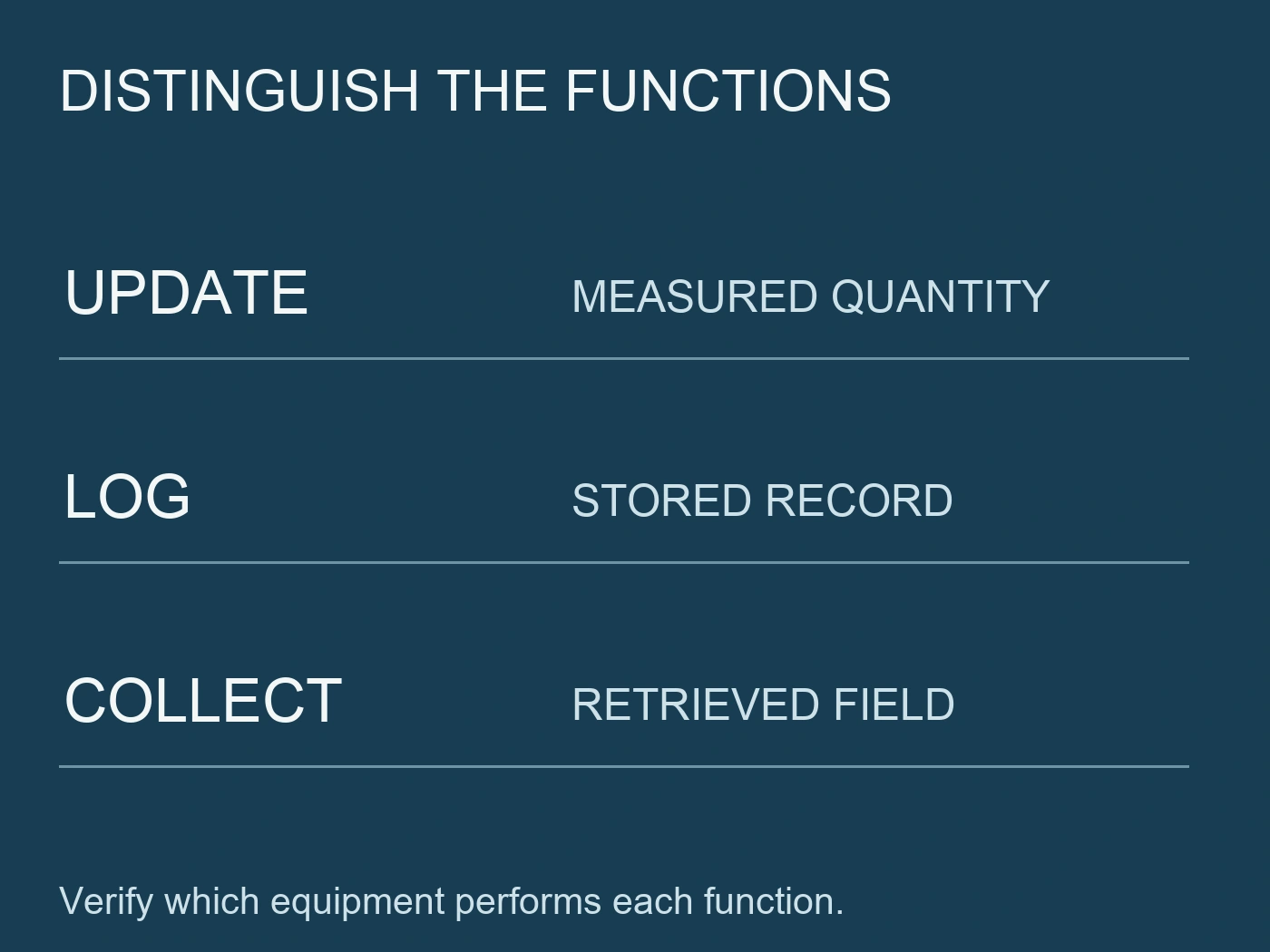
Three roles need explicit ownership: the meter produces a value, the collection system obtains it, and a storage arrangement retains it. They may be combined in one instrument or distributed across several systems. Determine the actual arrangement rather than assuming that a communicating meter contains the whole logging solution.
Schneider Electric's PM5500 data-log documentation gives a model-specific example of configurable fields, a defined recording interval and a circular history buffer. That example shows why recording settings and retention behavior need documentation. It does not establish the same internal memory or functions on the RITOKS meter.
For external collection, identify the platform and the exact source fields it reads. State how the platform attaches time information and where the retained data can be retrieved. Do not describe platform storage as “meter memory” if the instrument itself does not provide it. That distinction matters when communications fail or the collection service stops.
| Layer in the logging arrangement | Information to request | Assumption to avoid |
|---|---|---|
| Měření | Exact quantity, definition, unit and supported variant | A family name guarantees every harmonic option |
| Communications source | Applicable field or register document | Modbus support supplies the required map automatically |
| Collection | Platform, acquisition timing and availability handling | Every poll represents a fresh measurement |
| Time record | Time source, meaning and documented alignment | Receipt time always equals measurement time |
| Storage | Retention location and overwrite or export behavior | A display or interface proves historical memory |
| Recenze | Circuit purpose and relevant operating notes | A chart alone explains the cause of a change |
Assign unanswered items to the relevant supplier or integrator. The meter supplier may establish a source definition while the platform provider defines the logging behavior. Keeping those responsibilities separate makes the RFQ clearer and reduces the chance that each party assumes the other provides the missing function.
Define the timing record without inventing an interval
The record should distinguish the instrument's measurement or update behavior from the collector's polling and the logger's recording interval. Obtain those definitions for the exact arrangement. A fast platform poll does not by itself establish faster instrument updates or higher event resolution.
Choose the logging arrangement against the intended question and supported system behavior. Do not prescribe one interval for every harmonic, voltage or imbalance review. The reviewer needs to know what a logged value represents and what may occur between entries. Document the rationale and the limitations alongside the selected settings.
Keep the time basis explicit when comparing a trend with operating events. State whether a timestamp originates in the meter, collection platform or another reviewed source. If two systems use different time bases, ask the integrator how their records can be compared. A coincident-looking chart is not a substitute for known time alignment.
Record changes to timing settings. A series collected under one arrangement should not be merged silently with a later arrangement that represents a different observation pattern. Preserve the earlier settings and mark the change boundary so a reviewer can interpret each period appropriately.
Preserve gaps and configuration changes in the log
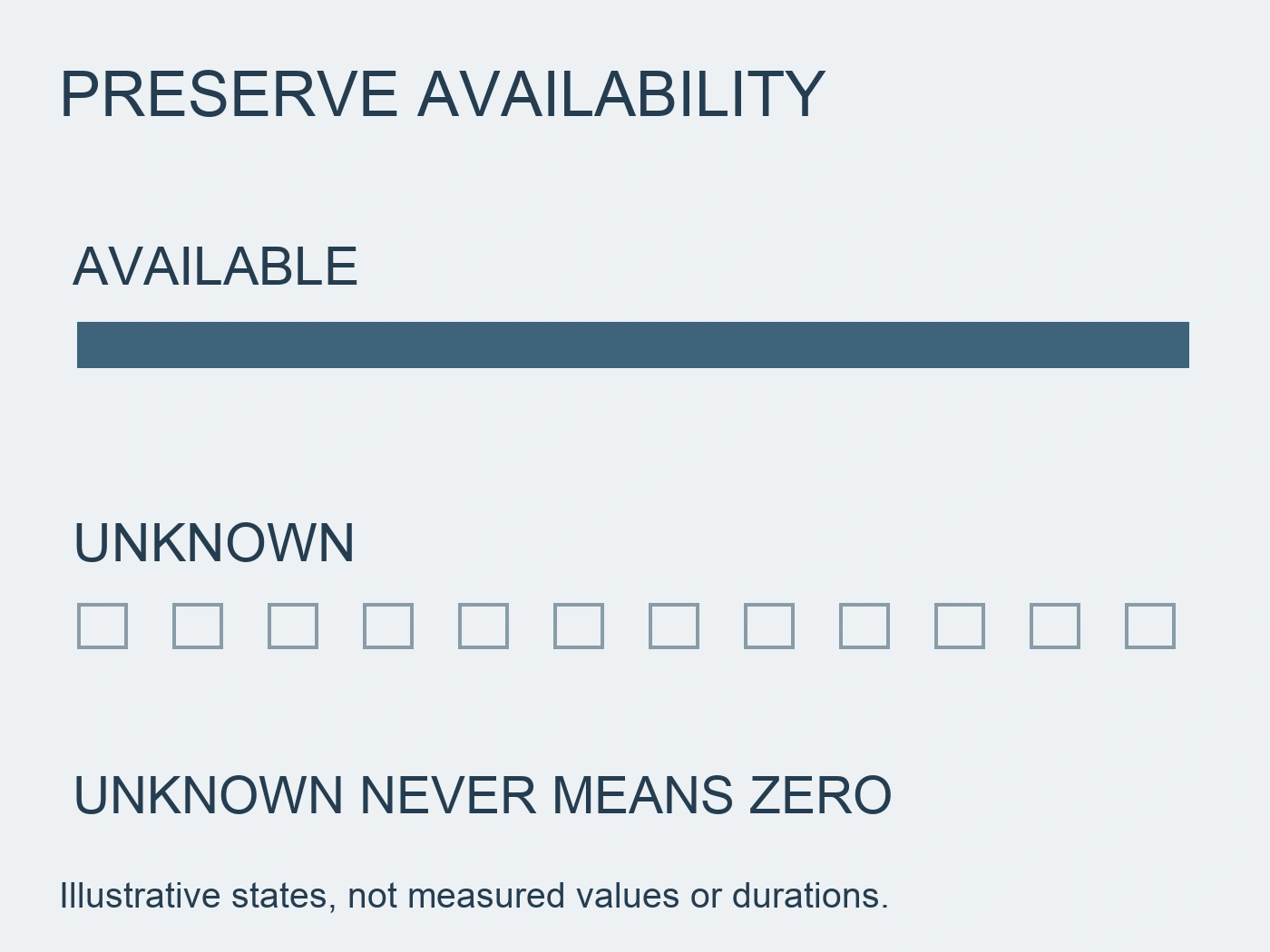
Missing observations should remain identifiable as missing. Do not enter zero merely because a response was unavailable. Zero is a measurement value with a defined meaning; a failed collection has not established that value. The receiving system should document how it distinguishes unavailable, stale and valid data.
Configuration changes also need a visible record. Changing a measurement point, a source field, a scale conversion or a supported meter option can change the meaning of the retained series. A graph that continues smoothly may conceal the change unless the logger preserves its configuration history.
Use a compact annotation record rather than embedding unsupported conclusions in the data. An entry can identify a known equipment change or an observed operating mode without declaring it the cause of a power-quality issue. Separate what the team knows from what the investigation is attempting to establish.
| Trend-log entry or annotation | What to record | Boundary to preserve |
|---|---|---|
| Valid observation | Time reference, source point, quantity, unit and value | Do not claim events outside the recorded observation |
| Missing or stale data | Availability status and known collection condition | Do not replace uncertainty with a zero reading |
| Production-mode note | Named mode and the source of that information | Correlation is not a completed diagnosis |
| Meter or input change | Old and new identities, settings and revision | Earlier readings retain their earlier configuration |
| Collection-setting change | Earlier and revised timing or field selection | Do not imply one consistent sampling arrangement |
| Review finding | Observation, supporting records and responsible reviewer | Keep hypotheses separate from verified causes |
The table is an original record structure, not a completed dataset. No measured numbers or causal results are assumed. Agree the actual fields and status meanings with the people who will collect and interpret the information before handing over the logging system.
Do not confuse a trend with waveform evidence
Periodic numerical readings and waveform records answer different kinds of questions. A trend can preserve how documented values appear across a period; waveform capture supplies a different record of the signal around a supported capture event. Confirm which evidence the investigation actually needs and whether the selected equipment provides it.
Schneider's PM5500 waveform-capture overview explicitly limits that function to named models and describes voltage and current waveform information separately from numerical values. This is a useful example of model-specific scope. Its capture, trigger and storage capabilities must not be transferred to an unrelated DIN rail meter.
If the requested task exceeds the available record, state the gap. Do not draw a detailed event waveform from a few trend points and present it as captured data. Likewise, an absence of a visible excursion in a periodic series does not prove that no shorter event occurred between its observations.
The buyer can use this distinction to improve the specification. Ask whether the task needs routine numerical history, an event record, waveform evidence or a combination, and request exact-model support for the required functions. The article does not select an instrument or declare a particular recording arrangement sufficient for every investigation.
Work through a bounded handover example
Suppose a maintenance team wants to review a documented imbalance quantity across two production modes. A DIN rail meter is offered with the measurement option and a communications interface, but the quotation does not identify historical storage. The team should not accept “trend logging included” until the actual retention arrangement is established.
The integrator then proposes external collection. The record identifies the exact source field, its unit and definition, the circuit, the platform's time basis and the agreed recording settings. The team also establishes how missing observations and production-mode notes will be retained. No numerical limit or measured result is assumed in this example.
Later, an operator reports a brief equipment interruption. The available periodic trend may help provide context, but it should not be described as an event waveform. The reviewer determines whether additional evidence is needed under an appropriate investigation plan. The existing log remains useful within its actual scope rather than being stretched to answer an unsupported question.
Finally, when the meter configuration changes, the handover record marks the date and the affected fields. Earlier readings remain linked to their earlier source definition. A future reviewer can then distinguish an operating change from a change in what the logging system actually recorded.
Prepare a logging RFQ with clear responsibilities
Provide the named circuit, maintenance question and required quantities with the enquiry. Ask for exact-model measurement definitions and the applicable communications documentation. Identify whether retained history is required inside the instrument, in an external system or both, and request the corresponding evidence.
For the collection and storage supplier, describe the needed time records, availability states, retention access and change annotations. Do not borrow numerical logging intervals or memory capacities from another manufacturer's example. Keep an unsupported requirement visible so the proposed solution can be reviewed honestly before purchase.
The handover package should include the final point list, model and configuration references, approved collection settings, storage arrangement, retrieval information and annotation policy. Record actual commissioning observations separately from the proposed plan. The result should be a log that another engineer can interpret without guessing what a line on the chart means.
Často kladené otázky
Does Modbus RTU mean the meter stores historical trends?
No. Communications and historical retention are separate functions. Obtain the exact source map and identify where the collected history is stored. If an external platform supplies the history, describe it accurately as external collection.
Can every DIN rail power-quality meter record waveforms?
Do not infer waveform capture from mounting format or a power-quality label. Require exact-model evidence of the needed recording function. A numerical harmonic or imbalance reading is not itself a captured voltage or current waveform.
Can missing readings be filled with zero?
Only use a zero when the system has established a valid measurement with that meaning. An unavailable response does not establish a zero value. Preserve missing or stale status according to the documented collection arrangement.
What makes the trend useful for maintenance?
It preserves understood quantities with circuit identity, timing, availability and relevant operating context. It also retains configuration changes and interpretation limits. A complete record supports a review without pretending that correlation alone establishes a fault cause.
Literatura
- Schneider Electric. (n.d.-a). PM5500 user manual: Data log. HRB1684301-18. Manufacturer documentation.
- Schneider Electric. (n.d.-b). PM5500 user manual: Overview of waveform capture. HRB1684301-18. Manufacturer documentation.