
DIN Rail Energy Meters · Technical Explainer
DC Meter and Shunt Calibration Records: Document the Measurement Pair
Quick answer
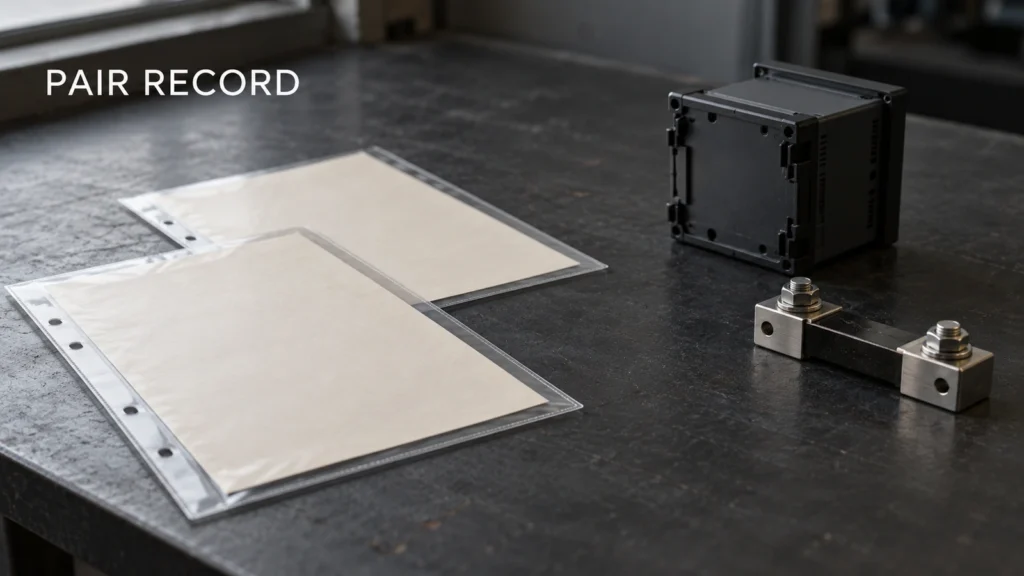
A useful DC meter and shunt calibration record identifies the exact components, their measurement relationship and the configuration represented by the reported results. Retain serial numbers, selected current-to-output relationship, meter settings, report scope and relevant conditions. Two certificates in one folder do not automatically establish the performance of the assembled measurement system.
Ask what was actually calibrated: the shunt, the meter input, the complete pair or another defined system. Keep that scope visible when reviewing the result against the application requirement. Replacement of either component should trigger review of the affected configuration record, not an automatic transfer of the old result to the new item.
This guide helps industrial buyers and quality teams structure the delivery and maintenance record. It does not prescribe a calibration method, calculate a system uncertainty or impose an annual interval. Applicable contracts, procedures and regulatory requirements must be reviewed by the responsible personnel. No NIST endorsement or calibration status is claimed for the products discussed here.
Name the measurement configuration before requesting a report
Start with the intended measured quantity and the equipment actually involved. A DC current measurement using an external shunt is not documented fully by the meter's front-panel name. The selected shunt reference, its stated output relationship and the receiving meter configuration also belong in the record.
Separate family designation from individual identity. A model identifies a product configuration; a serial number or another controlled identifier distinguishes the particular delivered item. If an item has no manufacturer serial number, ask how the supplier and user will maintain its identity. Do not create a fictional serial number and present it as a factory marking.
Record the configuration used for the reported result, including the meter's applicable settings and document revision. A result obtained with one scaling setup should not silently become evidence for a later setup. The quality reviewer needs to know whether the change affects the claim and what further work is required.
The RITOKS DC02NC shunt-input DC energy meter family describes model-dependent DC metering and external-shunt input. The FL-2-75 current shunt family distinguishes the selected primary-current model from its rated millivolt output. These are relevant sourcing fields, not evidence that an arbitrary pair has been calibrated together or is approved for the application.
Distinguish report scope from a complete-system claim
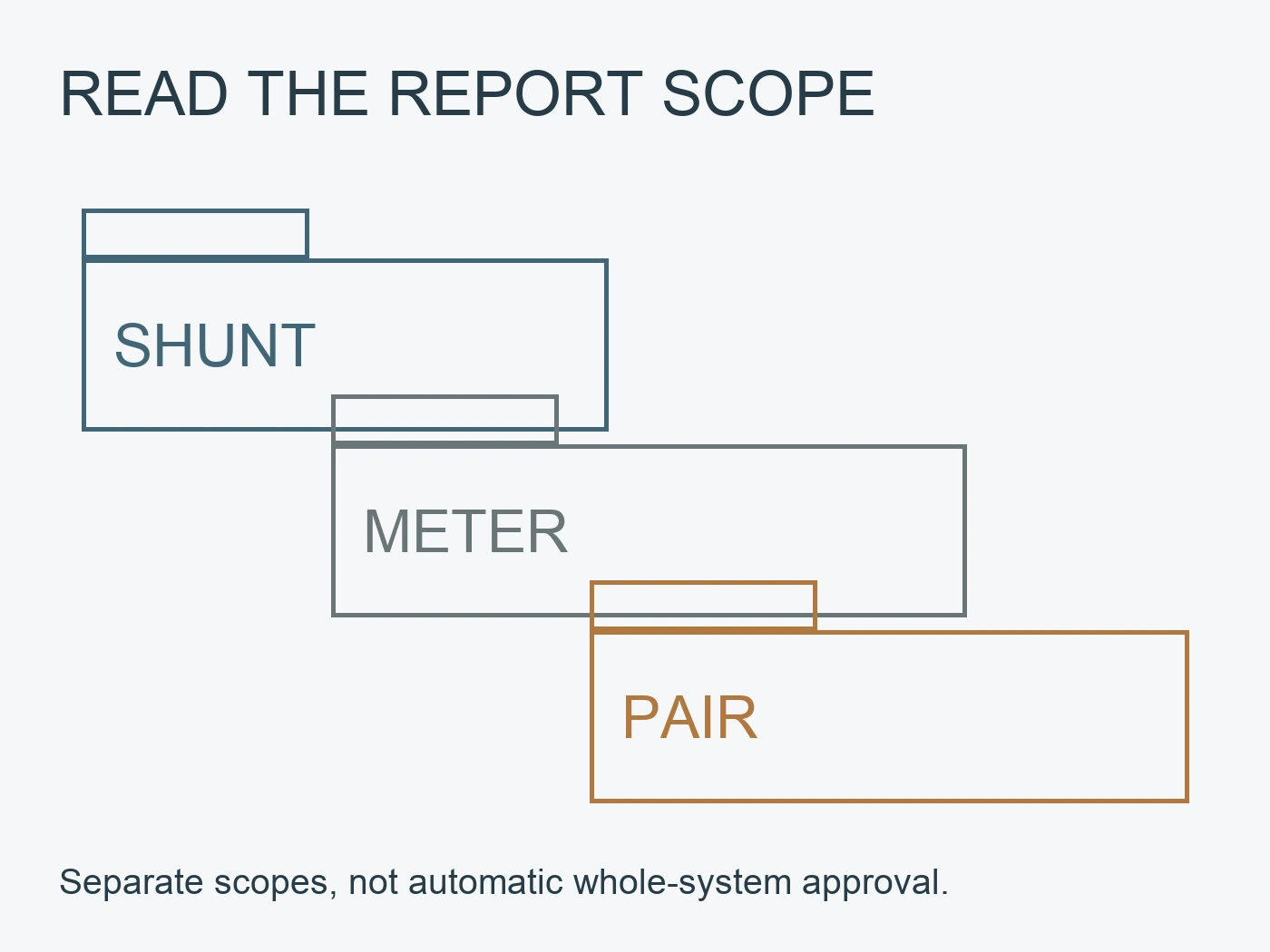
A shunt-only report concerns the item and quantity described in that report. A meter-input report concerns its stated receiving measurement. A report covering a pair needs to identify the two items and the defined configuration. The reviewer should find the scope in the actual report rather than infer it from the supplier's packing list.
NIST's metrological traceability policy and FAQ explains that traceability belongs to a measurement result, not to an instrument label. It requires documented calibration links and associated uncertainty; a calibrated instrument alone does not establish every subsequent result. NIST also distinguishes traceability from fitness for a particular measurement purpose. Use this distinction when assessing the evidence, without implying NIST approval of an offered product.
Ask the reporting organization to resolve an ambiguous scope. A phrase such as “DC system calibrated” is insufficient when the record does not identify the shunt and meter. Conversely, a clearly limited component report can be useful if the responsible metrology reviewer explains its role in the application assessment.
| Scope stated in the supplied record | Identification question | Claim that should remain open |
|---|---|---|
| Shunt-only result | Which individual shunt and output relationship were assessed? | Performance of the receiving meter and assembled system |
| Meter-input result | Which meter, input function and configuration were assessed? | Behavior of the installed shunt and its connections |
| Meter-and-shunt result | Are both individual items and settings identified? | Applicability outside the reported configuration and conditions |
| Installed-system assessment | What system boundary and method are described? | Other circuits or later changed configurations |
| Catalogue accuracy statement | Which selected model and stated conditions apply? | Individual calibration results and application uncertainty |
This table is an original document-review aid, not a calibration procedure or a list of acceptable certificates. The application owner must decide what evidence is sufficient for the actual purpose. A purchasing team can request missing scope information without claiming to have performed that metrology assessment.
Build a pair record that survives handover
Create one controlled configuration record linking the delivered items to their documents. Give the record its own revision so it can refer to a meter report, a shunt report and a later assessment without pretending they are the same document. Retain the original report files with their provider and issue identifiers.
The identity fields should include the meter order code, individual identifier, selected input and relevant configuration; the shunt order code, individual identifier and documented current-to-output relationship; and the approved application or circuit reference. Keep units visible. Do not treat a shunt's millivolt output as an auxiliary supply specification.
Add a report index rather than combining unlike results into one informal accuracy figure. The index can state which report covers which item, what quantity was assessed and which review remains open. An unsigned spreadsheet summary should not be described as the reporting organization's certificate unless that organization actually issued it.
Include the responsible reviewer and the decision date. The supplier delivers evidence; the application owner determines whether the evidence supports the intended use under the relevant process. Those roles can be performed by different organizations and should not disappear into a single unexplained “approved” cell.
When commissioning settings differ from the reported configuration, record the difference before handover. Do not copy the new settings into the old report. Preserve the reported configuration and ask the responsible reviewer what the change means for acceptance. The history should explain both what was delivered and what was used.
Keep conditions and uncertainty available for review
Retain the conditions and uncertainty information actually stated by the reporting organization. The review must be able to distinguish a reported measured value, a stated uncertainty and a manufacturer's catalogue accuracy listing. They are not interchangeable labels for one guaranteed whole-system error.
Do not add two catalogue accuracy figures and call the result a calibrated system uncertainty. The measurement relationship and relevant contributions need a competent assessment for the intended purpose. This article does not supply the necessary model or conditions for such a calculation, and no numerical system claim is made.
If a report omits information required by the applicable quality process, request clarification from its issuer. Write the missing question precisely: for example, whether the report identifies the receiving function used, or how its scope relates to the paired shunt. Avoid replacing a missing uncertainty statement with an optimistic percentage from a sales page.
The purchasing record can organize the questions without deciding the numerical assessment. It should identify what has been supplied, what the reviewer needs and which item remains unresolved. This is especially useful when the reporting laboratory, equipment supplier and system integrator are separate parties.
Record replacement and setting changes explicitly
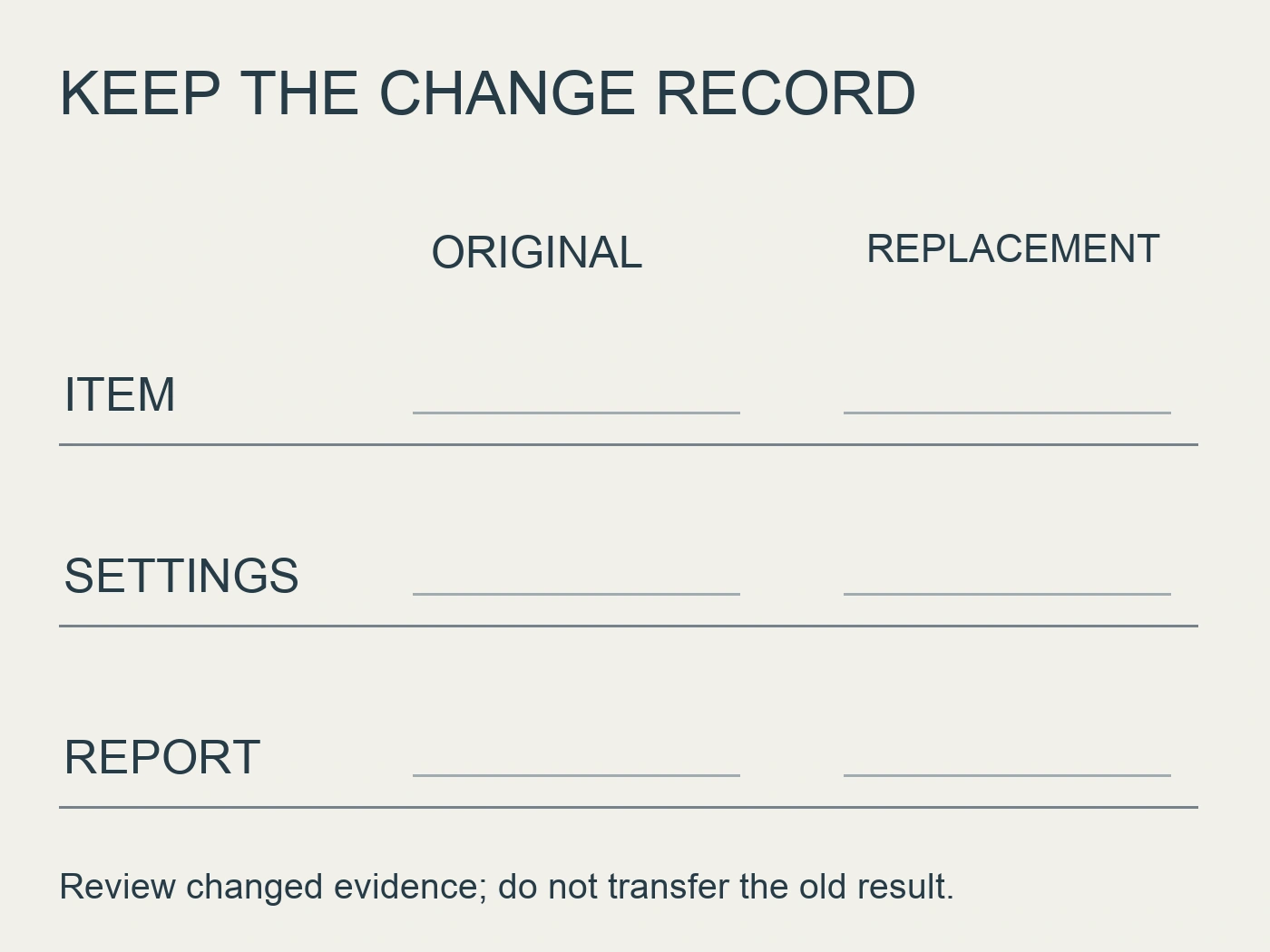
A replacement shunt can have the same family label while being a different individual item. A replacement meter can also retain the same general model name while needing its own identity and configuration review. Preserve the original records and create a dated change entry for the new configuration.
Do not presume that the old pair result covers the replacement. Ask the responsible reviewer which component evidence and configuration assessment are affected. A change may require additional work under the applicable process, but the requirement should come from that process and the actual evidence, not from a universal rule invented in a blog.
| Change or handover item | Information to retain | Question for the responsible reviewer |
|---|---|---|
| Shunt replaced | Old and new identities, stated relationship and supporting report | Which earlier results remain applicable? |
| Meter replaced | Old and new identities, input configuration and documents | What must be reviewed for the new pair? |
| Scaling changed | Earlier and revised settings, reason and date | Does the reported scope still represent the use? |
| Report renewed | Issuer, item identity, scope and issue reference | Is the evidence linked to the current configuration? |
| Application changed | Earlier and revised purpose or circuit reference | Are the measurement requirements still satisfied? |
| Scheduled review | Applicable procedure and interval rationale | What evidence supports continuing the interval? |
These questions do not declare that a particular replacement passes or fails. They make the changed evidence visible. Keep obsolete configurations available for interpreting earlier data, while clearly distinguishing them from the currently accepted configuration.
Choose the interval through the applicable process
Do not write “annual calibration required” into every meter RFQ without a supporting requirement. NIST's recommended calibration interval guidance does not set a general interval. It identifies factors including application accuracy needs, external requirements, device stability and environment, and discusses using recorded behavior to assess intervals.
For the project record, identify the contract, applicable requirement or internal procedure that determines the schedule. If the interval is a proposal awaiting review, call it a proposal. A convenient delivery date does not become an engineering justification merely because it is easy to enter on a label.
Retain the evidence used when the interval is later reviewed. Previous results and relevant service or configuration changes should remain accessible to the responsible quality personnel. The buyer's task is to ensure that the needed records are delivered and traceable to the items, not to certify an interval from a generic online statement.
A conditional delivery example
Suppose a supplier delivers one DC meter, one shunt and a report identifying only the shunt. The equipment may still be relevant to the intended project, but the report must not be renamed “complete pair calibration.” The buyer creates a pair record and links the shunt report to its actual scope.
The application reviewer then asks what evidence covers the meter input and whether the documented configuration satisfies the intended measurement purpose. If that evidence is absent, the status remains unresolved pending the appropriate report or assessment. No numerical error limit or acceptance result is assumed in this example.
Later, a replacement shunt is supplied with a different individual identifier. The record preserves the earlier configuration and opens a change review for the new one. Retaining the original meter does not automatically transfer the earlier shunt result to the replacement. The responsible reviewer determines the evidence needed under the applicable procedure.
The completed handover record should tell a future maintainer which items were present, which documents were reviewed, which configuration the decision covered and what changed afterward. That is a useful buying outcome even before any wider measurement claim is accepted.
Questions buyers should resolve
Do two component certificates prove the assembled pair's accuracy?
Not automatically. Read their scopes, identities and conditions, and obtain the appropriate assessment for the intended measurement system. Do not substitute a folder containing two files for a documented whole-system claim.
Can the report's accuracy be transferred to every model in the family?
Retain the exact items and scope represented by the result. A family page helps identify sourcing options but does not turn one individual report into evidence for all other configurations. Ask the issuer or responsible reviewer to resolve broader applicability.
Is an annual interval always required?
Use the applicable external requirement or reviewed quality procedure. Do not infer a universal interval from a generic device description or calibration label. Record the requirement and the decision owner with the maintenance schedule.
What should accompany the RFQ?
Provide the measured quantity, selected meter and shunt configuration, application requirements and required report scope. Ask for item identification, configuration and condition records, uncertainty information where required, and a clear document index. Leave unresolved evidence visible before acceptance.
Referencer
- National Institute of Standards and Technology. (2026a). Metrological traceability: Frequently asked questions and NIST policy, sections 5.1.1–5.1.4. Official guidance. Updated May 27, 2026.
- National Institute of Standards and Technology. (2026b). Recommended calibration interval. Official guidance. Updated May 29, 2026.