
DC Power Protection · Comparison
DC Fuse vs DC Circuit Breaker: Which Protection Method Fits the Circuit?
A DC fuse and a DC circuit breaker can both be used as part of an overcurrent protection strategy, but they do not operate or recover from a fault in the same way.
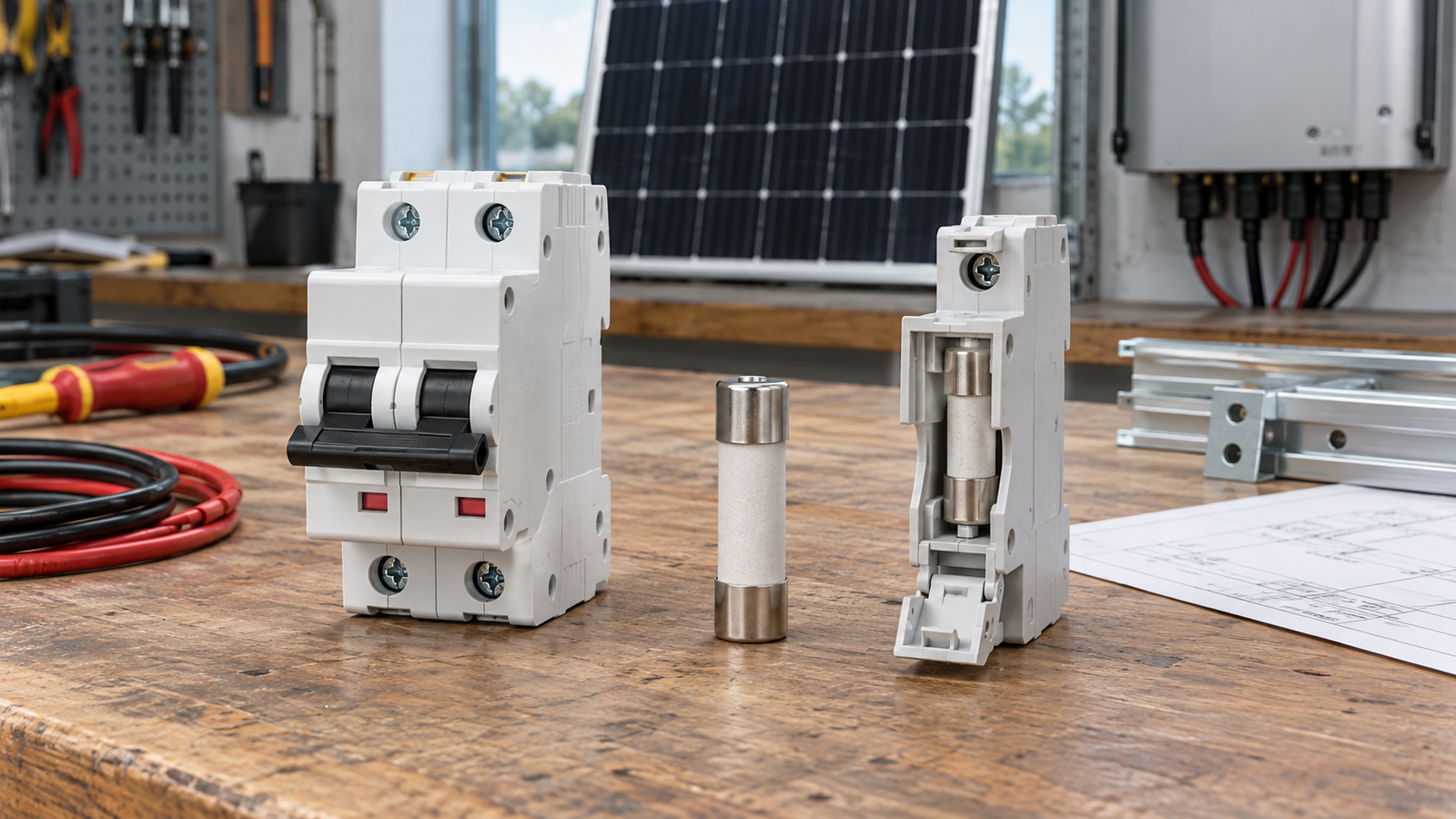
The simplest difference is:
A circuit breaker can normally be reset after it operates, while an operated fuse element normally needs to be replaced.
That difference affects maintenance, component selection and how the protection system is serviced after a fault.
But it does not mean one method is universally better.
The correct choice depends on the actual DC system, including:
- system voltage
- operating current
- required poles or fuse format
- mounting arrangement
- maintenance approach
- exact product configuration
- confirmed documentation for the selected device
This guide compares protection methods within a DC power protection system without relying on unsupported assumptions about speed, cost, breaking capacity or universal application suitability.
In This Guide
- Quick Answer: Fuse or Circuit Breaker?
- What Is a DC Fuse System?
- What Is a DC Circuit Breaker?
- The Main Difference
- A Practical Selection Process
- Common Selection Mistakes
- Frequently Asked Questions
Quick Answer: Fuse or Circuit Breaker?
| Selection Factor | DC Fuse System | DC Circuit Breaker |
|---|---|---|
| Protection concept | Fuse element opens under specified overcurrent conditions | Breaker mechanism interrupts the circuit under specified conditions |
| After operation | Fuse element normally requires replacement | Breaker can normally be reset after the fault is reviewed |
| Main components | Fuse link + compatible holder/base | Breaker assembly |
| Current RITOKS mounting examples | DIN-rail fuse-holder families | DIN-rail MCB and panel/fixed MCCB families |
| Selection inputs | Voltage, current, fuse dimensions, holder compatibility, exact model | Voltage, current, poles, mounting format, exact model |
| Can product name alone determine suitability? | No | No |
This comparison is about operating and maintenance models, not a universal ranking of one protection method over another.
For available commercial families, see DC Fuses & Fuse Holders and DC Circuit Breakers.
What Is a DC Fuse System?
A DC fuse system normally consists of two related components:
- a fuse link
- a compatible fuse holder or base
The fuse link contains the element that opens when specified overcurrent conditions are reached.
Once that fuse element has operated, it normally needs to be replaced.
The holder provides the mechanical and electrical interface for the fuse link and must match the required fuse format.
This means selecting a DC fuse is not simply a matter of choosing an ampere value.
The fuse link and holder need to be considered together.
Current RITOKS published examples include both 10×38mm and 10×65mm fuse formats.
Current 10×38mm Examples
The published range includes:
The current 10×38mm holder is designed around the corresponding fuse-link format rather than an arbitrary fuse dimension.
Current 10×65mm Examples
The published range also includes:
- 10×65mm 1500V DC PV Fuse Holder, 35A, 1P
- 10×65mm 1500V DC gPV Fuse Link, 6–32A
Again, the fuse link and holder need to be selected as a compatible system.
For broader options, see DC Fuse Links and DC Fuse Holders.
What Is a DC Circuit Breaker?
A DC circuit breaker is a circuit protection device that can interrupt the DC circuit according to its design and operating conditions.
Unlike an operated fuse element, a circuit breaker can normally be reset after operation, provided:
- the cause of the fault has been identified
- the breaker remains suitable for continued service
- the system conditions are appropriate for re-energization
Current RITOKS circuit breaker families include both:
- DIN-rail DC MCBs
- panel / fixed-mounted DC MCCBs
For example, current published breaker families include:
- 2P DIN-rail DC MCBs
- 1P/2P high-current DIN-rail DC MCBs
- 2P panel/fixed-mounted DC MCCBs
These product families use different voltage, current, pole and mounting configurations.
For a detailed MCB/MCCB comparison, see:
How to Choose a DC Circuit Breaker: MCB vs MCCB
DC Fuse vs DC Circuit Breaker: The Main Difference
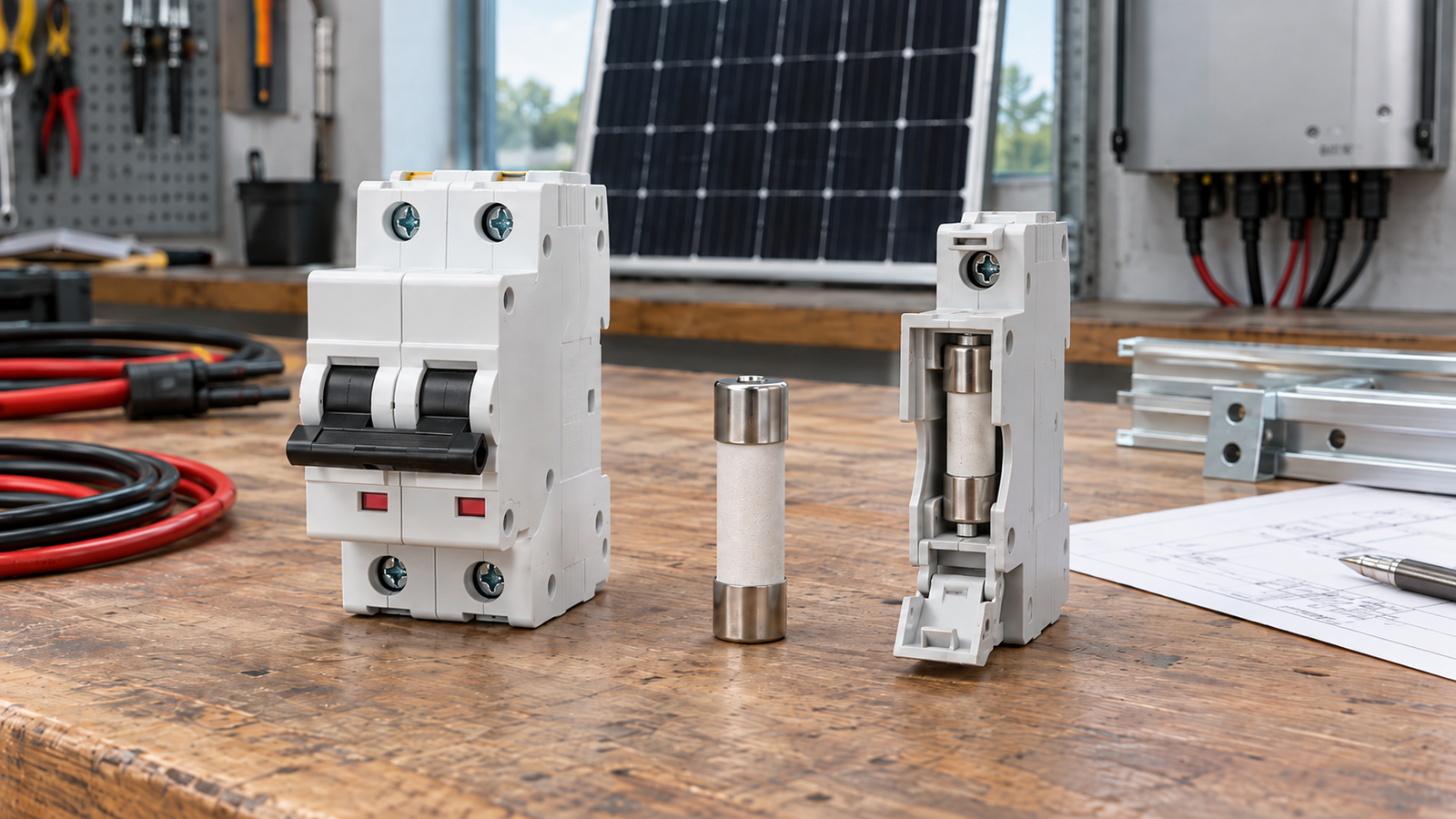
The most useful distinction is the way the protection device returns to service after it operates.
Fuse
When a fuse element operates, the circuit remains open until the fuse link is replaced with a suitable compatible replacement.
That replacement needs to match the required:
- fuse dimensions
- holder format
- voltage
- current
- exact product requirements
Circuit Breaker
When a circuit breaker operates, the breaker can normally be reset rather than replaced.
However, resetting should not be treated as simply moving the handle back to the ON position.
The fault condition should first be investigated, and the breaker and circuit should remain suitable for continued service.
This creates two different maintenance workflows.
Neither workflow is automatically superior in every DC system.
Fuse Link and Holder Must Be Selected Together
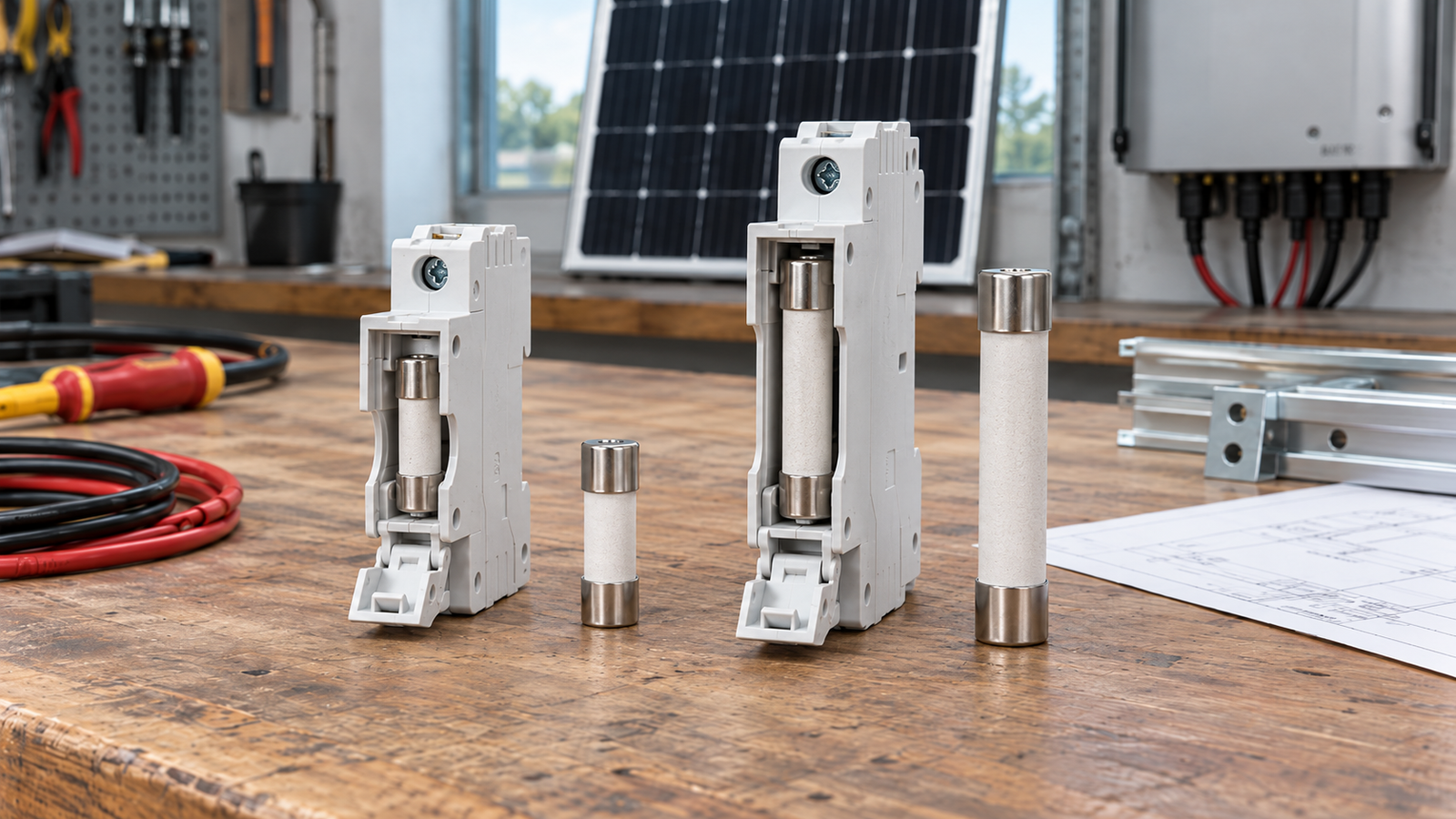
One difference that is easy to overlook is that a fuse normally belongs to a fuse system, not just a standalone component.
For example, the current RITOKS range contains:
- 10×38mm fuse links
- 10×38mm fuse holders
- 10×65mm fuse links
- 10×65mm fuse holders
A 10×38mm fuse link should not be treated as interchangeable with a 10×65mm holder simply because the current rating appears similar.
The physical format is part of the selection.
The sourcing process should therefore confirm:
- required fuse format
- compatible holder
- DC voltage
- required current
- exact fuse-link model
- exact holder model
This is different from selecting a self-contained breaker assembly.
1. Start With the DC System Voltage
Voltage is one of the first filters for either protection method.
Current published RITOKS fuse examples include:
- 1000V DC 10×38mm fuse-holder and fuse-link families
- 1500V DC 10×65mm fuse-holder and fuse-link families
Current breaker products also cover different voltage ranges depending on the exact family.
Therefore, the question should not be:
Should I use a fuse or breaker first?
It should begin with:
Which available protection devices are confirmed for the actual DC system voltage?
A component that matches the current requirement but not the required DC voltage should not be selected.
2. Confirm the Required Current
Current is also a necessary selection input, but it should remain attached to the exact product family.
For example, current RITOKS fuse-link examples include published 6–32A options.
Current circuit breaker families cover other ranges depending on the specific model.
That does not create a universal rule that one current level should always use a fuse and another should always use a breaker.
The current requirement helps narrow the product candidates.
It does not decide the protection architecture by itself.
3. Decide Whether Reset or Replacement Fits the Maintenance Model
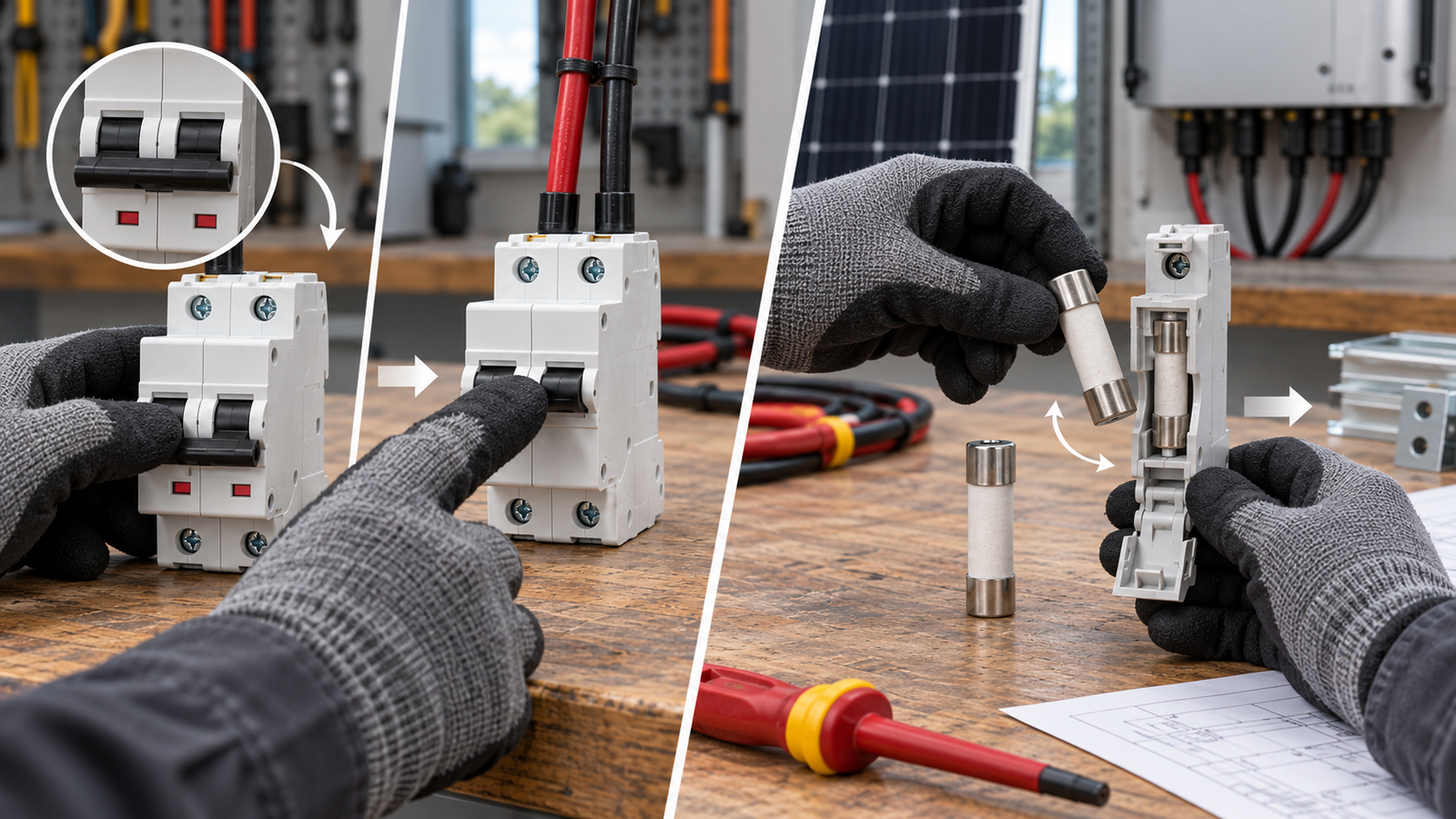
This is one of the clearest practical differences.
With a Breaker
After operation:
- investigate the cause
- inspect the system and breaker as required
- confirm continued suitability
- reset the breaker when appropriate
With a Fuse
After operation:
- investigate the cause
- inspect the system and fuse holder
- select the correct compatible replacement fuse link
- replace the operated fuse
- return the system to service when appropriate
The important point is that both approaches require fault review.
A resettable device does not eliminate the need to determine why the circuit was interrupted.
Likewise, replacing a fuse without identifying the underlying fault is not a complete maintenance process.
4. Consider the Installation Format
The physical installation can also narrow the choice.
Current Fuse Products
RITOKS currently publishes DIN-rail fuse-holder families in:
- 10×38mm
- 10×65mm
Current Breaker Products
RITOKS currently publishes:
- 35mm DIN-rail MCB families
- panel/fixed-mounted MCCB family
So the enclosure and panel architecture matter.
A DIN-rail design may accommodate either a suitable breaker or fuse-holder arrangement, depending on the system.
A molded-case breaker requires a different installation approach from a modular DIN-rail fuse holder.
The correct choice therefore includes mechanical layout as well as electrical requirements.
DC Fuse vs DC Circuit Breaker at a Glance
| Question | DC Fuse | DC Circuit Breaker |
|---|---|---|
| Is the protection element reusable after operation? | Operated fuse link normally requires replacement | Breaker can normally be reset after fault review |
| Is a separate holder required? | Yes, for the current fuse-link families | No separate fuse holder |
| Does physical format matter? | Yes — e.g. 10×38mm vs 10×65mm | Yes — DIN rail vs panel/fixed format |
| Can voltage alone determine the choice? | No | No |
| Can current alone determine the choice? | No | No |
| Must exact model data be checked? | Yes | Yes |
| Can one method be declared universally better? | No | No |
Selection Examples
Example 1: 10×38mm Fuse System
Suppose a project is evaluating a 10×38mm DC fuse format.
The current RITOKS range includes:
10×38mm 1000V DC PV Fuse Holder
- 32A holder
- 1P/2P
- 35mm DIN rail
- plug-in fuse-link format
and:
10×38mm 1000V DC gPV Fuse Link
- 1000V DC
- published 6–32A options
- compatible 10×38mm format
The important sourcing point is not simply the word “fuse.”
The holder and fuse link must be matched as a compatible format and selected from the confirmed product data.
Example 2: 10×65mm Fuse System
For a different physical format, the current range includes:
10×65mm 1500V DC PV Fuse Holder
- 1500V DC
- 35A
- 1P
- 35mm DIN rail
- 10×65mm fuse-link format
and:
10×65mm 1500V DC gPV Fuse Link
- 1500V DC
- published 6–32A options
- compatible 10×65mm holder
The 10×65mm system should not be treated as interchangeable with the 10×38mm system merely because some current values overlap.
Example 3: DIN-Rail Circuit Breaker
A project may instead use a resettable breaker format.
For example, the current RTS-DC63-1000 family provides:
- 2P
- 500–1000V DC
- 6–63A
- 35mm DIN rail
Here, the protective device is the circuit breaker assembly itself rather than a replaceable fuse link installed in a holder.
That changes the post-operation maintenance workflow but does not eliminate the need to verify the exact voltage, current and configuration.
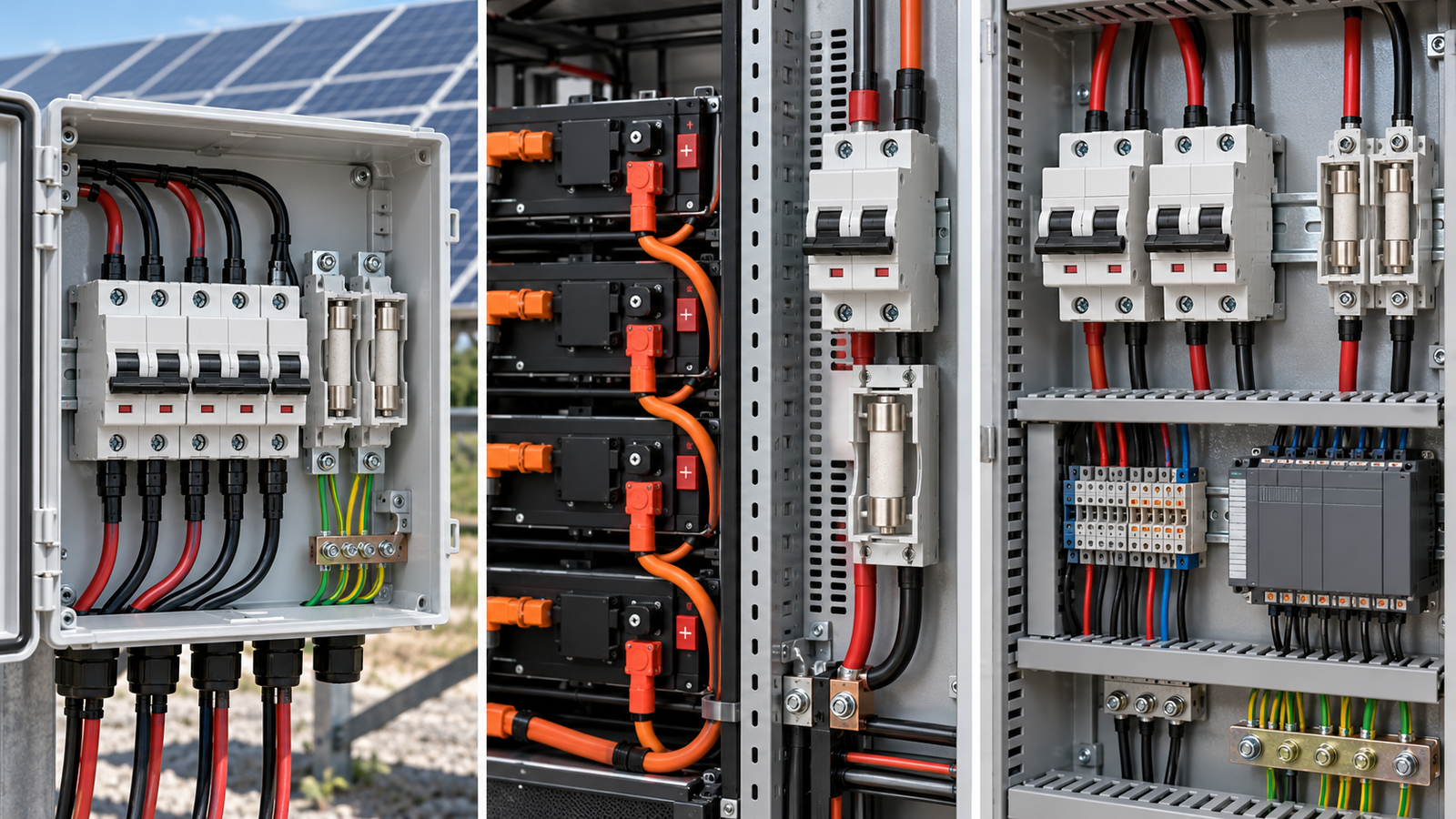
A Practical Fuse-or-Breaker Selection Process
A useful comparison workflow is:
- Define the DC voltage. Identify the actual DC system voltage.
- Define the operating current. Use the required current to narrow the available product families.
- Define the protection format. Determine whether the system design calls for a fuse link and holder, a DIN-rail circuit breaker or a panel/fixed-mounted circuit breaker.
- Define the maintenance approach. Decide whether the system is designed around replacement of an operated fuse link or resetting a breaker after fault review.
- Check mechanical compatibility. For fuse systems, confirm fuse dimensions and holder compatibility. For breakers, confirm poles and mounting format.
- Verify exact product data. Do not transfer ratings or performance claims from one fuse, holder or breaker family to another.
Common Fuse vs Circuit Breaker Selection Mistakes
Assuming Fuses Are Always Faster
The operating behavior of a protection device depends on its exact characteristics.
Without confirmed time-current data, a universal statement that fuses are always faster should not be made.
Assuming Circuit Breakers Are Always More Convenient
A resettable breaker changes the maintenance process, but whether that is preferable depends on the system and maintenance requirements.
“Resettable” should not automatically be translated into “better.”
Comparing Breaking Capacity Without Exact Data
Breaking capacity is a model-specific characteristic.
Do not assume that all fuses or all circuit breakers share the same breaking-capacity advantage.
Ignoring Fuse-Holder Compatibility
The fuse link and holder are separate parts of the same protection system.
Dimensions and compatibility must be checked.
Selecting From Current Rating Alone
Current is only one input.
Voltage, format, poles, mounting, exact model and system requirements also matter.
Treating a Replaced Fuse or Reset Breaker as the End of the Fault Investigation
Both protection methods require the cause of operation to be understood before the system is returned to service.
Applying One Product’s gPV Data to Every Fuse
The current RITOKS range includes specific published gPV fuse-link products.
That designation should remain attached to those exact products rather than generalized to every DC fuse.
Fuse and Breaker Roles Within a Wider DC Protection System
Fuse and circuit breaker selection is only one part of DC protection design.
Other protection functions may include:
- isolation
- surge protection
- other system-specific protection elements
For an overview of these different roles, see DC Protection Devices Explained: Circuit Breakers, Fuses, Isolators & SPDs.
If the circuit-breaker path is being considered, also see How to Choose a DC Circuit Breaker: MCB vs MCCB.
These guides separate the protection function from the specific product-family selection.
Frequently Asked Questions
Is a DC Fuse Better Than a DC Circuit Breaker?
Not universally. Both can provide overcurrent protection, but they use different operating and maintenance models. The correct method depends on the specific DC system and confirmed product requirements.
Can a DC Fuse Be Reset?
No. Once the fuse element operates, the fuse link normally needs to be replaced with a suitable compatible replacement.
Can a DC Circuit Breaker Be Reset After It Trips?
Normally yes, but only after the cause of operation has been investigated and the breaker and circuit remain suitable for continued service.
Does a Fuse Holder Protect the Circuit by Itself?
The holder is part of the fuse system. The fuse link provides the replaceable fuse element, while the holder provides the compatible mounting and electrical interface.
Can I Put a 10×38mm Fuse in a 10×65mm Holder?
The current RITOKS ranges treat 10×38mm and 10×65mm as different fuse formats. Use a fuse link compatible with the exact holder format.
Is a Fuse Always Faster Than a Breaker?
That should not be assumed. Operating characteristics depend on the exact device. A meaningful comparison requires confirmed time-current data.
Can Current Rating Alone Decide Between a Fuse and Circuit Breaker?
No. Voltage, physical format, maintenance approach, mounting arrangement and exact product data must also be considered.
Need Help Choosing Between a DC Fuse and Circuit Breaker?
RITOKS supplies both DC fuse systems and DC circuit breaker product families.
For a sourcing inquiry, provide:
- DC system voltage
- operating current
- required protection format
- fuse dimensions if applicable
- breaker pole requirement if applicable
- mounting preference
- application
- any required documented characteristics
RITOKS can then match the inquiry against available product families and confirmed model data.
Related Resources
Continue exploring DC Power Protection
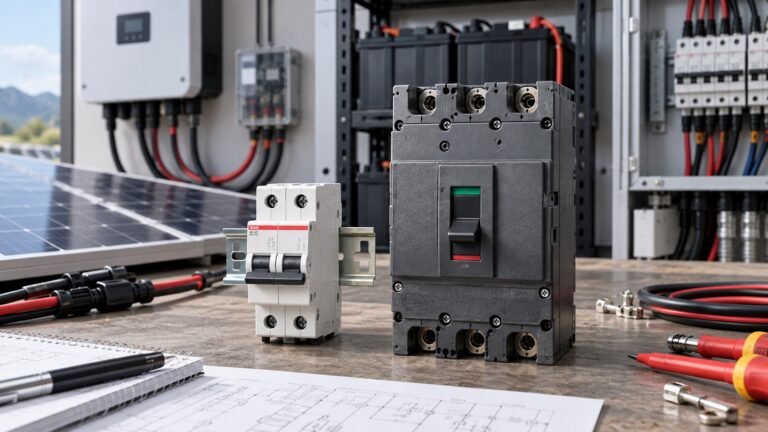
How to Choose a DC Circuit Breaker: MCB vs MCCB
How to Choose a DC Circuit Breaker: MCB vs MCCB Representative DC MCB and MCCB formats used when…
Read guide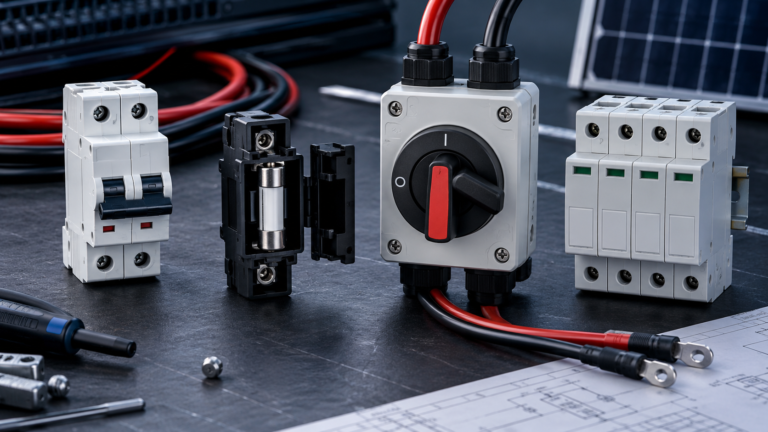
DC Protection Devices Selection Guide: Circuit Breakers, Fuses, SPDs and Isolators
DC Protection Devices Selection Guide: Circuit Breakers, Fuses, SPDs and Isolators Representative DC protection devices including circuit breakers,…
Read guide