
AC Power Protection · Technical Explainer
RS485 Fire Protection Devices: Building an Alarm and Event Point List
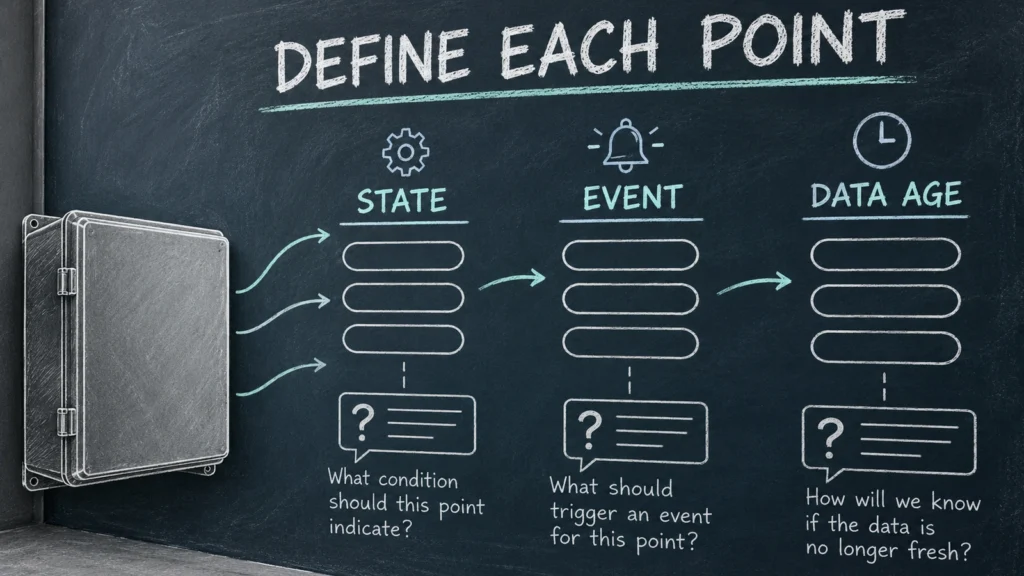
Quick answer
An electrical fire protector with RS485 needs more than a cable connection to become a useful monitoring source. The integrator needs the exact protocol, a supported point map and clear definitions of measurements, alarms, protective actions and reset behavior. Without these, a screen can display a plausible label while representing the wrong condition.
Begin with a point list tied to the selected device and firmware. The list should explain what can actually be read, what each value means, how its freshness is assessed and who acts on an abnormal indication. Do not populate missing register addresses from another product or assume that a generic “fault” bit describes a specific protection event.
This is a documentation and supervisory-integration guide for building electrical designers and system integrators. It is not an installation diagram, a fieldbus wiring instruction or authorization to send commands to protective equipment. The equipment's local protective role and approved operating procedures remain separate from the monitoring screen.
Confirm the protocol before planning the map
Texas Instruments explains that RS-485 defines a physical interface used with protocols such as Modbus, Profibus or BACnet. An RS485 entry in a product specification therefore does not identify the application protocol or the available device data (Texas Instruments, 2022).
The Modbus serial-line guide likewise separates the application protocol from serial data-link and physical-interface layers. For a documented Modbus serial implementation, it describes request-and-response communications initiated by the master. This does not establish that a particular fire protector implements Modbus or automatically pushes every new alarm to a supervisory platform (Modbus Organization, 2006).
Before creating platform tags, request the selected model's communications manual. It should identify protocol and revision, supported read operations, point definitions and relevant settings. Record the firmware or configuration to which the manual applies. Where the supplier provides an integration example, ask whether it represents the ordered version or simply another member of the family.
For the published RTX-EFP protector family, the public page lists RS485 but asks buyers to confirm the protocol and monitoring-platform compatibility. It does not publish a register map. A completed platform driver must therefore await the exact communications documentation; this article supplies no RTX-EFP addresses or commands.
Divide the point list by information role
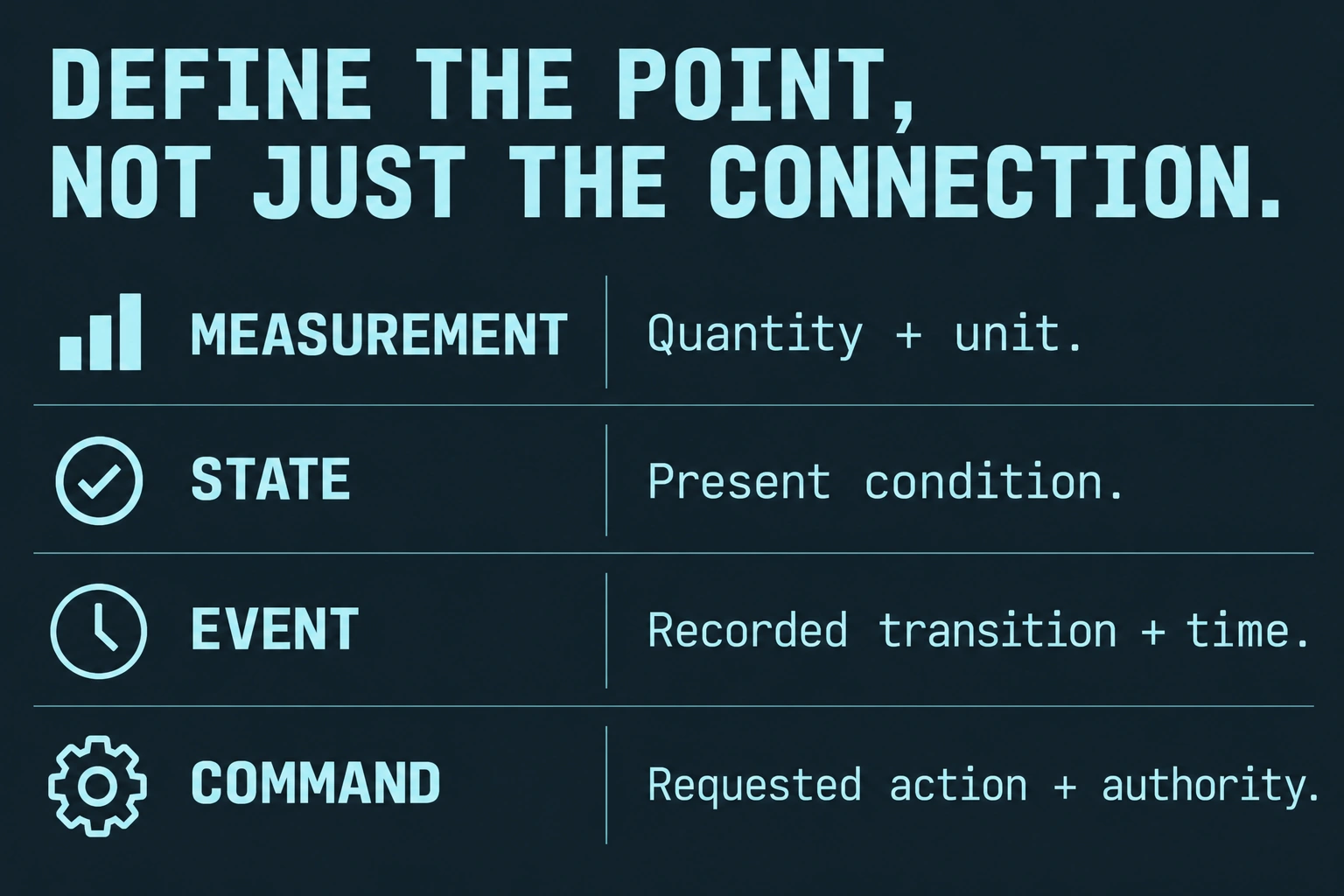
Separate a continuously changing measurement from a state, an event and a command. A measurement may help describe operating conditions. A state describes a documented condition at the time it is read. An event may describe a transition or an occurrence retained by the device. A command requests an action and needs a different approval process from read-only monitoring.
Do not infer that all four groups are available. Start with the project's desired information, then mark each item as documented, unavailable or awaiting confirmation. The point list is a requirements review until the supplier's map establishes what the device actually exposes.
| Information group | Original project question | Evidence needed before mapping |
|---|---|---|
| Measurements | Which operating values are available to the platform? | Exact point identity, units, scale and validity definition |
| Alarm states | Which abnormal conditions can be distinguished? | Model-specific alarm meanings and active/inactive behavior |
| Protective-action status | Can a documented action be identified independently? | Exact status definition, supported states and limitations |
| Retained events | Is occurrence history accessible, and what is retained? | Event record format, sequence and retention behavior |
| Communications health | How will unavailable or stale data be represented? | Platform acquisition rules and documented device behavior |
| Commands | Is a remote operation actually supported and authorized? | Separate command documentation and project approval |
This table is an original planning tool, not a claim that RTX-EFP supplies these points. Keep that distinction in the handover document too. A desired item must not quietly become a promised feature when a preliminary schedule is copied into an order.
If the public product information distinguishes model functions, preserve that distinction in the point list. A leakage-related item cannot be assumed available on a version selected for a different fault-protection scope. Ask for a map corresponding to the exact variant rather than one apparently covering the entire family.
Make each point readable without relying on its address
A register address is an acquisition instruction, not a complete description. Each platform tag should have a stable device identity and an unambiguous label. A technician reading the schedule should be able to tell whether a value describes a measurement, an alarm state or an accumulated event without opening the integration software.
Record the original point name alongside the project's preferred label. Where a word such as “trip,” “fault” or “protection” appears, request its defined meaning. Does it indicate a presently active condition, a retained historical occurrence, or a general summary? Do not choose a more specific screen label than the source definition supports.
For numerical information, record units, scaling and data representation from the exact map. For multi-part values, use the documented interpretation rather than guessing from a familiar product. For a coded state, retain the defined meaning of each supported code. An unexpected or undocumented value needs an explicit treatment, not silent conversion to “normal.”
Keep the point-map revision visible in the configuration record. If the supplier changes firmware or the device is replaced, compare the definitions before reusing the driver. A working connection is not proof that unchanged addresses still represent the same information.
Treat freshness as part of the displayed meaning
The screen needs to distinguish “normal information was received recently” from “the last value happened to be normal.” A successful reading and an old cached value are different evidence. The system integrator should document how acquisition time, loss of communication and invalid readings are handled.
Choose freshness rules through the project's approved monitoring requirements and documented implementation. This guide supplies no universal polling interval or timeout. The relevant question is whether the agreed behavior is visible and testable: when the data source becomes unavailable, can the operator identify that fact without confusing it with a healthy device?
Do not replace a missing measurement with zero unless that conversion has a defined and justified meaning. A zero could otherwise look like a valid operating value. Likewise, preserve a communications-health indication separately from an electrical alarm so the operator knows whether the system reports a device condition or cannot observe the device at all.
If the platform records acquisition time rather than a timestamp supplied by the device, identify it as such. An event received during the next poll does not automatically establish the exact instant the electrical condition began. Request device timestamp or event-sequence capabilities where the application requires them, and leave unavailable features explicit.
Keep acknowledgement, reset and restoration separate
Alarm acknowledgement is a supervisory workflow decision. A reset may affect a retained indication or another documented device function. Restoration of supply is an electrical operating decision. Similar button labels must not make these actions appear interchangeable.
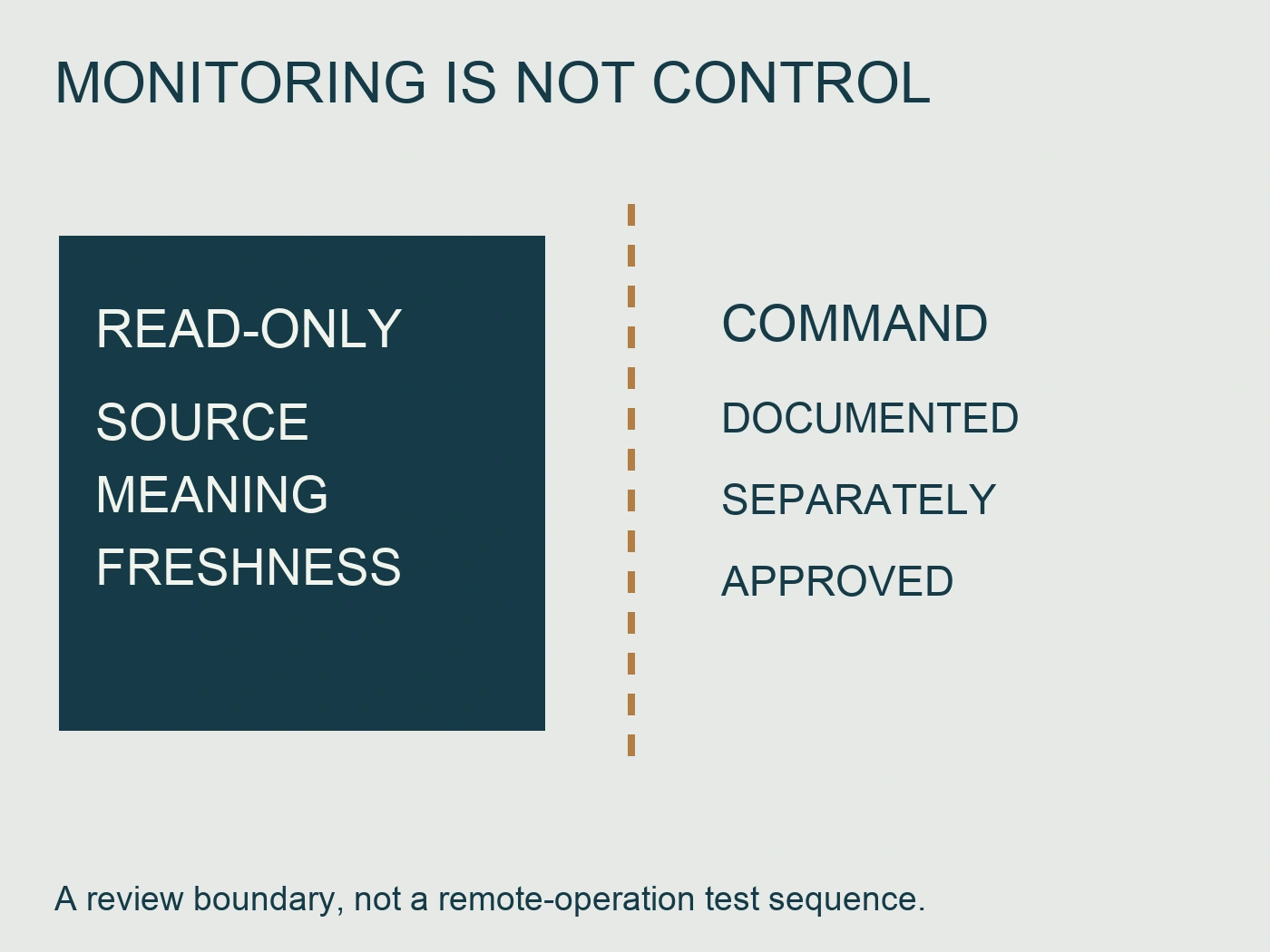
Begin the integration as read-only unless the approved project scope explicitly includes remote operations. If a command is supported, identify its purpose, prerequisites, possible effect and responsible operator using the manufacturer's documentation and the project's procedures. Do not derive a command address from a neighboring register or test undocumented write operations.
The point schedule should state whether an item is readable or writable, but that does not itself approve its use. A supported command may still be outside the project's permitted operating arrangement. Purchasing, electrical design and supervisory integration should agree this boundary before someone builds a convenience button into the interface.
For an alarm that can clear while a retained event remains, request the exact behavior and represent both only when documented. If the device supplies only a summary status, do not create an artificial history that appears to come from the device. Platform-generated history should be labelled as platform observations.
Prepare a reviewable integration acceptance record
Acceptance should compare intended display meaning with documented source information. It should not rely solely on the absence of communications errors. Use an agreed, safe review or manufacturer-approved test method, with qualified personnel responsible for electrical operating conditions.
| Acceptance item | Record to retain | What the reviewer should be able to establish |
|---|---|---|
| Equipment identity | Ordered model, delivered version and firmware | Configuration belongs to the actual device |
| Documentation identity | Communications manual and map revision | Every mapped point has a traceable source |
| Display meaning | Source name, platform label and interpretation | Label does not imply an unsupported function |
| Data quality | Acquisition and unavailable-data behavior | Stale information is not presented as current |
| Event handling | Documented latching, ordering and timestamps if available | History is not confused with current state |
| Operations boundary | Read-only scope or separately approved commands | Monitoring does not silently gain control authority |
This is an original acceptance-record outline. It contains no live test sequence, register values or protective settings. Required evidence and safe methods must be agreed for the particular project. Retain unresolved items with an owner and disposition rather than describing the integration as complete because some tags are visible.
A useful handover also identifies where the source files are kept. Preserve the map supplied by the manufacturer, the implemented tag list and the review record together. When a label is corrected later, the team should be able to distinguish a user-interface edit from a change in device interpretation.
Fill a point record without inventing a cause tag
Assume a hypothetical project identifies one device as FP1 and requests a protective-action indication, a cause and communications health. Assume its supplied map documents a general alarm state but provides no cause-specific event record. These are fictional document conditions, not an RTX-EFP register map. No address, state code or supported command is assigned to a real device in this exercise.
The filled mapping entry reads “source: documented general alarm; display: FP1 general alarm; cause detail: not supplied.” A proposed label such as “FP1 short-circuit trip” would be too specific, even if the device family includes a short-circuit protection variant. A product function and a remotely available cause point are different evidence. Keep a separate platform communications-health field so that a missing reading does not become an electrical-fault diagnosis.
Assume the platform successfully acquires an active general-alarm state, then loses communication. The useful display record is “last acquired state: active; data quality: unavailable; present device state: not established.” If the last acquired state had been inactive, the same data-quality result would still apply. Neither a frozen active value nor a frozen inactive value establishes what the device is doing now. This example specifies no polling period or timeout; the project must define when its actual acquisition is considered unavailable.
Now suppose communication returns and the documented current alarm is inactive. The platform can retain its earlier observation in its own history, identified as an acquisition record. It cannot claim that FP1 supplies a latched event, cleared a fault cause or generated an exact event-start timestamp unless the device documentation supports those meanings. Acknowledging the platform record likewise does not change the device or authorize restoration. The filled history note is “platform observed active state before connection loss; current reading inactive; device event chronology unavailable.”
The design decision depends on the operator's task. If a general indication is sufficient, the project can accept that supported scope while showing missing cause detail explicitly. If the operator needs cause attribution or device-time ordering, the existing map does not satisfy that requirement and another supported source or revised offer must be assessed. More dashboard tags would not fix the source gap. A later exact-version map may add the missing information, but its documented definition must then replace the placeholder question rather than inherit an earlier guessed label.
Deliver information the operator can trust
A sound RS485 fire-protection point list connects each displayed meaning to an exact device definition. Confirm the protocol first, separate measurements from states and events, preserve freshness and identify control boundaries. When the source documentation leaves a point unresolved, the handover should show the gap. A smaller verified point list is more useful than an elaborate display built on assumed registers.
Daftar Pustaka
- Modbus Organization. (2006). MODBUS over serial line specification and implementation guide V1.02. https://www.modbus.org/file/secure/modbusoverserial.pdf
- Texas Instruments. (2022). Application brief: RS-485 introduction and isolated RS-485 in end applications (SLLA418C). https://www.ti.com/document-viewer/lit/html/SLLA418
- RITOKS. (n.d.). RTX-EFP electrical fire current-limiting protectors. https://ritoks.com/products/rtx-efp-electrical-fire-current-limiting-protectors-20a-250a/