
DC Power Protection · Battery Disconnect Switches
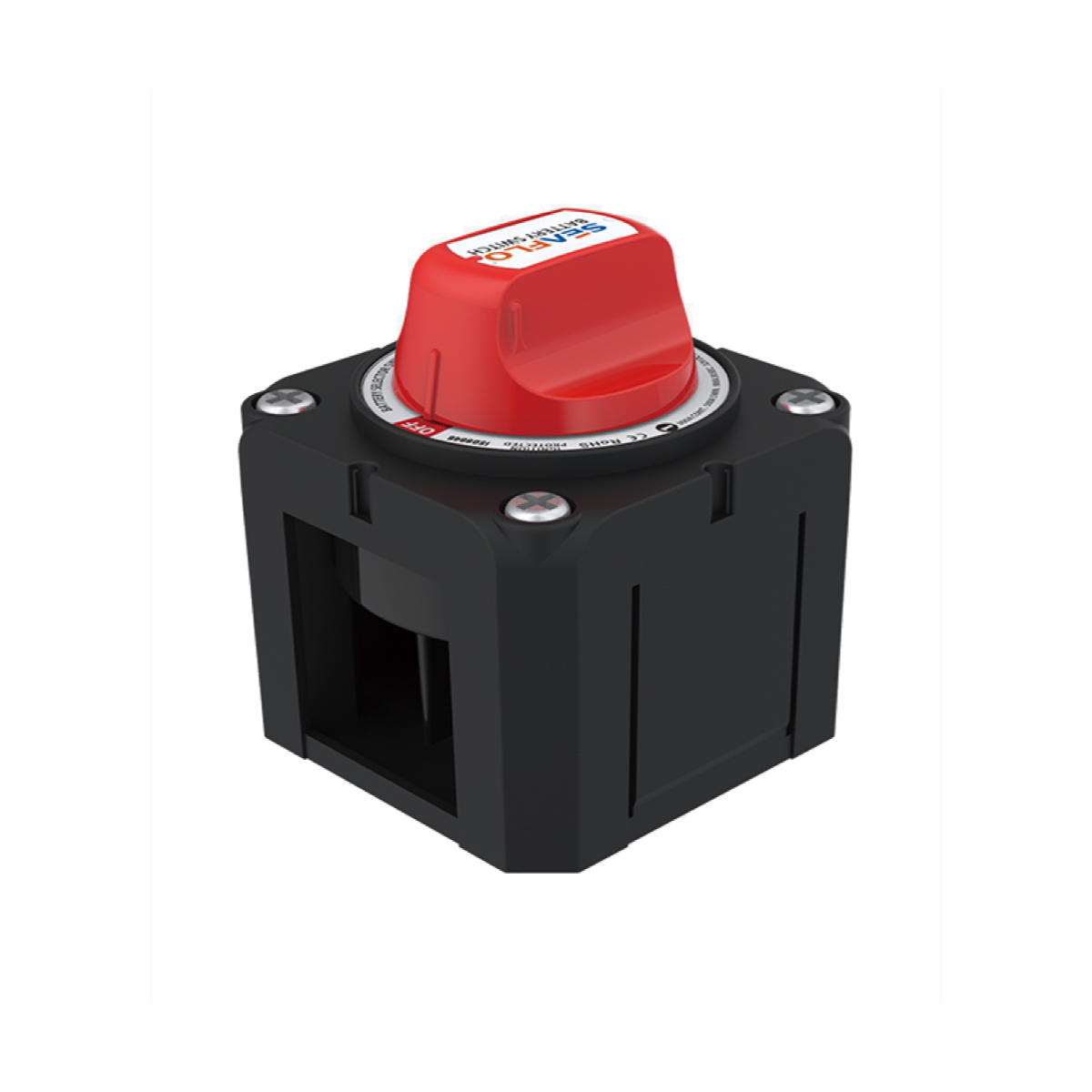
SFCBS-300 Series 300A Battery Disconnect Switches
SFCBS-300 Series manual rotary battery disconnect switches provide four verified single-circuit, selector and dual-circuit configurations with 300A continuous current and model-specific 32V or 48V DC maximum voltage.
300AContinuous current for all four models
32V / 48V DCModel-specific maximum voltage
4 ModelsON/OFF, selector and dual-circuit functions
M10 StudsTin-plated copper terminals
Product Overview
The SFCBS-300 Series is a family of manual rotary switches for isolating or selecting low-voltage battery circuits. Four documented models cover single-circuit ON/OFF, four-position battery selection, and two dual-circuit switching arrangements. Each model is rated for 300A continuous current, while voltage and timed current ratings remain model specific.
Key Features
- Four exact switch configurations in one documented family
- 300A continuous current for every model
- 32V DC and 48V DC model-specific maximum voltage
- Single-circuit, selector and dual-circuit switching logic
- Battery-combine function on selected models
- M10 tin-plated copper terminal studs
- Surface or panel mounting
Available Models
Select by circuit architecture, switch positions, battery-combine requirement, maximum DC voltage and timed current requirements.
| Model | Function | Positions | Battery Combine | Max Voltage | Continuous | Intermittent | Cranking |
|---|---|---|---|---|---|---|---|
| SFCBS-300-202 | Single-circuit ON/OFF | 2 | No | 48V DC | 300A | 500A / 5 min | 900A / 30 sec |
| SFCBS-300-402 | Four-position battery selector | 4 | Yes | 32V DC | 300A | 500A / 5 min | 900A / 30 sec |
| SFCBS-300-203 | Dual-circuit, two-position | 2 | No | 32V DC | 300A | 450A / 5 min | 675A / 30 sec |
| SFCBS-300-301 | Dual-circuit, three-position | 3 | Yes | 32V DC | 300A | 450A / 5 min | 675A / 30 sec |
Technical Specifications
| Series | SFCBS-300 |
|---|---|
| Product Type | Manual rotary battery disconnect and selector switch |
| Continuous Current | 300A for all four models |
| Maximum DC Voltage | 32V DC or 48V DC, model specific |
| Intermittent Current | 450A or 500A for 5 minutes, model specific |
| Cranking Current | 675A or 900A for 30 seconds, model specific |
| Terminal Studs | 3/8-16 x 7/8 in (M10 x 22 mm) |
| Terminal Material | Tin-plated copper |
| Maximum Terminal Torque | 13.56 N m (120 in-lb) |
| Mounting | Surface or panel mounting |
| Supplier-Listed Enclosure Rating | IP66 |
Intermittent and cranking ratings are timed current definitions, not continuous or breaking-current ratings. Breaking current is not specified in the available evidence.
Applications
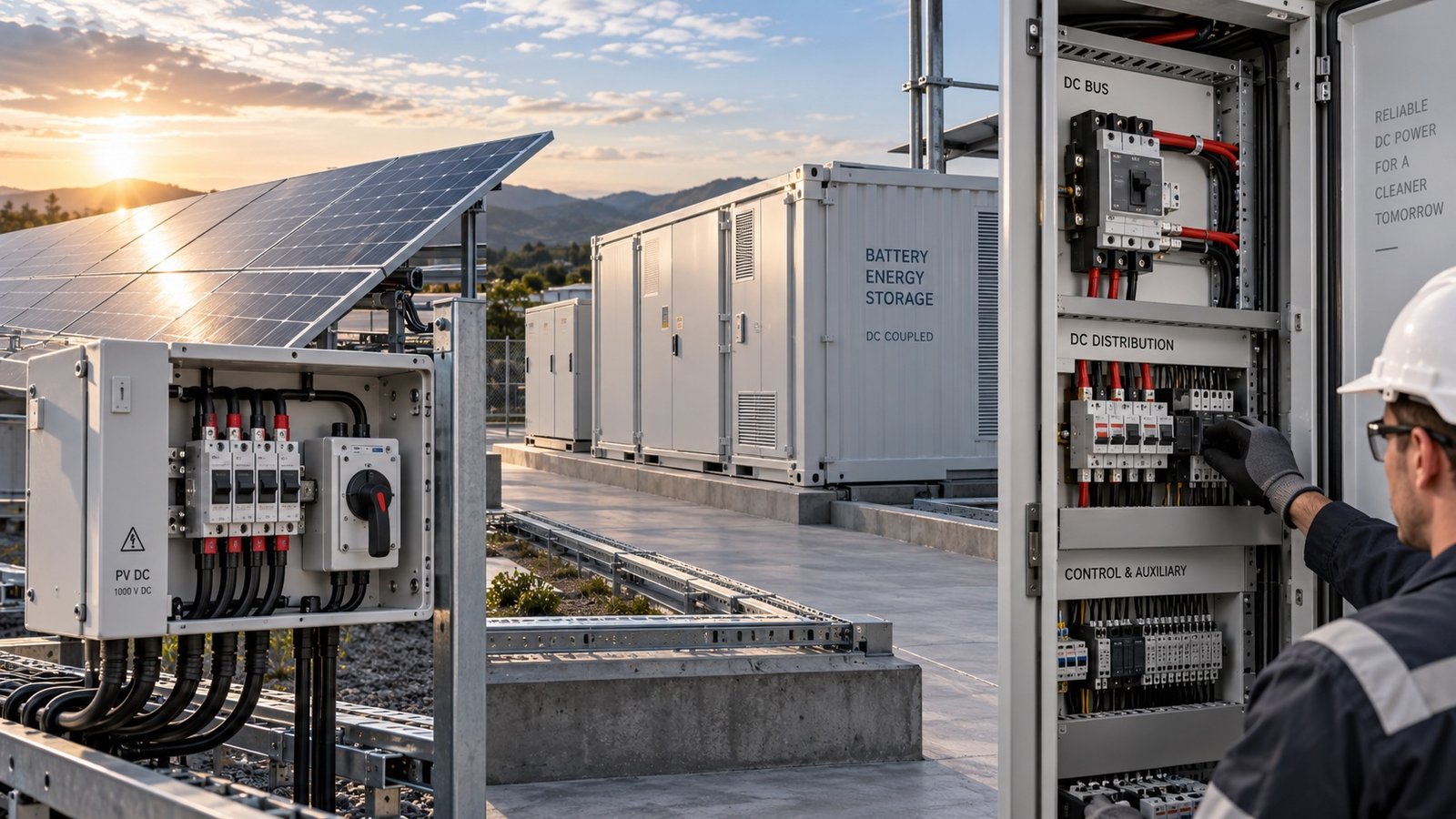
The supporting image illustrates a low-voltage battery and DC distribution environment and does not show an installed SFCBS-300 switch.
Vehicle and Mobile Equipment
Manual battery-circuit isolation in compatible low-voltage vehicle and mobile-equipment electrical systems.
Auxiliary DC Power Systems
Single- or dual-battery selection and isolation where the chosen switch function and ratings match the circuit.
Low-Voltage Electrical Equipment
Manual disconnection of battery-fed equipment for shutdown, service or storage procedures.
Information to Confirm for Selection
- Required SFCBS-300 model
- Maximum DC system voltage
- Single-circuit, selector or dual-circuit function
- Battery-combine requirement
- Continuous and timed current requirements
- Terminal and cable details
- Quantity and application
FAQ
Are all SFCBS-300 models rated for the same voltage?
No. SFCBS-300-202 is listed at 48V DC maximum; the other three models are listed at 32V DC maximum.
Is 900A a continuous-current rating?
No. The 900A value is a 30-second cranking rating on two models. Continuous current is 300A for all four models.
Which models provide battery-combine switching?
SFCBS-300-402 and SFCBS-300-301 are documented with a battery-combine function.
Does this product replace a DC circuit breaker?
No. These are manual battery disconnect and selector switches. Circuit protection must be selected independently for the electrical system.
Related Products
Request a Quote
Provide the required model, maximum DC voltage, circuit/position function, continuous-current requirement, terminal/cable details, quantity and application.