
Semiconductor Fuses for High-Speed Protection · Technical Explainer
Semiconductor Fuse RFQ: Class, Voltage, I²t and Mounting Evidence
A semiconductor-fuse RFQ is not complete when it asks for “a fast 100 A fuse.” The supplier still needs to know the protected device, circuit position, operating and fault conditions, voltage type, required utilization category, energy limits and mounting interface. Without that context, an offer may match a familiar catalogue headline while failing the actual engineering duty. The purpose of a good RFQ is to expose those unknowns early, not to turn a sourcing team into the circuit designer.

RITOKS publishes the RS95 aR semiconductor-fuse family та semiconductor-fuse category. The product page gives family-level bodies and model-dependent ratings. It is not a universal coordination schedule for SCRs, rectifiers or drives. This guide shows which documents to request so that a qualified engineer can compare an exact offer with the intended equipment duty.
State the Protected Equipment and Circuit Function
Name the machine, converter or cabinet, its original equipment model and the component the fuse is expected to protect. A fuse at an AC input can serve a different role from a fuse in a semiconductor branch or DC link. Attach the relevant circuit drawing and mark the proposed fuse position. A photograph of an old fuse helps identify a part but cannot establish where the fuse sits in the electrical design.
Describe the fault objective. Is the fuse intended to limit energy seen by an SCR, protect a diode bridge, clear a feeder short circuit, or form part of a tested original-equipment protection combination? Different objectives can require different characteristics and supporting evidence. If the equipment maker already specifies an exact fuse, include its full code and revision. If this is a replacement, ask for an exact-part cross-reference rather than a generic “equivalent” description.
Keep product families separate. A semiconductor fuse offered for a documented AC SCR application should not be repurposed for an undocumented PV DC circuit. A rectifier module's normal output-current class is not the same as its fault withstand. The supplier needs the system context to know which questions remain open; a catalogue filter cannot infer it from one current number.
Identify Fuse Class and Breaking Range
Ask for the proposed fuse's utilization category and intended breaking range. Terms such as aR and gR are not decorative suffixes. They influence how the fuse is expected to behave across overload and short-circuit ranges. The IEC 60269-4:2024 standard defines supplementary requirements for fuse links used to protect semiconductor devices. It does not say that all products covered by the standard are substitutes for one another.
If an aR fuse is specified, ask what device or function covers lower-current overloads outside the fuse's intended range. The complete scheme may include upstream protective devices, equipment controls and thermal protections. A supplier's statement that a fuse is “high speed” should be followed by a model-specific data sheet, curves and application note. Marketing terminology alone does not reveal the breaking range or coordination behavior.
If the exact required class is not known, do not guess in the purchase description. State the intended protection function and the original equipment reference, then request the manufacturer's recommended class and supporting rationale. This keeps an open engineering decision visible instead of embedding an unverified class in every supplier quotation.
Specify Voltage and AC/DC Duty
Provide the nominal and maximum circuit voltage at the fuse position, including whether the application is AC or DC. For AC, include frequency and relevant phase information. For DC, describe the system and expected fault-source behavior as requested by the designer. The rated voltage printed on an AC fuse cannot simply be compared numerically with a DC circuit voltage. Interruption conditions differ, and the exact product must be documented for the required duty.
Опубліковані RS95 page describes 50 Hz AC applications with body-dependent voltage information. It does not document a blanket DC rating. If an RFQ asks for a DC-link fuse, the supplier must propose a part with explicit DC interruption data. The fact that its blades match an existing base is a mechanical observation, not an electrical approval.
Include prospective short-circuit current at the fuse position. Breaking capacity has to be sufficient for that fault level, but the design must also check the fuse's lower breaking range and its coordination with upstream devices. If no fault-current study is available, the RFQ should request help obtaining it and mark final selection pending. A high interrupting-rating headline cannot replace a circuit-specific study.
Request I²t and Peak Cut-Off Evidence
For semiconductor protection, ask for both pre-arcing and total-clearing I²t under stated test conditions and the peak let-through current. These are not interchangeable terms. Rockwell Automation's technical switchgear reference distinguishes melting from total energy through arc extinction. The buyer should specify which data the protected device's withstand comparison requires rather than comparing unmatched figures from separate brochures.
Request time-current curves and cut-off-current curves across the relevant prospective fault range. Ask what voltage, power factor or time basis applies to each curve. For the protected SCR or diode module, request its exact surge-current and I²t withstand data at the corresponding stated conditions. A nominal module current or the words “high-speed fuse” do not fill that gap.

The purchasing team can collect the curves and put them side by side, but it should not sign a coordination conclusion unless qualified to do so. A supplier who recommends a fuse for an exact machine should identify the document or calculation supporting the recommendation. If the supplier gives only an ampere value, ask for the missing curve and application evidence before ordering for a critical replacement.
| Поле «Запит на пропозицію» | Buyer supplies | Повернення від постачальника |
|---|---|---|
| Equipment and circuit position | Model, drawing, original part | Intended use statement |
| Operating and fault duty | Voltage, load, fault study | Rated voltage and breaking data |
| Device protection | Exact SCR/diode data | I²t and cut-off curves |
| Physical interface | Existing holder or busbar drawing | Fuse outline and mounting instructions |
| Approval status | Required review owner | Model-specific support documents |
Detail the Mechanical Interface
Include the installed fuse body's dimensions, blade or terminal form, mounting-hole arrangement and holder or busbar reference. A product photo cannot show all contact and clearance requirements. Ask for a dimensioned drawing for the exact proposed code. If the fuse sits in a separate holder, request the holder's electrical and thermal ratings and any manufacturer-approved pairing list.
Check enclosure and ambient conditions. High-current fuses dissipate heat, and the contact arrangement affects temperature rise. Ask for power-loss data, conductor and ventilation assumptions, and any mounting torque stated in the exact manufacturer's instructions. Do not specify a generic torque from a blog or copy one from a different body. A replacement that looks dimensionally compatible can still change thermal behavior.
If the equipment is an existing certified assembly, ask whether substituting the fuse or holder affects the equipment maker's documented configuration. Procurement should preserve the original part wherever possible or obtain a written engineering approval for changes. A reseller's catalog cross-reference is useful for screening, not a substitute for final assembly acceptance.
Ask for Exact Model and Revision Information
An RFQ should produce a full model code, not a family name alone. Request the manufacturer's data-sheet revision, dimensioned drawing revision and any accessory codes. The RS95 family includes several body variants and supplier-listed ranges. A quote for “RS95” without a body and specific rating is not enough to compare with an original fuse.
Where the supplier offers multiple choices, ask it to identify the assumptions behind each option. Perhaps one has the desired body but incomplete device coordination; another has appropriate curves but requires a new holder. A comparison table makes those differences visible. Do not mark a candidate “approved” because it is cheaper, available sooner or broadly described as equivalent.
Retain the requested evidence alongside the quotation. Engineering, maintenance and purchasing should work from the same revision and full part code. A clear record helps avoid a later substitution based on the abbreviated inventory name. This is especially important when a project has several similar cabinets with different circuit voltages or fuse locations.
Use a Two-Stage RFQ When Data Are Missing
Some buyers do not have all fault and device data at the first inquiry. In that case, send a preliminary RFQ for a shortlist, clearly marked as conditional. Ask the supplier which technical inputs it needs before final recommendation. The shortlist can cover available form factors, documented ratings and document availability without claiming that a candidate is coordinated.
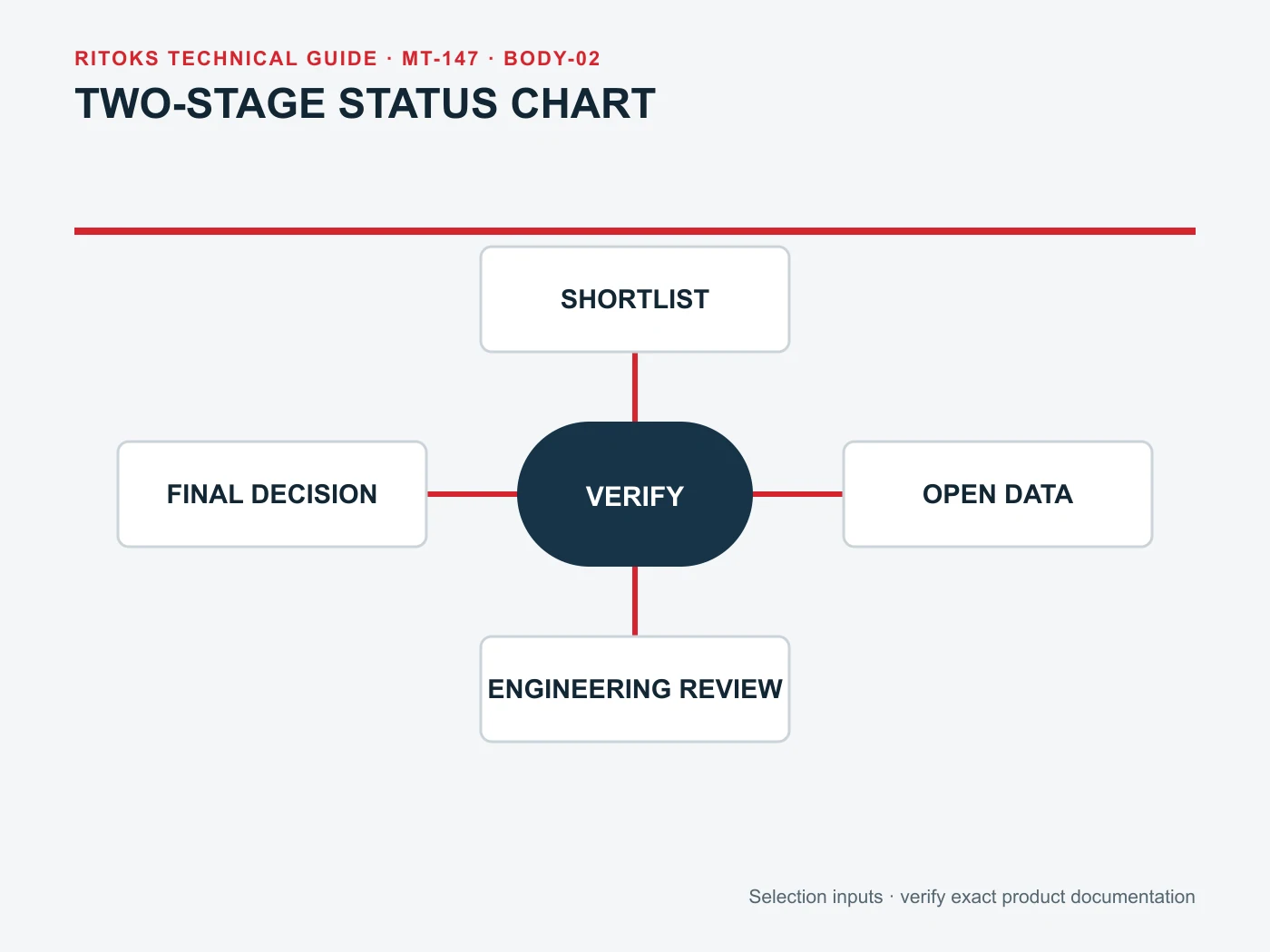
The second stage resolves the engineering questions. Add the fault study, exact semiconductor data, equipment drawing and any original manufacturer instruction. Ask the supplier or equipment maker to confirm the proposed code for the defined application. Mark unresolved inputs openly and hold final purchase or installation approval until the responsible engineer accepts the complete protection scheme.
This staged process is faster than repeatedly exchanging vague catalog links. It also separates sourcing from engineering authority. A buyer can identify a capable supplier and obtain a price while the technical review continues, provided the commercial paperwork does not misrepresent conditional options as approved replacements.
Поширені запитання
Is amperage enough for an initial quote?
It may be enough to start a conversation, but not to select a semiconductor fuse. Include the circuit, full original code, AC/DC voltage, class, fault level, device data and mounting interface as soon as available.
Why ask for both pre-arcing and total I²t?
They describe different intervals. A semiconductor withstand comparison may require total-clearing stress, and two data sheets should be compared only at compatible conditions.
Can the supplier approve a replacement from photographs?
Photographs can identify a body and markings, but not the complete duty or coordination. Exact technical documents and qualified review remain necessary.
Conclusion
A useful semiconductor-fuse RFQ turns an ambiguous product request into a traceable evidence packet. State the circuit and protected device, specify class and AC/DC voltage, obtain fault and energy data, and verify the mechanical and thermal interface. Keep candidate selection conditional until the equipment maker or qualified engineer confirms the exact application. This produces better supplier responses without inventing a protection claim.