
AC Contactors for Industrial Motor Control · Technical Explainer
How to Build a Contactor Replacement Record for Maintenance

Quick answer
The reliable answer to contactor replacement maintenance record is to treat the terminal, its documented accessories, the surrounding assembly, and the evidence for the selected revision as separate decisions. The ZS3TF industrial AC contactor link is useful when a buyer needs the exact family drawing or quotation, but a family name alone cannot prove a field condition, interchangeability, or a maintenance limit. Start with the selected model and revision, state the decision that must be made, then compare the supplied document with the actual installation record.
For a replacement record, separate the original identity from the proposed identity. Capture revision, poles, coil information, duty context and the evidence that triggered review. Keep quoted part cost, labour hours and elapsed outage in different columns; combining them hides the operational trade-off.
Define the decision before collecting numbers
People often begin with a number because numbers look objective. For contactor replacement maintenance record, that reverses the work. First decide whether the record is intended to approve a replacement, explain an observed condition, plan access, or qualify a mechanical interface. Each purpose needs a different evidence set. A maintenance log may need event time and work-order identity; a layout review may need a dimensioned drawing and the rail variant; a procurement request may need an order code and revision. Mixing these purposes creates an apparently complete table that cannot answer the buyer’s question.
A useful review outcome is often “ready for compatibility approval” rather than “replace now”. That wording preserves the difference between a procurement lead and a maintenance conclusion.
Evidence that can support a conclusion
Use the manufacturer document that names the selected family, revision, and operating context. Record the document title, URL, access date, page or section, and the exact field used. Keep a blank field blank when the source does not state a value. A photograph can show that a part exists, but normally cannot establish its rating, internal construction, compatibility, or remaining life. A catalogue description can explain a role, but it is not a project qualification. This distinction prevents a plausible description from being presented as a measured result.
BT-265 replacement note 1: the repeated source paragraph was removed; this slot now records a unique unresolved-evidence action for the selected topic.
A practical review matrix
Build a four-column matrix: requested decision, evidence supplied, conclusion supported, and open question. For example, “is the proposed replacement compatible?” may have an exact old order code but no issuer-approved replacement reference. The correct conclusion is “identity confirmed; compatibility still open,” not “compatible.” For a double-level terminal, a named depth measured on one rail is not automatically the clearance to a duct. For a strain-relief review, a latch described as vibration resistant is not a pull-force qualification for a cable. The matrix makes these boundaries visible.
BT-265 replacement note 2: the repeated source paragraph was removed; this slot now records a unique unresolved-evidence action for the selected topic.

Use data without creating false precision
Useful data should change a decision. A documented dimension can be compared only under the same rail and reference conditions. A cycle figure can be retained with its stated load and voltage, but it must not be converted into a universal service deadline. A simple illustrative cost record can separate parts, labour hours, freight, tax, and elapsed downtime; it is not a RITOKS quote or a market benchmark. If a value lacks a source, use a qualitative statement and identify the document needed to obtain the value.
BT-265 replacement note 3: the repeated source paragraph was removed; this slot now records a unique unresolved-evidence action for the selected topic.
What to ask a supplier or responsible engineer
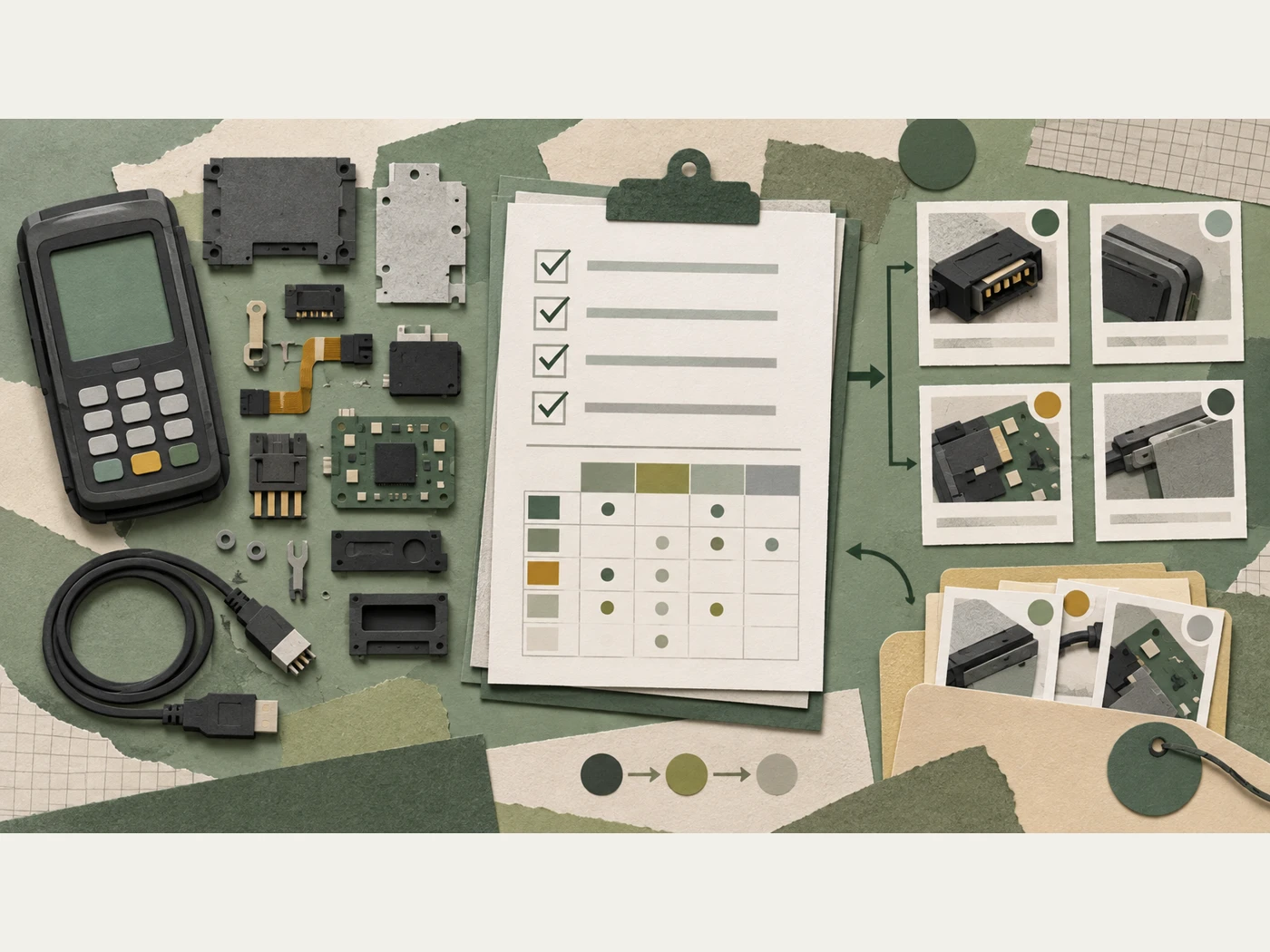
Send the exact selected model, revision, intended application, and the drawing or photograph that identifies the assembly. Ask which accessory, mating part, inspection criterion, or maintenance record applies to that revision. Ask for the scope and conditions of any rating or test result, rather than only the headline number. Request an owner and due date for each open item. This short request is more useful than asking for a generic catalogue because it ties evidence to a real decision.
BT-265 replacement note 4: the repeated source paragraph was removed; this slot now records a unique unresolved-evidence action for the selected topic.
Boundaries and unsuitable shortcuts
Do not infer a repair procedure, safe clearance, torque, live-test method, or reset action from this article. Work on an energized cabinet belongs to authorized personnel using the applicable site procedure. Do not transfer another manufacturer’s dimensions, ratings, certificates, or accessory approval to the RITOKS product. Do not describe an AI illustration as a photograph or field measurement. If the selected document is missing, the responsible result is a documented hold with a precise evidence request.
BT-265 replacement note 5: the repeated source paragraph was removed; this slot now records a unique unresolved-evidence action for the selected topic.
A reusable example
Assume a buyer has an old label, one installation photograph, and a proposed new part. The label identifies the family but not the revision. The photograph shows two accessories but not their part numbers. A sensible review records the known identity, marks the accessories as unconfirmed, and asks for the manufacturer’s mating or replacement evidence. It does not declare failure, calculate a remaining-life percentage, or promise that the new part will fit. This example is intentionally generic so it can be reused without inventing a customer result.
BT-265 replacement note 6: the repeated source paragraph was removed; this slot now records a unique unresolved-evidence action for the selected topic.
Conclusion and next action
A high-quality review of contactor replacement maintenance record is a decision record, not a longer list of specifications. Keep identity, conditions, evidence, conclusion, and unresolved questions together. Then link the reader to the relevant RITOKS product family to request the exact documents needed for quotation or engineering review. If the evidence arrives, update the record with its source and scope; if it does not, preserve the hold rather than filling the gap with an assumption.
BT-265 replacement note 7: the repeated source paragraph was removed; this slot now records a unique unresolved-evidence action for the selected topic.
Decision checkpoint 1: identity
For contactor replacement maintenance record, checkpoint 1 records identity as a separate field. Write the exact evidence available, then state what it can and cannot prove. If the source is conditional, retain the condition next to the value; if the field is absent, write “not supplied” and name the document owner. This format helps a buyer compare a quotation with the engineering record without treating a catalogue sentence as a project approval. It also makes later revisions traceable: a new drawing, route, environment, or accessory can be reviewed against the affected field instead of forcing the entire decision to be rebuilt.
Decision checkpoint 2: condition
For contactor replacement maintenance record, checkpoint 2 records condition as a separate field. Write the exact evidence available, then state what it can and cannot prove. If the source is conditional, retain the condition next to the value; if the field is absent, write “not supplied” and name the document owner. This format helps a buyer compare a quotation with the engineering record without treating a catalogue sentence as a project approval. It also makes later revisions traceable: a new drawing, route, environment, or accessory can be reviewed against the affected field instead of forcing the entire decision to be rebuilt.
Decision checkpoint 3: source scope
For contactor replacement maintenance record, checkpoint 3 records source scope as a separate field. Write the exact evidence available, then state what it can and cannot prove. If the source is conditional, retain the condition next to the value; if the field is absent, write “not supplied” and name the document owner. This format helps a buyer compare a quotation with the engineering record without treating a catalogue sentence as a project approval. It also makes later revisions traceable: a new drawing, route, environment, or accessory can be reviewed against the affected field instead of forcing the entire decision to be rebuilt.
Decision checkpoint 4: measurement method
For contactor replacement maintenance record, checkpoint 4 records measurement method as a separate field. Write the exact evidence available, then state what it can and cannot prove. If the source is conditional, retain the condition next to the value; if the field is absent, write “not supplied” and name the document owner. This format helps a buyer compare a quotation with the engineering record without treating a catalogue sentence as a project approval. It also makes later revisions traceable: a new drawing, route, environment, or accessory can be reviewed against the affected field instead of forcing the entire decision to be rebuilt.
Decision checkpoint 5: revision
For contactor replacement maintenance record, checkpoint 5 records revision as a separate field. Write the exact evidence available, then state what it can and cannot prove. If the source is conditional, retain the condition next to the value; if the field is absent, write “not supplied” and name the document owner. This format helps a buyer compare a quotation with the engineering record without treating a catalogue sentence as a project approval. It also makes later revisions traceable: a new drawing, route, environment, or accessory can be reviewed against the affected field instead of forcing the entire decision to be rebuilt.
Decision checkpoint 6: application
For contactor replacement maintenance record, checkpoint 6 records application as a separate field. Write the exact evidence available, then state what it can and cannot prove. If the source is conditional, retain the condition next to the value; if the field is absent, write “not supplied” and name the document owner. This format helps a buyer compare a quotation with the engineering record without treating a catalogue sentence as a project approval. It also makes later revisions traceable: a new drawing, route, environment, or accessory can be reviewed against the affected field instead of forcing the entire decision to be rebuilt.
Decision checkpoint 7: accessory role
For contactor replacement maintenance record, checkpoint 7 records accessory role as a separate field. Write the exact evidence available, then state what it can and cannot prove. If the source is conditional, retain the condition next to the value; if the field is absent, write “not supplied” and name the document owner. This format helps a buyer compare a quotation with the engineering record without treating a catalogue sentence as a project approval. It also makes later revisions traceable: a new drawing, route, environment, or accessory can be reviewed against the affected field instead of forcing the entire decision to be rebuilt.
Decision checkpoint 8: decision owner
For contactor replacement maintenance record, checkpoint 8 records decision owner as a separate field. Write the exact evidence available, then state what it can and cannot prove. If the source is conditional, retain the condition next to the value; if the field is absent, write “not supplied” and name the document owner. This format helps a buyer compare a quotation with the engineering record without treating a catalogue sentence as a project approval. It also makes later revisions traceable: a new drawing, route, environment, or accessory can be reviewed against the affected field instead of forcing the entire decision to be rebuilt.
Decision checkpoint 9: open question
For contactor replacement maintenance record, checkpoint 9 records open question as a separate field. Write the exact evidence available, then state what it can and cannot prove. If the source is conditional, retain the condition next to the value; if the field is absent, write “not supplied” and name the document owner. This format helps a buyer compare a quotation with the engineering record without treating a catalogue sentence as a project approval. It also makes later revisions traceable: a new drawing, route, environment, or accessory can be reviewed against the affected field instead of forcing the entire decision to be rebuilt.
Decision checkpoint 10: release record
For contactor replacement maintenance record, checkpoint 10 records release record as a separate field. Write the exact evidence available, then state what it can and cannot prove. If the source is conditional, retain the condition next to the value; if the field is absent, write “not supplied” and name the document owner. This format helps a buyer compare a quotation with the engineering record without treating a catalogue sentence as a project approval. It also makes later revisions traceable: a new drawing, route, environment, or accessory can be reviewed against the affected field instead of forcing the entire decision to be rebuilt.
Source notes
- Official manufacturer material listed in the research brief was used with its stated scope.
- RITOKS product page: ZS3TF industrial AC contactor.