
Rack Power Distribution · Comparison
125V 8-Outlet vs 250V 1U Rack PDU: RITOKS Model Comparison
RITOKS currently publishes two assembled rack PDU families with materially different configurations:
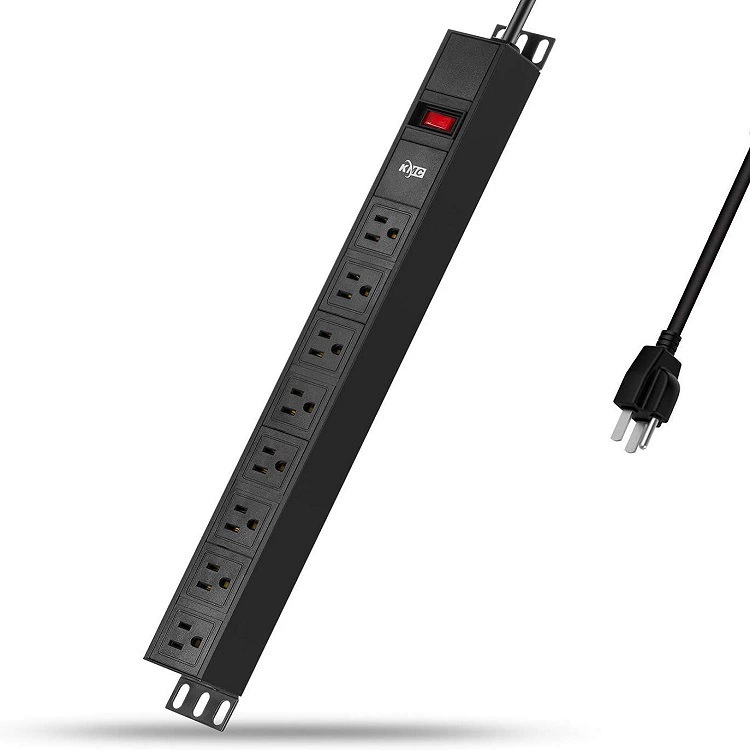
- RTS-PDU-US8-15A — AC125V, 15A, 1875W, eight grounded US-style three-slot outlets and a 1.8 m cable
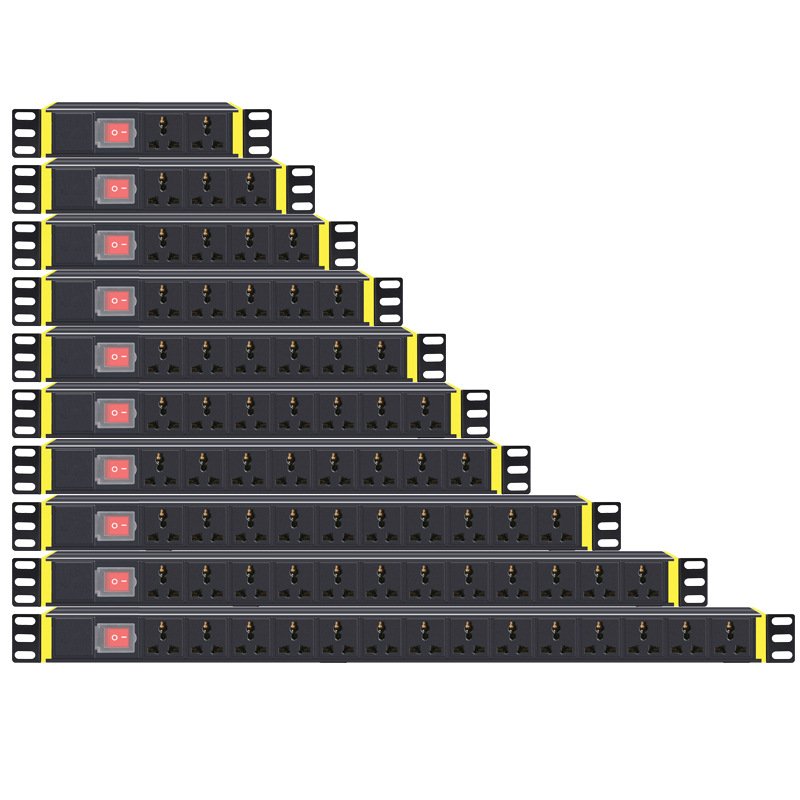
- RTS-PDU1U-10A — AC250V, 10A, 2500W, 1U format, multiple outlet-count variants and 2 m or no-cord configurations
These differences make the two families useful for a direct sourcing comparison.
But this is not a general “125V versus 250V” electrical-design guide.
The practical question is:
Which published RITOKS configuration more closely matches the requirements already defined for your project?
Neither family is universally better. The correct candidate depends on the full requirement, including voltage, current, outlet configuration, physical format, input connection and exact variant documentation.
Contents
Quick Comparison
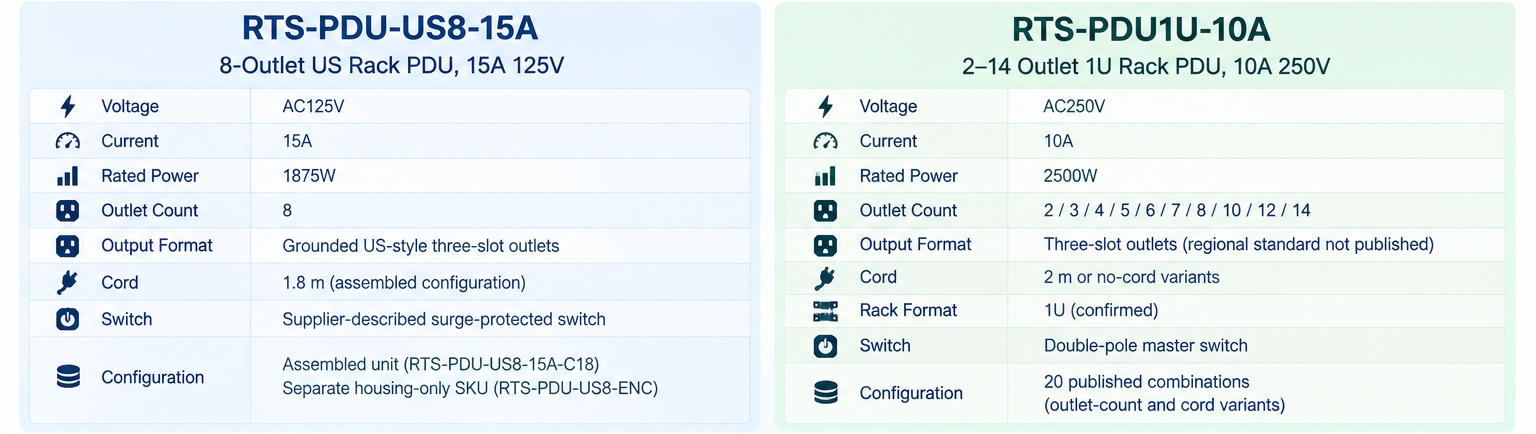
| Specification | RTS-PDU-US8-15A | RTS-PDU1U-10A |
|---|---|---|
| Product role | Eight-outlet assembled PDU plus separate housing-only SKU | Multi-variant 1U rack PDU family |
| Published voltage | AC125V | AC250V |
| Published current | 15A | 10A |
| Published rated power | 1875W | 2500W |
| Outlet count | 8 | 2 / 3 / 4 / 5 / 6 / 7 / 8 / 10 / 12 / 14 |
| Output description | Grounded US-style three-slot outlets | Three-slot outlets; regional standard not published |
| Input plug | Not published | Not published |
| Cord | 1.8 m assembled configuration | 2 m or no-cord variants |
| Rack format | Not published | 1U confirmed |
| Switch | Supplier-described surge-protected switch | Double-pole master switch |
| Surge | Exact rating not published | Not published |
| Metering / monitoring | Not published | Not published |
| Dimensions | Not published | Not published |
| Documentation / confirmation gaps | Confirm exact plug, rack format, outlet designation and surge documentation | Confirm exact plug, socket standard, dimensions and variant documentation |
The table compares published product data only. It does not establish exact plug compatibility, regional socket standards, installation suitability or certification status.
1. Product 257: RTS-PDU-US8-15A
RTS-PDU-US8-15A is the more fixed of the two assembled configurations reviewed here.
Published data confirms:
- AC125V
- 15A
- 1875W
- eight grounded US-style three-slot outlets
- 1.8 m cable
- supplier-described surge-protected switch
The product family also includes a separate housing-only SKU, RTS-PDU-US8-ENC.
That distinction is important.
The housing-only configuration should not be described as a complete no-cord electrical PDU. It is a different product configuration from the assembled RTS-PDU-US8-15A-C18.
What Still Needs Confirmation
The current published information does not confirm:
- exact input plug
- exact NEMA outlet designation
- rack dimensions
- 1U or 0U format
- horizontal or vertical orientation
- mounting hardware
- exact surge rating
- breaker or fuse arrangement
- certification
- metering or monitoring
These should remain exact-model or project-verification questions.
2. Product 259: RTS-PDU1U-10A
RTS-PDU1U-10A is published as a multi-variant 1U rack PDU family.
Confirmed data includes:
- AC250V
- 10A
- 2500W
- 1U
- three-slot outlets
- double-pole master switch
- 2 m cord and no-cord variants
- multiple outlet-count options
Published outlet counts include:
- 2
- 3
- 4
- 5
- 6
- 7
- 8
- 10
- 12
- 14
The reviewed data identifies twenty published combinations across the outlet-count and cord arrangements.
What “Configurable” Means Here
For this article, configurable should be interpreted narrowly.
It refers to confirmed variation in:
- outlet count
- cord / no-cord arrangement
It does not establish:
- configurable voltage
- configurable regional socket standard
- arbitrary plug selection
- metering
- monitoring
- remote switching
- intelligent PDU functionality
Those capabilities are not confirmed in the current product evidence.
3. Compare Published Electrical Ratings, Not Regions
125V vs 250V
The clearest electrical difference is the published voltage:
- RTS-PDU-US8-15A: AC125V
- RTS-PDU1U-10A: AC250V
Those values are safe to compare directly.
What is not safe is turning them into broad geographic rules.
This article should not conclude:
- 125V is always for US data centers
- 250V is always for international racks
- 250V is automatically preferable
- higher voltage means a better PDU
The correct sourcing process starts with the voltage requirement already defined for the project.
Then the buyer compares that requirement with the published product rating.
For the broader selection process, see the Rack PDU Selection Guide.
Current Ratings Also Differ
The two families have different published current ratings:
- RTS-PDU-US8-15A — 15A
- RTS-PDU1U-10A — 10A
Again, this is a product specification difference, not a quality ranking.
A higher ampere value should not be interpreted as:
- a better product
- a more suitable rack PDU
- evidence that it can support more servers
- proof of a particular upstream-circuit requirement
The project’s electrical requirement must already be known or separately engineered.
Rated Power: 1875W vs 2500W
Published rated power also differs:
- RTS-PDU-US8-15A — 1875W
- RTS-PDU1U-10A — 2500W
This is safe to report as model data.
It is not safe to conclude that RTS-PDU1U-10A is universally “more powerful” or the better choice simply because 2500W is numerically higher.
Voltage, current and rated power should be read together with the rest of the product specification.
Suitability cannot be ranked from one number alone.
4. Outlet Count, Connections and Physical Format
Fixed 8 Outlets vs Multiple Outlet-Count Variants
Outlet configuration is another important difference.
RTS-PDU-US8-15A
Published assembled configuration:
- 8 outlets
RTS-PDU1U-10A
Published family options:
- 2–14 outlets across ten listed outlet counts
This means RTS-PDU1U-10A currently provides more published outlet-count choices.
That is a useful sourcing distinction.
It does not mean:
- more outlets are better
- more outlets mean higher electrical capacity
- more outlets mean higher rack density
- the 14-outlet version supports a specific number of servers
Outlet count and electrical capacity are separate specifications.
Output Socket Descriptions Are Not Equally Specific
RTS-PDU-US8-15A publishes:
- eight grounded US-style three-slot outlets
RTS-PDU1U-10A publishes:
- three-slot outlets
But the evidence stops there.
For Product 257:
- exact NEMA designation is not published
For Product 259:
- exact regional outlet standard is not published
Neither product currently publishes confirmed C13/C19 output support.
Therefore, this article should compare only the published output descriptions.
If exact receptacle compatibility matters, confirm it before ordering.
Input Plug Comparison Is Not Yet Possible
One thing buyers may expect from a comparison article is an input-plug comparison.
Current evidence does not support one.
For both products:
- Exact input plug: NOT PUBLISHED
That means we should not infer the input from:
- output socket appearance
- voltage
- cord length
- product photography
- regional naming
A buyer should include the required input connection directly in the RFQ.
For help preparing those requirements, see the Rack PDU RFQ Checklist.
Cord Arrangements Differ
The cord configurations are also different.
RTS-PDU-US8-15A
The assembled configuration publishes:
- 1.8 m cord
Its separate housing-only SKU should not be treated as a no-cord electrical PDU.
RTS-PDU1U-10A
Published variants include:
- 2 m cord
- no-cord electrical variants
This is one area where the Product 259 family has confirmed configuration variation.
If cord arrangement matters to the project, specify it directly in the inquiry.
Only Product 259 Has Confirmed 1U Format
RTS-PDU1U-10A explicitly publishes:
- 1U
That makes 1U a safe comparison point.
RTS-PDU-US8-15A does not currently publish:
- exact rack-unit height
- 1U designation
- 0U designation
- horizontal orientation
- vertical orientation
So the correct comparison is:
Product 259 has a confirmed 1U format; Product 257’s exact rack format remains unconfirmed.
It would be inaccurate to turn this article into a 1U-versus-non-1U installation guide.
5. Switch, Surge and Management Evidence
The Switch Descriptions Are Different
Both product pages include switch-related wording, but they should not be treated as identical functions.
RTS-PDU-US8-15A
Published wording:
- supplier-described surge-protected switch
Detailed surge-performance data is not currently published.
RTS-PDU1U-10A
Published wording:
- double-pole master switch
These descriptions can be compared as product facts.
But neither product should be classified as an intelligent “switched PDU” based on this information.
Current product pages do not confirm:
- remote outlet control
- network switching
- intelligent outlet management
- SNMP
- remote monitoring
Surge Protection Should Not Be Used as a Superiority Claim
Product 257 includes surge-related wording.
Product 259 does not currently publish surge protection.
That does not support a conclusion such as:
- “Product 257 is safer.”
For Product 257, the exact surge rating and test evidence remain pending.
So surge protection should be treated as a documentation question, not a simple ranking feature.
Neither Product Publishes Metering or Remote Monitoring
For both reviewed families, current published evidence does not confirm:
- metering
- remote monitoring
- remotely switched outlets
- remote control
- communications interface
Therefore, this article should not compare them as:
- basic vs smart
- basic vs metered
- switched vs unswitched
- managed vs unmanaged
Those would be different product-category comparisons requiring different evidence.
Which Published Configuration Matches Your Requirement?
Rather than asking which PDU is “better,” compare your project requirement against the published configuration.
RTS-PDU-US8-15A May Be a Candidate When
Your project requirement matches its confirmed:
- AC125V
- 15A
- 1875W
- eight-outlet assembled configuration
- 1.8 m cord
Before ordering, confirm:
- exact input plug
- rack format
- exact outlet standard
- surge documentation
- other required technical documents
RTS-PDU1U-10A May Be a Candidate When
Your project requires a published:
- AC250V
- 10A
- 2500W
- 1U family
- one of the available 2–14 outlet-count variants
- 2 m or no-cord arrangement
Before ordering, confirm:
- exact input connection
- exact output socket standard
- dimensions or mounting information where required
- documentation for the exact variant
Neither family is universally better.
The decision depends on matching the complete project requirement with the exact product variant.
What Still Needs Confirmation on Both Families?
Despite the confirmed differences, several buyer questions remain open.
Input Plug
Not published for either family.
Exact Socket Standard
Not fully confirmed for either family.
Dimensions
Not published.
Certification / Compliance Evidence
Not confirmed.
Metering or Monitoring
Not published.
Exact Mechanical Installation Details
Product 259 confirms 1U, but detailed mounting information remains pending. Product 257’s rack format itself is still unconfirmed.
These missing fields are not reasons to invent an answer.
They are reasons to request exact documentation.
Common Comparison Mistakes
Assuming 125V Means “US Only”
Product 257 uses US-style outlet wording, but this article should not create a universal regional voltage rule.
Assuming 250V Means “International”
The same problem applies in the other direction.
Product 259 publishes 250V. That does not define every appropriate country or electrical system.
Calling Product 259 More Powerful
2500W is a published rating, not a universal superiority claim.
Choosing From Outlet Count Alone
More outlet-count choices do not automatically mean greater electrical capacity or better suitability.
Assuming Product 257 Is 1U
Its current product data does not confirm that.
Assuming Product 259 Is Horizontal
1U is published; horizontal orientation is not.
Assuming Both Have Known Input Plugs
Neither exact input plug is currently published.
Comparing C13 vs C19
The current evidence for Products 257 and 259 does not support that comparison.
Treating a Master Switch as Remote Switching
Product 259’s double-pole master switch is not evidence of intelligent outlet-level control.
What Should Buyers Include in the RFQ?
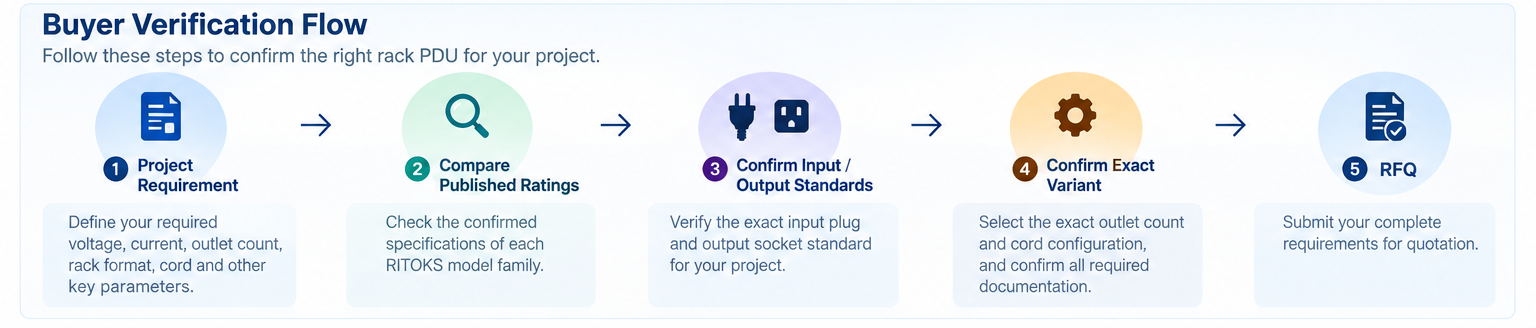
When comparing these two families, provide:
- required input voltage
- required current
- required power rating, if specified
- required outlet count
- required output socket format
- required input plug or connector
- required rack format
- cord requirement
- quantity
- required technical documentation
- destination
- delivery requirement
If one of these requirements is still unknown, mark it as pending rather than guessing.
The Rack PDU RFQ Checklist provides a more complete procurement template.
Frequently Asked Questions
What Is the Main Difference Between These Two RITOKS Rack PDUs?
RTS-PDU-US8-15A publishes a 125V / 15A / 1875W eight-outlet assembled configuration. RTS-PDU1U-10A publishes a 250V / 10A / 2500W 1U family with multiple outlet-count and cord variants.
Is the 250V PDU Better Than the 125V PDU?
No universal conclusion can be made. They are different published configurations intended to be matched against different project requirements.
Does the 250V Model Have More Outlet Options?
Yes. RTS-PDU1U-10A publishes ten outlet-count options ranging from 2 to 14, while the reviewed assembled RTS-PDU-US8-15A configuration has eight outlets.
Is RTS-PDU-US8-15A a 1U PDU?
Its current published rack format is not confirmed.
Is RTS-PDU1U-10A Horizontal?
The product publishes a 1U format, but current evidence does not explicitly confirm horizontal orientation.
Do Either of These Models Use C13 or C19 Outputs?
Current product evidence does not confirm C13 or C19 outputs for these two assembled families.
Do Either Models Support Remote Monitoring or Switching?
Current published product data does not confirm metering, remote monitoring or intelligent outlet switching for either family. Buyers who require those different functions can separately compare the Smart Rack PDUs, Metered Rack PDUs and ATS Rack PDUs categories without treating them as equivalent to the two basic families reviewed here.
Which Input Plug Do They Use?
The exact input plug is not currently published for either family and should be confirmed before ordering.
Need Help Comparing These Two Rack PDU Families?
Start with the requirements already defined by your project.
If your specification is close to the published 125V / 15A / 8-outlet configuration, review RTS-PDU-US8-15A.
If it is closer to a 250V / 10A / 1U configuration with a specific published outlet-count and cord variant, review RTS-PDU1U-10A.
Then confirm the missing connection, mechanical and documentation details before ordering.
View Rack Power Distribution →
View Rack PDUs & Socket Modules →
Read the Rack PDU Selection Guide →
Related Resources
Continue exploring Rack Power Distribution

Rack PDU RFQ Checklist: What Buyers Should Specify
Rack PDU RFQ Checklist: What Buyers Should Specify A useful rack PDU RFQ should do more than say:…
Read guide
Rack PDU Selection Guide: Outlet Count, Voltage, Plug and Socket Format
Rack PDU Selection Guide: Outlet Count, Voltage, Plug and Socket Format Selecting a rack power distribution unit involves…
Read guide