
Rack Power Distribution · Selection Guide
Rack PDU Selection Guide: Outlet Count, Voltage, Plug and Socket Format
Selecting a rack power distribution unit involves more than counting outlets.

A buyer may need to compare:
- input voltage
- rated current
- input plug or connector
- output socket format
- outlet count
- rack format
- cord or input arrangement
- physical constraints
- required documentation
These parameters describe different parts of the PDU specification and should not be treated as interchangeable.
Raritan’s official rack PDU selection guidance similarly identifies factors such as voltage, current, input plug type, number and type of outlets, rack units and physical dimensions as important configuration variables.
The key sourcing principle is simple:
Start with the requirements already defined for the rack or project, then compare those requirements with the exact published PDU configuration.
Do not assume that a supplier can determine the correct electrical design from server count or rack size alone.
Contents
Rack PDU Selection Checklist
| Parameter | What the Buyer Should Specify | Why It Matters |
|---|---|---|
| Voltage | Required input voltage | PDU families may be built for different voltage ratings |
| Current | Required rated current | Current capability differs by model |
| Input plug | Required plug or connector | Determines how the PDU connects to the upstream supply |
| Output socket | Required outlet/receptacle format | Must match connected equipment |
| Outlet count | Number of required outputs | Product families differ significantly in outlet quantity |
| Rack format | 1U or other required format | Affects physical installation |
| Cord / input arrangement | Required cable length, cord or no-cord format | May vary by product configuration |
| Documentation | Required drawings, specifications or evidence | Availability depends on exact model and variant |

Not every RFQ needs every item, but leaving out basic configuration data can make product matching much slower.
1. Start With the Required Voltage
Voltage is one of the first parameters to confirm.
Current RITOKS rack-power products include different published voltage configurations.
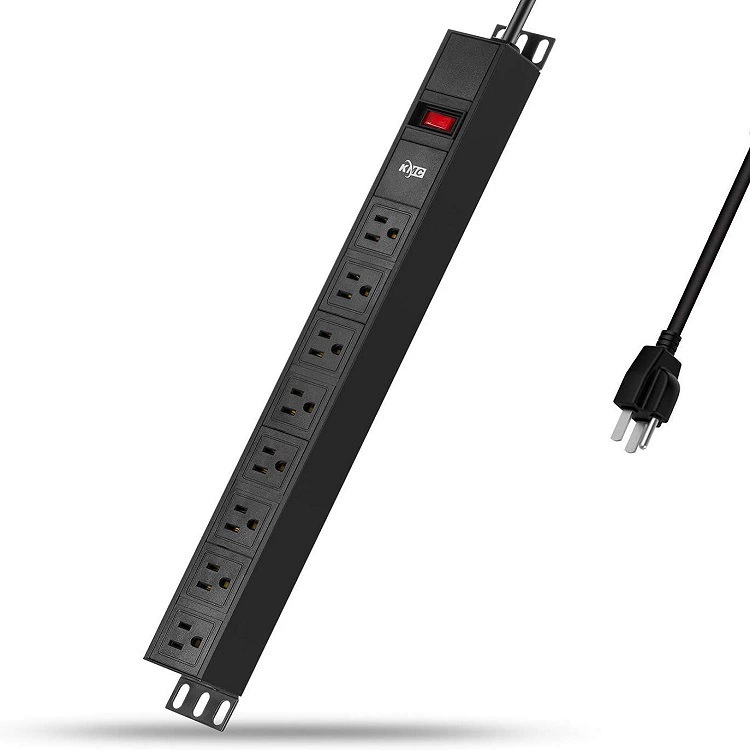
RTS-PDU-US8-15A
The assembled configuration currently publishes:
- AC 125V
- 15A
- 1875W
- eight grounded US-style three-slot outlets
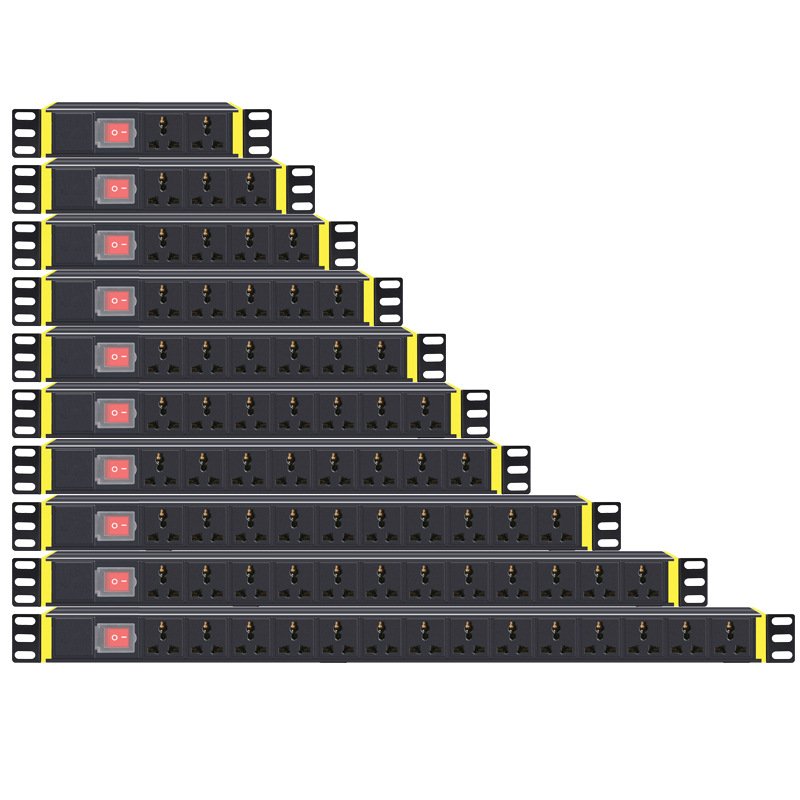
RTS-PDU1U-10A
The current published configuration lists:
- AC 250V
- 10A
- 2500W
- 1U rack format
- multiple outlet-count options
These values describe two different product families; see the 125V 8-outlet and 250V 1U rack PDU comparison for a model-specific side-by-side view.
They should not be converted into universal rules such as:
- 125V is always the correct choice for US racks
- 250V is always the correct choice for international racks
The buyer should provide the voltage required by the actual project.
A useful inquiry field is:
Required input voltage: [project voltage]
2. Confirm the Rated Current
Voltage and current should be checked separately.
A PDU may have the correct voltage but still not match the required current specification.
Current published RITOKS examples include:
- RTS-PDU-US8-15A — 15A
- RTS-PDU1U-10A — 10A
Product 253, RTS-PDUSM, includes individual modular components with designations such as 10A and 16A, but it is a component family rather than a complete assembled PDU.
That distinction matters.
A 16A component option should not automatically be interpreted as proof of a complete 16A rack PDU configuration.
For sourcing, provide:
Required current: [project requirement]
rather than asking the supplier to calculate the PDU current from the number of servers alone.
3. Separate Input Plug From Output Socket
One of the easiest PDU sourcing mistakes is mixing up the input connection and the output receptacles.
They perform different roles.
Input Plug or Connector
This is how the PDU receives power from the upstream supply.
Output Socket or Receptacle
These are the connections used by the equipment powered from the PDU.
The same PDU specification may therefore involve two different connector questions:
What does the PDU plug into?
and:
What plugs into the PDU?
Raritan’s product-selection tools treat plug type and outlet configuration as separate PDU parameters, which reflects this distinction.
4. Check the Input Plug or Connector Requirement
Current RITOKS evidence is stronger for modular input-component options than for the two assembled PDU families.
RTS-PDUSM currently lists input or connector options including:
- China 10A / 16A
- European
- UK
- US
- Australian
- Italian
- IEC C13
- IEC C14
- IEC C19
- IEC C20
- 16A / 32A industrial options
However, these are part of a modular component family.
They do not prove that every option is available in every assembled PDU combination.
For RTS-PDU-US8-15A and RTS-PDU1U-10A, the exact input plug is not currently published.
So a buyer should specify:
Required input plug / connector: [type]
and request exact variant confirmation.
5. Choose the Required Output Socket Format
Output receptacles need to match the equipment being connected.
The broader rack-PDU market uses several output formats, including IEC 60320 C13 and C19 receptacles. Official Schneider Electric rack PDU product documentation, for example, explicitly identifies products with C13 and C19 output receptacles.
IEC 60320-1 provides the general standard framework for appliance couplers used to connect electrical equipment to the mains supply.
For RITOKS, however, the current evidence must remain more limited.
RTS-PDUSM
Published component options include:
- universal outlet modules
- China-standard modules
- US-style modules
- C13 modules
- C19 modules
- C13 slide-lock modules
- SPD modules
These are modular socket components.
They should not be described as proof that RITOKS currently offers a complete assembled C13/C19 rack PDU.
RTS-PDU-US8-15A
Current assembled output configuration:
- eight grounded US-style three-slot outlets
Exact NEMA designation is not published.
RTS-PDU1U-10A
Current assembled configuration publishes:
- three-slot outlets
- multiple outlet-count variants
The exact regional outlet standard is not currently confirmed.
6. Decide How Many Outlets Are Needed
Outlet count is one of the most visible differences between rack PDU configurations.
Current RITOKS published options include:
- RTS-PDU-US8-15A
- 8 outlets
- RTS-PDU1U-10A
Available published counts include:
- 2
- 3
- 4
- 5
- 6
- 7
- 8
- 10
- 12
- 14
This gives buyers a meaningful range to compare.
But higher outlet count is not automatically better.
Outlet count does not tell you:
- required electrical capacity
- upstream circuit capability
- rack power budget
- whether every outlet will be used simultaneously
- future power demand
Those belong to the broader rack electrical design.
For an RFQ, the safer field is simply:
Required outlet count: [number]
7. Outlet Count and Electrical Capacity Are Different Questions
A 14-outlet PDU is not automatically a higher-capacity PDU than an 8-outlet unit.
Outlet count describes the number of connection points.
Voltage, current and rated power describe different electrical characteristics.
For example, the current RITOKS data includes:
- RTS-PDU-US8-15A — 8 outlets, 125V, 15A, 1875W
- RTS-PDU1U-10A — up to 14 outlets, 250V, 10A, 2500W
These specifications should be read together rather than ranking the products by outlet count alone.
The final rack load requirement must come from the actual electrical design.
8. Check Rack Format and Physical Constraints
Rack installation format affects how the PDU fits into the cabinet.
The wider rack PDU market includes both horizontal rack-unit formats and vertical zero-U designs. Eaton describes common formats including 1U horizontal and 0U vertical PDUs, while also noting that mounting choice depends on available rack space and deployment needs.
For current RITOKS products:
RTS-PDU1U-10A
1U is confirmed.
RTS-PDU-US8-15A
Rack orientation and exact format are currently not confirmed.
RTS-PDUSM
This is a component family, so rack format is not published.
RITOKS currently does not have a confirmed 0U PDU in the reviewed product set.
Therefore, do not interpret general industry 0U terminology as evidence of a RITOKS 0U product.
9. Do Not Assume “1U” Automatically Means Every Physical Detail
The 1U designation provides useful rack-height information, but a buyer may still need more data.
Depending on the project, ask for:
- exact overall dimensions
- mounting-hole arrangement
- rack ears or mounting hardware
- terminal position
- cable-entry direction
- available clearance
For RTS-PDU1U-10A, 1U is published, but exact horizontal/vertical wording, mounting drawing and detailed dimensions are not currently published.
So the article should not turn “1U” into a complete mechanical specification.
10. Check the Cable or Input Arrangement
Cord configuration can also differ between PDU variants.
Current RITOKS evidence includes:
- RTS-PDU-US8-15A
- 1.8 m cable on the assembled configuration
- RTS-PDU1U-10A
- 2 m cord option
- no-cord variant
That makes cable configuration a useful RFQ field.
A buyer can specify:
Cord requirement: [length / no-cord / connector requirement]
Exact plug compatibility still needs confirmation where the product page does not publish the input plug.
11. Understand Optional Features Without Assuming Them
The wider rack PDU market includes multiple technology levels.
Eaton and Raritan official documentation distinguish categories such as basic, metered, switched or managed rack PDUs, with advanced products adding functions such as metering, monitoring or remote outlet control.
That industry terminology is useful when preparing an RFQ.
But it should not be confused with current RITOKS product availability.
For the reviewed RITOKS products:
- Metered PDU: Not confirmed
- Remote-switched outlet PDU: Not confirmed
- Monitored PDU: Not confirmed
- Smart/network PDU: Not confirmed
- SNMP: Not confirmed
- Environmental monitoring: Not confirmed
- ATS: Not confirmed
RTS-PDU1U-10A does publish a double-pole master switch.
That is not the same thing as an intelligent switched PDU with remotely controlled individual outlets.
12. Be Careful With Surge-Protection Language
Two current product families include limited surge-related information.
RTS-PDU-US8-15A
The product is supplier-described as having a surge-protected switch.
However, detailed surge rating and test evidence are still pending.
RTS-PDUSM
A modular SPD option is listed.
Again, exact electrical and surge parameters are not currently published.
Therefore, buyers can ask:
Surge-protection requirement: [project requirement]
but the supplier should confirm exact performance documentation before any technical claim is made.
Current RITOKS Rack Power Families
| Product Family | Published Role | Key Confirmed Data | Important Limitations |
|---|---|---|---|
| RTS-PDUSM | Modular PDU socket/input component family | Regional socket modules, C13/C19 options, multiple input/connector options | Not an assembled PDU; exact voltage, rack format and assembled combinations not published |
| RTS-PDU-US8-15A | Assembled 8-outlet PDU | 125V, 15A, 1875W, 8 US-style outlets, 1.8m cable | Exact input plug, NEMA designation, rack format and verified surge parameters not published |
| RTS-PDU1U-10A | Configurable-outlet-count 1U PDU | 250V, 10A, 2500W, 1U, 2–14 outlet variants, 2m/no-cord options, double-pole master switch | Exact input plug and regional socket standard not published; no 0U, metering or remote switching confirmed |
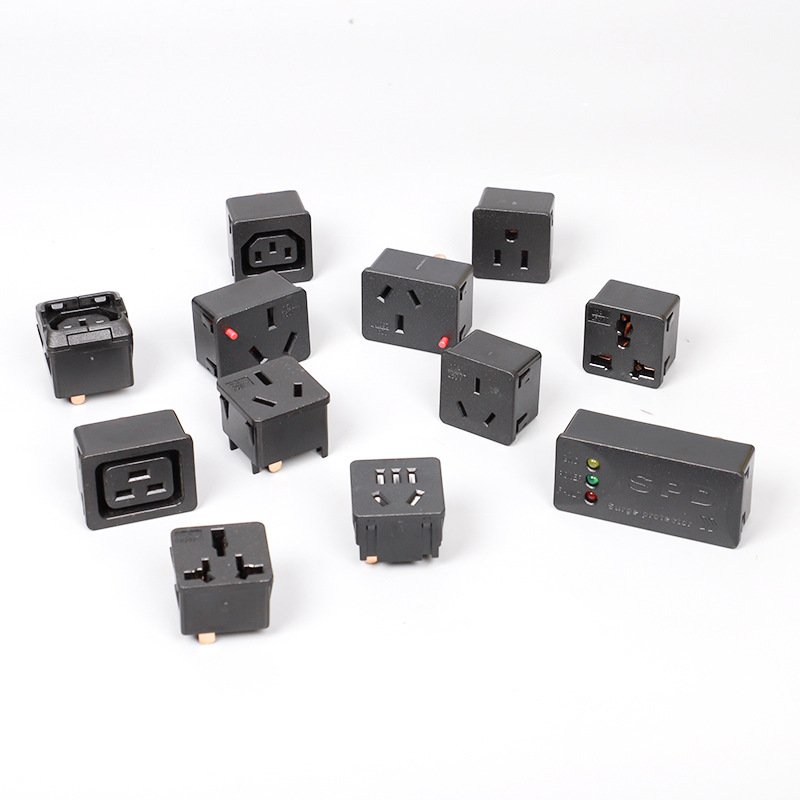
RTS-PDUSM Modular PDU Components
COMPONENT FAMILY — NOT ASSEMBLED PDU
Modular socket and input component family.
The table is intentionally conservative.
Where data is missing, the correct sourcing step is to confirm the exact variant rather than fill the gap with assumptions.
13. Modular Components Are Not the Same as an Assembled Rack PDU
RTS-PDUSM deserves special attention because it covers a broad range of socket and input components.
That makes it useful for discussions involving:
- C13
- C19
- regional socket formats
- different input connector styles
- modular PDU construction
But it should not be used as evidence that every listed component can already be ordered as any desired assembled rack PDU.
For example:
C13 component available
does not automatically mean:
Complete RITOKS C13 rack PDU available in every outlet count and voltage.
Final assembly compatibility must be confirmed.
14. Common Rack PDU Selection Mistakes
Choosing by Outlet Count Alone
More outlets do not automatically mean more usable electrical capacity.
Mixing Up Input Plug and Output Socket
These are different parts of the specification and should be stated separately.
Assuming a Socket Component Means a Complete PDU Exists
RTS-PDUSM is a modular component family, not evidence of every possible assembled combination.
Assuming a 250V Socket Rating Defines the PDU Input
Component ratings and assembled PDU input voltage should not be treated as identical unless the exact product data confirms it.
Assuming Every Rack PDU Is 1U or 0U
Rack format must be verified from the exact model.
Calling a Master-Switch PDU a “Switched PDU”
A local master switch is not the same as remote outlet-level switching.
Assuming Metering or Monitoring Is Standard
RITOKS now publishes distinct smart rack PDU, metered rack PDU and ATS rack PDU families. Compare the documented functions of the P Series Smart Rack PDU, Local-Display Metered Rack PDU and LA-PD Dual-Input ATS Rack PDU; monitoring, local metering and automatic source transfer are separate architectures and should not be treated as interchangeable.
Assuming “Surge Protected” Defines the Exact Protection Level
Surge performance requires exact technical parameters and supporting documentation.
15. What Buyers Should Include in a Rack PDU Inquiry
A useful sourcing inquiry should provide the requirements already known for the project. Use the Rack PDU RFQ checklist to organize them.
Consider including:
- required input voltage
- required current
- input plug or connector
- output socket type
- outlet count
- rack format
- cord length or no-cord requirement
- quantity
- mounting constraints
- surge-protection requirement, if any
- required technical documents
- destination country
- delivery requirement
Where a parameter has not yet been determined by the project, do not guess simply to fill the RFQ.
For example:
Input plug: To be confirmed
is better than choosing a plug type without knowing the upstream connection.
Example Rack PDU Requirement Template
Project / rack type: [project description]
Required voltage: [voltage]
Required current: [current]
Input plug / connector: [required type]
Output sockets: [required type]
Outlet count: [number]
Rack format: [required format]
Cord requirement: [length / no-cord]
Quantity: [quantity]
Surge requirement: [if applicable]
Required documents: [documents]
Destination: [country / region]
Delivery requirement: [schedule]
This template communicates buyer requirements.
It does not replace the electrical design of the rack or upstream circuit.
Frequently Asked Questions
What Is the Most Important Specification When Choosing a Rack PDU?
There is no single specification that replaces the others.
Voltage, current, input connection, output sockets, outlet count and physical format all need to be considered together.
How Many Outlets Should a Rack PDU Have?
Use the outlet count required by the equipment and project plan.
Current RITOKS assembled products include an 8-outlet PDU and a 1U family with 2–14 outlet variants.
A universal spare-outlet percentage is not used in this guide.
Does RITOKS Offer C13 and C19 Rack PDUs?
Current published data confirms C13 and C19 modular socket components under RTS-PDUSM.
It does not yet confirm a complete assembled RITOKS C13/C19 rack PDU family.
Does RITOKS Offer a 1U Rack PDU?
Yes.
RTS-PDU1U-10A currently publishes a 1U configuration.
Does RITOKS Offer a 0U Rack PDU?
A 0U RITOKS product is not currently confirmed in the reviewed product data.
Are RITOKS Rack PDUs Metered or Smart?
Current published rack PDU pages do not confirm metering, remote monitoring, SNMP or smart/network functionality.
Is the RTS-PDU1U-10A a Switched PDU?
It publishes a double-pole master switch.
That should not be confused with remote outlet-level switching or a managed/switched PDU category.
Can Buyers Request Other Plug or Socket Options?
RTS-PDUSM publishes a broad range of modular connector and socket options.
Exact compatibility with an assembled PDU configuration should be confirmed for the requested model and variant.
Need Help Matching a Rack PDU Configuration?
RITOKS currently publishes rack-power products covering:
- modular input and outlet components
- a fixed 125V 8-outlet assembled PDU
- a 250V 1U PDU family with multiple outlet-count options
When sending an inquiry, provide the electrical, connection and physical requirements already defined by the project.
RITOKS can then compare those requirements with currently published product families and confirm which exact details still need verification.
Related Resources
Continue exploring Rack Power Distribution
125V 8-Outlet vs 250V 1U Rack PDU: RITOKS Model Comparison
125V 8-Outlet vs 250V 1U Rack PDU: RITOKS Model Comparison RITOKS currently publishes two assembled rack PDU families…
Read guide
Rack PDU RFQ Checklist: What Buyers Should Specify
Rack PDU RFQ Checklist: What Buyers Should Specify A useful rack PDU RFQ should do more than say:…
Read guide