

Thermal Overload Relays for Motor Protection
Explore thermal overload relays for protecting motors from sustained overload conditions within each device's documented coordination limits. Compare available products using verified adjustment range, trip behavior, reset mode, contactor compatibility, auxiliary contacts, mounting and operating conditions, then review the listed family for confirmed model details.

Buyer Guidance
Prepare the motor nameplate current, supply and starting duty before comparing motor thermal overload relays. Identify the contactor or starter assembly, required adjustment range, reset mode and auxiliary-control requirements so the enquiry describes the complete motor-control context.
For a replacement, include the existing relay order code and contactor reference as well as mounting and terminal requirements. A matching current range alone does not prove mechanical fit or coordination. Keep overload response, short-circuit protection and isolation as separate requirements in the project brief.
Thermal overload relays protect motors from sustained overload conditions within the selected device's documented limits and coordination requirements. Buyers should confirm motor data, adjustment range, trip behavior, reset mode, contactor compatibility, auxiliary contacts, mounting and operating conditions.
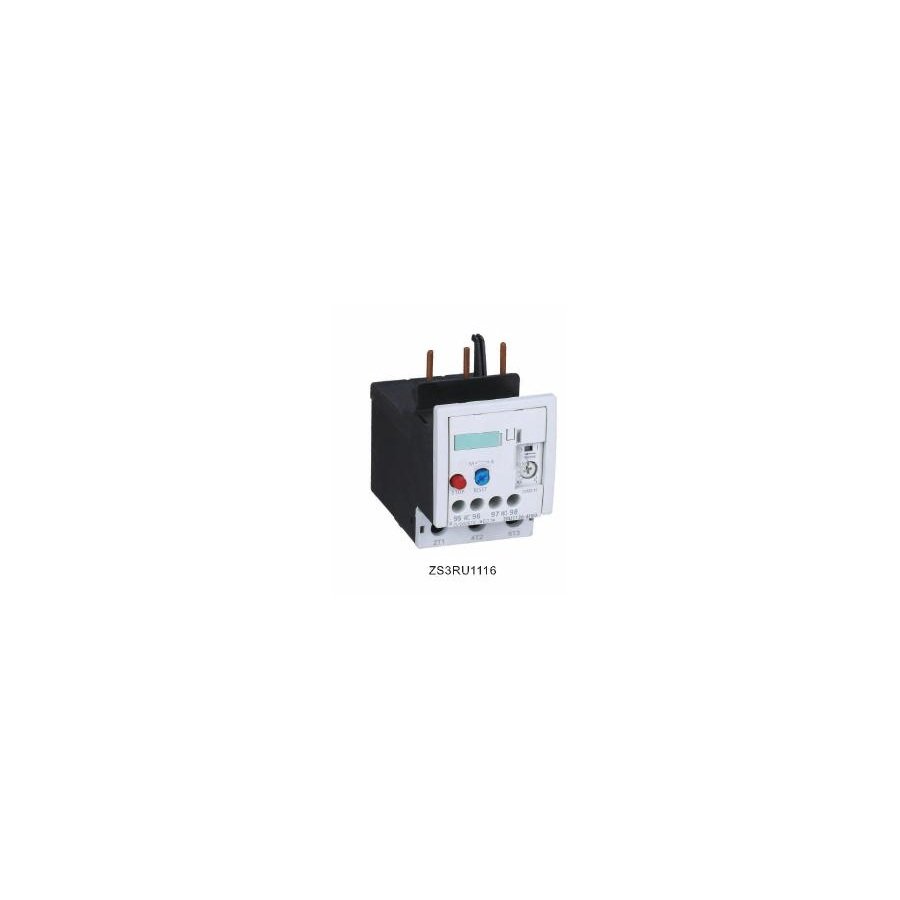
View the published ZS3RU Thermal Overload Relays.
For a comparison of overload-relay, MPCB and MCB roles, read the MPCB vs Thermal Overload Relay vs MCB guide.
Frequently Asked Questions
What does a thermal overload relay protect?
It responds to sustained motor overload conditions according to the selected device's documented behavior and coordination limits.
How should an overload relay be set?
Settings must follow the motor data, relay documentation and the required motor-control coordination.
How does it differ from an MPCB?
Their switching, protection and coordination roles differ and must be evaluated within the complete motor-control architecture.