
Power Semiconductor Modules · Comparison
MDS 30A–250A vs 300A–1200A Bridge Rectifier Modules: Model Comparison
RITOKS currently publishes two MDS three-phase bridge rectifier module families covering different current-class ranges:
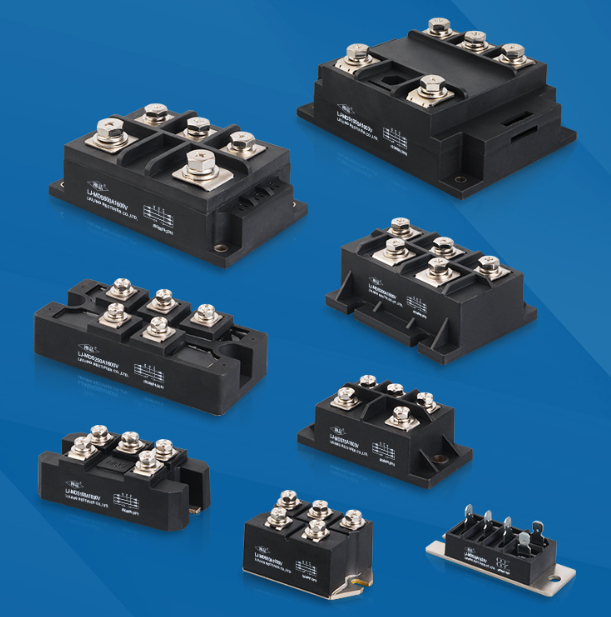
MDS 30A–250A
MDS 300A–1200A
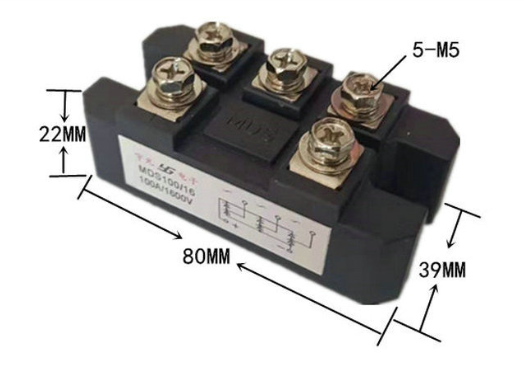
Both are MDS three-phase bridge rectifier families, but their published model classes are separated into two ranges.
The lower-range family lists models from 30A to 250A.
The higher-range family lists models from 300A to 1200A.
This comparison focuses only on the differences that are currently published.
It does not rank one family as better, more efficient or safer, and it does not convert current class into a universal module-sizing rule.
For broader selection principles, see the MDS Bridge Rectifier Module Selection Guide.
MDS Bridge Rectifier Module Comparison
| Item | MDS 30A–250A | MDS 300A–1200A |
|---|---|---|
| Product family | MDS three-phase bridge rectifier module | MDS high-current three-phase bridge rectifier module |
| Published current range | 30A–250A | 300A–1200A |
| Published model classes | 30 / 60 / 75 / 100 / 150 / 200 / 250A | 300 / 400 / 500 / 600 / 800 / 1000 / 1200A |
| Exact voltage version | Confirm exact model | Confirm exact model |
| Supplier load-current reference | Published by model | Published by model |
| Supplier heatsink reference | Published by model group | Published by model group |
| Cooling configuration | Confirm for application/model | Confirm for application/model |
| Module dimensions | Not currently published | Not currently published; conflicting outline references require verification |
| Terminal arrangement | Confirm exact model | Confirm exact model |
| Mounting details | Confirm exact model | Confirm exact model |
| Insulation data | Not published | Not published |
| Certification / standards | Not published | Not published |
| Downloadable datasheet | Not currently available | Not currently available |
| Final selection | Exact-model verification required | Exact-model verification required |
The strongest difference between the two families is therefore their published current-class coverage.
Other important fields still need exact-model confirmation.
Published Current Classes Comparison
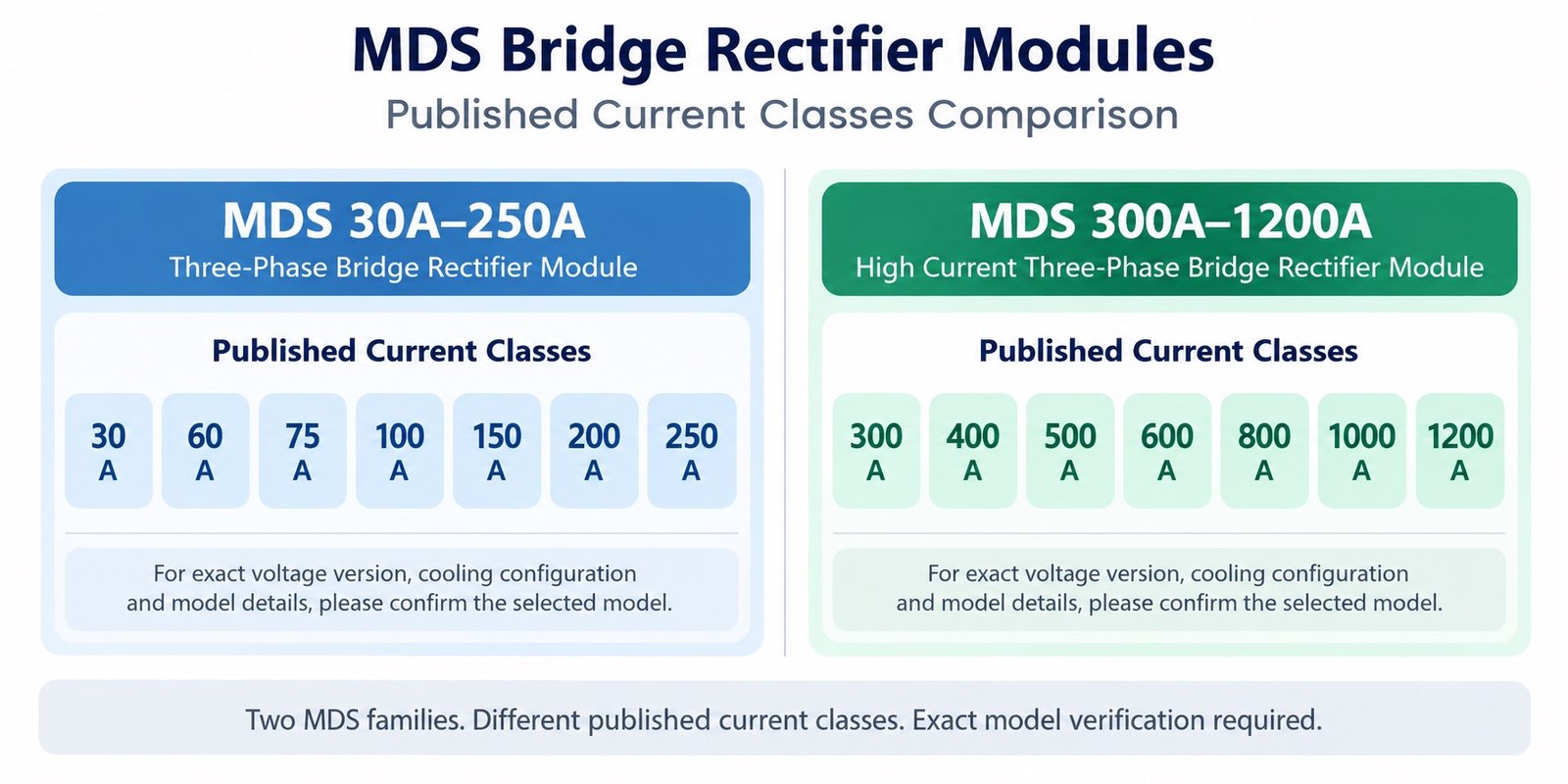
1. MDS 30A–250A Published Model Classes
The MDS 30A–250A family currently lists seven current classes:
- MDS30A
- MDS60A
- MDS75A
- MDS100A
- MDS150A
- MDS200A
- MDS250A
This family covers the lower portion of the currently published RITOKS MDS range.
For procurement purposes, a buyer can use these published classes to identify whether this family is worth reviewing against an existing project requirement.
That does not mean the closest current number automatically becomes the correct module.
The exact voltage version, application conditions, cooling arrangement and model documentation still need verification.
2. MDS 300A–1200A Published Model Classes
The higher-current MDS family also lists seven current classes:
- MDS300A
- MDS400A
- MDS500A
- MDS600A
- MDS800A
- MDS1000A
- MDS1200A
This creates a published range from 300A through 1200A.
As with the 30A–250A family, these numbers identify model classes.
They do not establish a rule such as:
load current = required MDS current class
or:
select the next current class above the load.
Final suitability depends on the full application and exact model information.
3. The Published Boundary Is 250A to 300A
The current RITOKS product pages create a clear published family boundary:
MDS 30A–250A family: highest listed class = 250A
MDS 300A–1200A family: lowest listed class = 300A
There is no 251A–299A class listed on these two current product pages.
That statement applies only to the currently published RITOKS family structure.
It does not mean:
- no other rating exists in the wider market
- every requirement below 300A should use 250A
- every requirement above 250A should automatically use 300A
- 300A is a universal transition point for bridge rectifier design
The boundary simply helps buyers understand how the two RITOKS product families are organized.
4. Supplier Load-Current Reference Data: 30A–250A Family
The MDS 30A–250A page currently publishes supplier-reference values for resistive and inductive load conditions.
| Model Class | Resistive Reference | Inductive Reference |
|---|---|---|
| 30A | 27A | 18A |
| 60A | 42A | 36A |
| 75A | 50A | 40A |
| 100A | 65A | 45A |
| 150A | 100A | 75A |
| 200A | 130A | 100A |
| 250A | 175A | 125A |
These are supplier-reference values tied to the listed models.
They should not be converted into a universal ratio or sizing formula.
For example, this article does not derive:
- a load-current multiplier
- a fixed derating percentage
- a fixed safety margin
- an automatic model-selection rule
Use the table as reference information and confirm the actual application before selecting the exact module.
5. Supplier Load-Current Reference Data: 300A–1200A Family
The MDS 300A–1200A page publishes a corresponding set of reference values.
| Model Class | Resistive Reference | Inductive Reference |
|---|---|---|
| 300A | 190A | 135A |
| 400A | 250A | 150A |
| 500A | 300A | 180A |
| 600A | 340A | 204A |
| 800A | 360A | 216A |
| 1000A | 540A | 324A |
| 1200A | 580A | 340A |
These values should be interpreted in the same way:
model-specific supplier reference data, not a universal engineering rule.
Do not calculate a ratio from one row and apply it to other MDS models or applications.
Operating and cooling conditions still matter.
6. What the Two Load-Reference Tables Can Tell You
The two families both provide reference information that can help a buyer prepare a more specific model inquiry.
They can be used to:
- identify published model classes
- review the supplier’s reference data for a particular class
- prepare application information for confirmation
- identify questions that should be resolved before ordering
They should not be used to claim:
- a universal relationship between load current and module rating
- guaranteed suitability for a particular machine
- an automatic derating rule
- a recommended oversizing percentage
If a project requires engineering calculations, those calculations need the actual electrical and thermal conditions plus verified device data.
7. Published Heatsink References Also Differ
Both MDS product pages contain supplier-reference heatsink information.
MDS 30A–250A
Published reference groups include:
30A–100A
125 × 95 × 50 mm reference heatsink
150A–250A
- 150 × 100 × 80 mm reference heatsink
- MDS 300A–1200A
Published reference groups include:
300A–600A
150 × 125 × 135 mm reference heatsink
800A–1200A
250 × 141 × 135 mm reference heatsink
These dimensions refer to the supplier-reference heatsink, not the rectifier-module dimensions.
That distinction is important.
Do not use the numbers as:
- module package dimensions
- mounting dimensions
- required universal heatsink dimensions
- proof of final thermal performance
The actual cooling arrangement must be checked for the selected model and application.
8. Higher Current Class Does Not Establish a Better Cooling Solution
It may be tempting to compare the two families and conclude that the larger-current family automatically requires a particular cooling method.
The current evidence does not support that universal conclusion.
The safe comparison is:
- both families publish heatsink-reference information
- those reference sizes differ across model groups
- final thermal configuration depends on the exact model and application
The current product data does not establish that every MDS 300A–1200A variant:
- uses the same cooling method
- requires water cooling
- uses a specific cooling interface
- runs hotter than every 30A–250A model
Cooling should remain an exact-model verification item.
9. Voltage Is Not a Useful Side-by-Side Comparison Yet
The current product pages do not provide enough verified model-level information to build a reliable voltage-range comparison between these two families.
For both:
Exact voltage version / suffix: confirm the selected model.
Therefore, this article should not claim:
- identical voltage ranges
- different voltage ranges
- universal voltage availability
- a particular voltage suffix for every current class
Voltage should instead be included in the buyer’s model-confirmation request.
10. Mechanical Dimensions Cannot Yet Be Compared
The current pages also do not provide enough verified information for a package-size comparison.
For the MDS 30A–250A family, model-specific package and outline information still needs verification.
For the MDS 300A–1200A family, current information includes conflicting outline references that should not be resolved by guessing.
Therefore, do not compare:
- module width
- module length
- module height
- mounting-hole spacing
- terminal locations
- weight
- cooling interface
from the current article data or product photographs.
Where fit matters, request the verified drawing for the exact model.
11. Product Images Are Not Mechanical Drawings
The existing RITOKS product images are useful for identifying each family visually.
They are not suitable evidence for determining:
- exact module dimensions
- terminal assignment
- terminal polarity
- mounting-hole spacing
- voltage
- insulation
- internal circuit
- certification
A buyer who needs mechanical integration data should request verified documentation rather than scaling or interpreting the product photograph.
12. Certification and Standards Are Not Yet a Comparison Point
Neither reviewed family currently publishes enough evidence to make a certification comparison.
Current status:
MDS 30A–250A
- certification: not published
- standards: not published
MDS 300A–1200A
- certification: not published
- standards: not published
If certification or market approval is required, specify the exact document needed in the inquiry.
Do not treat:
- product type
- application wording
- supplier table
- product image
as certification evidence.
13. Neither Family Currently Provides a Downloadable Datasheet
The current product pages do not provide a downloadable model-specific datasheet.
That makes exact-model confirmation more important for projects that require:
- dimensional drawings
- terminal details
- voltage/version confirmation
- mounting information
- thermal information
- certification evidence
These should be requested for the actual model being considered.
14. Which Family Should You Review First?
The simplest safe distinction is the published current-class range.
Review the MDS 30A–250A Family When
The project requirement falls within one of its published classes:
30 / 60 / 75 / 100 / 150 / 200 / 250A
Then confirm:
- exact voltage version
- application/load information
- cooling arrangement
- exact model
- required documentation
- Review the MDS 300A–1200A Family When
The project requirement falls within one of its published classes:
300 / 400 / 500 / 600 / 800 / 1000 / 1200A
Then perform the same exact-model verification.
This is a way to narrow the family for review, not a final engineering selection method.
15. Neither Family Is Universally Better
A 1200A-class MDS module should not be described as a better version of a 100A-class module.
Likewise, the 30A–250A family should not automatically be described as:
- light duty
- cheaper
- more efficient
- easier to cool
And the 300A–1200A family should not automatically be described as:
- heavy duty
- more powerful
- safer
- more durable
- better for demanding applications
Those conclusions require evidence not currently published.
The useful distinction is much simpler:
the two families cover different published current classes.
16. What Buyers Should Confirm Before Ordering Either Family
Regardless of which family is being reviewed, confirm:
Current class
Which published MDS class is being considered?
Voltage
What exact voltage version or suffix is required?
Application
What load and operating conditions apply?
Cooling
What thermal and cooling arrangement is required?
Exact model
What complete model designation will be supplied?
Mechanical information
Are drawings, dimensions or mounting details required?
Documentation
Are datasheets, certificates, test evidence or other technical documents required?
Quantity
What quantity is required?
The MDS Bridge Rectifier Module Selection Guide provides the broader selection workflow.
Frequently Asked Questions
What Is the Main Difference Between the Two MDS Families?
Their clearest published difference is current-class coverage. One family lists classes from 30A to 250A, while the other lists classes from 300A to 1200A.
Is There a Published MDS Class Between 250A and 300A?
Not on these two current RITOKS product pages. That describes the current published family structure only and is not a market-wide statement.
Is the 300A–1200A Family Better?
No. A higher current class does not establish better efficiency, safety, cooling or suitability.
Can I Select a Model Directly From the Load-Current Table?
The tables are supplier-reference information. They should not be converted into a universal formula or automatic selection rule.
Are the Published Heatsink Sizes Module Dimensions?
No. They are supplier-reference heatsink dimensions and should not be interpreted as module package dimensions.
Are the Voltage Options the Same for Both Families?
The current evidence does not support an exact voltage comparison. Confirm the voltage version for the selected model.
Are Dimensions and Terminal Drawings Available?
Complete verified model-level mechanical information is not currently published on the two product pages. Request the necessary drawing before mechanical integration.
Compare the Exact MDS Family Before Your RFQ
Start with the published current classes:
- MDS 30A–250A → 30 / 60 / 75 / 100 / 150 / 200 / 250A
- MDS 300A–1200A → 300 / 400 / 500 / 600 / 800 / 1000 / 1200A
Then verify:
current class → voltage version → application/load → cooling → exact model → documentation
before ordering.
Related Resources
Continue exploring Power Semiconductor Modules
Diode Rectifier Module Selection Guide: Current, Voltage, Configuration and Model Verification
Selecting a diode rectifier module starts with a defined electrical and mechanical requirement, not with a family name…
Read guide
SCR Thyristor Module Selection Guide: Current Class, Voltage, Cooling and Model Verification
Selecting an SCR thyristor module requires more than matching a current number to a product name. A practical…
Read guide