
Thermal Management · Selection Guide
Cabinet Cooling Fan Selection Guide: Size, Voltage, Airflow Requirements and Model Verification
Cabinet cooling fan selection begins with the enclosure requirement, not with a frame size, voltage label or product photograph.
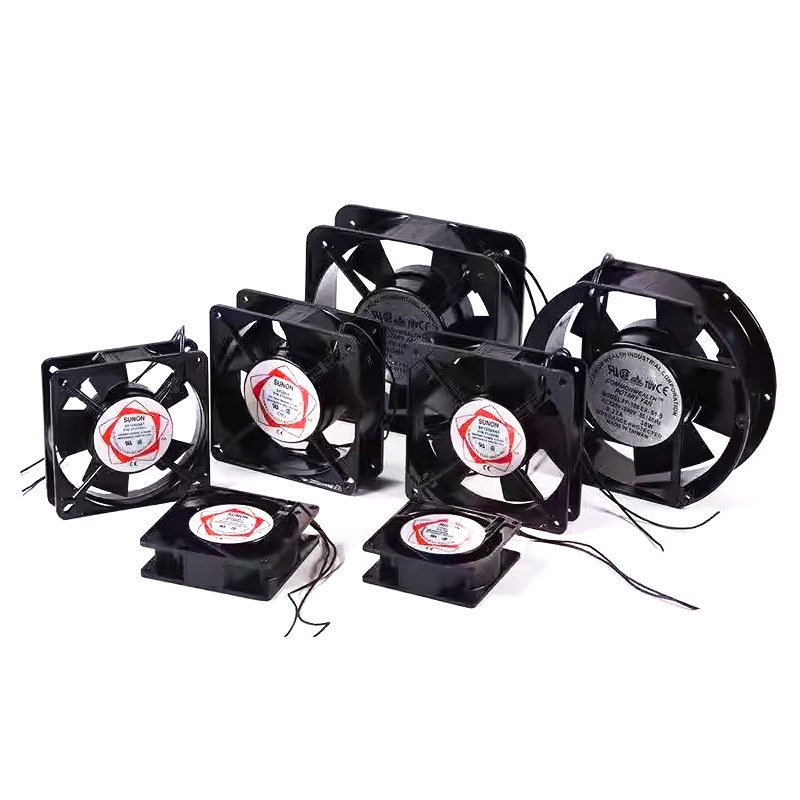
A useful inquiry defines the fan type, available installation space, supply voltage, mechanical interface and required operating conditions before a candidate model is confirmed.
RITOKS currently publishes AC axial fans, a cabinet filter-fan family and a 24V DC axial fan. Their public pages support family screening, but they do not contain complete airflow, static-pressure, noise or fan-curve data for performance-based model selection.
This guide separates buyer-defined requirements from published product facts and shows what must still be verified in exact model documentation.
Contents
- Selection at a Glance
- Start With the Fan Type
- Physical Size and Mounting
- Supply Voltage
- Bearing, Version and Connector
- Airflow and Static Pressure
- Filter and Environmental Requirements
- Exact Model Performance Data
- RITOKS Family Overview
- Verification Workflow
- Inquiry Information
- Data Requiring Confirmation
- Frequently Asked Questions
Cabinet Cooling Fan Selection at a Glance
The following inputs help organize family screening and model verification. Published product information can narrow the options, but exact performance and compatibility must be confirmed from the selected model documentation.
Cabinet Cooling Fan Selection Inputs
| Selection Input | What the Buyer Should Define or Confirm |
|---|---|
| Fan type | Axial fan, filter-fan assembly or another project-defined format |
| Physical size | Frame dimensions and available installation depth |
| Supply voltage | Available AC or DC supply and the required voltage |
| Bearing / version | Any exact bearing or supplied version requirement |
| Connector / wiring | Required connector, lead or wiring arrangement |
| Airflow requirement | Buyer-defined requirement to verify against exact model data |
| Static-pressure requirement | Operating condition to define where airflow restrictions matter |
| Noise requirement | Project limit or measurement condition, if applicable |
| IP / environment | Required environmental protection and operating conditions |
| Mounting / cutout | Cutout, pitch, depth and grille/filter compatibility |
| Datasheet / fan curve | Exact model documents required for performance verification |
| Exact model | Complete orderable designation confirmed before quotation |
1. Start With the Fan Type
The Thermal Management range includes a dedicated Cabinet Cooling Fans category. The current products cover axial cooling fans and a filter-fan branch. These formats should be screened against the physical and environmental requirements of the enclosure. For applications requiring active enclosure cooling rather than fan-based airflow, compare the separate Enclosure Air Conditioners family and its published EP-A models.
Axial Cooling Fans
RITOKS publishes broad AC axial fan families and a minimal-data 24V DC example. Axial format alone does not establish delivered airflow, static pressure, noise or cooling capacity. Those values remain exact-model performance data.
Cabinet Filter Fans
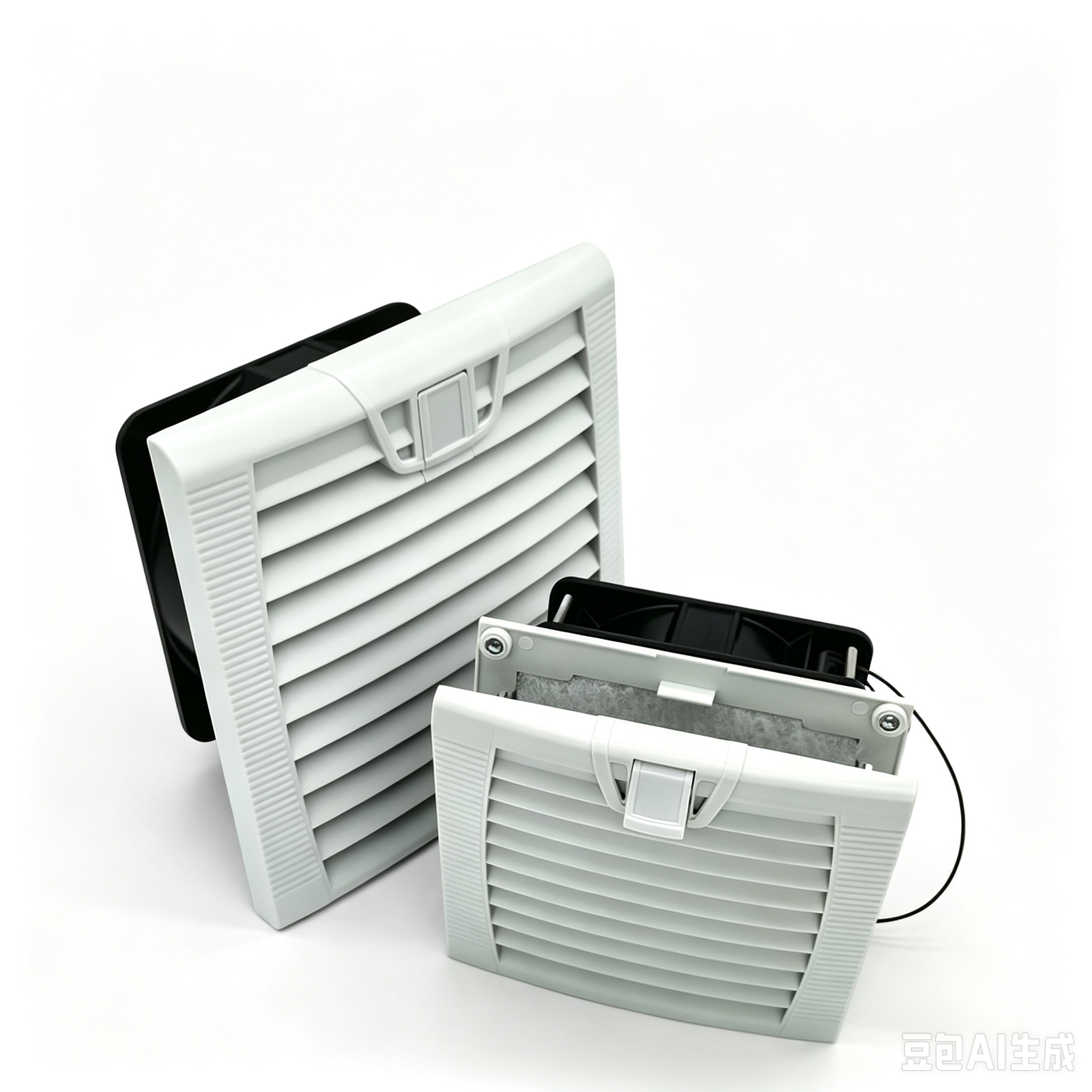
A filter-fan assembly introduces additional fields such as filter requirements, grille compatibility, cabinet cutout, maintenance needs and environmental protection. The current FD product page does not publish complete filter media, replacement or airflow data, so it supports a selection branch rather than a complete filter-fan design method.
2. Confirm Physical Size and Mounting
Start with the available installation space. Confirm the fan or assembly dimensions, installation depth, cabinet cutout, mounting pitch and compatibility with the intended grille or filter arrangement.
Frame size is useful for screening, but it is not a substitute for an exact mechanical drawing. Product photographs must not be used to infer hole spacing, orientation or interchangeability.
Within the FD filter-fan page, only FD9802.300 currently carries the published combination of 116 × 116 × 37 mm overall dimensions, a 92 × 92 mm cutout and 101 × 101 mm mounting pitch. These values apply to that reference only and must not be generalized across the FD family.
3. Match the Supply Voltage
Supply type and voltage must match the available system power and the exact fan model. They are compatibility fields, not evidence that one fan type is more efficient, quieter or more reliable.
The current product range includes a published 24V DC example, 12038 AC models at 110V, 220V and 380V, and broader AC families with exact-SKU 220V or 380V mapping. A buyer should state the required supply and confirm the complete model designation rather than assuming that every voltage is available for every variant.
4. Confirm Bearing, Version and Connector Requirements
Some published AC SKUs identify oil, ball or dual-ball bearing variants, while other products do not publish a bearing field. Bearing type should therefore be confirmed for the exact model whenever it forms part of the procurement requirement.
The same rule applies to version and wiring descriptions. Product 383 includes supplied labels such as Standard, Full-Round, Capacitor Version and several model-specific three-phase or reversible descriptions. These are exact supplied descriptions, not universal wiring instructions.
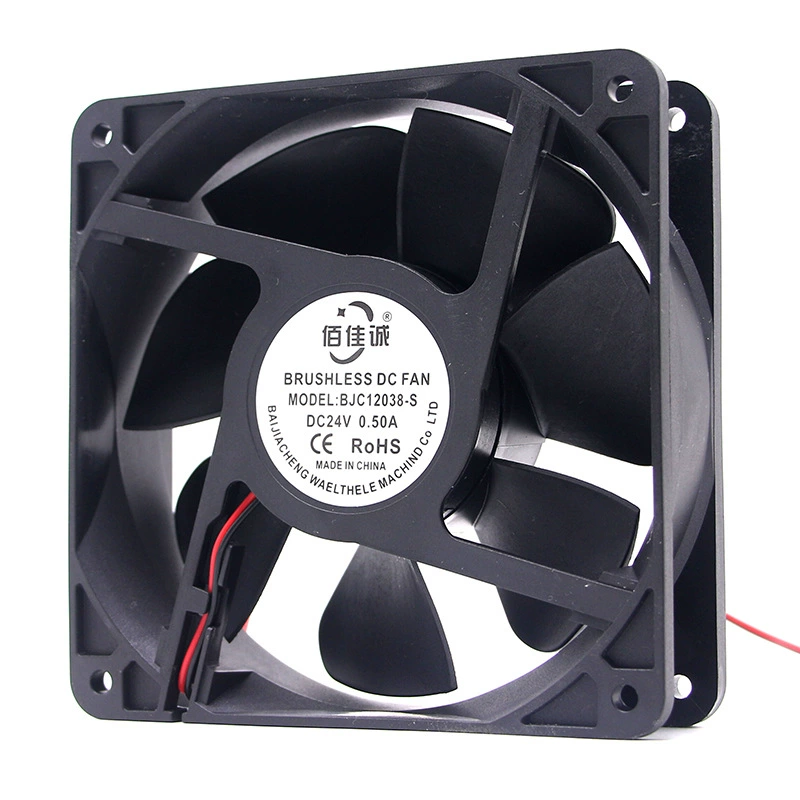
Product 385 publishes a two-wire XH2.54 connector. That fact does not establish polarity, wire color, PWM support, tachometer output or pin assignment. Request the required connector and wiring documentation before approving the model.
5. Define Required Airflow and Static Pressure
Airflow indicates the volume of air moved under specified conditions. For this article, airflow is a project requirement and a field to confirm, not a value that can be calculated from the current RITOKS product pages.
The reviewed pages do not publish enough airflow data to compare families in CFM or m³/h. Fan size, RPM and power must not be converted into assumed airflow or cooling capacity.
Static pressure becomes relevant when filters, grilles, restricted openings or internal airflow paths resist flow. The Oriental Motor technical reference explains airflow/static-pressure characteristics as a relationship rather than two interchangeable maximum values. This is a general fan principle only; it provides no RITOKS model performance data.
SANYO DENKI's official fan-selection material likewise describes the use of airflow/static-pressure characteristics and system impedance when evaluating installed airflow. Do not transfer its formulas, margins, curves or product values to a RITOKS fan.
Where performance verification is required, define the operating requirement and request the exact model fan curve or technical data.
6. Check Filter and Environmental Requirements
When to Verify a Filter-Fan Assembly
If the project requires a filter-fan assembly, state the filter requirement, grille compatibility, cutout, maintenance or replacement requirement, environmental protection and required airflow/static-pressure condition.
The current FD page does not publish a family-wide filter class, media specification, replacement interval, dust-holding capacity or measured airflow. These must remain inquiry fields until exact documentation is available.
Environmental and IP requirements also need model-level confirmation. FD9802.300 is published as IP54, but that value cannot be applied to other FD references or to the axial fan families.
7. Request Exact Model Performance Data
A family page can identify a candidate format or SKU, but performance approval requires the exact model documents relevant to the project.
- airflow and the stated test conditions
- airflow/static-pressure curve, where required
- noise data and measurement conditions
- electrical current and power data
- operating-temperature and lifetime information
- mechanical drawing, cutout and mounting details
- connector, wiring or terminal information
- IP, environmental or certification evidence where required
Requesting these fields does not create a rating or guarantee. It identifies the evidence needed to compare the selected model with the defined project requirement.
Published RITOKS Cabinet Cooling Fan Family Overview
This table records confirmed public fields only. “Not published” means the value should be requested for the exact model rather than inferred from another SKU or image.
| Family | Type | Published Size | Published Supply | Published Variant Data | Performance Data Status | Key Verification Need |
|---|---|---|---|---|---|---|
| Industrial AC Axial Cooling Fan 60–250mm | AC axial family | 60–250mm/model groups | 220V / 380V by SKU | Bearing and supplied version/wiring descriptions by SKU | Airflow, power and RPM not published | Exact SKU, mechanical fit and complete performance data |
| FD Series Cabinet Filter Fan | Filter-fan branch | FD9802.300 dimensions only; most references not published | 12V / 24V / 230V by fan kit | Power and RPM by kit; four grille references | Airflow and static pressure not published | Filter, cutout, IP and performance data for exact reference |
| 12038 24V DC Axial Cooling Fan | Brushless DC axial fan | 120 × 120 × 38 mm | 24V DC | Two-wire XH2.54 connector | Minimal published data; airflow, power and RPM not published | Performance, bearing, polarity, pinout and mechanical data |
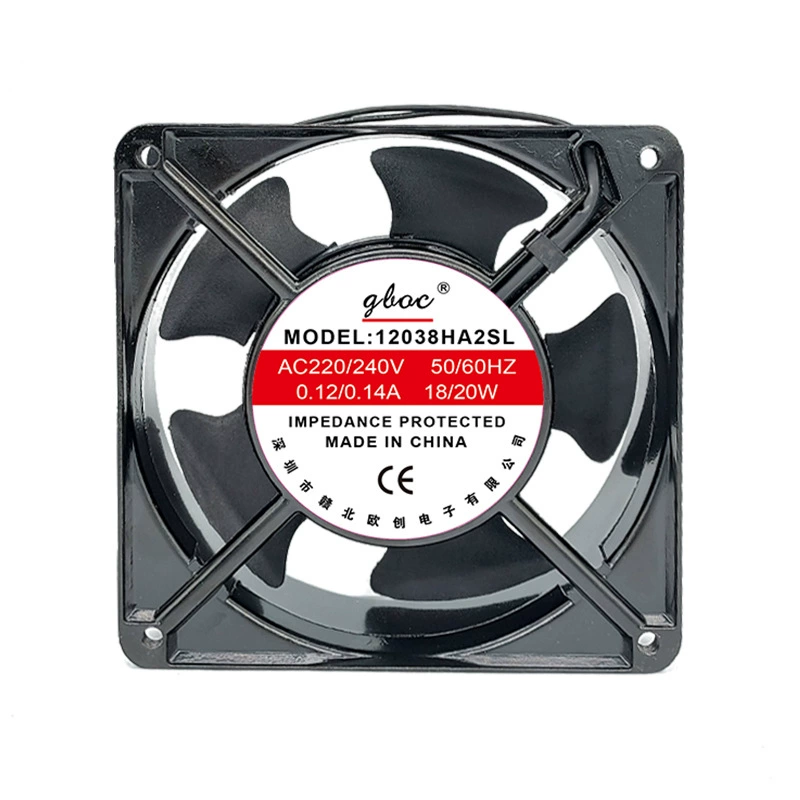
| 12038 AC Axial Cooling Fan | AC axial fan | 120 × 120 × 38 mm | 110V / 220V / 380V by SKU | Bearing, power, RPM and supplied version labels by SKU | Exact-SKU power/RPM published; airflow not published | Airflow, mechanical and other exact performance data |
8. Recommended Fan Verification Workflow
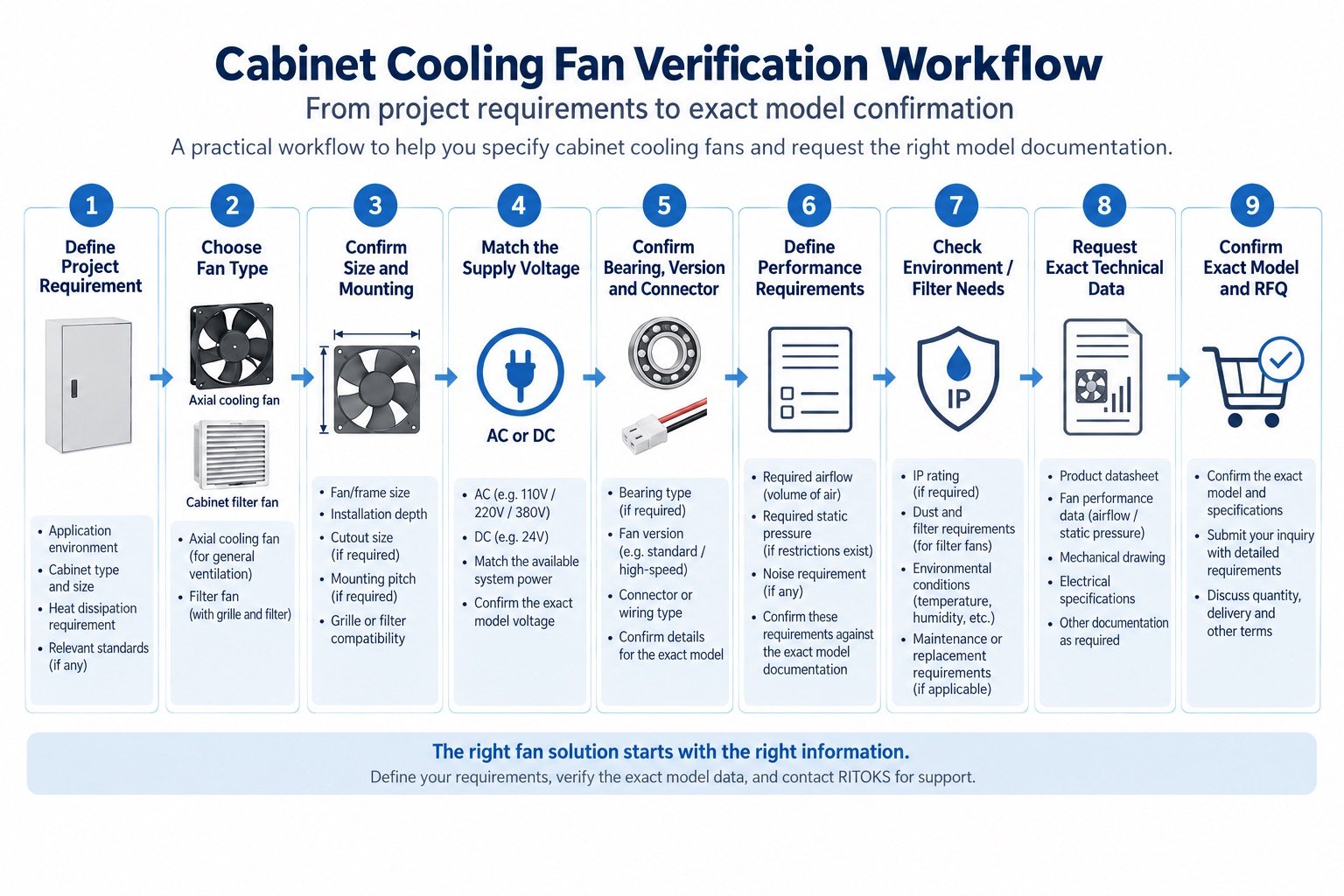
- Define the application, enclosure conditions and procurement scope.
- Choose the required axial or filter-fan branch.
- Confirm frame size, depth, cutout and mounting constraints.
- State the available supply type and voltage.
- Define the required airflow, static pressure and noise conditions.
- Record filter, IP and environmental requirements.
- Request the exact technical data and drawings.
- Confirm the complete model designation.
- Submit the verified requirement for quotation.
9. Information to Include in an Inquiry
- Application: [application]
- Fan type: [axial / filter fan / to be confirmed]
- Required size: [requirement]
- Supply: [requirement]
- Bearing/version: [if required]
- Connector/wiring: [if required]
- Required airflow: [requirement / to be confirmed]
- Required static pressure: [requirement / to be confirmed]
- Noise limit: [if required]
- IP/environment: [if required]
- Cutout/mounting: [requirement]
- Required datasheet/fan curve: [if required]
- Quantity: [quantity]
- Destination: [destination]
- Delivery: [schedule]
Use “to be confirmed” where a requirement has not yet been defined. Do not substitute a value from a different model or infer it from the product image.
10. What Data Still Needs Exact-Model Confirmation?
The current pages are useful for product-family identification and selected SKU screening. They are not complete fan-performance records.
Across the four families, priority confirmation fields include airflow, static pressure or fan curves, noise, operating temperature, lifetime, detailed mechanical drawings, connector or wiring details, environmental ratings and certification evidence where a project requires them.
Product 386 publishes exact-SKU power and RPM values, while Product 384 publishes power and RPM for its fan kits. Those values must remain attached to their exact rows and do not establish delivered airflow. Products 383 and 385 do not publish comparable performance fields.
Frequently Asked Questions
What cabinet cooling fan types does RITOKS publish?
Current pages include AC axial fan families, a cabinet filter-fan family and a 24V DC brushless axial fan example.
Can I select a cabinet fan from size alone?
No. Size can screen the mechanical format, but supply, mounting, required operating conditions and exact model documentation may also need confirmation.
Are airflow values published for these RITOKS fan families?
The reviewed product pages do not publish enough airflow data for a model comparison or selection calculation. Request airflow data for the exact model.
Why should static pressure be checked for filter fans?
Filters, grilles and restricted openings can add resistance to airflow. Define the required operating condition and request exact model characteristics rather than assuming free-air performance.
Can I compare AC and DC fans by performance from the current data?
No. The current evidence supports supply-type and voltage screening only. It does not support efficiency, airflow, noise, lifetime or reliability comparisons.
Is every FD filter fan IP54?
No family-wide IP54 claim is supported. The current page publishes IP54 for FD9802.300 only.
What information should I provide before requesting a fan model?
Provide the fan type, size and mounting constraints, supply, required operating conditions, environment, connector or wiring needs, documentation requirements, quantity and delivery details.
Need Help Confirming a Cabinet Cooling Fan Model?
Send the project requirements already available, identify any candidate family and list the exact performance, mechanical or environmental documents required for approval.
RITOKS can use that information to narrow the published options and confirm the exact model details available for quotation. The product catalogue supports screening; it does not create the engineering requirement.