
Digital Panel Meters · Technical Explainer
Planning a Readable Voltage Display for an Equipment Front Panel

Quick answer
A voltage display is readable only in the actual viewing situation. Plan around observer distance, off-axis position, ambient light, glare, units and labels. A 22 mm mounting format does not reveal digit height, and LED color does not assign safety meaning. Use a project-owned observation register plus non-energized prototype evidence. For this readability question, the buyer should identify the observer, distance, light, label and selected display configuration before accepting a visibility statement. A mounting format or color option cannot replace a scoped observation under the intended panel conditions.
Mounting is not digit size
AD16-22 identifies a 22 mm panel format; character height is a separate drawing field. Do not use the mounting number as a readability shortcut. A close operator station and a remote aisle are different tasks. For this readability question, the buyer should identify the observer, distance, light, label and selected display configuration before accepting a visibility statement. A mounting format or color option cannot replace a scoped observation under the intended panel conditions.
Viewing distance
Record normal position, distance, off-axis viewing and whether the value is read momentarily or continuously. Include door, guard or window effects. A photograph documents context but cannot prove naked-eye legibility. For this readability question, the buyer should identify the observer, distance, light, label and selected display configuration before accepting a visibility statement. A mounting format or color option cannot replace a scoped observation under the intended panel conditions.

Ambient light
Murata distinguishes direct sunlight, indoor LED and low-light conditions when discussing process-monitor selection. DwyerOmega lists a 14.2 mm display with red sunlight-readable and standard green options on another series. These examples show why lighting belongs in the request; they are not AD16 specifications or safety-color rules. For this readability question, the buyer should identify the observer, distance, light, label and selected display configuration before accepting a visibility statement. A mounting format or color option cannot replace a scoped observation under the intended panel conditions.
Observation register
Use candidate/configuration revision, digit height, observer position, distance, off-axis position, illumination method, glare, units, nearby label, photo identity, reader feedback, decision and owner. Keep unknown fields blank and identify date/reviewer. For this readability question, the buyer should identify the observer, distance, light, label and selected display configuration before accepting a visibility statement. A mounting format or color option cannot replace a scoped observation under the intended panel conditions.
Labels matter
A large number can remain ambiguous without unit, phase or measurement-point context. Check signs, decimal points and nearby labels. Do not make color carry safe/fault meaning unless the interface separately defines it. For this readability question, the buyer should identify the observer, distance, light, label and selected display configuration before accepting a visibility statement. A mounting format or color option cannot replace a scoped observation under the intended panel conditions.
Prototype over adjectives
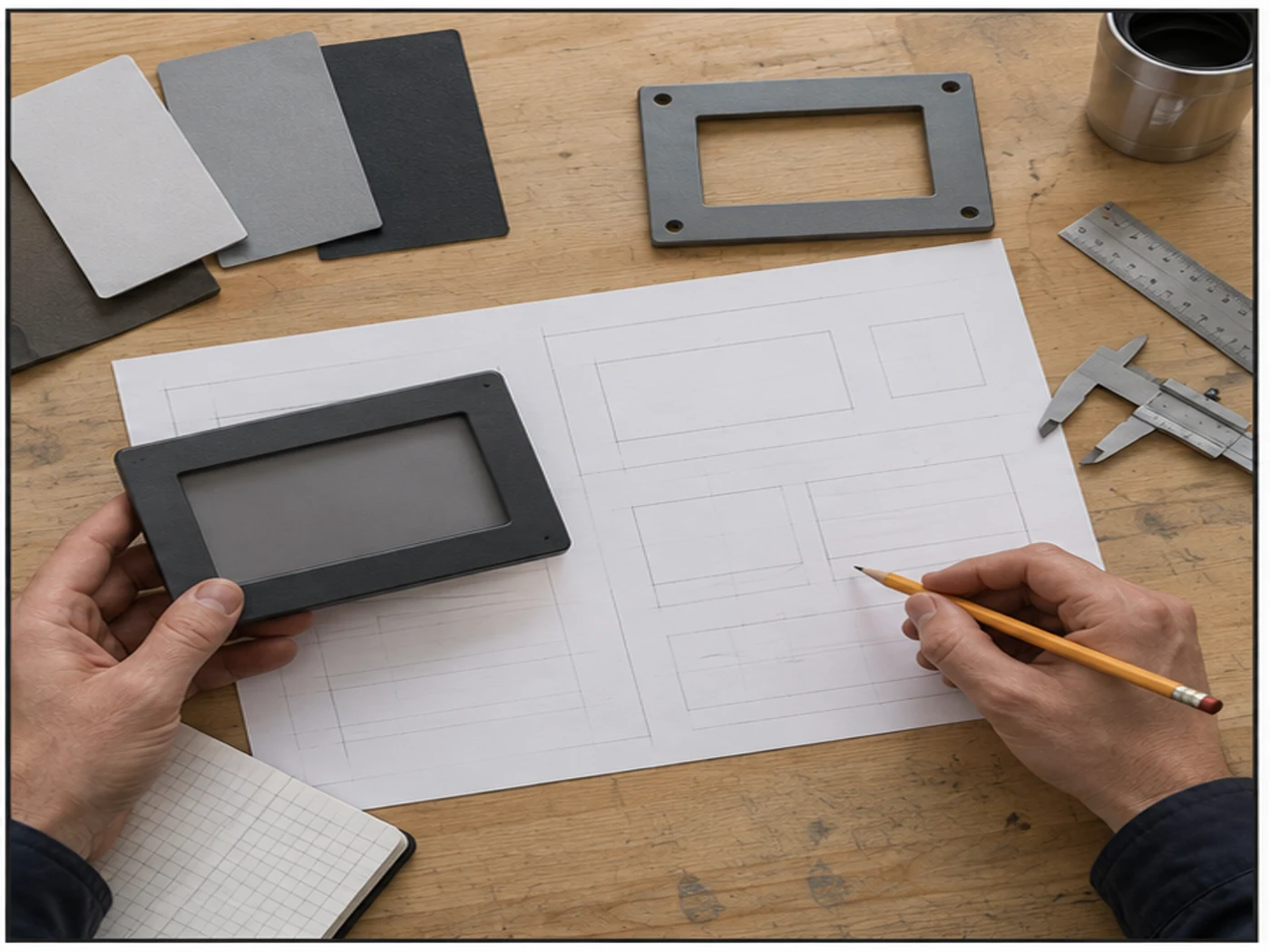
Sunlight-readable or high visibility narrows a request but does not replace selected configuration and panel context. Use a non-energized mock-up and record what readers identify. Never present a generated illustration as a real prototype photograph. For this readability question, the buyer should identify the observer, distance, light, label and selected display configuration before accepting a visibility statement. A mounting format or color option cannot replace a scoped observation under the intended panel conditions.
Acceptance sequence
Freeze configuration and drawing; mark observer positions; review intended lighting with approved non-energized evidence; record value, unit, sign and label recognition; assign corrections. This is documentation review, not live testing. For this readability question, the buyer should identify the observer, distance, light, label and selected display configuration before accepting a visibility statement. A mounting format or color option cannot replace a scoped observation under the intended panel conditions.
RITOKS product context
RITOKS identifies AD16-22 as a compact LED digital voltage panel meter with a 22 mm mounting format and listed color options. Public data does not establish digit height, brightness guarantee or viewing angle; request selected-configuration evidence. For this readability question, the buyer should identify the observer, distance, light, label and selected display configuration before accepting a visibility statement. A mounting format or color option cannot replace a scoped observation under the intended panel conditions.
FAQ: Does color define safety?
No. Color is an option unless the project separately assigns a meaning and verifies the interface. For this readability question, the buyer should identify the observer, distance, light, label and selected display configuration before accepting a visibility statement. A mounting format or color option cannot replace a scoped observation under the intended panel conditions.
FAQ: Does a photo prove readability?
No. Record observer feedback under intended conditions. For this readability question, the buyer should identify the observer, distance, light, label and selected display configuration before accepting a visibility statement. A mounting format or color option cannot replace a scoped observation under the intended panel conditions.
FAQ: Is 22 mm digit height?
No. It is a mounting-format identifier; request digit dimensions. For this readability question, the buyer should identify the observer, distance, light, label and selected display configuration before accepting a visibility statement. A mounting format or color option cannot replace a scoped observation under the intended panel conditions.
FAQ: What should an RFQ include?
Request configuration, digit dimensions, brightness/view-angle documentation when available, panel context and prototype evidence. For this readability question, the buyer should identify the observer, distance, light, label and selected display configuration before accepting a visibility statement. A mounting format or color option cannot replace a scoped observation under the intended panel conditions.
Review the complete viewing path
The display, bezel, window, label, light and observer form one viewing path. Change any one of them and the observation can change. A catalog image normally omits glare, reflections and off-axis viewing, so it should not be treated as an acceptance result. Include the installed interface in the mock-up and identify which component can be changed if a reader cannot identify the value or unit.
Make observations repeatable
Record configuration revision, date, observer position and lighting description with each observation. If readers disagree, retain the disagreement and investigate the cause rather than averaging it into a fabricated score. The aim is a transparent decision about this equipment, not a universal readability threshold. A later enclosure or label change should trigger the same review again.
Practical buyer takeaway
Use the AD16-22 product page to begin a configuration request, then ask for the missing visual fields and a representative sample. Keep color and mounting identity separate from safety claims. A clear, scoped observation is a stronger procurement record than an unsupported assertion that the display is readable everywhere.
Design for the least favorable normal view
The acceptance review should include the least favorable position that a normal operator is expected to use, not an extreme angle invented to force a failure. Include realistic glare, protective windows and the full label arrangement. If the value can be read only by standing in an unusual position, record that as a usability issue and assign an owner rather than hiding it behind a bright color choice.
Keep the evidence tied to configuration
An AD16-22 option, bezel or label change can alter the observation. Preserve configuration identity with every photograph and reader note. A later purchaser can then tell whether the evidence applies to the offered part or only to an earlier prototype. Include the unit and measurement-point label in the same visual review as the digits. A value that is easy to see but difficult to identify can still lead to the wrong operational decision. Record that distinction explicitly in the acceptance note.
A compact review worksheet
Before approving a front-panel display, write the configuration identity at the top of the worksheet. Then list the normal observer, approximate distance, off-axis position, lighting description, glare condition, unit label and reader result. Attach a photograph only as context, with exposure and scale caveats. The worksheet should end with a decision owner and a follow-up date, not a universal pass mark. If the display is changed, repeat the same observations. This makes the result useful to procurement and commissioning without claiming that one prototype represents every enclosure or observer. Include a separate note for decimal point, polarity sign and phase label recognition so a bright but ambiguous value is not accepted as clear. A repeatable worksheet also helps compare a day observation with a night observation without claiming that either one is a universal threshold. Keep the lighting description and observer identity with the note. If a protective window or bezel changes, repeat the check because the optical path has changed. Retain the selected configuration with the observation. The final record should show who observed the display, what was seen and which configuration was used. This keeps a later supplier conversation grounded in a real equipment context. The evidence remains configuration-specific and clearly dated for review.
Add the panel drawing revision and the intended unit or phase label to the worksheet. That small addition prevents a visually clear number from being accepted when it is attached to the wrong measurement point or an outdated front-panel arrangement.
Decide what a reader must do next
Readability should be tied to an operator action, not only to whether digits can be seen. Ask whether the reader must identify a stable value, notice a change, confirm a unit, compare two readings or make a stop-and-escalate decision. Mark that action beside the observation. A display can be bright enough for a quick glance yet still be unsuitable if the decimal point, polarity sign or phase label is missed. Conversely, a remote service panel may be acceptable when the documented task is an occasional confirmation rather than continuous supervision. Keep these distinctions in the procurement record and show the intended label arrangement in the non-energized mock-up. If the project has more than one observer position, repeat the same short task at each position and preserve disagreements instead of averaging them into a score. This produces a useful configuration decision without inventing a universal brightness, distance or viewing-angle threshold for AD16-22.
Source notes
Sources are listed in dossier.md. Product-specific statements are limited to verified evidence; hypothetical arithmetic is labelled.