
Cabinet Cooling Fans · RFQ Checklist
Cabinet Fan RFQ Checklist: Airflow, Voltage, Size and Environment
Cabinet Fan RFQ Checklist: Airflow, Voltage, Size and Environment begins with a controlled application record, not a catalog headline. Buyers should define the real system, installation and service conditions before comparing candidate products. Every decisive claim then needs support from the exact proposed order code.
This RFQ checklist structures information for cabinet and enclosure cooling fans. It does not calculate required airflow, promise an enclosure temperature, select a filter grade or approve a fan from free-air airflow alone.
एक नजर में निर्णय इनपुट्स
| समीक्षा क्षेत्र | खरीदार को परिभाषित करना होगा | साक्ष्य आवश्यक |
|---|---|---|
| Thermal duty | Internal losses, ambient range and target internal condition | Heat-load record and thermal objective |
| वायु मार्ग | Inlet, outlet, obstructions, filters and pressure resistance | Enclosure layout and system resistance estimate |
| विद्युत | Available supply, control method and monitoring needs | Panel electrical specification |
| यांत्रिक | Cutout, depth, orientation, guard and service clearance | Dimensioned mounting drawing |
| पर्यावरण | Dust, moisture, oil mist, corrosives and maintenance interval | Site survey and enclosure strategy |
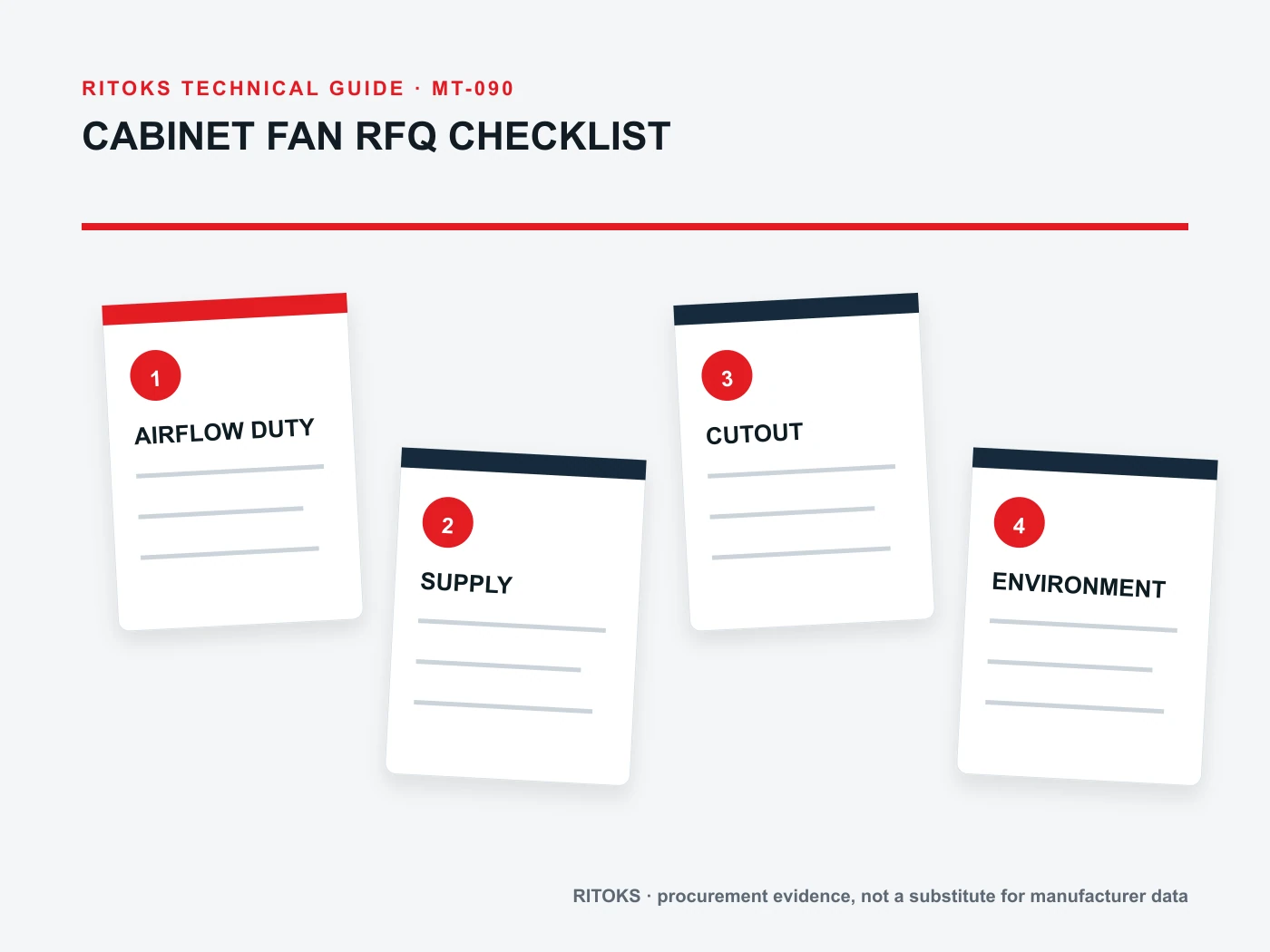
Define the Thermal Problem Before Asking for Airflow
List the heat sources inside the enclosure and the operating states that create the highest credible loss. Record minimum and maximum ambient conditions and the internal temperature objective for the equipment.
A fan moves air; it does not guarantee a temperature without a complete heat and airflow model. If ambient air cannot provide acceptable cooling or must not enter the cabinet, another thermal method may be required.
Describe the Complete Air Path
Show the intended inlet, outlet and direction of flow. Mark filters, louvers, guards, ducts, wiring, shelves and components that create resistance or recirculation. The fan must be reviewed at the system operating point, not only at free-air delivery.
Provide the enclosure geometry and proposed placement. Hot zones can remain even when total airflow appears sufficient, so the layout should direct useful air across critical heat sources and provide a clear return path.
State Supply and Control Requirements
Provide the available fan supply and its tolerance, frequency where relevant, connector or terminal preference and control method. Identify whether the fan runs continuously, from a thermostat or under another control sequence.
List monitoring requirements such as alarm or status output only when they are genuinely needed, and ask for exact-model evidence. Do not assume that a family includes speed control, tachometer output or protection features.
Freeze Mechanical and Mounting Inputs
Provide available cutout, mounting pattern, panel thickness, maximum depth, orientation, guard requirement and access for filter or fan replacement. Use an exact drawing before cutting the enclosure.
Distinguish an axial fan mounted inside a system from an integrated filter-fan assembly. Their mechanical interfaces, air resistance and service tasks differ even when a nominal frame size appears similar.
Define the Environment and Filtration Strategy
Describe dust, fibers, moisture, oil mist, corrosive contamination and washdown or outdoor exposure. If filtered ventilation is intended, state the filtration objective and expected maintenance conditions.
A filter changes resistance as it loads. The RFQ should ask for the applicable performance basis and replacement element, but the maintenance interval must be established from the real environment and inspection experience.
Plan the Outlet and Pressure Balance
An exhaust path is part of the system. Specify whether the design uses a powered inlet, powered outlet, passive grille or another arrangement. Check how pressure direction affects leakage paths and contamination entry.
The outlet should not be treated as a decorative opening. Its size, filter, guard and location contribute to system resistance and the distribution of air through the cabinet.
एक सटीक-मॉडल साक्ष्य फ़ाइल बनाएँ
Build the cabinet-fan approval record around the proposed order code, supply, frame or cabinet cutout, bearing and wiring version. For a filter-fan kit, identify the matched fan, filter and grille. Attach the exact datasheet, installation drawing and model-specific airflow or pressure evidence requested for the application, retaining each document's revision or retrieval date. Keep any unresolved requirement visible in the RFQ; neither a similar frame nor a family listing proves the selected configuration.
जाँचें कि प्रत्येक स्वीकृत विवरण एक ही ऑर्डर योग्य वस्तु का वर्णन करता है। एक वेरिएंट से पारिवारिक अधिकतम, दूसरे से आरेख और तीसरे से वैकल्पिक सुविधा को एक साथ न मिलाएँ। अनसुलझे फ़ील्ड्स को स्पष्ट रूप से चिह्नित करें ताकि वे तकनीकी और वाणिज्यिक समीक्षा में दिखाई दें।.
परियोजना इनपुट्स को उत्पाद साक्ष्य से अलग रखें
The project team defines the application: source, load, duty, environment, controls, mounting, service and required functions. The supplier identifies an exact Cabinet Fan and supports it with exact documents. Neither side should fill a gap by inference from appearance, a shared family name or one matching headline value.
जब कोटेशन की तुलना की जा रही हो, तब आवेदन रिकॉर्ड को स्थिर रखें। यदि विद्युत ड्यूटी, वातावरण, शीतलन विधि, आवरण, स्थापना या आवश्यक कार्य बदलता है, तो एक संशोधित रिकॉर्ड जारी करें और प्रत्येक आपूर्तिकर्ता से उम्मीदवार की पुनः पुष्टि करने के लिए कहें।.
ऑर्डर देने से पहले स्वीकृति रिकॉर्ड परिभाषित करें
Write the acceptance record before a preferred Cabinet Fan is chosen. Include the project inputs, proposed order code, included accessories, document revisions, exceptions, assumptions and the person responsible for resolving each open point. This prevents the technical basis from being reconstructed after price negotiations have already narrowed the choice.
अनिवार्य आवश्यकताओं को प्राथमिकताओं और भविष्य के विकल्पों से अलग करें। एक अनिवार्य शर्त के लिए प्रत्यक्ष साक्ष्य या दस्तावेजीकृत इंजीनियरिंग निर्णय की आवश्यकता होती है। प्राथमिकता तुलना को प्रभावित कर सकती है, लेकिन इसे सुरक्षा या अनुपालन आवश्यकता के रूप में प्रस्तुत नहीं किया जाना चाहिए। भविष्य के विकल्पों की जाँच केवल तब की जानी चाहिए जब परियोजना वास्तव में उनकी अपेक्षा करती हो, क्योंकि वैकल्पिक सुविधाएँ ऑर्डर कोड, टर्मिनलों, आयामों या सहायक दस्तावेजों को बदल सकती हैं।.
प्रदान की गई वस्तु और तैयार असेंबली की पुष्टि करें।
Incoming inspection should compare the delivered Cabinet Fan, labels, accessories and documents with the approved record. Do not accept a same-family replacement solely because its appearance or one rating matches. Record any substitution and repeat the affected review before installation.
असेंबली के बाद उन कार्यों और स्थितियों का सत्यापन करें जिन्हें केवल घटक संबंधी दस्तावेज़ों से साबित नहीं किया जा सकता। इस जांच में यांत्रिक फिट, अनुमोदित आरेख के अनुसार वायरिंग, नियंत्रण व्यवहार, तापमान, वायु प्रवाह, अलार्म या लागू होने पर सेवा पहुँच शामिल हो सकती है। खरीद आदेश में सार्वभौमिक सीमाएँ निर्धारित करने के बजाय परियोजना परीक्षण योजना में प्रतिनिधि संचालन अवस्थाएँ और स्वीकृति मानदंड परिभाषित करें।.
सामान्य खरीद त्रुटियाँ
- Selecting a Cabinet Fan from one headline value while the application context remains incomplete.
- पड़ोसी ऑर्डर कोड से वक्र, सर्किट, आरेख या दावे का उपयोग करना।.
- श्रेणी पृष्ठ, उत्पाद की तस्वीर या नाममात्र आकार को सटीक अनुकूलता के प्रमाण के रूप में मानना।.
- यह मानते हुए कि कोई सहायक उपकरण, सिस्टम फ़ंक्शन या समन्वय परिणाम बिना दस्तावेज़ीकरण के शामिल किया गया है।.
- बिजली, यांत्रिक और साक्ष्य समीक्षा को दोहराए बिना एक प्रतिस्थापन को मंजूरी देना।.
कीमत और लीड टाइम की तुलना करने से पहले इन अंतरालों को सुलझा लें। एक प्रस्ताव तकनीकी रूप से अधूरा होने के बावजूद वाणिज्यिक रूप से आकर्षक बना रह सकता है, लेकिन गायब साक्ष्य को कोटेशन के भीतर छिपाया नहीं जाना चाहिए।.
सप्लायर ऑफ़र्स की तुलना कैसे करें
| समीक्षा क्षेत्र | खरीदार को परिभाषित करना होगा | साक्ष्य आवश्यक |
|---|---|---|
| आदेश कोड | प्रस्तावित आइटम और शामिल सहायक उपकरण | सटीक डेटाशीट और दायरा |
| आवेदन मिलान | प्रस्तुत परिचालन और पर्यावरणीय परिस्थितियाँ | प्रत्येक आवश्यकता का लिखित उत्तर |
| यांत्रिक एकीकरण | माउंटिंग, टर्मिनल, क्लीयरेंस और सर्विस | सटीक चित्र और निर्देश |
| विद्युत साक्ष्य | लागू रेटिंग्स, वक्र और टोपोलॉजी | सटीक-मॉडल तकनीकी दस्तावेज़ |
| खुले बिंदु | अज्ञात, अपवाद और धारणाएँ | दिनांकित स्पष्टीकरण सूची |
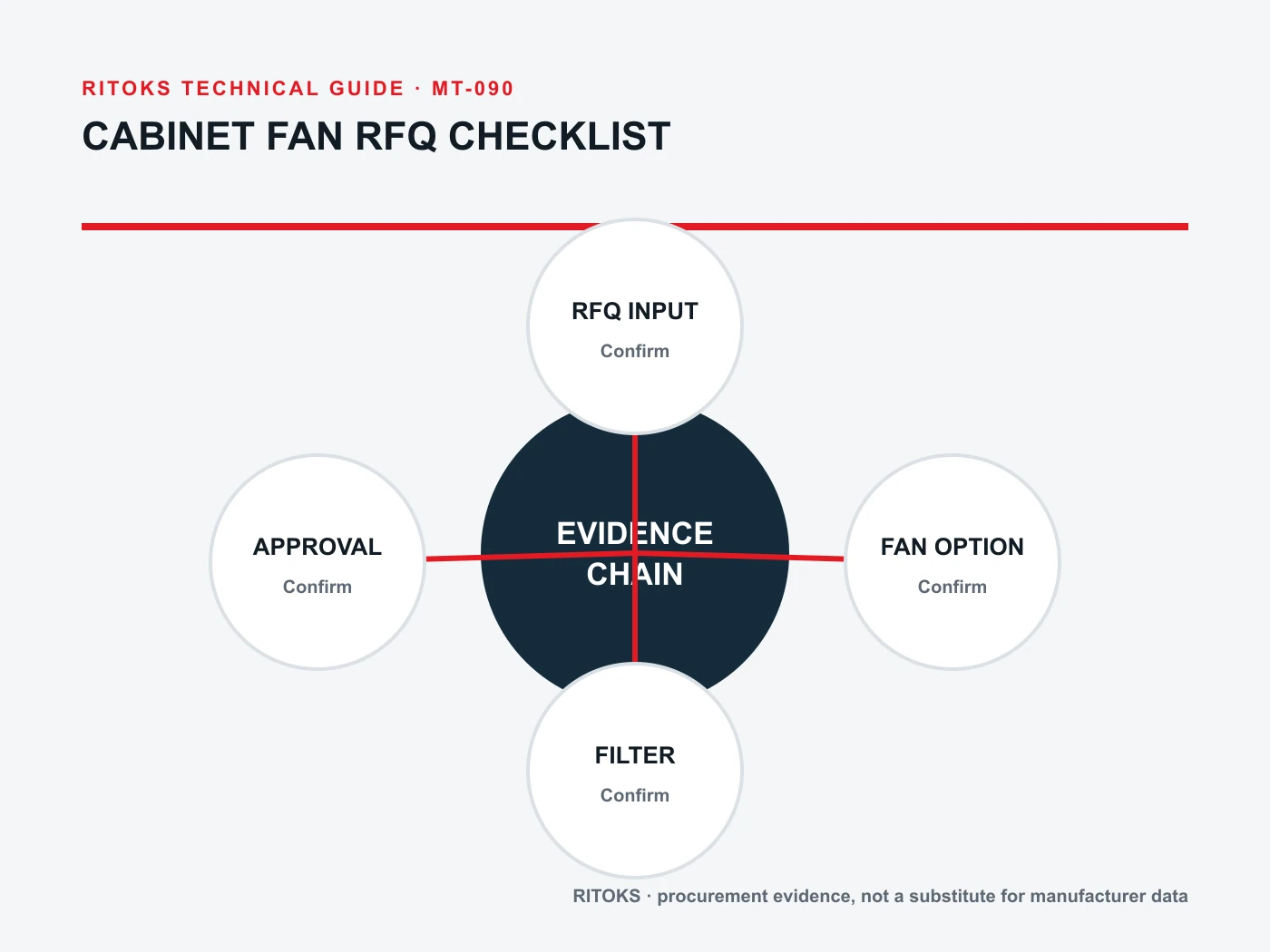
Normalize every Cabinet Fan offer to the same application record. Keep document revisions, test conditions, included accessories and open questions beside each value. This makes differences in delivered scope visible and prevents a lower-cost but narrower offer from appearing equivalent to a complete proposal.
निर्णय कार्यप्रवाह
- प्रणाली की सीमा और परिचालन अवस्थाओं को स्थिर करें।.
- विद्युत, यांत्रिक, पर्यावरणीय और सेवा इनपुट्स को रिकॉर्ड करें।.
- समीक्षा के लिए एक पूर्ण उम्मीदवार ऑर्डर कोड चुनें।.
- प्रत्येक महत्वपूर्ण कथन को सटीक-मॉडल साक्ष्यों के आधार पर सत्यापित करें।.
- व्यावसायिक तुलना से पहले अपवादों और मान्यताओं को सुलझाएँ।.
- जहाँ अनुप्रयोग जोखिम की आवश्यकता हो, वहाँ तैयार असेंबली का सत्यापन करें।.
जब कोई महत्वपूर्ण इनपुट अज्ञात हो, उद्धृत मॉडल अस्पष्ट हो, कोई आवश्यक दावा केवल किसी अन्य निर्माता या ऑर्डर कोड द्वारा समर्थित हो, या स्थापना उपलब्ध साक्ष्यों से परे हो, तो रुकें। ये इंजीनियरिंग अंतराल हैं, संपादकीय विवरण नहीं।.
आरएफक्यू तैयारी चेकलिस्ट
A useful RFQ for cabinet fan rfq checklist is concise enough to answer and complete enough to prevent silent assumptions. Identify unknown values as questions and require a full orderable code rather than a generic family recommendation.
- HEAT LOAD
- AMBIENT
- AIR PATH
- SYSTEM RESISTANCE
- SUPPLY
- CUTOUT
- पर्यावरण
- MAINTENANCE
- आवश्यक दस्तावेज़ और संशोधन
- मात्रा, गंतव्य और अनुरोधित वितरण दायरा
आपूर्तिकर्ता से अनुरोध करें कि वह अपवादों, मान्यताओं और विकल्पों को अलग से बताए। तकनीकी इनपुट्स के बाद मात्रा और गंतव्य दर्ज करें ताकि वाणिज्यिक शर्तें अनसुलझे इंजीनियरिंग प्रश्नों को अस्पष्ट न करें।.
अक्सर पूछे जाने वाले प्रश्न
Can I select a Cabinet Fan from one rating or size?
नहीं। चयन के लिए पूर्ण आवेदन, सटीक निर्माण और सभी लागू विद्युत, यांत्रिक, तापीय, पर्यावरणीय तथा दस्तावेज़ीकरण संबंधी शर्तें आवश्यक हैं।.
क्या मैं स्वीकृति के प्रमाण के रूप में पारिवारिक पृष्ठ का उपयोग कर सकता हूँ?
परिवार पृष्ठ अभिविन्यास के लिए उपयोगी है। अनुमोदन के लिए सटीक ऑर्डर-कोड डेटाशीट, ड्राइंग, निर्देश और परियोजना-विशिष्ट इंजीनियरिंग साक्ष्य का उपयोग किया जाना चाहिए।.
क्या एक जैसे दिखने वाले मॉडल परस्पर बदलने योग्य हैं?
स्वचालित रूप से नहीं। समान आवासों में विभिन्न सर्किट, सामग्री, टर्मिनल, रेटिंग या सहायक उपकरण हो सकते हैं। प्रत्येक विकल्प के लिए समीक्षा दोहराएँ।.
उद्धरण में क्या खुला रहना चाहिए?
किसी भी अनुपस्थित प्रोजेक्ट इनपुट, बिना सत्यापित सटीक-मॉडल दावे, अस्पष्ट शामिल सहायक उपकरण या अनसुलझी स्थापना स्थिति को अनुमानित करने के बजाय खुले बिंदु के रूप में सूचीबद्ध किया जाना चाहिए।.
संबंधित RITOKS संसाधन और RFQ
ब्राउज़ करें कैबिनेट पंखे उत्पाद श्रेणी, संबंधित उत्पाद पृष्ठ की समीक्षा करें, समीक्षा संबंधित उत्पाद विकल्प 2, समीक्षा संबंधित उत्पाद विकल्प 3. ये पृष्ठ व्यावसायिक संदर्भ प्रदान करते हैं; सटीक उपयुक्तता अभी भी परियोजना रिकॉर्ड और उद्धृत ऑर्डर कोड पर निर्भर करती है।.
जब तकनीकी रिकॉर्ड तैयार हो जाएगा, आवेदन और साक्ष्य आवश्यकताओं को RITOKS को भेजें। एक प्रलेखित उद्धरण के लिए। अंतिम चयन को परियोजना अभियंता की स्वीकृति और वर्तमान निर्माता दस्तावेज़ीकरण के अधीन रखें।.