
Cabinet Cooling Fans · RFQ Checklist
Cabinet Fan RFQ Checklist: Airflow, Voltage, Size and Environment
Cabinet Fan RFQ Checklist: Airflow, Voltage, Size and Environment begins with a controlled application record, not a catalog headline. Buyers should define the real system, installation and service conditions before comparing candidate products. Every decisive claim then needs support from the exact proposed order code.
This RFQ checklist structures information for cabinet and enclosure cooling fans. It does not calculate required airflow, promise an enclosure temperature, select a filter grade or approve a fan from free-air airflow alone.
의사결정 입력 요소 요약
| 검토 대상 영역 | 구매자는 다음을 명시해야 합니다. | 필요한 증거 |
|---|---|---|
| Thermal duty | Internal losses, ambient range and target internal condition | Heat-load record and thermal objective |
| 공기 흐름 경로 | Inlet, outlet, obstructions, filters and pressure resistance | Enclosure layout and system resistance estimate |
| 전기 | Available supply, control method and monitoring needs | Panel electrical specification |
| 기계 | Cutout, depth, orientation, guard and service clearance | Dimensioned mounting drawing |
| 환경 | Dust, moisture, oil mist, corrosives and maintenance interval | Site survey and enclosure strategy |
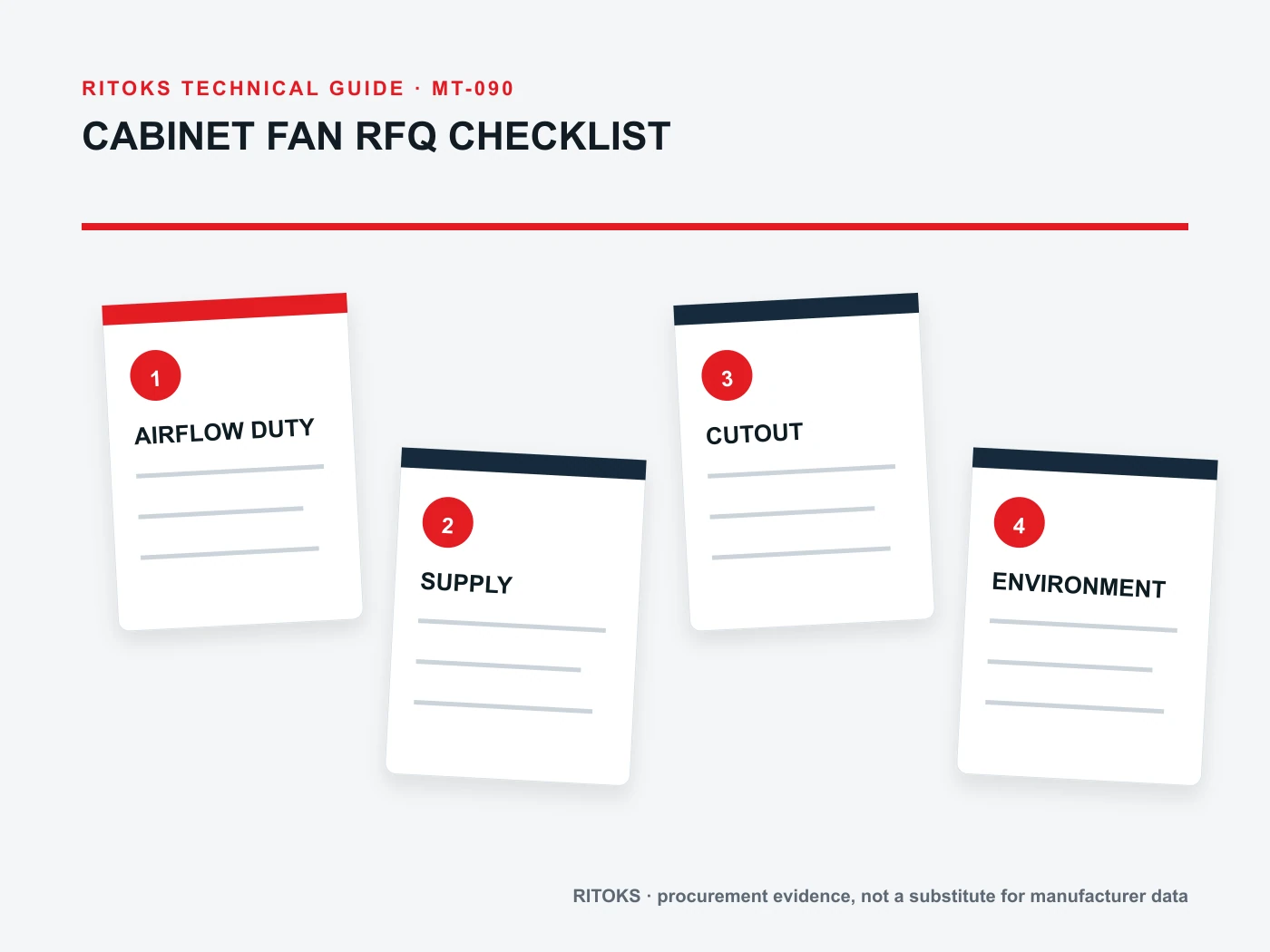
Define the Thermal Problem Before Asking for Airflow
List the heat sources inside the enclosure and the operating states that create the highest credible loss. Record minimum and maximum ambient conditions and the internal temperature objective for the equipment.
A fan moves air; it does not guarantee a temperature without a complete heat and airflow model. If ambient air cannot provide acceptable cooling or must not enter the cabinet, another thermal method may be required.
Describe the Complete Air Path
Show the intended inlet, outlet and direction of flow. Mark filters, louvers, guards, ducts, wiring, shelves and components that create resistance or recirculation. The fan must be reviewed at the system operating point, not only at free-air delivery.
Provide the enclosure geometry and proposed placement. Hot zones can remain even when total airflow appears sufficient, so the layout should direct useful air across critical heat sources and provide a clear return path.
State Supply and Control Requirements
Provide the available fan supply and its tolerance, frequency where relevant, connector or terminal preference and control method. Identify whether the fan runs continuously, from a thermostat or under another control sequence.
List monitoring requirements such as alarm or status output only when they are genuinely needed, and ask for exact-model evidence. Do not assume that a family includes speed control, tachometer output or protection features.
Freeze Mechanical and Mounting Inputs
Provide available cutout, mounting pattern, panel thickness, maximum depth, orientation, guard requirement and access for filter or fan replacement. Use an exact drawing before cutting the enclosure.
Distinguish an axial fan mounted inside a system from an integrated filter-fan assembly. Their mechanical interfaces, air resistance and service tasks differ even when a nominal frame size appears similar.
Define the Environment and Filtration Strategy
Describe dust, fibers, moisture, oil mist, corrosive contamination and washdown or outdoor exposure. If filtered ventilation is intended, state the filtration objective and expected maintenance conditions.
A filter changes resistance as it loads. The RFQ should ask for the applicable performance basis and replacement element, but the maintenance interval must be established from the real environment and inspection experience.
Plan the Outlet and Pressure Balance
An exhaust path is part of the system. Specify whether the design uses a powered inlet, powered outlet, passive grille or another arrangement. Check how pressure direction affects leakage paths and contamination entry.
The outlet should not be treated as a decorative opening. Its size, filter, guard and location contribute to system resistance and the distribution of air through the cabinet.
정확한 모델 증거 파일 생성하기
Build the cabinet-fan approval record around the proposed order code, supply, frame or cabinet cutout, bearing and wiring version. For a filter-fan kit, identify the matched fan, filter and grille. Attach the exact datasheet, installation drawing and model-specific airflow or pressure evidence requested for the application, retaining each document's revision or retrieval date. Keep any unresolved requirement visible in the RFQ; neither a similar frame nor a family listing proves the selected configuration.
승인된 모든 명세가 동일한 주문 가능 품목을 설명하고 있는지 확인하십시오. 한 변형의 ‘제품군 최대치’, 다른 변형의 ‘도면’, 그리고 세 번째 변형의 ‘선택 사양’을 혼합하여 사용하지 마십시오. 해결되지 않은 항목은 기술 검토 및 상업 검토 과정에서 계속 표시될 수 있도록 명확하게 표시하십시오.
프로젝트 입력 사항과 제품 증거를 별도로 관리하십시오
The project team defines the application: source, load, duty, environment, controls, mounting, service and required functions. The supplier identifies an exact Cabinet Fan and supports it with exact documents. Neither side should fill a gap by inference from appearance, a shared family name or one matching headline value.
견적서를 비교하는 동안 신청 기록을 동결하십시오. 전기 부하, 환경, 냉각 방식, 인클로저, 설치 방식 또는 요구 기능이 변경될 경우, 수정된 기록을 발행하고 모든 공급업체에 해당 후보 제품을 재확인하도록 요청하십시오.
주문하기 전에 인수 기록을 정의하십시오
Write the acceptance record before a preferred Cabinet Fan is chosen. Include the project inputs, proposed order code, included accessories, document revisions, exceptions, assumptions and the person responsible for resolving each open point. This prevents the technical basis from being reconstructed after price negotiations have already narrowed the choice.
필수 요구 사항과 선호 사항 및 향후 옵션을 구분해야 합니다. 필수 조건에는 직접적인 증거나 문서화된 엔지니어링 결정이 필요합니다. 선호 사항은 비교에 영향을 미칠 수 있으나, 안전 또는 규정 준수 요구 사항으로 제시되어서는 안 됩니다. 향후 옵션은 프로젝트에서 이를 진정으로 예상하는 경우에만 확인해야 합니다. 선택적 기능은 주문 코드, 단자, 치수 또는 지원 문서를 변경할 수 있기 때문입니다.
납품된 품목 및 완성된 조립품 확인
Incoming inspection should compare the delivered Cabinet Fan, labels, accessories and documents with the approved record. Do not accept a same-family replacement solely because its appearance or one rating matches. Record any substitution and repeat the affected review before installation.
조립이 완료된 후에는 부품 설명서만으로는 확인할 수 없는 기능 및 상태를 점검하십시오. 점검 항목에는 기계적 결합 상태, 승인된 회로도에 따른 배선, 제어 동작, 온도, 기류, 경보 또는 필요한 경우 정비 접근성 등이 포함될 수 있습니다. 구매 주문서에 일률적인 한계를 임의로 설정하기보다는, 프로젝트 시험 계획서에 대표적인 작동 상태와 인수 기준을 명시하십시오.
조달 과정에서 흔히 발생하는 오류
- Selecting a Cabinet Fan from one headline value while the application context remains incomplete.
- 인접한 주문 코드의 곡선, 회로, 도면 또는 청구항을 사용하는 경우.
- 카테고리 페이지, 상품 사진 또는 명목상의 사이즈를 정확한 호환성 증거로 간주하는 것.
- 관련 문서 없이 액세서리, 시스템 기능 또는 조정 결과가 포함된 것으로 가정합니다.
- 전기, 기계 및 증거 검토를 반복하지 않고 대체 인력을 승인하는 것.
가격과 납기일을 비교하기 전에 이러한 미비점을 먼저 해결하십시오. 제안서는 기술적으로 미비한 부분이 있더라도 상업적으로는 여전히 매력적일 수 있지만, 누락된 증거 자료가 견적서 속에 묻혀서는 안 됩니다.
공급업체 제안서 비교 방법
| 검토 대상 영역 | 구매자는 다음을 명시해야 합니다. | 필요한 증거 |
|---|---|---|
| 주문 코드 | 제안된 품목 및 포함된 부속품을 모두 포함합니다. | 정확한 데이터시트 및 오실로스코프 |
| 응용 프로그램 일치 | 제출된 운영 및 환경 조건 | 각 요구 사항에 대한 서면 답변 |
| 기계적 통합 | 설치, 단자, 여유 공간 및 유지보수 | 정확한 도면과 지침 |
| 전기적 증거 | 적용 가능한 정격, 특성 곡선 및 토폴로지 | 정확한 모델의 기술 문서 |
| 논의 사항 | 알 수 없는 사항, 예외 및 가정 | 날짜가 기재된 설명 목록 |
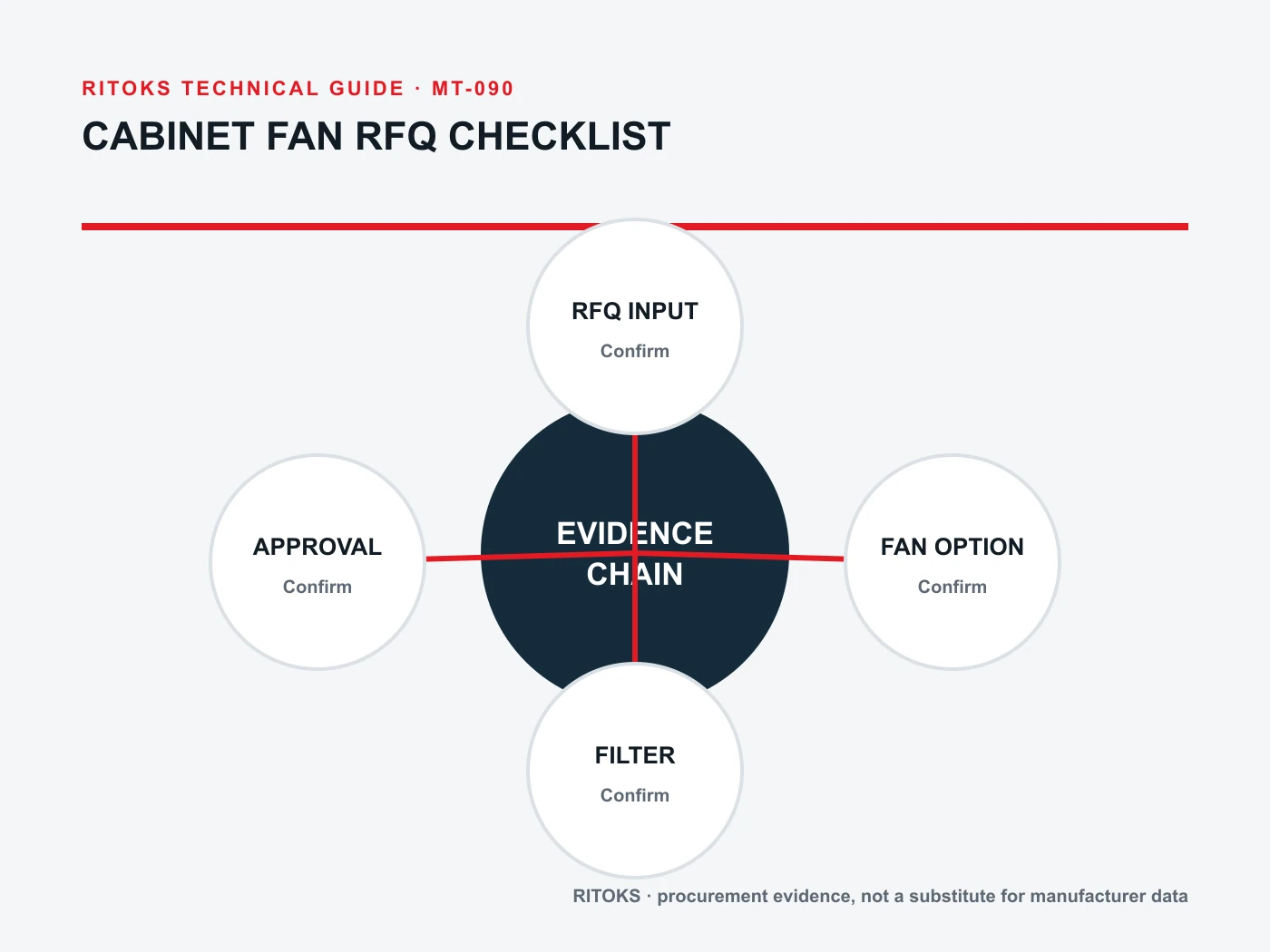
Normalize every Cabinet Fan offer to the same application record. Keep document revisions, test conditions, included accessories and open questions beside each value. This makes differences in delivered scope visible and prevents a lower-cost but narrower offer from appearing equivalent to a complete proposal.
의사결정 워크플로우
- 시스템 경계와 작동 상태를 고정합니다.
- 전기, 기계, 환경 및 서비스 관련 입력 사항을 기록하십시오.
- 검토할 후보 주문 코드를 하나 선택하십시오.
- 모든 중요한 주장을 정확한 모델의 증거에 비추어 검증하라.
- 상업적 비교에 앞서 예외 사항과 가정 사항을 해결하십시오.
- 적용 위험으로 인해 필요한 경우, 완성된 조립품을 검증하십시오.
중요한 입력값이 알려지지 않았거나, 인용된 모델이 모호하거나, 필수 명세가 다른 제조업체나 주문 코드에 의해서만 뒷받침되거나, 설치 조건이 이용 가능한 증거의 범위를 벗어날 경우 작업을 중단하십시오. 이는 편집상의 세부 사항이 아닌 공학적 공백입니다.
견적 요청서(RFQ) 작성 체크리스트
A useful RFQ for cabinet fan rfq checklist is concise enough to answer and complete enough to prevent silent assumptions. Identify unknown values as questions and require a full orderable code rather than a generic family recommendation.
- HEAT LOAD
- AMBIENT
- AIR PATH
- SYSTEM RESISTANCE
- SUPPLY
- CUTOUT
- 환경
- MAINTENANCE
- 필수 서류 및 수정 사항
- 수량, 배송지 및 요청된 배송 범위
공급업체에 제외 사항, 가정 및 선택 사항을 별도로 명시해 줄 것을 요청하십시오. 기술적 입력 사항 뒤에 수량과 목적지를 기록하여, 상업적 조건이 해결되지 않은 기술적 문제들을 가리지 않도록 하십시오.
자주 묻는 질문
Can I select a Cabinet Fan from one rating or size?
아니요. 선정에는 완전한 신청서, 정확한 시공 사양 및 모든 관련 전기, 기계, 열, 환경 및 문서화 조건이 필요합니다.
가족 페이지를 승인 증빙 자료로 사용할 수 있나요?
가족 페이지는 전반적인 이해를 돕는 데 유용합니다. 승인 시에는 정확한 주문 코드가 기재된 데이터시트, 도면, 지침서 및 프로젝트별 기술적 증빙 자료를 사용해야 합니다.
겉모습이 비슷한 모델들은 서로 바꿔서 사용할 수 있나요?
자동으로 적용되는 것은 아닙니다. 유사한 외관의 제품이라도 회로, 재질, 단자, 정격 또는 부속품이 다를 수 있습니다. 대체품마다 검토 과정을 반복하십시오.
견적서에는 어떤 항목을 포함시켜야 할까요?
누락된 프로젝트 입력 사항, 검증되지 않은 정밀 모델 주장, 불분명한 포함 부속품 또는 해결되지 않은 설치 조건은 가정하지 말고 미해결 사항으로 기재해야 합니다.
관련 RITOKS 자료 및 견적 요청서(RFQ)
다음 내용을 살펴보세요. 캐비닛 팬 제품 카테고리, 주요 관련 제품 페이지를 확인해 주세요, 관련 제품 옵션 2 살펴보기, 관련 제품 옵션 3 검토하기. 이 페이지들은 상업적 배경을 제공하며, 정확한 적합 여부는 여전히 프로젝트 실적과 제시된 주문 코드에 따라 달라집니다.
기술 기록이 준비되면, 신청서 및 증빙 서류를 RITOKS로 보내주십시오 서면 견적을 요청하십시오. 최종 선정은 프로젝트 엔지니어의 승인 및 해당 제조사의 최신 문서를 기준으로 해야 합니다.