
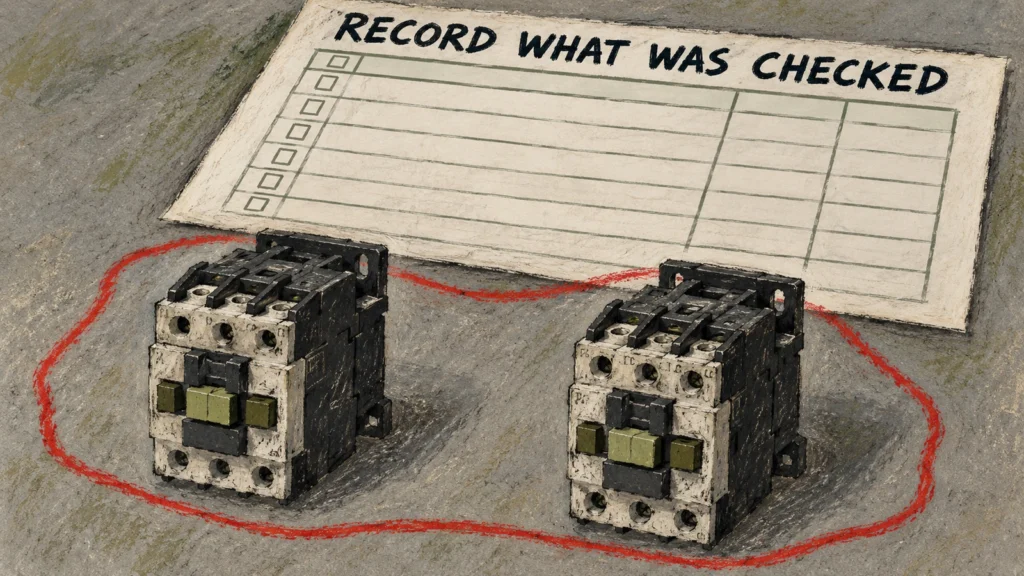
Testing a Reversing Starter Interlock: Write the Acceptance Plan
Define the assembly boundary, approved checks, command cases and acceptance evidence without improvising a hazardous interlock test.

Define the assembly boundary, approved checks, command cases and acceptance evidence without improvising a hazardous interlock test.
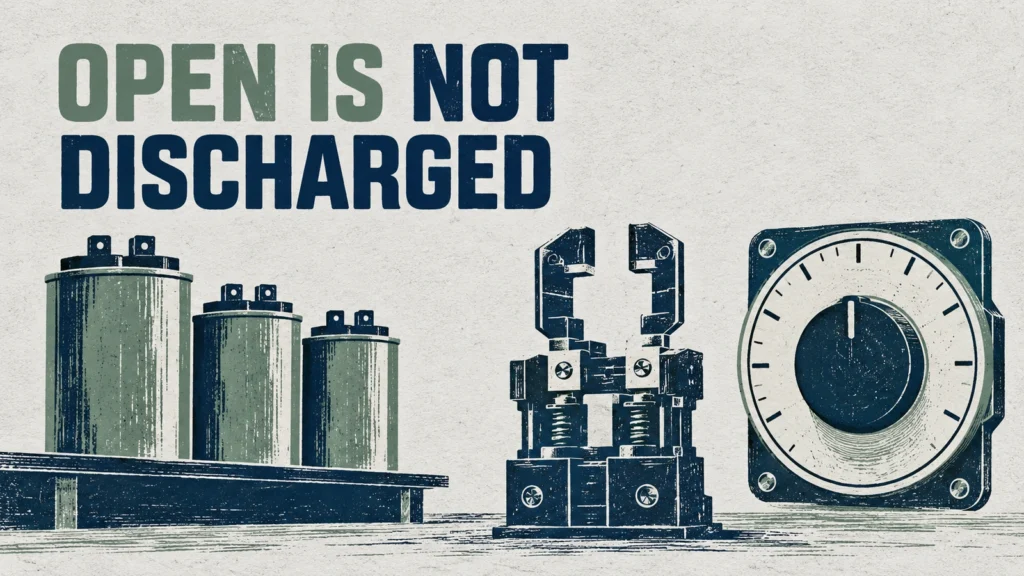
Review residual voltage, the discharge arrangement and controller timing before approving faster capacitor bank step reconnection.
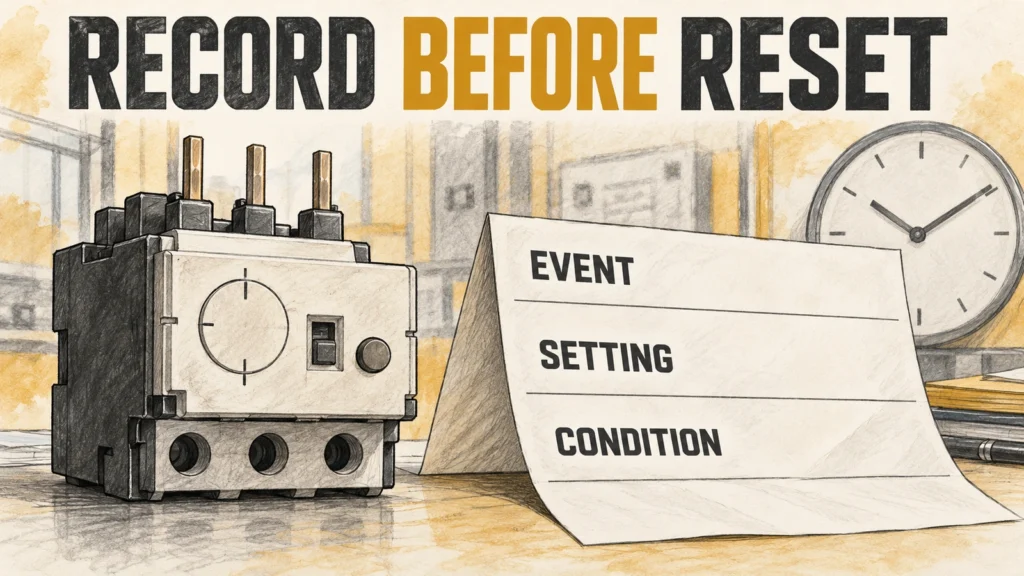
Preserve the trip indication, configuration, phase-current history and motor operating conditions before an authorized reset or restart decision.

Separate mechanical test operation, contact response and installed circuit checks from verification of an overload relay’s thermal characteristic.

Compare controlled-path architectures against delta and star loads, neutral connections and switching scope without altering a three-pole device.

Build a traceable mapping between supply phases, synchronization references, bridge device labels and isolated gate channels before approved commissioning.

Compare supply phase count, controlled-device topology, firing interfaces and operating scope before selecting a rectifier for adjustable DC.
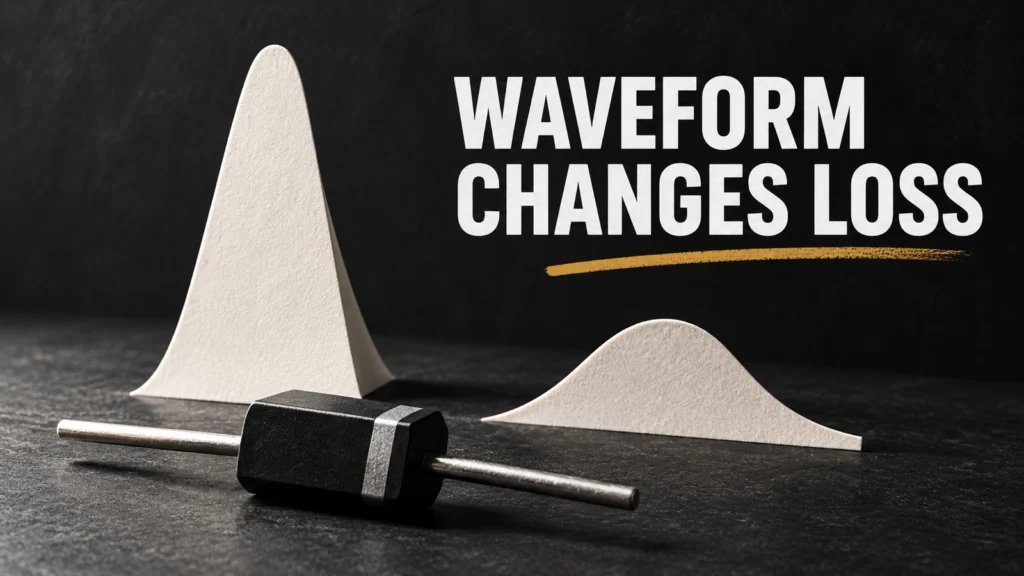
Calculate rectifier conduction loss using actual device paths, average and RMS currents, forward characteristics and stated thermal assumptions.
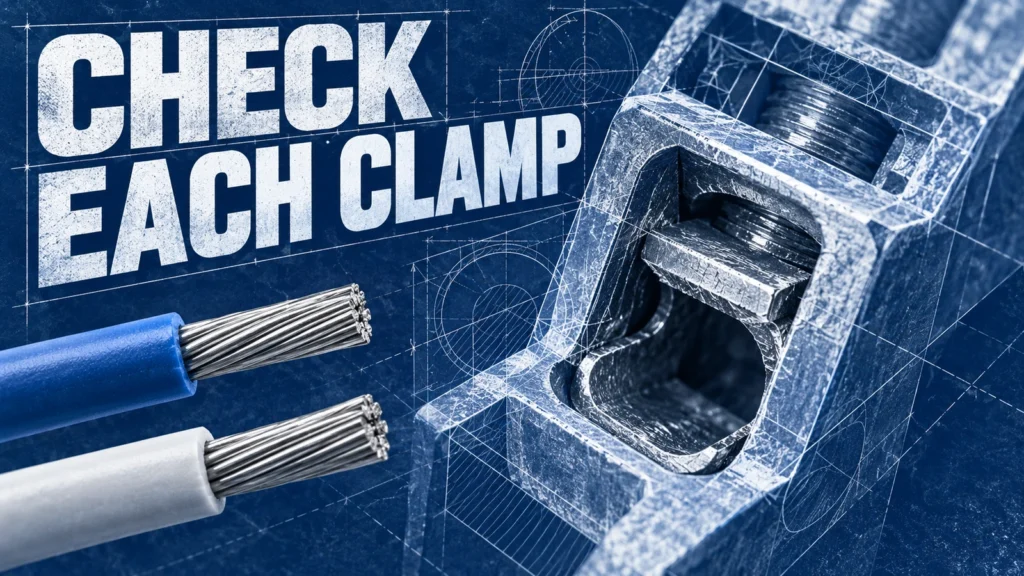
Turn exact clamp allowances into a conductor-by-port work instruction instead of judging two-wire suitability from hole size.
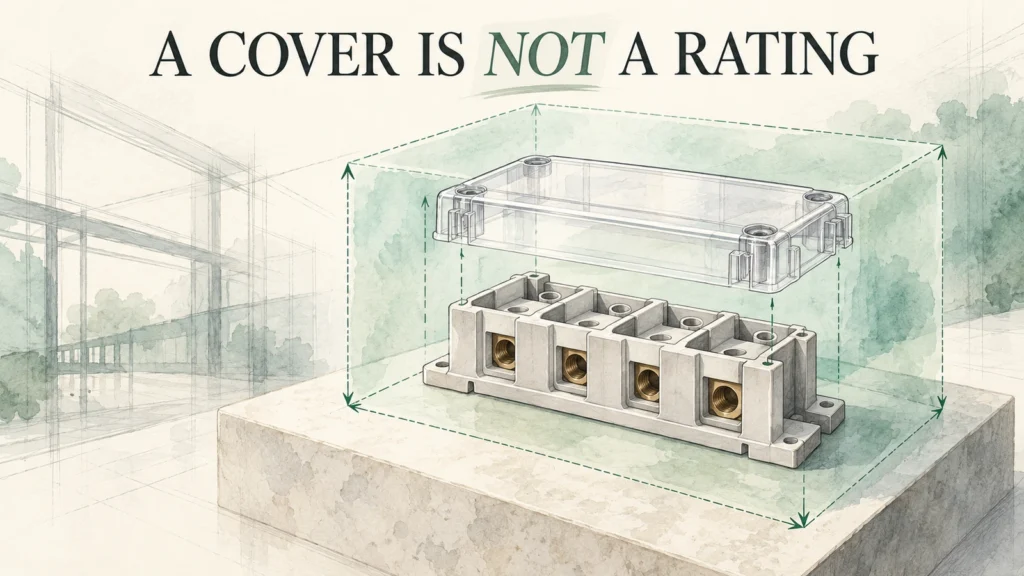
Verify the exact protection claim, cover and installed wiring conditions instead of inferring a rating from a transparent lid.