
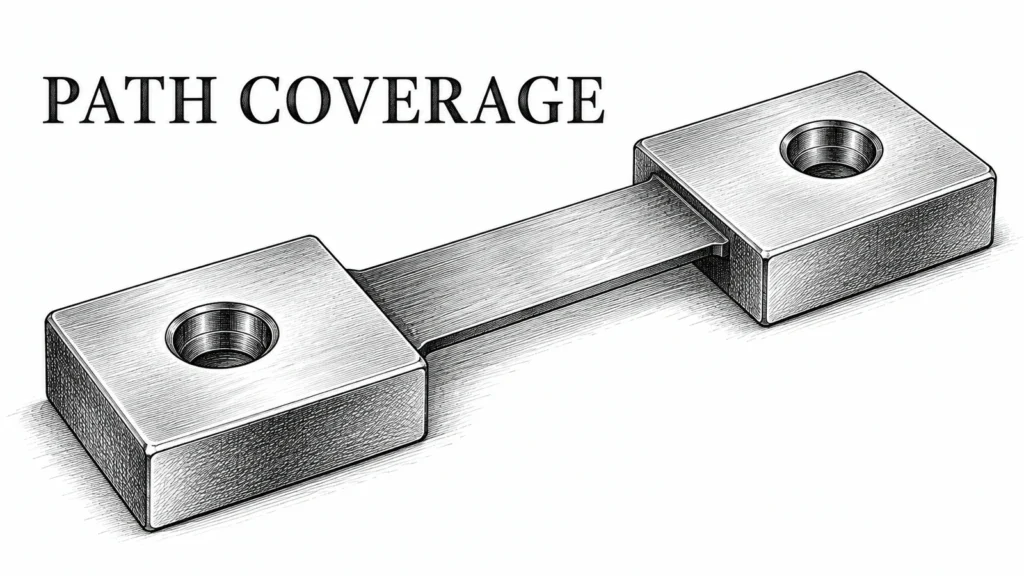
Battery Shunt Placement: Account for Every Charge and Discharge Path
Review the battery measurement boundary, charging sources, loads and operating states before accepting whole-battery shunt coverage.

Review the battery measurement boundary, charging sources, loads and operating states before accepting whole-battery shunt coverage.

Define the measurement boundary, directional counters and register-to-platform mapping before accepting charge and discharge energy data.

Keep exact meter and shunt identities, report scopes, settings and replacement records together without overstating the measurement claim.
Define measured quantities, source fields, timing, storage and operating annotations without assuming waveform recording or built-in history.

Keep harmonic content, reference current and measurement scope visible when reporting THD and TDD; distinguish calculation from compliance.

Organize event definitions, source timestamps, duration availability, original files and operating context without assuming waveform capability or root cause.

Review live conductors, neutral returns, PE routing and the matched sensor–monitor pair before approving a residual-current monitoring layout.

Separate star acceleration time from contactor changeover time and build a motor, load and sequence evidence set for the starter RFQ.

Separate stop commands, contactor feedback and actual motion when specifying a reversing assembly, permitted duty and direction sequence.
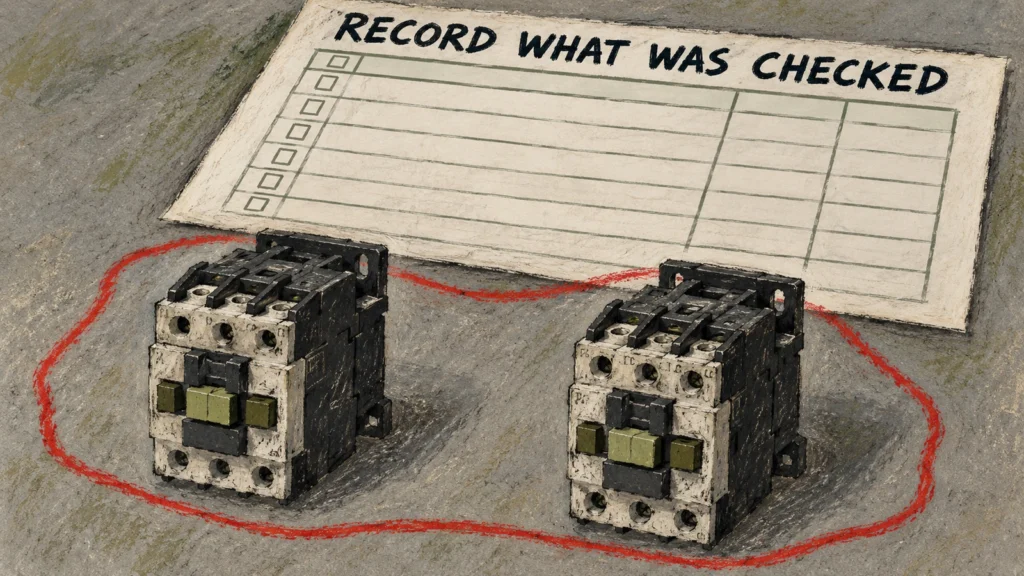
Define the assembly boundary, approved checks, command cases and acceptance evidence without improvising a hazardous interlock test.