
तापीय प्रबंधन · तकनीकी स्पष्टीकरणकर्ता
Thermal Management for Outdoor Electrical Cabinets
Thermal Management for Outdoor Electrical Cabinets starts with the system question: Which solar, ambient, ingress and duty conditions change the approach? A useful selection brief connects the equipment duty, installation and receiving system to a specific orderable product. The article below separates project inputs from product evidence so that a familiar product name does not quietly become a technical approval.
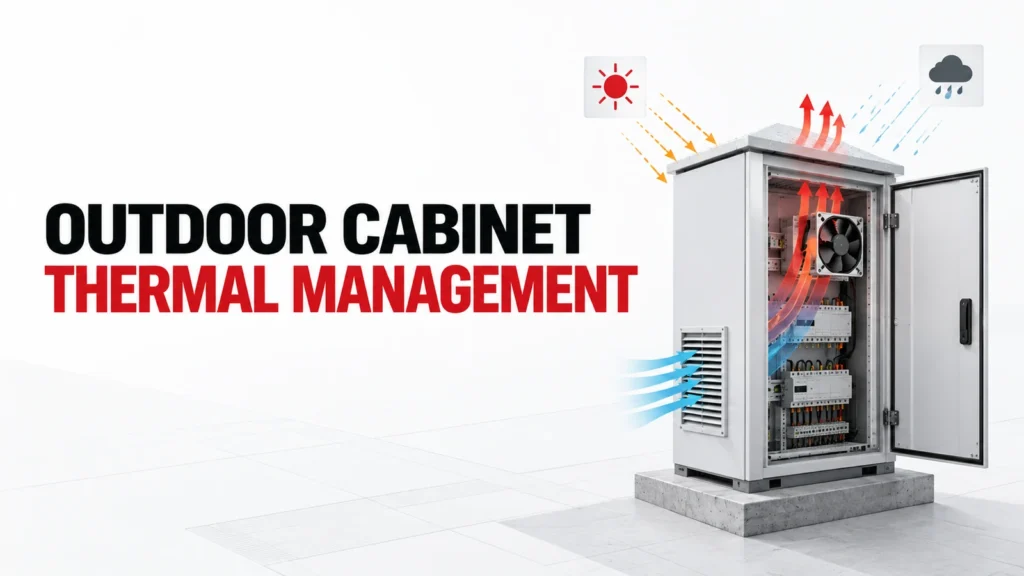
This guide defines outdoor cabinet thermal inputs and solution roles. It does not claim that an indoor-rated air conditioner, fan or heater is suitable outdoors; suitability must be established for the exact product and assembled enclosure.
एक नजर में निर्णय इनपुट्स
| समीक्षा क्षेत्र | परियोजना इनपुट | मांगने के लिए साक्ष्य |
|---|---|---|
| SOLAR GAIN | वास्तविक संचालन स्थिति और सिस्टम की सीमा परिभाषित करें | अनुमोदित प्रणाली आरेख या ड्यूटी रिकॉर्ड |
| DEVICE LOSSES | इंटरफ़ेस, ज्यामिति या नियंत्रण अपेक्षा का नाम | सटीक उपकरण या उत्पाद दस्तावेज़ |
| AMBIENT | राज्य पर्यावरण और स्थापना की स्थिति | साइट या पैनल आरेख |
| DUTY | सेवा और स्वीकृति आवश्यकता का वर्णन करें | सटीक निर्देश और परीक्षण योजना |
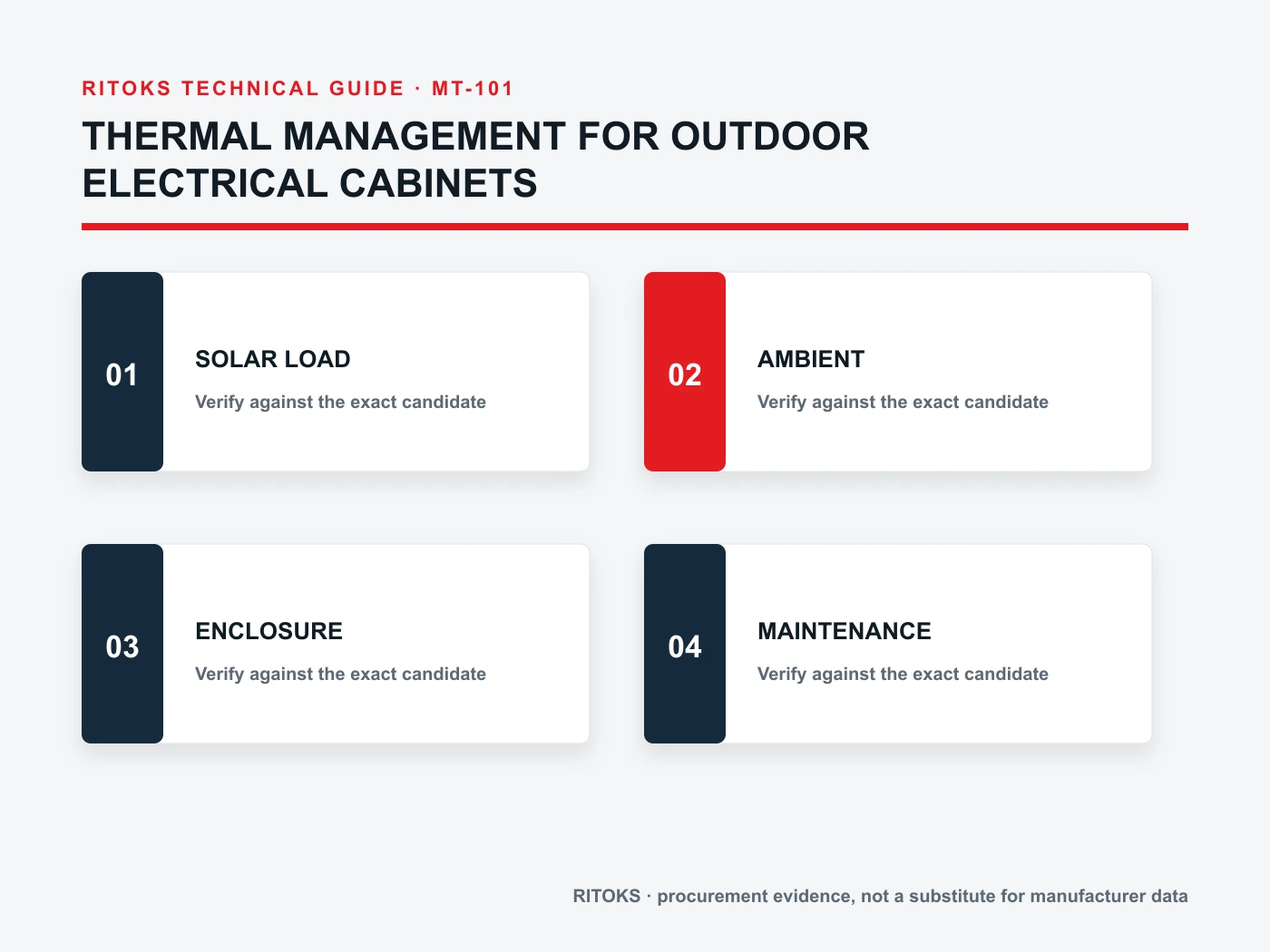
Outdoor exposure changes the problem
An outdoor electrical cabinet sees the heat produced by its own equipment and the conditions surrounding the enclosure. Sunlight, ambient temperature, wind, rain, dust and duty cycle can change across the day and season. A cooling method selected from an indoor cabinet example may not address these combined conditions.
The first deliverable is a site and equipment profile, not a model number. Record cabinet location, orientation, shade, material, dimensions, internal losses and acceptable component temperatures. Identify the limiting operating state so the selected approach is evaluated against a real case rather than a comfortable average.
Account for solar and external heat
Solar gain can warm a cabinet wall and raise the thermal burden, particularly when exposed surfaces and internal components are close. The effect depends on orientation, color, shading and local weather. Request a project-specific assumption or measurement rather than applying a universal percentage to every enclosure.
Nearby process equipment, ground surfaces and trapped air can also affect local ambient. Record the temperature at the cabinet installation, not only a regional weather headline. If the cabinet will be relocated or installed in multiple climates, define a separate design envelope for each case.
Map internal losses and operating states
Create a heat-load list for drives, power supplies, contactors, communication devices and other installed equipment using applicable exact data. Include continuous and intermittent duty, standby states and any future equipment that is actually committed to the design. A device’s electrical input is not necessarily its heat loss inside the cabinet.
Place major heat sources on the layout. Component separation, airflow path and sensors influence local hot spots even when the total loss is unchanged. Where supplier loss data is missing, mark the estimate as provisional and identify the test or document needed to close it.
Choose between exchange and isolation of air
Filtered ventilation exchanges internal and outside air. It may be suitable only when external air conditions and ingress needs allow it, and when the achievable temperature condition meets component limits. A heat exchanger or air conditioner can maintain a more controlled boundary, but each has its own ambient, mounting, drainage, power and maintenance requirements.
Do not treat a cabinet fan as a universal outdoor solution or an air conditioner as an automatic answer. Compare the selected method with dust, water, corrosive exposure and the enclosure’s required protective function. Verify the rating of the assembled installation, including penetrations and accessories.
Separate overheating from condensation control
An enclosure can have a moisture problem when surfaces cool below the relevant dew point, even if it does not overheat. A heater may support condensation control in defined conditions, but it adds heat and requires controls. A cooling device may also have condensate behavior that must be handled. The two objectives should be written separately.
Record humidity conditions, off-cycle periods, ventilation openings and drain strategy. Ask which device handles each operating state and how sensors are placed. Do not infer that a product labeled “heater” or “cooler” solves both problems without a complete control and environmental design.
Check product location and assembly rating
An indoor air conditioner is not made outdoor-suitable by mounting it on an outdoor cabinet. Require the exact device environmental rating, installation orientation, sealing instructions and exposure limits. The same review applies to fans, filters, heaters, thermostats, cable entries and doors.
The enclosure’s protective function belongs to the assembled result. Cutting an opening, adding a cooling unit or changing a gasket can alter that result. Preserve the approved cutout drawing and mounting instructions, then inspect the built cabinet for the same arrangement.
Plan maintenance in the real location
Outdoor cabinets may be remote, elevated or difficult to service. Define filter cleaning, fan replacement, condensate management, sensor checks and access clearance before the equipment is ordered. A method that works in a laboratory but cannot be maintained at the site may not be the right choice.
Where cooling depends on power or moving parts, define alarm and failure response. The project should identify which electrical loads remain active, what the controller does and how the operator learns of a fault. Record the selected behavior in commissioning tests.
एक सटीक-मॉडल साक्ष्य फ़ाइल बनाएँ
For the proposed Enclosure Cooling Strategy, create one approval record with the complete order code, the exact datasheet, the relevant drawing, installation instructions and any curve or test report used for the decision. Date each file or record its revision. A product-family page is useful for discovery, but it does not prove that a particular configuration includes an optional feature or meets a system condition.
हर आवश्यकता की तुलना उसी ऑर्डर किए जा सकने वाले आइटम के साक्ष्यों से करें। एक वेरिएंट का फैमिली मैक्सिमम किसी अन्य के सर्किट डायग्राम, एक्सेसरी सूची या थर्मल वक्र के साथ न मिलाएं। अनसुलझे क्षेत्रों को एक दृश्य स्पष्टीकरण कॉलम में रखें। यदि कोई आपूर्तिकर्ता विकल्प प्रस्तावित करता है, तो उसकी तकनीकी समतुल्यता को मंजूरी देने से पहले प्रभावित समीक्षा दोहराएं।.
परियोजना इनपुट्स को आपूर्तिकर्ता दावों से अलग रखें
परियोजना टीम एप्लिकेशन रिकॉर्ड की मालिक है: स्रोत और लोड, संचालन अवस्थाएँ, पर्यावरण, माउंटिंग, नियंत्रण, सेवा और स्वीकृति मानदंड। आपूर्तिकर्ता प्रस्तावित ऑर्डर कोड और सहायक उपकरण साक्ष्य का मालिक है। किसी भी पक्ष को दिखावे या परिचित पारिवारिक नाम से अनुमान लगाकर किसी कमी को भरना नहीं चाहिए। एक उपयोगी उत्तर हो सकता है “डेटा अभी उपलब्ध नहीं है,” बशर्ते कि उस अनुपस्थित आइटम का कोई स्वामी और समापन तिथि हो।.
जब तक प्रस्तावों की तुलना हो रही हो, उस रिकॉर्ड को स्थिर रखें। यदि संचालन शुल्क, कैबिनेट, स्रोत, मीटर, मोटर या सुरक्षा संरचना बदलती है, तो एक संशोधित इनपुट शीट जारी करें और प्रत्येक आपूर्तिकर्ता से अपने उम्मीदवार की पुनः पुष्टि करने के लिए कहें। इससे पहले दिए गए कोटेशन को बाद के डिज़ाइन के लिए स्वीकृति के रूप में लेने से रोका जा सकता है।.
सप्लायर ऑफ़र्स की तुलना कैसे करें
| आइटम की पेशकश करें | क्या तुलना करें | अनुमोदन साक्ष्य |
|---|---|---|
| आदेश योग्य दायरा | पूरा कोड और शामिल सहायक उपकरण | सटीक उद्धरण और सामग्री सूची |
| बिजली की फिटिंग | सभी लागू परिचालन राज्य | सटीक रेटिंग, सर्किट या वक्र दस्तावेज़ |
| यांत्रिक फिट | माउंटिंग, टर्मिनल और एक्सेस | ड्राइंग और इंस्टॉलेशन निर्देश |
| सेवा योजना | निरीक्षण और प्रतिस्थापन विधि | रखरखाव निर्देश |
| खुले आइटम | मान्यताएँ, बहिष्करण और अपवाद | लिखित स्पष्टीकरण रजिस्टर |
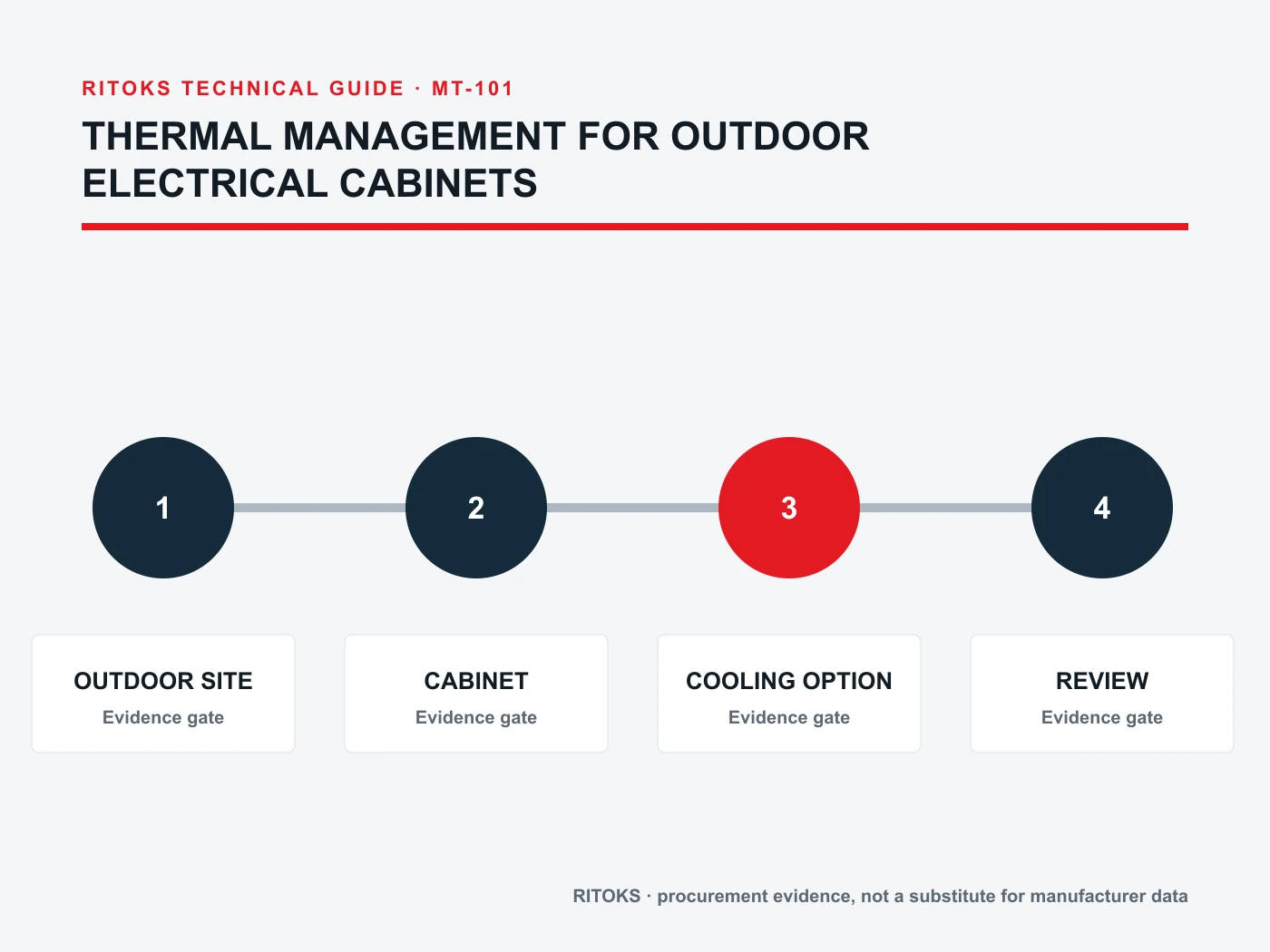
Normalize each Enclosure Cooling Strategy offer to the same application record. A shorter lead time or lower price is meaningful only after the technical scope is comparable. Record whether each supplier included the required accessories, documents and support for commissioning. Keep exceptions explicit, especially when the candidate needs a change to the panel or control design.
खरीद और कमीशनिंग जांच बिंदु
- प्रणाली की सीमा, संचालन अवस्थाएँ और स्वीकृति मानदंडों की पुष्टि करें।.
- एक पूर्ण ऑर्डर कोड की सटीक-मॉडल दस्तावेज़ों के साथ समीक्षा करें।.
- विद्युत, यांत्रिक, पर्यावरणीय और सेवा संबंधी अपवादों का समाधान करें।.
- प्रस्तावों में प्रदान किए गए दायरे और दस्तावेज़ संशोधनों की तुलना करें।.
- प्राप्त वस्तु की जांच स्वीकृत रिकॉर्ड के अनुसार करें।.
- परियोजना की अधिकृत प्रक्रिया के अनुसार तैयार असेंबली का परीक्षण करें।.
आगमन निरीक्षण में वितरित लेबल, टर्मिनल, शामिल सहायक उपकरण और दस्तावेज़ों की तुलना स्वीकृत ऑर्डर से की जानी चाहिए। एक ही परिवार के प्रतिस्थापन को स्वचालित रूप से स्वीकार्य नहीं माना जाना चाहिए। चालूकरण के समय उन अनुप्रयोग-निर्भर कार्यों का सत्यापन करें जिन्हें केवल घटक साहित्य से स्थापित नहीं किया जा सकता। परीक्षण योजना में सार्वभौमिक सीमाएँ गढ़े बिना प्रतिनिधि अवस्थाओं और स्वीकृति मानदंडों का उल्लेख होना चाहिए।.
आरएफक्यू तैयारी चेकलिस्ट
A useful request for quotation on thermal management for outdoor cabinets is concise but complete. Ask for the exact orderable configuration and list unknown values as questions. Do not let the sales description silently answer a technical question that belongs to a calculation, a drawing or a test.
- SOLAR GAIN
- DEVICE LOSSES
- AMBIENT
- DUTY
- INGRESS
- CONDENSATION
- कूलिंग
- SERVICE
- लागू दस्तावेज़ संशोधन
- मात्रा, गंतव्य और वितरण का दायरा
आपूर्तिकर्ता से अनुरोध करें कि वे अपवादों, मान्यताओं और वैकल्पिक मदों को अलग से बताएं। तकनीकी स्पष्टीकरण रिकॉर्ड को कोटेशन के साथ रखें ताकि खरीद और इंजीनियरिंग एक ही दायरे की समीक्षा कर सकें। यदि कोई महत्वपूर्ण इनपुट अभी भी अनुपस्थित है, तो उम्मीदवार वाणिज्यिक रूप से दिलचस्प बना रह सकता है, लेकिन उसकी तकनीकी स्वीकृति अभी भी लंबित रहेगी।.
अक्सर पूछे जाने वाले प्रश्न
Can a Enclosure Cooling Strategy be chosen from one headline rating?
नहीं। अनुप्रयोग, सटीक विन्यास और प्रासंगिक विद्युत, यांत्रिक, तापीय और पर्यावरणीय परिस्थितियों की समीक्षा एक साथ करनी चाहिए। एक कैटलॉग शीर्षक खोज का प्रारंभिक बिंदु है, न कि पूर्ण अनुमोदन रिकॉर्ड।.
क्या एक पारिवारिक पृष्ठ सटीक संबंध या सहायक साबित करता है?
नहीं। प्रस्तावित ऑर्डर कोड और उसकी वर्तमान ड्राइंग, डेटाशीट तथा इंस्टॉलेशन निर्देशों का उपयोग करें। वैकल्पिक सुविधाएँ या वैकल्पिक टर्मिनल व्यवस्थाएँ एक ही परिवार के भीतर भिन्न हो सकती हैं।.
यदि आपूर्तिकर्ता एक आवश्यक मान प्रदान नहीं कर सकता तो क्या होगा?
मूल्य को अनसुलझा के रूप में चिह्नित करें, यह निर्धारित करें कि इसे कौन प्राप्त करेगा और प्रभावित निर्णय को रोक दें। केवल इसलिए कि खरीद की तारीख नज़दीक आ रही है, किसी धारणा को सत्यापित दावे में न बदलें।.
समीक्षा कहाँ जारी रखें
ब्राउज़ करें Enclosure Cooling Strategy category उपलब्ध उत्पाद परिवार के लिए, फिर समीक्षा करें संबंधित उत्पाद पृष्ठ एक संभावित प्रारंभिक बिंदु के रूप में। ये पृष्ठ व्यावसायिक गंतव्य की पहचान करते हैं; सटीक मॉडल दस्तावेज़ आवेदन की उपयुक्तता निर्धारित करते हैं। परियोजना-विशिष्ट तुलना के लिए, सिस्टम इनपुट्स और खुले प्रश्नों को माध्यम से भेजें। RITOKS पूछताछ पृष्ठ.
यदि साक्ष्यों की समीक्षा करने के बाद कोई अन्य उपकरण या विधि अधिक उपयुक्त प्रतीत हो, तो प्रतिस्थापन का अनुरोध करने से पहले डिज़ाइन ब्रीफ को संशोधित करें। रिकॉर्ड को केवल उस उत्पाद परिवार से नहीं, जिसने पहली बार ध्यान आकर्षित किया था, बल्कि अंतिम सर्किट और स्थापना से भी जुड़ा रखें।.