
熱管理・技術解説
Thermal Management for Outdoor Electrical Cabinets
Thermal Management for Outdoor Electrical Cabinets starts with the system question: Which solar, ambient, ingress and duty conditions change the approach? A useful selection brief connects the equipment duty, installation and receiving system to a specific orderable product. The article below separates project inputs from product evidence so that a familiar product name does not quietly become a technical approval.
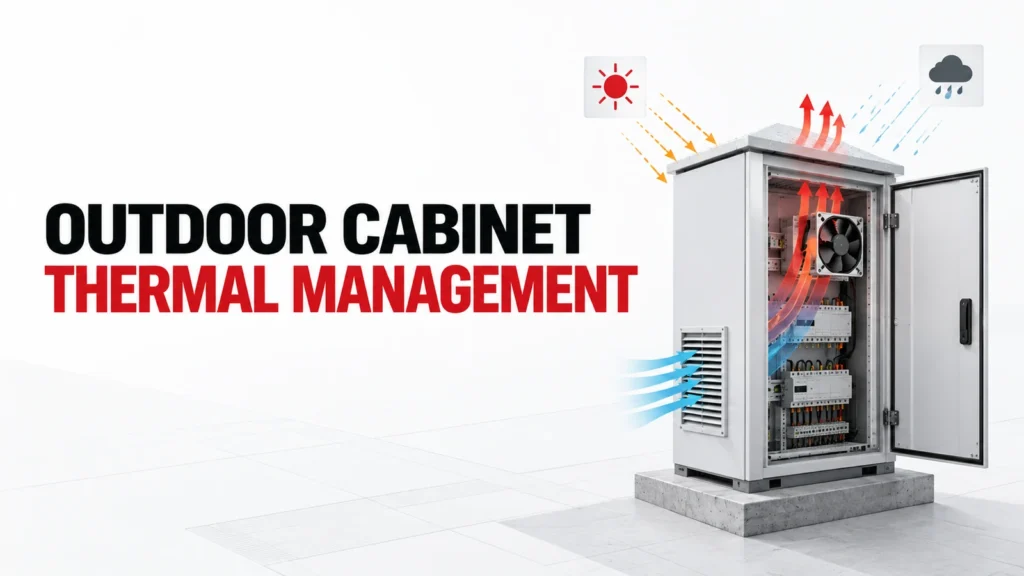
This guide defines outdoor cabinet thermal inputs and solution roles. It does not claim that an indoor-rated air conditioner, fan or heater is suitable outdoors; suitability must be established for the exact product and assembled enclosure.
意思決定の入力要素の概要
| レビュー対象エリア | プロジェクトの入力 | 提出を求める証拠 |
|---|---|---|
| SOLAR GAIN | 実際の動作状態とシステムの境界を定義する | 承認済みのシステム図面または業務記録 |
| DEVICE LOSSES | インターフェース、ジオメトリ、またはコントロールの期待値を指定してください | 機器または製品の正確な資料 |
| AMBIENT | 状態および設置状況 | 現場図面またはパネル図面 |
| DUTY | サービスおよび受入要件を記述してください | 詳細な手順とテスト計画 |
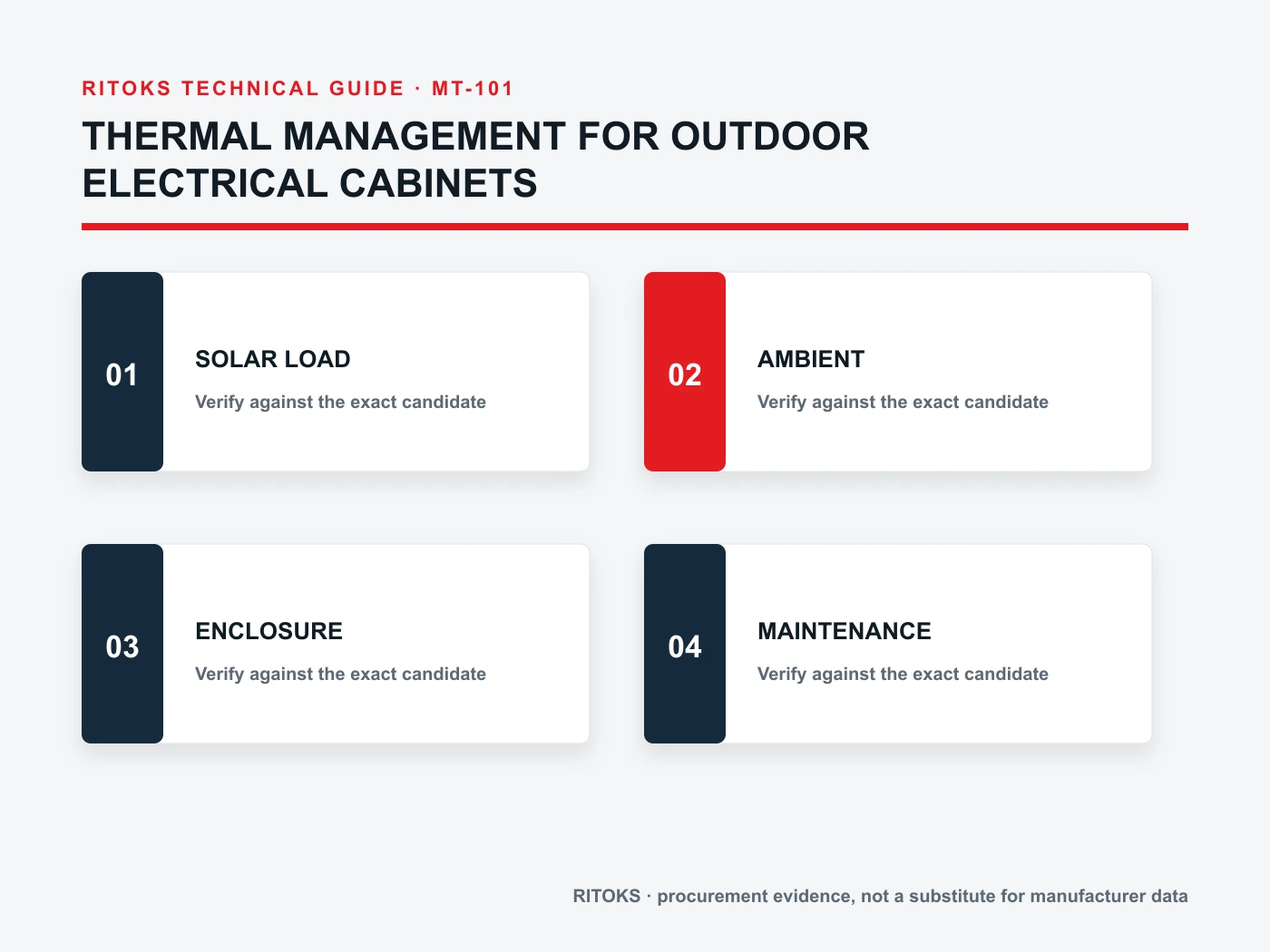
Outdoor exposure changes the problem
An outdoor electrical cabinet sees the heat produced by its own equipment and the conditions surrounding the enclosure. Sunlight, ambient temperature, wind, rain, dust and duty cycle can change across the day and season. A cooling method selected from an indoor cabinet example may not address these combined conditions.
The first deliverable is a site and equipment profile, not a model number. Record cabinet location, orientation, shade, material, dimensions, internal losses and acceptable component temperatures. Identify the limiting operating state so the selected approach is evaluated against a real case rather than a comfortable average.
Account for solar and external heat
Solar gain can warm a cabinet wall and raise the thermal burden, particularly when exposed surfaces and internal components are close. The effect depends on orientation, color, shading and local weather. Request a project-specific assumption or measurement rather than applying a universal percentage to every enclosure.
Nearby process equipment, ground surfaces and trapped air can also affect local ambient. Record the temperature at the cabinet installation, not only a regional weather headline. If the cabinet will be relocated or installed in multiple climates, define a separate design envelope for each case.
Map internal losses and operating states
Create a heat-load list for drives, power supplies, contactors, communication devices and other installed equipment using applicable exact data. Include continuous and intermittent duty, standby states and any future equipment that is actually committed to the design. A device’s electrical input is not necessarily its heat loss inside the cabinet.
Place major heat sources on the layout. Component separation, airflow path and sensors influence local hot spots even when the total loss is unchanged. Where supplier loss data is missing, mark the estimate as provisional and identify the test or document needed to close it.
Choose between exchange and isolation of air
Filtered ventilation exchanges internal and outside air. It may be suitable only when external air conditions and ingress needs allow it, and when the achievable temperature condition meets component limits. A heat exchanger or air conditioner can maintain a more controlled boundary, but each has its own ambient, mounting, drainage, power and maintenance requirements.
Do not treat a cabinet fan as a universal outdoor solution or an air conditioner as an automatic answer. Compare the selected method with dust, water, corrosive exposure and the enclosure’s required protective function. Verify the rating of the assembled installation, including penetrations and accessories.
Separate overheating from condensation control
An enclosure can have a moisture problem when surfaces cool below the relevant dew point, even if it does not overheat. A heater may support condensation control in defined conditions, but it adds heat and requires controls. A cooling device may also have condensate behavior that must be handled. The two objectives should be written separately.
Record humidity conditions, off-cycle periods, ventilation openings and drain strategy. Ask which device handles each operating state and how sensors are placed. Do not infer that a product labeled “heater” or “cooler” solves both problems without a complete control and environmental design.
Check product location and assembly rating
An indoor air conditioner is not made outdoor-suitable by mounting it on an outdoor cabinet. Require the exact device environmental rating, installation orientation, sealing instructions and exposure limits. The same review applies to fans, filters, heaters, thermostats, cable entries and doors.
The enclosure’s protective function belongs to the assembled result. Cutting an opening, adding a cooling unit or changing a gasket can alter that result. Preserve the approved cutout drawing and mounting instructions, then inspect the built cabinet for the same arrangement.
Plan maintenance in the real location
Outdoor cabinets may be remote, elevated or difficult to service. Define filter cleaning, fan replacement, condensate management, sensor checks and access clearance before the equipment is ordered. A method that works in a laboratory but cannot be maintained at the site may not be the right choice.
Where cooling depends on power or moving parts, define alarm and failure response. The project should identify which electrical loads remain active, what the controller does and how the operator learns of a fault. Record the selected behavior in commissioning tests.
正確なモデルの証拠ファイルを作成する
For the proposed Enclosure Cooling Strategy, create one approval record with the complete order code, the exact datasheet, the relevant drawing, installation instructions and any curve or test report used for the decision. Date each file or record its revision. A product-family page is useful for discovery, but it does not prove that a particular configuration includes an optional feature or meets a system condition.
同一の注文可能品目について、すべての要件と証拠を照合してください。あるバリエーションの「ファミリー最大値」を、別のバリエーションの回路図、付属品リスト、または熱特性曲線と組み合わせてはいけません。未解決の項目は、目立つ「確認事項」欄に記載してください。サプライヤーが代替品を提案した場合は、その技術的同等性を承認する前に、該当する審査を再度実施してください。.
プロジェクトの投入コストとサプライヤーの請求額は区別しておく
プロジェクトチームは、アプリケーションの記録(ソースおよびロード、動作状態、環境、マウント、制御、サービス、および受入基準)を管理する。サプライヤーは、提案された注文コードおよびそれを裏付ける機器の証拠を管理する。いずれの側も、外観や馴染みのある製品名から推測して、不足している情報を補ってはならない。 欠落している項目に責任者と完了予定日が定められている場合、「データはまだ入手できません」という回答も有効である。.
見積書の比較検討中は、その記録を凍結しておいてください。運転条件、キャビネット、電源、メーター、モーター、または保護構成に変更が生じた場合は、改訂版入力シートを発行し、各サプライヤーに候補品の再確認を依頼してください。これにより、初期の見積書が後の設計に対する承認とみなされることを防ぐことができます。.
サプライヤーの提案を比較する方法
| セール商品 | 何を比較するか | 承認の証拠 |
|---|---|---|
| 注文可能な範囲 | 完全なコードと付属品一式 | 正確な見積書および部品表 |
| 電気配線 | 該当するすべての動作状態 | 正確な定格、回路、または特性曲線に関する資料 |
| 機械的嵌合 | 取り付け、端子、およびアクセス | 図面および設置手順 |
| サービスプラン | 点検および交換方法 | メンテナンスの手順 |
| 未処理項目 | 前提、除外事項および例外 | 書面による説明記録簿 |
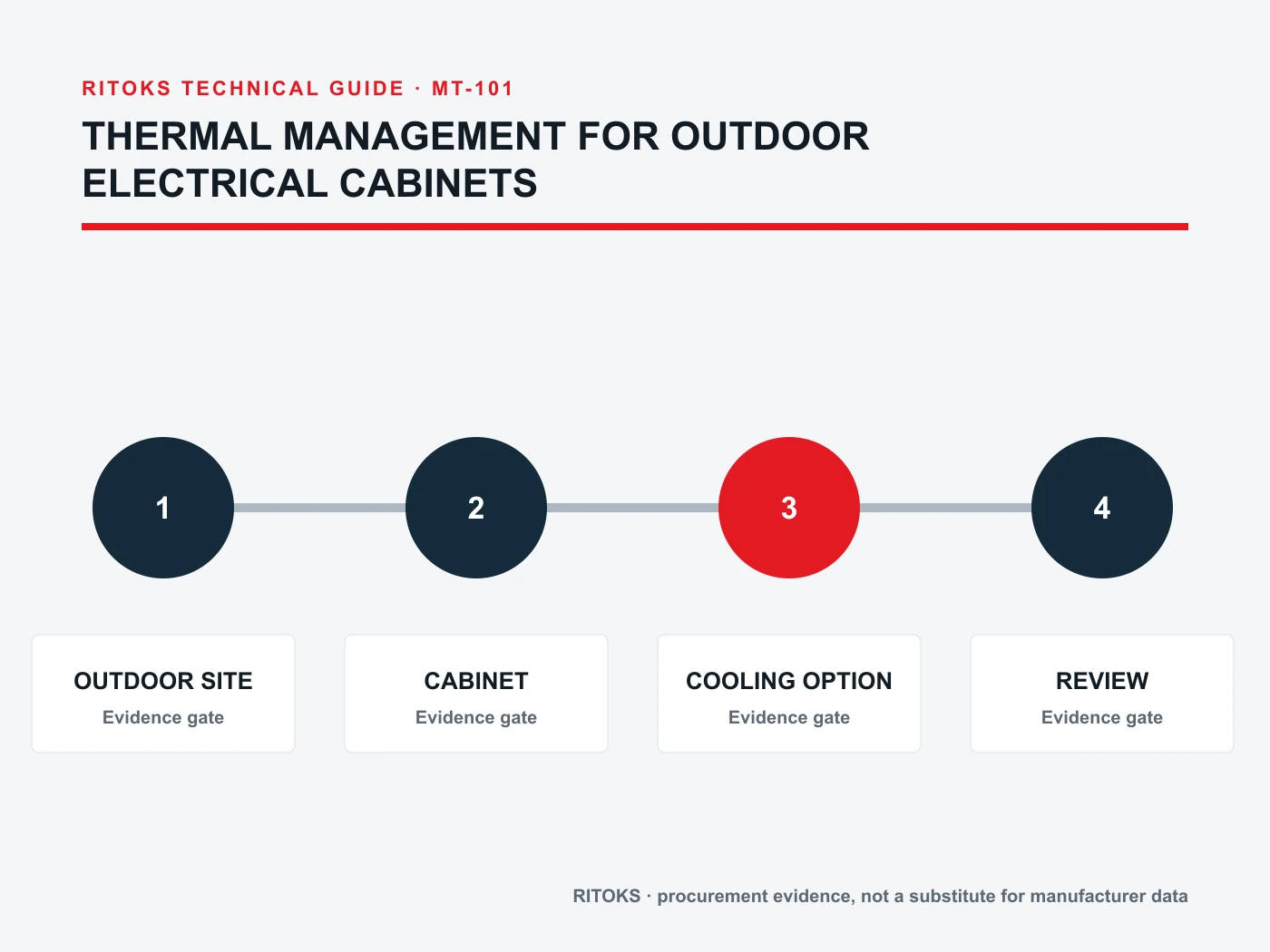
Normalize each Enclosure Cooling Strategy offer to the same application record. A shorter lead time or lower price is meaningful only after the technical scope is comparable. Record whether each supplier included the required accessories, documents and support for commissioning. Keep exceptions explicit, especially when the candidate needs a change to the panel or control design.
調達および試運転のチェックポイント
- システムの境界、動作状態、および受け入れ基準を確認する。.
- 1件の完全な注文コードを、正確なモデル文書と照合して確認する。.
- 電気、機械、環境、およびサービスに関する例外事象を解決する。.
- 各オファー間の提供範囲および文書の改訂内容を比較する。.
- 受領した品物を、承認済みの記録と照合して検査してください。.
- 完成したアセンブリについて、プロジェクトで定められた手順に従って試験を行う。.
入荷検査では、納入されたラベル、端子、付属品、および書類を、承認済みの注文内容と照合して確認する必要があります。同系列の製品による交換は、自動的に認められるものではありません。試運転時には、部品の取扱説明書だけでは確認できない、用途に応じた機能を検証してください。試験計画書には、普遍的な限界値を勝手に設定することなく、代表的な状態と受入基準を明記する必要があります。.
見積依頼書(RFQ)作成チェックリスト
A useful request for quotation on thermal management for outdoor cabinets is concise but complete. Ask for the exact orderable configuration and list unknown values as questions. Do not let the sales description silently answer a technical question that belongs to a calculation, a drawing or a test.
- SOLAR GAIN
- DEVICE LOSSES
- AMBIENT
- DUTY
- INGRESS
- CONDENSATION
- 冷却
- SERVICE
- 対象となる文書の改訂版
- 数量、配送先、および納品範囲
サプライヤーに対し、除外事項、前提条件、およびオプション項目を個別に明記するよう依頼してください。技術的な説明記録を見積書と一緒に保管し、調達部門と技術部門が同一の範囲で審査できるようにしてください。重要な情報が依然として欠落している場合でも、その候補は商業的には依然として魅力的である可能性がありますが、技術的な承認については保留となります。.
よくある質問
Can a Enclosure Cooling Strategy be chosen from one headline rating?
いいえ。用途、具体的な構成、および関連する電気的、機械的、熱的、環境的条件を総合的に検討する必要があります。カタログの品名はその情報を把握するための出発点であり、完全な承認記録ではありません。.
家族ページは、正確なつながりや関係性を証明するものなのでしょうか?
いいえ。提案された注文コードと、それに対応する最新の図面、データシート、および設置説明書を使用してください。オプション機能や端子の配置は、同一ファミリー内でも異なる場合があります。.
もしサプライヤーが、必要な値のうち1つを提供できない場合はどうなりますか?
その値を「未解決」としてマークし、誰がそれを取得するかを特定した上で、影響を受ける意思決定を一時停止してください。購入日が近づいているという理由だけで、仮定を検証済みの主張に変えてはいけません。.
レビューの続きはどこで読むか
以下をご覧ください Enclosure Cooling Strategy category 利用可能な製品ファミリーについては、以下を確認してください。 関連商品のページ 参考となる出発点として。これらのページでは、商用利用の目的を特定しています。具体的なモデル文書によって、その用途への適合性が決まります。プロジェクト固有の比較を行うには、システムの入力情報と不明点を以下の RITOKSのお問い合わせページ.
証拠を検討した結果、別のデバイスや手法の方が適していると思われる場合は、代替を依頼する前に設計要件書を見直してください。記録は、最初に注目された製品群だけでなく、最終的な回路および設置状況と関連付けておくようにしてください。.