
Power Module Heatsinks · Selection Guide
Power Module Heatsink Selection Guide: Loss, Thermal Resistance and Airflow
A power-module heatsink is selected from a thermal path, not from module current alone. The designer needs semiconductor loss at the real duty, an allowed junction-temperature objective, interface data, heatsink performance under the installed airflow and a mechanical arrangement that preserves contact. Missing any link can make an apparently generous extrusion inadequate.
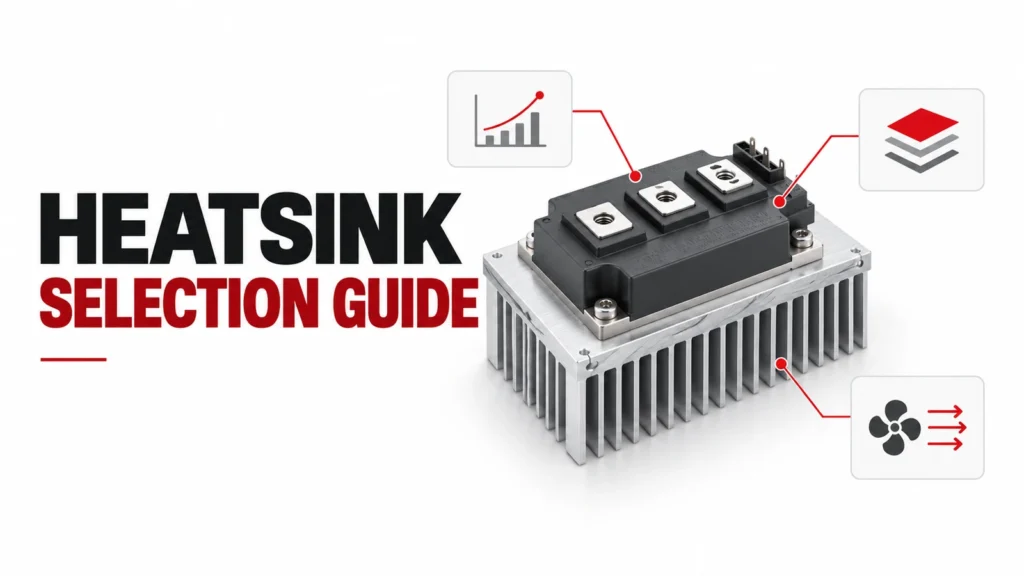
This guide explains the evidence chain required to select a heatsink for SCR, rectifier or other power modules. It does not calculate a heatsink for an unknown semiconductor, publish transferable thermal-resistance values or approve a mounting method without exact device and heatsink documents.
意思決定の入力要素の概要
| 決定の根拠 | 購入者は確認する必要があります | 必要な証拠 |
|---|---|---|
| Heat generation | Conduction and switching loss at the design duty | Exact semiconductor loss data or validated calculation |
| 温度境界 | Maximum junction objective and worst local ambient | Device limits and project criterion |
| Interface path | Case, thermal interface material and contact condition | Mounting instruction and interface data |
| Heatsink performance | Thermal behavior at actual orientation and airflow | Exact heatsink curve or validated model |
| 機械的嵌合 | Footprint, hole pattern, flatness, fasteners and clearance | 寸法入り組立図 |
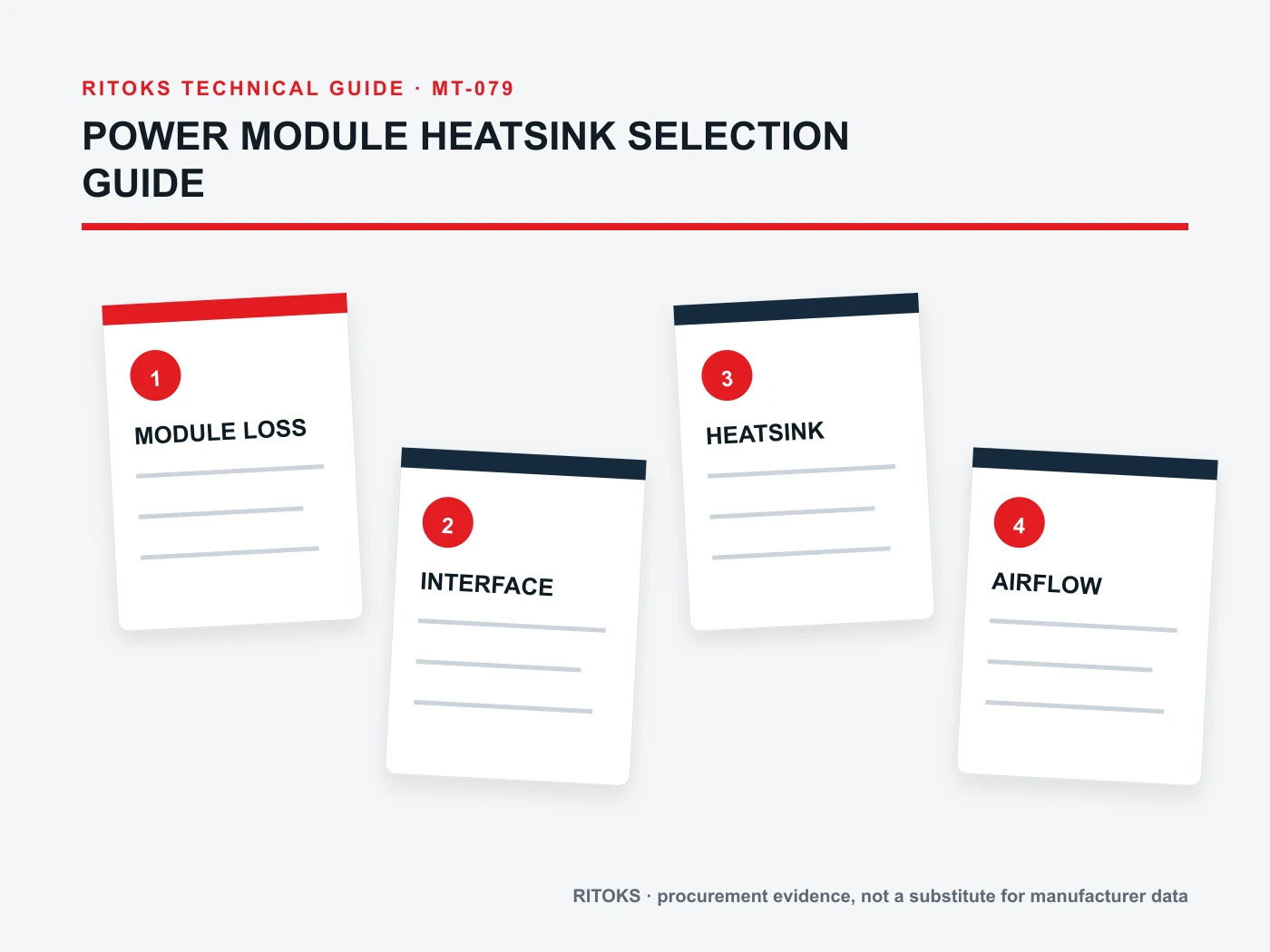
Begin With Semiconductor Loss
Current rating is not a direct heat value. Determine conduction, switching and other relevant losses using the exact device characteristics and the actual waveform, duty and control method.
Document who owns the loss calculation and preserve its inputs. If the semiconductor or duty changes, the heatsink review must be reopened instead of retaining the old result by default.
Build the Complete Thermal Resistance Chain
The path normally includes junction-to-case behavior, the interface between module and sink, the heatsink itself and the air or other cooling medium. Each part has its own conditions and uncertainty.
Do not subtract catalog temperatures without checking definitions. Use one consistent thermal model and units, and distinguish manufacturer limits from the project’s chosen design margin.
Treat Interface Quality as an Engineering Input
Flatness, surface condition, thermal interface material, application method, mounting force and tightening sequence influence contact performance. Follow the semiconductor and heatsink instructions that apply to the exact assembly.
Adding more interface material is not automatically safer because excess thickness can increase resistance. The approved material and process should be repeatable in production and service.
Use Heatsink Data for the Installed Airflow
Natural-convection performance depends on orientation, fin spacing and surrounding clearance. Forced-air performance depends on flow distribution, pressure capability, obstructions and where air temperature is measured.
A fan free-air value is not the airflow through a loaded heatsink channel. Evaluate the complete path and use performance evidence whose test arrangement is relevant to the proposed installation.
Verify Mechanical Compatibility
Check module footprint, mounting holes, terminal access, creepage and clearance needs, base thickness and available fastener depth. The electrical layout must not force a poor thermal contact or block fins.
Create an assembly drawing that identifies the module, sink, interface, fasteners and orientation. This prevents the quotation from mixing compatible-looking parts that have not been reviewed together.
Plan Verification and Field Maintenance
Prototype or thermal testing may be needed when calculations contain uncertain inputs, unusual duty or restricted airflow. Define sensor locations and acceptance criteria before the test.
Dust, fan degradation and blocked clearances can raise temperature over time. The maintenance plan should preserve the airflow and inspection access assumed by the selection.
正確なモデルの証拠ファイルを作成する
Build the heatsink approval record around the exact module, mounting interface, available space and cooling arrangement. Match the proposed heatsink to its dimensioned drawing and the relevant thermal evidence under stated test or operating conditions. Record the mounting and airflow assumptions alongside the document revision. A compatible footprint or a product-family page cannot establish the thermal performance of the complete assembly.
承認されたすべての記述が、同一の注文可能品目を記述していることを確認してください。外観が類似している筐体であっても、内部の回路、端子、材質、ファームウェア、または付属品が異なる場合があります。あるバリエーションの最大値、別のバリエーションの図面、さらに別のバリエーションの特性を組み合わせて使用しないでください。未解決の項目については、設計レビューや商談レビューの過程でも確認できるよう、明確にマークを付けておいてください。.
プロジェクトのインプットと成果物の根拠は区別しておく
The project team defines the application: source, load, duty, environment, controls, mechanical limits and required functions. The supplier identifies an exact Power Module Heatsink and supports it with exact documents. Neither side should fill a gap by inference from appearance, a shared family name or one matching headline value.
見積書の比較中は、申請記録を凍結してください。回路、負荷、稼働条件、環境、筐体、放熱方法、または必要出力が変更された場合は、改訂版記録を作成し、各サプライヤーに候補品の再確認を依頼してください。そうしないと、一見比較可能な見積書であっても、実際には異なる技術要件に基づいている可能性があります。.
調達におけるよくあるミス
- Selecting Power Module Heatsink from one headline rating while the application context remains incomplete.
- 近隣モデルから回路、曲線、端子図、または性能に関する主張を使用すること。.
- 家族の写真や商品の写真を、厳密な技術的証拠として扱うこと。.
- 付属品、システム機能、または調整結果が、関連する文書なしに含まれていると仮定する。.
- 電気的、熱的、機械的および証拠に関する審査を繰り返し行わずに、代替案を承認すること。.
価格やリードタイムを比較する前に、こうした不備を解消してください。審査担当者は、受け入れられたすべての記述について、プロジェクト要件または具体的な候補文書に遡って確認できる必要があります。提案書は、技術的には不完全であっても商業的には魅力的なままである可能性がありますが、根拠となる情報が欠落している場合は、見積書の中にその不備が隠れていてはなりません。.
サプライヤーの提案を比較する方法
| 比較ポイント | 必要な証拠 | 承諾しないでください |
|---|---|---|
| 厳密な同一性 | 注文可能な全コードおよびバリエーションの説明 | 姓のみ |
| アプリケーションの適合性 | 凍結されたプロジェクトの投入要素に対する対応 | 一般的な適合性に関する声明 |
| 技術的証拠 | 改訂履歴付きの現在の正確なモデルに関する文書 | スクリーンショットまたは類似モデルのページ |
| 納入範囲 | 同梱の付属品、インターフェース、およびドキュメント | 定義されていない「標準パッケージ」“ |
| 未解決の質問 | 目視による逸脱事項および説明事項一覧 | 沈黙を承諾とみなす |
| 置換 | すべての要件に対する新たな見直し | “外観に基づく「同等」 |
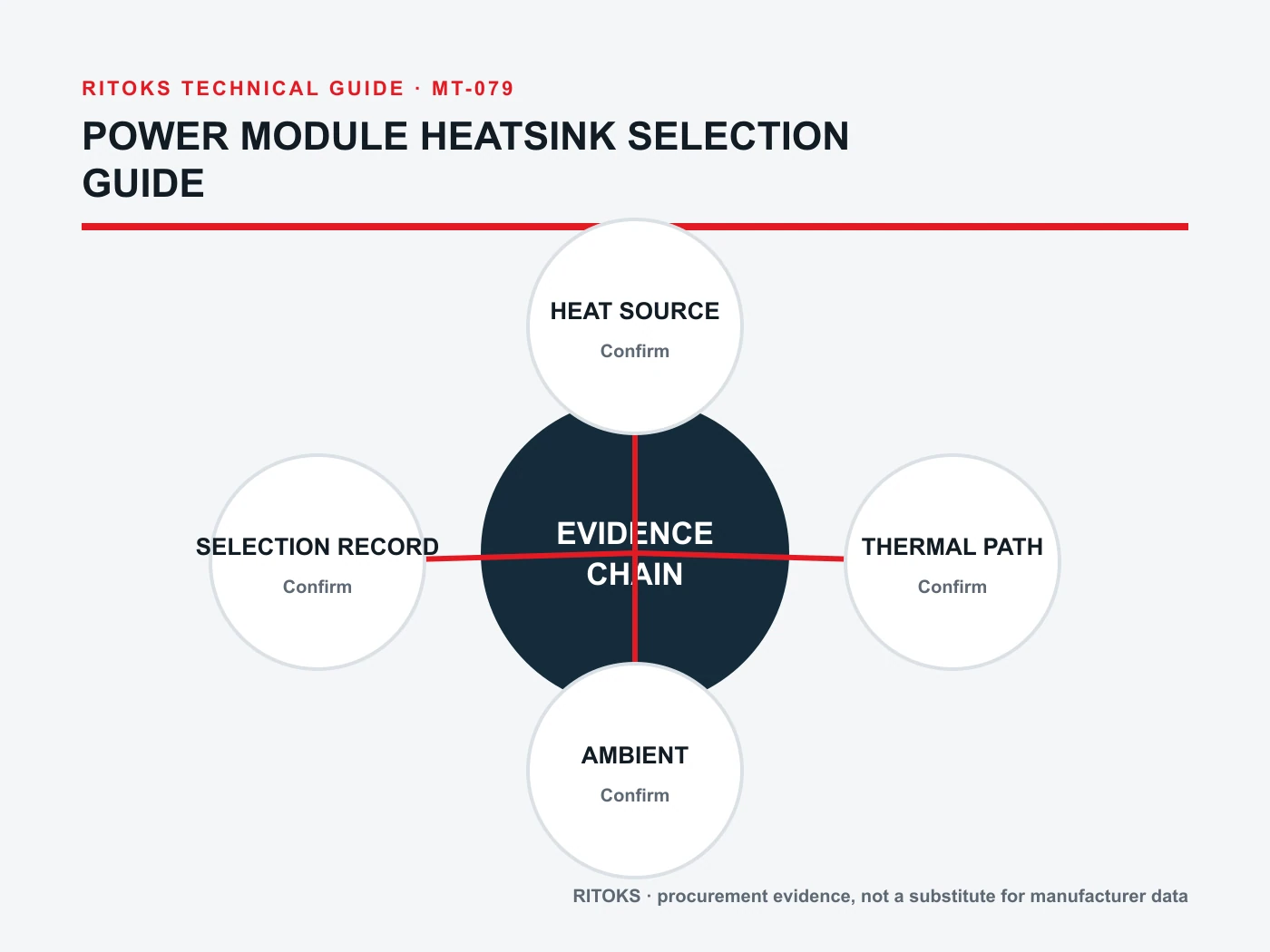
Normalize every Power Module Heatsink offer to the same application record. Keep document revisions, test conditions, included accessories and open questions beside each value. This makes differences in delivered scope visible and prevents a lower-cost but narrower offer from appearing equivalent to a complete solution.
意思決定ワークフロー
- アプリケーションアーキテクチャと運用シナリオを確定する。.
- 環境、熱、および機械的な制約条件を記録する。.
- Identify the required Power Module Heatsink function without assuming a model.
- 完全な注文コードと正確な添付書類の提出を依頼してください。.
- 各請求事項について、その条件や定義と照らし合わせて確認してください。.
- 商業承認の前に、逸脱事項や調整に関する問題を解決しておくこと。.
- 受理された証拠書類を、最終部品表とともに保管してください。.
重要なアプリケーション入力が不明な場合、引用されたモデルが曖昧な場合、必須の主張が他のメーカーまたは別の注文コードによってのみ裏付けられている場合、あるいは設置状況が利用可能な証拠の範囲外である場合は、審査を中止してください。これらは編集上の細部ではなく、技術的な不備です。.
見積依頼書(RFQ)作成チェックリスト
A useful RFQ for power module heatsink selection guide is concise enough to answer and complete enough to prevent silent assumptions. Identify unknown values as questions and require a full orderable code rather than a generic family recommendation.
- Device loss
- インターフェース
- Sink path
- 気流経路
- Ambient
- Module footprint
- Flatness
- 締結
- Orientation
- Service clearance
- 数量、仕向地、および必要書類の言語
最新のデータシートの改訂版、および認証、互換性、連携、性能に関する主張の正確な範囲を照会してください。技術的な情報の後に数量と仕向地を明記し、商取引上の条件によって未解決の技術的な疑問が覆い隠されないようにしてください。.
エンジニアリング部門から購買部門への引き継ぎ
Engineering approval should identify the exact Power Module Heatsink code, accepted document revisions, unresolved deviations and the application record used for the decision. Purchasing can then compare commercial offers without silently changing the technical basis. If a supplier proposes another code, different accessory or revised configuration, route it back through the same review instead of treating it as an administrative substitution.
承認済みの証拠書類は、発注書および最終部品表とともに保管してください。受入チームおよび生産チームは、承認された品目を識別し、ラベル、端子の配置、付属品、または書類に相違がある場合に作業を中止できるよう、十分な情報を必要とします。また、この引き継ぎにより、保守チームは、写真や古い請求書の記載内容、あるいは単一の見出し評価に頼るのではなく、交換の判断を行うための追跡可能な出発点を得ることができます。.
よくある質問
Can a heatsink be selected from module current rating?
No. Use semiconductor loss at the actual duty and the full thermal path.
Is a lower catalog thermal resistance always better?
Only when the definition and test conditions apply to the installed orientation and airflow.
Can any thermal compound be used?
Use an interface material and process supported for the exact module and assembly.
関連するRITOKS製品およびガイダンス
これらのリンクは、公開されている製品ファミリーに関する背景情報のみを提供するものです。こうした背景情報を示すリンクは、互換性や適合性、あるいは承認されたシステムの組み合わせを保証するものではありません。.
Published RITOKS Power Module Heatsink product page
Published RITOKS Power Module Heatsink product page
技術リファレンス
以下の情報源は、本ガイドに記載されている一般的な技術的概念のみを裏付けるものです。その製品定格、回路図、認証、および調整結果は、RITOKS製品には適用されません。.
Infineon, Thermal design and mounting guidance for power semiconductor modules
Supports treating loss, thermal interfaces and mounting as one design chain; Infineon values do not transfer to RITOKS products.
正確なモデルに関するレビューを依頼する
申請要件、書類に関する具体的な質問、数量、および配送先を、RITOKSのお問い合わせフォームから送信してください。RFQ(見積依頼)では、正確なモデルの確認が求められます。本ガイドでは、回路、設置、または自動的な代替品の承認は行いません。.