
Power Module Heatsinks · Selection Guide
Power Module Heatsink Selection Guide: Loss, Thermal Resistance and Airflow
A power-module heatsink is selected from a thermal path, not from module current alone. The designer needs semiconductor loss at the real duty, an allowed junction-temperature objective, interface data, heatsink performance under the installed airflow and a mechanical arrangement that preserves contact. Missing any link can make an apparently generous extrusion inadequate.
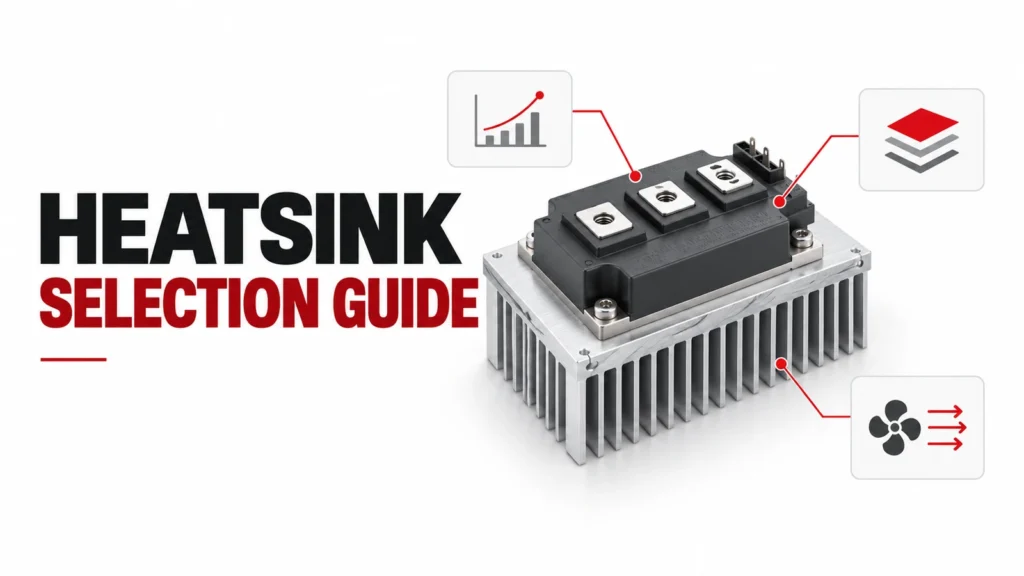
This guide explains the evidence chain required to select a heatsink for SCR, rectifier or other power modules. It does not calculate a heatsink for an unknown semiconductor, publish transferable thermal-resistance values or approve a mounting method without exact device and heatsink documents.
決策輸入要素一覽
| 決策輸入 | 買方必須確認 | 所需證據 |
|---|---|---|
| Heat generation | Conduction and switching loss at the design duty | Exact semiconductor loss data or validated calculation |
| 溫度邊界 | Maximum junction objective and worst local ambient | Device limits and project criterion |
| Interface path | Case, thermal interface material and contact condition | Mounting instruction and interface data |
| Heatsink performance | Thermal behavior at actual orientation and airflow | Exact heatsink curve or validated model |
| 機械配合 | Footprint, hole pattern, flatness, fasteners and clearance | 帶尺寸的裝配圖 |
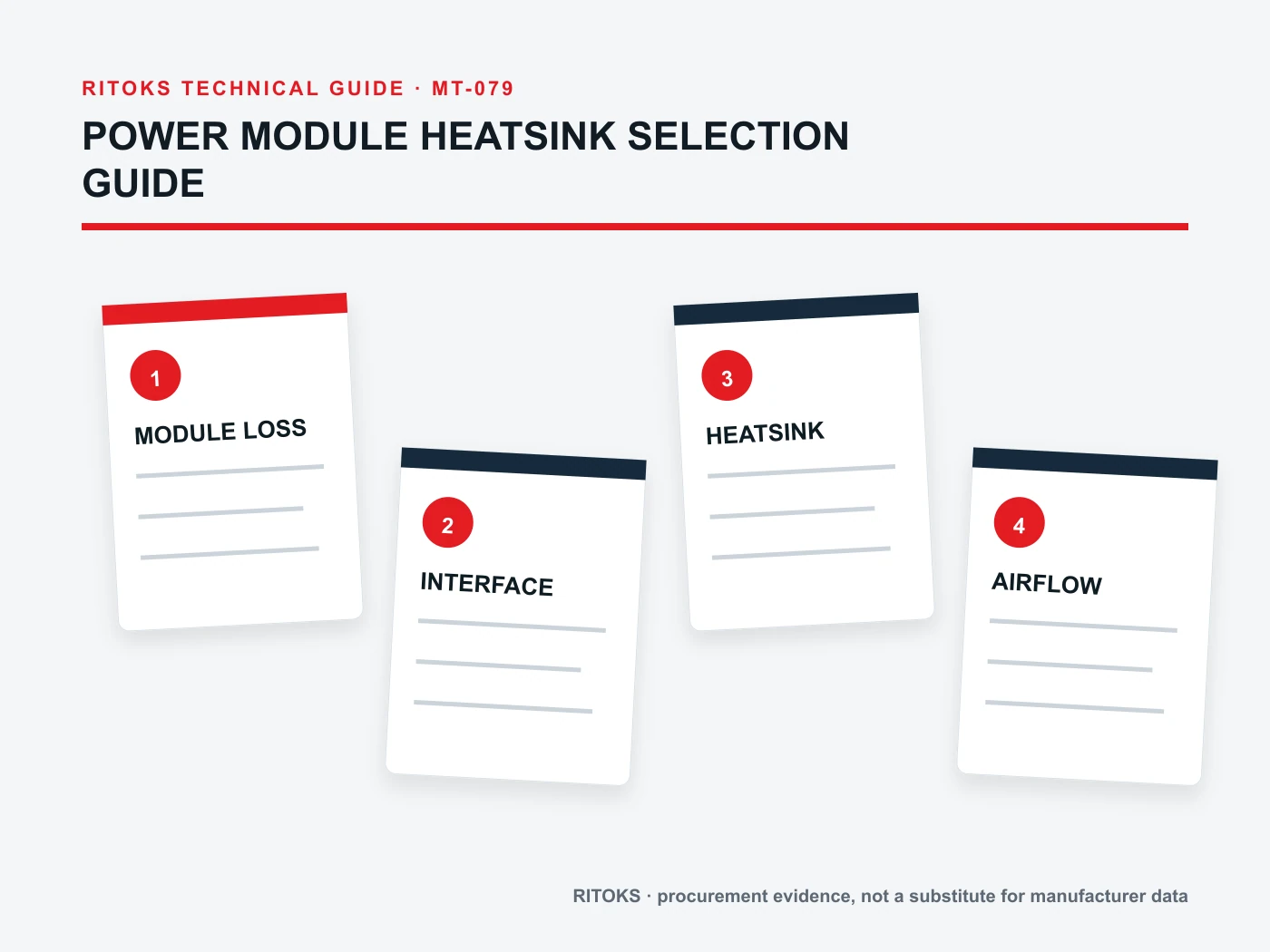
Begin With Semiconductor Loss
Current rating is not a direct heat value. Determine conduction, switching and other relevant losses using the exact device characteristics and the actual waveform, duty and control method.
Document who owns the loss calculation and preserve its inputs. If the semiconductor or duty changes, the heatsink review must be reopened instead of retaining the old result by default.
Build the Complete Thermal Resistance Chain
The path normally includes junction-to-case behavior, the interface between module and sink, the heatsink itself and the air or other cooling medium. Each part has its own conditions and uncertainty.
Do not subtract catalog temperatures without checking definitions. Use one consistent thermal model and units, and distinguish manufacturer limits from the project’s chosen design margin.
Treat Interface Quality as an Engineering Input
Flatness, surface condition, thermal interface material, application method, mounting force and tightening sequence influence contact performance. Follow the semiconductor and heatsink instructions that apply to the exact assembly.
Adding more interface material is not automatically safer because excess thickness can increase resistance. The approved material and process should be repeatable in production and service.
Use Heatsink Data for the Installed Airflow
Natural-convection performance depends on orientation, fin spacing and surrounding clearance. Forced-air performance depends on flow distribution, pressure capability, obstructions and where air temperature is measured.
A fan free-air value is not the airflow through a loaded heatsink channel. Evaluate the complete path and use performance evidence whose test arrangement is relevant to the proposed installation.
Verify Mechanical Compatibility
Check module footprint, mounting holes, terminal access, creepage and clearance needs, base thickness and available fastener depth. The electrical layout must not force a poor thermal contact or block fins.
Create an assembly drawing that identifies the module, sink, interface, fasteners and orientation. This prevents the quotation from mixing compatible-looking parts that have not been reviewed together.
Plan Verification and Field Maintenance
Prototype or thermal testing may be needed when calculations contain uncertain inputs, unusual duty or restricted airflow. Define sensor locations and acceptance criteria before the test.
Dust, fan degradation and blocked clearances can raise temperature over time. The maintenance plan should preserve the airflow and inspection access assumed by the selection.
建立精確模型證據檔案
Build the heatsink approval record around the exact module, mounting interface, available space and cooling arrangement. Match the proposed heatsink to its dimensioned drawing and the relevant thermal evidence under stated test or operating conditions. Record the mounting and airflow assumptions alongside the document revision. A compatible footprint or a product-family page cannot establish the thermal performance of the complete assembly.
請確認每個被接受的陳述皆描述同一項可訂購商品。外觀相似的機殼可能包含不同的電路、端子、材料、韌體或配件。請勿將某個變體的最大值、另一個變體的圖面,以及第三個變體的特徵混合使用。請明確標示尚未解決的欄位,以便在工程審查與商業審查過程中保持其可見性。.
將專案輸入與產品證據分開處理
The project team defines the application: source, load, duty, environment, controls, mechanical limits and required functions. The supplier identifies an exact Power Module Heatsink and supports it with exact documents. Neither side should fill a gap by inference from appearance, a shared family name or one matching headline value.
在比較報價期間,請暫停申請紀錄。若電路、負載、工作模式、環境、機箱、散熱方式或所需輸出有所變更,請發布修訂後的紀錄,並要求各供應商重新確認候選方案。否則,表面上看似可比的報價,實際上可能針對不同的技術要求所提出。.
常見的採購錯誤
- Selecting Power Module Heatsink from one headline rating while the application context remains incomplete.
- 使用鄰近型號的電路、曲線、端子圖或性能聲明。.
- 將家庭相片或產品照片視為確鑿的技術證據。.
- 假設某項配件、系統功能或協調結果已被納入,但未附相關文件。.
- 批准替代方案,無需重複進行電氣、熱力、機械及證據方面的審查。.
在比較價格和交期之前,請先釐清這些缺漏之處。審閱者應能將每一項被採納的陳述,追溯至專案需求或確切的參考文件。一份提案即使在技術上尚不完整,仍可能具有商業吸引力,但缺失的佐證絕不能在報價單中被忽略。.
如何比較供應商的報價
| 比較基準點 | 所需證據 | 請勿接受 |
|---|---|---|
| 精確等式 | 完整的可訂購代碼與款式說明 | 僅姓氏 |
| 應用程式匹配 | 針對被凍結的專案輸入所作的回應 | 通用適用性聲明 |
| 技術證據 | 包含修訂版本的現行精確模型文件 | 螢幕截圖或相鄰型號頁面 |
| 已交付範圍 | 隨附配件、介面及文件 | 未定義的「標準套件」“ |
| 未解之謎 | 可見偏差與說明清單 | 將沉默視為默許 |
| 替補 | 針對每一項要求進行重新審查 | “基於外觀的「等同」 |
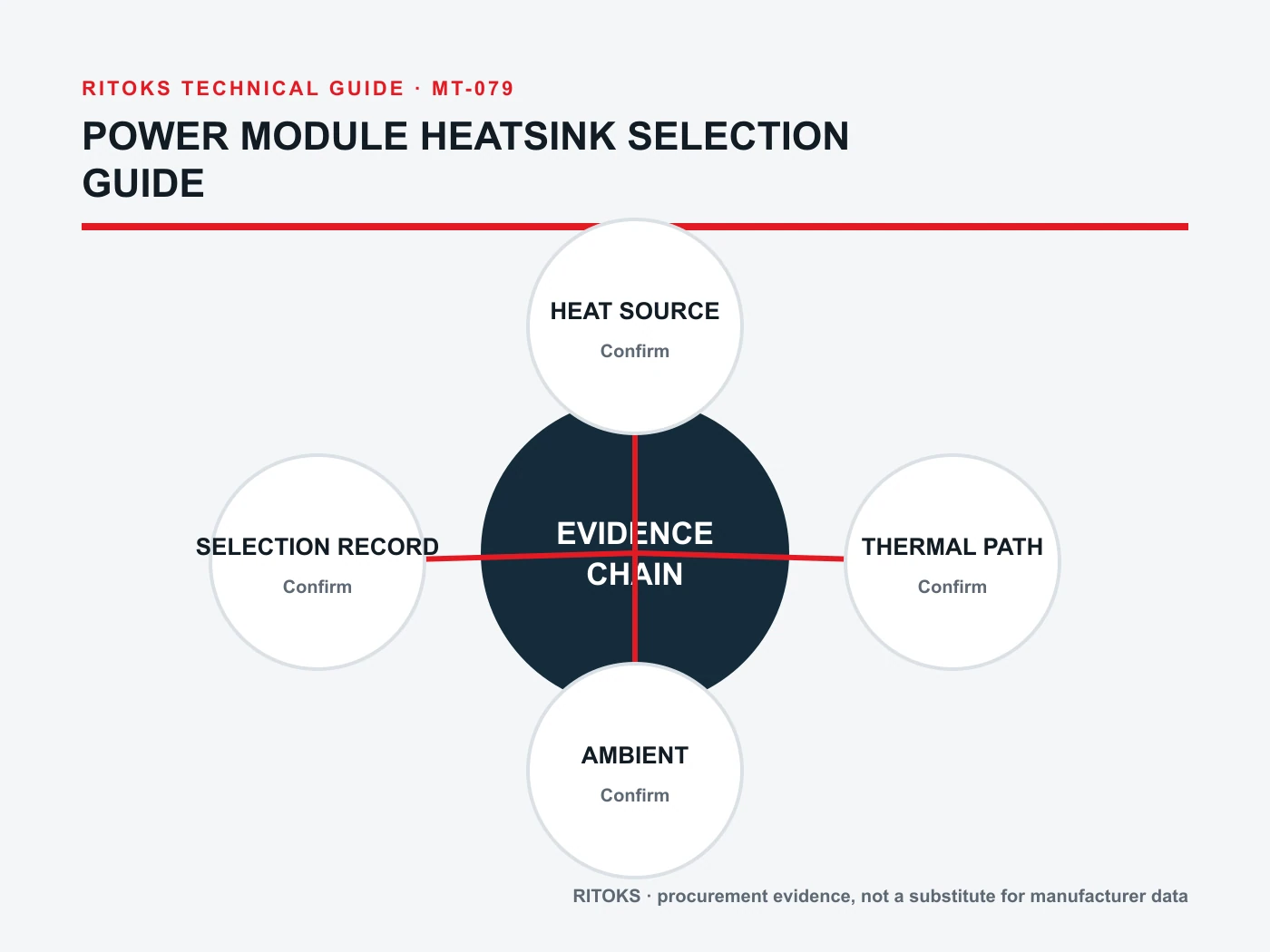
Normalize every Power Module Heatsink offer to the same application record. Keep document revisions, test conditions, included accessories and open questions beside each value. This makes differences in delivered scope visible and prevents a lower-cost but narrower offer from appearing equivalent to a complete solution.
決策工作流程
- 確定應用程式架構與運作情境。.
- 記錄環境、熱學及機械方面的限制條件。.
- Identify the required Power Module Heatsink function without assuming a model.
- 請索取完整的訂單編號及確切的佐證文件。.
- 請將每項索賠與其相關的條款及定義進行比對。.
- 請在商業批准前解決所有偏差及協調問題。.
- 將已核准的證據與最終的物料清單一併歸檔。.
當關鍵的應用輸入參數未知、引用的型號含糊不清、必備的聲明僅由另一家製造商或另一組訂購代碼所支持,或是安裝情況超出現有證據範圍時,應中止審查。這些屬於工程上的缺失,而非編輯上的細節。.
詢價單(RFQ)準備檢查清單
A useful RFQ for power module heatsink selection guide is concise enough to answer and complete enough to prevent silent assumptions. Identify unknown values as questions and require a full orderable code rather than a generic family recommendation.
- 裝置損耗
- 介面
- Sink path
- 氣流路徑
- 環境
- Module footprint
- Flatness
- 緊固
- Orientation
- Service clearance
- 數量、目的地及所需文件語言
請索取最新版本的資料表,並確認任何認證、相容性、協調性或性能聲明的確切範圍。請在技術資訊之後記錄數量與目的地,以免商業條款掩蓋尚未解決的工程問題。.
從工程部門移交至採購部門
Engineering approval should identify the exact Power Module Heatsink code, accepted document revisions, unresolved deviations and the application record used for the decision. Purchasing can then compare commercial offers without silently changing the technical basis. If a supplier proposes another code, different accessory or revised configuration, route it back through the same review instead of treating it as an administrative substitution.
請將經核准的證明文件與採購訂單及最終物料清單一併保存。收貨與生產團隊需要足夠的資訊,才能辨識已驗收的項目,並在標籤、端子配置、配件或文件有差異時及時停止作業。此交接流程亦為維修團隊提供可追溯的起點,作為更換決策的依據,而非僅依賴照片、舊發票上的描述或單一標稱額定值。.
常見問題
Can a heatsink be selected from module current rating?
No. Use semiconductor loss at the actual duty and the full thermal path.
Is a lower catalog thermal resistance always better?
Only when the definition and test conditions apply to the installed orientation and airflow.
Can any thermal compound be used?
Use an interface material and process supported for the exact module and assembly.
相關 RITOKS 產品與指引
這些連結僅提供已發布產品系列的相關背景資訊。此類背景連結並不表示產品可互換、相容,亦不代表經核准的系統組合。.
Published RITOKS Power Module Heatsink product page
Published RITOKS Power Module Heatsink product page
技術參考
以下資料僅用於支持本指南中所述的一般工程概念。其產品規格、電路圖、認證及協調結果均不適用於 RITOKS 產品。.
Infineon, Thermal design and mounting guidance for power semiconductor modules
Supports treating loss, thermal interfaces and mounting as one design chain; Infineon values do not transfer to RITOKS products.
申請精確型號審查
請透過 RITOKS 聯絡表單提交申請要求、具體文件相關問題、數量及目的地。詢價單(RFQ)需進行確切型號的審查;本指南不核准任何電路、安裝方式或自動替代方案。.