
Power Module Heatsinks · Selection Guide
Power Module Heatsink Selection Guide: Loss, Thermal Resistance and Airflow
A power-module heatsink is selected from a thermal path, not from module current alone. The designer needs semiconductor loss at the real duty, an allowed junction-temperature objective, interface data, heatsink performance under the installed airflow and a mechanical arrangement that preserves contact. Missing any link can make an apparently generous extrusion inadequate.
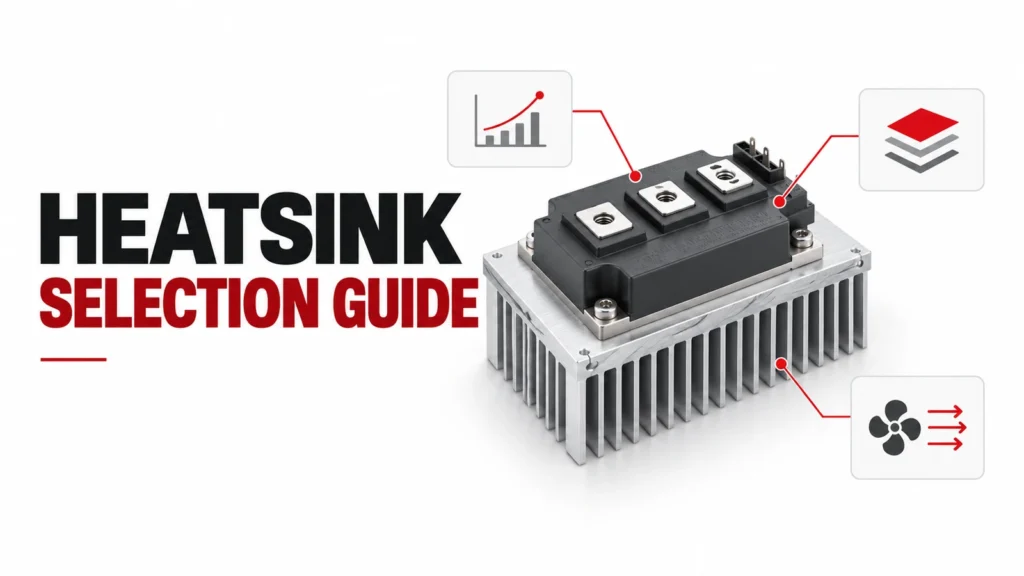
This guide explains the evidence chain required to select a heatsink for SCR, rectifier or other power modules. It does not calculate a heatsink for an unknown semiconductor, publish transferable thermal-resistance values or approve a mounting method without exact device and heatsink documents.
의사결정 입력 요소 요약
| 결정 입력 | 구매자는 다음 사항을 확인해야 합니다. | 필요한 증거 |
|---|---|---|
| Heat generation | Conduction and switching loss at the design duty | Exact semiconductor loss data or validated calculation |
| 온도 경계 | Maximum junction objective and worst local ambient | Device limits and project criterion |
| Interface path | Case, thermal interface material and contact condition | Mounting instruction and interface data |
| Heatsink performance | Thermal behavior at actual orientation and airflow | Exact heatsink curve or validated model |
| 기계적 맞물림 | Footprint, hole pattern, flatness, fasteners and clearance | 치수가 표기된 조립도 |
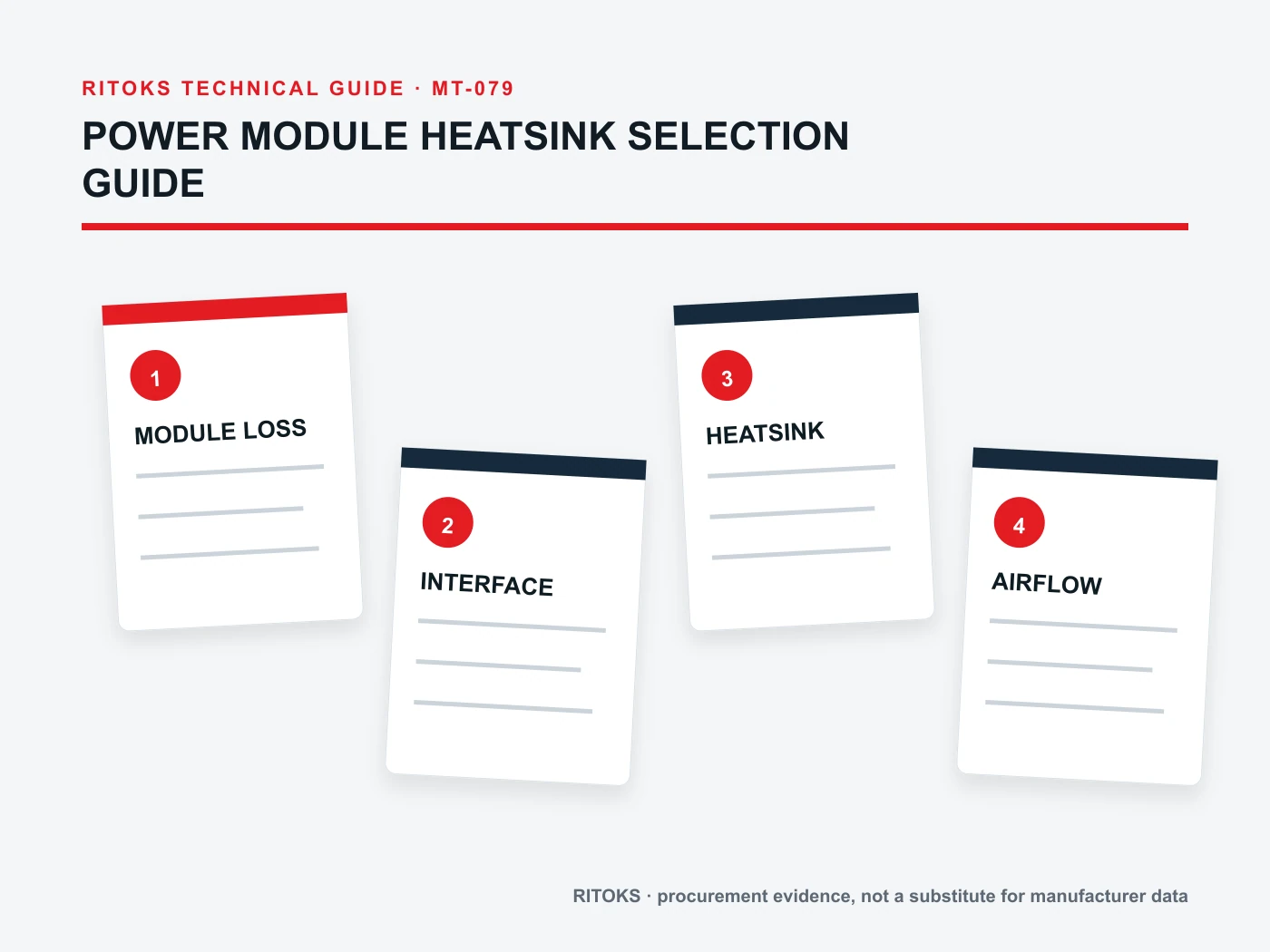
Begin With Semiconductor Loss
Current rating is not a direct heat value. Determine conduction, switching and other relevant losses using the exact device characteristics and the actual waveform, duty and control method.
Document who owns the loss calculation and preserve its inputs. If the semiconductor or duty changes, the heatsink review must be reopened instead of retaining the old result by default.
Build the Complete Thermal Resistance Chain
The path normally includes junction-to-case behavior, the interface between module and sink, the heatsink itself and the air or other cooling medium. Each part has its own conditions and uncertainty.
Do not subtract catalog temperatures without checking definitions. Use one consistent thermal model and units, and distinguish manufacturer limits from the project’s chosen design margin.
Treat Interface Quality as an Engineering Input
Flatness, surface condition, thermal interface material, application method, mounting force and tightening sequence influence contact performance. Follow the semiconductor and heatsink instructions that apply to the exact assembly.
Adding more interface material is not automatically safer because excess thickness can increase resistance. The approved material and process should be repeatable in production and service.
Use Heatsink Data for the Installed Airflow
Natural-convection performance depends on orientation, fin spacing and surrounding clearance. Forced-air performance depends on flow distribution, pressure capability, obstructions and where air temperature is measured.
A fan free-air value is not the airflow through a loaded heatsink channel. Evaluate the complete path and use performance evidence whose test arrangement is relevant to the proposed installation.
Verify Mechanical Compatibility
Check module footprint, mounting holes, terminal access, creepage and clearance needs, base thickness and available fastener depth. The electrical layout must not force a poor thermal contact or block fins.
Create an assembly drawing that identifies the module, sink, interface, fasteners and orientation. This prevents the quotation from mixing compatible-looking parts that have not been reviewed together.
Plan Verification and Field Maintenance
Prototype or thermal testing may be needed when calculations contain uncertain inputs, unusual duty or restricted airflow. Define sensor locations and acceptance criteria before the test.
Dust, fan degradation and blocked clearances can raise temperature over time. The maintenance plan should preserve the airflow and inspection access assumed by the selection.
정확한 모델 증거 파일 생성하기
Build the heatsink approval record around the exact module, mounting interface, available space and cooling arrangement. Match the proposed heatsink to its dimensioned drawing and the relevant thermal evidence under stated test or operating conditions. Record the mounting and airflow assumptions alongside the document revision. A compatible footprint or a product-family page cannot establish the thermal performance of the complete assembly.
승인된 모든 명세서가 동일한 주문 가능한 품목을 설명하는지 확인하십시오. 유사한 하우징이라도 회로, 단자, 재질, 펌웨어 또는 부속품이 다를 수 있습니다. 한 변형의 최대값, 다른 변형의 도면, 또 다른 변형의 특징을 혼합하여 사용해서는 안 됩니다. 해결되지 않은 항목은 엔지니어링 및 상업적 검토 과정에서 계속 표시되도록 명확하게 표시하십시오.
프로젝트 입력 사항과 제품 증거를 별도로 관리하십시오
The project team defines the application: source, load, duty, environment, controls, mechanical limits and required functions. The supplier identifies an exact Power Module Heatsink and supports it with exact documents. Neither side should fill a gap by inference from appearance, a shared family name or one matching headline value.
견적서를 비교하는 동안 신청 기록을 일시 정지하십시오. 회로, 부하, 작동 조건, 환경, 인클로저, 열 관리 방식 또는 요구 출력이 변경될 경우, 수정된 기록을 발행하고 각 공급업체에 후보 제품을 재확인하도록 요청하십시오. 그렇지 않으면 겉보기에는 비슷해 보이는 견적서들이 실제로는 서로 다른 기술적 요구 사항에 대한 답변일 수 있습니다.
조달 과정에서 흔히 발생하는 오류
- Selecting Power Module Heatsink from one headline rating while the application context remains incomplete.
- 인접한 모델의 회로, 곡선, 단자 도면 또는 성능 주장을 사용하는 것.
- 가족 사진이나 제품 사진을 정확한 기술적 증거로 취급하는 것.
- 관련 문서 없이 액세서리, 시스템 기능 또는 조정 결과가 포함된 것으로 가정합니다.
- 전기, 열, 기계적 및 증거 검토를 반복하지 않고 대체품을 승인하는 것.
가격과 납기일을 비교하기 전에 이러한 미비점을 해결해야 합니다. 검토자는 승인된 모든 진술이 프로젝트 요구사항이나 정확한 후보 문서로 거슬러 올라갈 수 있도록 해야 합니다. 제안서는 기술적으로 불완전하더라도 상업적으로는 여전히 매력적일 수 있지만, 누락된 근거 자료가 견적서 속에 묻혀서는 안 됩니다.
공급업체 제안서 비교 방법
| 비교 기준 | 필수 증거 | 수락하지 마십시오 |
|---|---|---|
| 정확한 동일성 | 주문 가능한 전체 코드 및 변형 설명 | 성만 |
| 응용 프로그램 일치 | 동결된 프로젝트 투입 요소에 대한 대응 | 일반적 적합성 진술서 |
| 기술적 증거 | 수정 내역이 포함된 최신 정확한 모델 문서 | 스크린샷 또는 유사 모델 페이지 |
| 제공된 범위 | 포함된 액세서리, 인터페이스 및 설명서 | 정의되지 않은 “표준 패키지” |
| 미해결 질문 | 명백한 편차 및 설명 목록 | 침묵을 동의로 간주함 |
| 치환 | 모든 요구 사항에 대한 새로운 검토 | “외관상 ”동등한” |
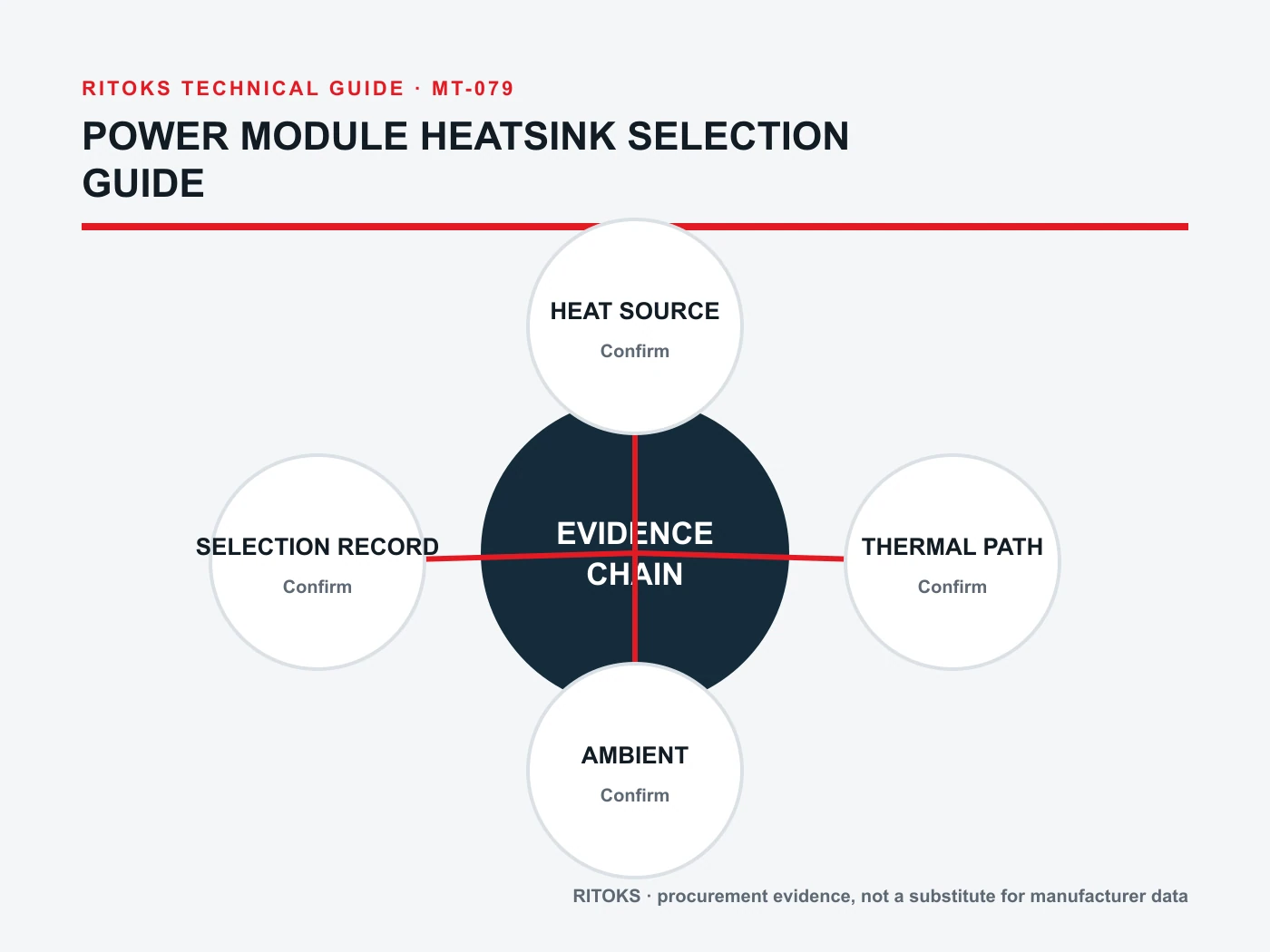
Normalize every Power Module Heatsink offer to the same application record. Keep document revisions, test conditions, included accessories and open questions beside each value. This makes differences in delivered scope visible and prevents a lower-cost but narrower offer from appearing equivalent to a complete solution.
의사결정 워크플로우
- 애플리케이션 아키텍처와 운영 시나리오를 확정하십시오.
- 환경적, 열적, 기계적 제약 조건을 기록하십시오.
- Identify the required Power Module Heatsink function without assuming a model.
- 전체 주문 코드와 정확한 증빙 서류를 요청해 주십시오.
- 각 청구항을 해당 조건 및 정의와 대조해 보십시오.
- 상업적 승인 전에 편차 사항 및 조정 관련 문제를 해결하십시오.
- 승인된 증거 자료를 최종 자재 명세서와 함께 보관하십시오.
중요한 애플리케이션 입력값이 불분명하거나, 인용된 모델이 모호하거나, 필수 청구항이 다른 제조업체나 다른 주문 코드에 의해서만 뒷받침되거나, 설치 내용이 이용 가능한 증거의 범위를 벗어날 경우 심사를 중단해야 합니다. 이는 편집상의 세부 사항이 아닌 기술적 누락입니다.
견적 요청서(RFQ) 작성 체크리스트
A useful RFQ for power module heatsink selection guide is concise enough to answer and complete enough to prevent silent assumptions. Identify unknown values as questions and require a full orderable code rather than a generic family recommendation.
- Device loss
- 인터페이스
- Sink path
- 공기 흐름 경로
- Ambient
- Module footprint
- Flatness
- 고정
- Orientation
- Service clearance
- 수량, 목적지 및 필요 서류 언어
최신 데이터시트 개정판과 인증, 호환성, 연계성 또는 성능 관련 주장의 정확한 범위를 요청하십시오. 기술적 사항 기재 후 수량과 목적지를 기록하여, 상업적 조건이 해결되지 않은 기술적 문제를 가리지 않도록 하십시오.
엔지니어링 부서에서 구매 부서로 업무 인계
Engineering approval should identify the exact Power Module Heatsink code, accepted document revisions, unresolved deviations and the application record used for the decision. Purchasing can then compare commercial offers without silently changing the technical basis. If a supplier proposes another code, different accessory or revised configuration, route it back through the same review instead of treating it as an administrative substitution.
승인된 증빙 자료를 구매 주문서 및 최종 자재 명세서와 함께 보관하십시오. 입고 및 생산 팀은 승인된 품목을 식별하고, 라벨, 단자 배열, 부속품 또는 문서가 상이할 경우 작업을 중단할 수 있도록 충분한 정보를 확보해야 합니다. 또한 이러한 인계 절차를 통해 유지보수 팀은 사진, 오래된 청구서 설명 또는 단일 등급 정보에만 의존하지 않고, 교체 결정을 내릴 때 추적 가능한 근거를 확보할 수 있습니다.
자주 묻는 질문
Can a heatsink be selected from module current rating?
No. Use semiconductor loss at the actual duty and the full thermal path.
Is a lower catalog thermal resistance always better?
Only when the definition and test conditions apply to the installed orientation and airflow.
Can any thermal compound be used?
Use an interface material and process supported for the exact module and assembly.
관련 RITOKS 제품 및 지침
이 링크들은 해당 제품군의 배경 정보만을 제공합니다. 이러한 배경 정보 링크는 상호 호환성, 호환성 또는 승인된 시스템 조합을 보장하지 않습니다.
Published RITOKS Power Module Heatsink product page
Published RITOKS Power Module Heatsink product page
기술 참고 자료
다음 출처는 본 가이드에 명시된 일반적인 공학적 개념만을 뒷받침합니다. 해당 출처의 제품 사양, 회로도, 인증 및 조정 결과는 RITOKS 제품에 적용되지 않습니다.
Infineon, Thermal design and mounting guidance for power semiconductor modules
Supports treating loss, thermal interfaces and mounting as one design chain; Infineon values do not transfer to RITOKS products.
정확한 모델 검토 요청
RITOKS 문의 양식을 통해 신청 요건, 구체적인 문서 관련 문의 사항, 수량 및 배송지를 보내주십시오. RFQ는 정확한 모델 검토를 요청하는 것이며, 본 안내서는 회로, 설치 또는 자동 대체품에 대한 승인을 의미하지 않습니다.