
열 관리 · 기술 해설
Thermal Management for Outdoor Electrical Cabinets
Thermal Management for Outdoor Electrical Cabinets starts with the system question: Which solar, ambient, ingress and duty conditions change the approach? A useful selection brief connects the equipment duty, installation and receiving system to a specific orderable product. The article below separates project inputs from product evidence so that a familiar product name does not quietly become a technical approval.
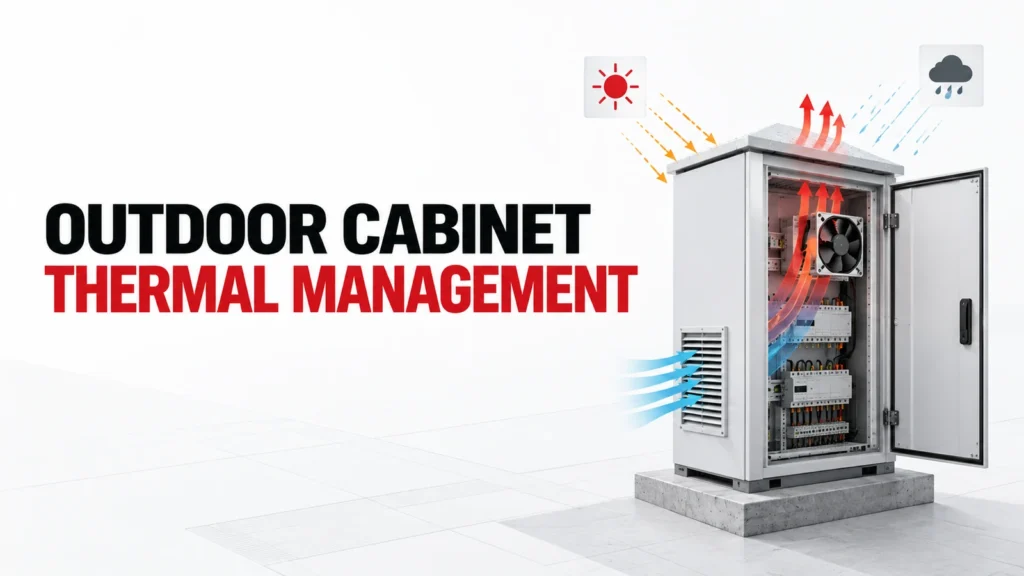
This guide defines outdoor cabinet thermal inputs and solution roles. It does not claim that an indoor-rated air conditioner, fan or heater is suitable outdoors; suitability must be established for the exact product and assembled enclosure.
의사결정 입력 요소 요약
| 검토 대상 영역 | 프로젝트 입력 사항 | 요청할 증거 |
|---|---|---|
| SOLAR GAIN | 실제 운영 상태 및 시스템 경계를 정의한다 | 승인된 시스템 도면 또는 근무 기록부 |
| DEVICE LOSSES | 인터페이스, 지오메트리 또는 컨트롤에 대한 기대값 명명 | 해당 장비 또는 제품에 대한 정확한 문서 |
| AMBIENT | 주 환경 및 설치 조건 | 현장도 또는 패널 도면 |
| DUTY | 서비스 및 승인 요건을 설명하십시오. | 상세한 지침 및 테스트 계획 |
Outdoor exposure changes the problem
An outdoor electrical cabinet sees the heat produced by its own equipment and the conditions surrounding the enclosure. Sunlight, ambient temperature, wind, rain, dust and duty cycle can change across the day and season. A cooling method selected from an indoor cabinet example may not address these combined conditions.
The first deliverable is a site and equipment profile, not a model number. Record cabinet location, orientation, shade, material, dimensions, internal losses and acceptable component temperatures. Identify the limiting operating state so the selected approach is evaluated against a real case rather than a comfortable average.
Account for solar and external heat
Solar gain can warm a cabinet wall and raise the thermal burden, particularly when exposed surfaces and internal components are close. The effect depends on orientation, color, shading and local weather. Request a project-specific assumption or measurement rather than applying a universal percentage to every enclosure.
Nearby process equipment, ground surfaces and trapped air can also affect local ambient. Record the temperature at the cabinet installation, not only a regional weather headline. If the cabinet will be relocated or installed in multiple climates, define a separate design envelope for each case.
Map internal losses and operating states
Create a heat-load list for drives, power supplies, contactors, communication devices and other installed equipment using applicable exact data. Include continuous and intermittent duty, standby states and any future equipment that is actually committed to the design. A device’s electrical input is not necessarily its heat loss inside the cabinet.
Place major heat sources on the layout. Component separation, airflow path and sensors influence local hot spots even when the total loss is unchanged. Where supplier loss data is missing, mark the estimate as provisional and identify the test or document needed to close it.
Choose between exchange and isolation of air
Filtered ventilation exchanges internal and outside air. It may be suitable only when external air conditions and ingress needs allow it, and when the achievable temperature condition meets component limits. A heat exchanger or air conditioner can maintain a more controlled boundary, but each has its own ambient, mounting, drainage, power and maintenance requirements.
Do not treat a cabinet fan as a universal outdoor solution or an air conditioner as an automatic answer. Compare the selected method with dust, water, corrosive exposure and the enclosure’s required protective function. Verify the rating of the assembled installation, including penetrations and accessories.
Separate overheating from condensation control
An enclosure can have a moisture problem when surfaces cool below the relevant dew point, even if it does not overheat. A heater may support condensation control in defined conditions, but it adds heat and requires controls. A cooling device may also have condensate behavior that must be handled. The two objectives should be written separately.
Record humidity conditions, off-cycle periods, ventilation openings and drain strategy. Ask which device handles each operating state and how sensors are placed. Do not infer that a product labeled “heater” or “cooler” solves both problems without a complete control and environmental design.
Check product location and assembly rating
An indoor air conditioner is not made outdoor-suitable by mounting it on an outdoor cabinet. Require the exact device environmental rating, installation orientation, sealing instructions and exposure limits. The same review applies to fans, filters, heaters, thermostats, cable entries and doors.
The enclosure’s protective function belongs to the assembled result. Cutting an opening, adding a cooling unit or changing a gasket can alter that result. Preserve the approved cutout drawing and mounting instructions, then inspect the built cabinet for the same arrangement.
Plan maintenance in the real location
Outdoor cabinets may be remote, elevated or difficult to service. Define filter cleaning, fan replacement, condensate management, sensor checks and access clearance before the equipment is ordered. A method that works in a laboratory but cannot be maintained at the site may not be the right choice.
Where cooling depends on power or moving parts, define alarm and failure response. The project should identify which electrical loads remain active, what the controller does and how the operator learns of a fault. Record the selected behavior in commissioning tests.
정확한 모델 증거 파일 생성하기
For the proposed Enclosure Cooling Strategy, create one approval record with the complete order code, the exact datasheet, the relevant drawing, installation instructions and any curve or test report used for the decision. Date each file or record its revision. A product-family page is useful for discovery, but it does not prove that a particular configuration includes an optional feature or meets a system condition.
동일한 주문 가능 품목에 대한 모든 요구 사항을 관련 증거 자료와 대조하여 검토하십시오. 한 변형의 제품군 최대 허용치를 다른 변형의 회로도, 부속품 목록 또는 열 곡선과 혼합하여 사용해서는 안 됩니다. 해결되지 않은 항목은 눈에 잘 띄는 ‘확정 필요’ 열에 기재하십시오. 공급업체가 대체품을 제안할 경우, 기술적 동등성을 승인하기 전에 해당 검토 항목을 다시 수행하십시오.
프로젝트 투입 내역과 공급업체 청구 내역을 별도로 관리하십시오
프로젝트 팀은 애플리케이션 기록(소스 및 로드, 운영 상태, 환경, 마운팅, 제어, 서비스 및 승인 기준)에 대한 책임을 집니다. 공급업체는 제안된 주문 코드 및 이를 뒷받침하는 장치 증거 자료에 대한 책임을 집니다. 어느 쪽도 외관이나 익숙한 제품군 이름을 바탕으로 추측하여 누락된 정보를 채워서는 안 됩니다. 누락된 항목에 담당자와 완료 일정이 정해져 있다면, “데이터가 아직 준비되지 않았습니다”라는 답변도 유용한 답변이 될 수 있습니다.
제안서를 비교하는 동안 해당 기록을 동결해 두십시오. 운전 조건, 캐비닛, 전원, 계량기, 모터 또는 보호 구조가 변경될 경우, 수정된 입력 시트를 발행하고 각 공급업체에 후보 제품을 재확인하도록 요청하십시오. 이를 통해 초기 견적이 이후 설계에 대한 승인으로 간주되는 것을 방지할 수 있습니다.
공급업체 제안서 비교 방법
| 특가 상품 | 비교 대상 | 승인 증빙 자료 |
|---|---|---|
| 범위의 적용 범위 | 전체 구성품 및 동봉된 액세서리 | 정확한 견적서 및 자재 명세서 |
| 전기적 적합성 | 적용 가능한 모든 작동 상태 | 정확한 등급, 회로 또는 곡선 관련 문서 |
| 기계적 맞물림 | 장착, 단자 및 접근 | 도면 및 설치 안내 |
| 서비스 요금제 | 점검 및 교체 방법 | 유지보수 지침 |
| 미결 항목 | 가정, 제외 사항 및 예외 | 서면 설명 등록부 |
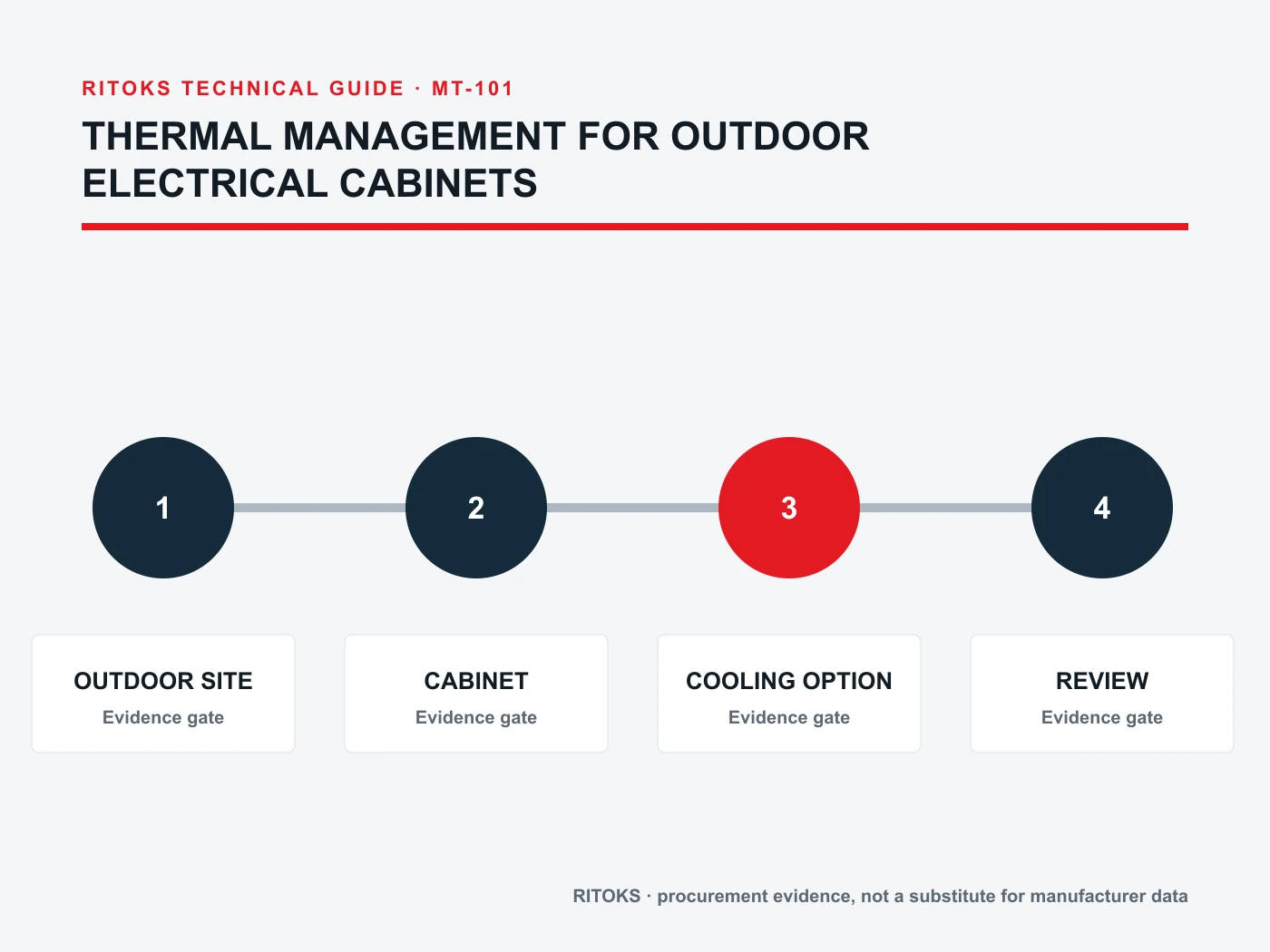
Normalize each Enclosure Cooling Strategy offer to the same application record. A shorter lead time or lower price is meaningful only after the technical scope is comparable. Record whether each supplier included the required accessories, documents and support for commissioning. Keep exceptions explicit, especially when the candidate needs a change to the panel or control design.
조달 및 시운전 점검 항목
- 시스템 경계, 작동 상태 및 승인 기준을 확인하십시오.
- 정확한 모델 문서를 기준으로 하나의 전체 주문 코드를 검토하십시오.
- 전기, 기계, 환경 및 서비스 관련 예외 사항을 해결합니다.
- 각 제안서 간의 제공 범위와 문서 수정 사항을 비교하십시오.
- 수령한 품목을 승인된 기록과 대조하여 검사하십시오.
- 프로젝트의 승인된 절차에 따라 완성된 조립품을 테스트하십시오.
입고 검사 시에는 납품된 라벨, 단자, 동봉된 부속품 및 문서를 승인된 주문 내역과 대조하여 확인해야 합니다. 동일한 제품군의 대체품이 자동으로 허용되는 것은 아닙니다. 시운전 시에는 부품 설명서만으로는 확인할 수 없는, 용도에 따른 기능을 검증해야 합니다. 시험 계획서에는 보편적인 한계를 임의로 설정하지 말고, 대표적인 상태와 수용 기준을 명시해야 합니다.
견적 요청서(RFQ) 작성 체크리스트
A useful request for quotation on thermal management for outdoor cabinets is concise but complete. Ask for the exact orderable configuration and list unknown values as questions. Do not let the sales description silently answer a technical question that belongs to a calculation, a drawing or a test.
- SOLAR GAIN
- DEVICE LOSSES
- AMBIENT
- DUTY
- INGRESS
- CONDENSATION
- 냉각
- SERVICE
- 적용 대상 문서 개정판
- 수량, 배송지 및 배송 범위
공급업체에 제외 사항, 가정 사항 및 선택 항목을 별도로 명시하도록 요청하십시오. 기술적 설명 기록을 견적서와 함께 보관하여 조달 부서와 엔지니어링 부서가 동일한 범위를 검토할 수 있도록 하십시오. 중요한 입력 사항이 여전히 누락된 경우, 해당 후보 업체는 상업적으로 여전히 매력적일 수 있으나 기술적 승인은 유보됩니다.
자주 묻는 질문
Can a Enclosure Cooling Strategy be chosen from one headline rating?
아닙니다. 해당 제품, 정확한 구성 및 관련 전기적, 기계적, 열적, 환경적 조건을 종합적으로 검토해야 합니다. 카탈로그 제목은 정보를 파악하기 위한 출발점일 뿐, 완전한 승인 기록은 아닙니다.
가족 페이지가 정확한 관계나 연관성을 입증해 주는 것일까요?
아니요. 제안된 주문 코드와 해당 코드에 대한 최신 도면, 데이터시트 및 설치 지침을 사용하십시오. 선택 사양이나 단자 배열은 제품군 내에서도 다를 수 있습니다.
만약 공급업체가 필요한 값 중 하나를 제공할 수 없다면 어떻게 될까요?
해당 값을 ‘미해결’로 표시하고, 누가 이를 확보할지 명확히 한 뒤, 해당 결정 과정을 일시 중지하십시오. 단순히 구매일이 다가온다는 이유만으로 가정을 검증된 사실로 간주해서는 안 됩니다.
리뷰를 어디에서 이어갈까요?
다음 내용을 살펴보세요. Enclosure Cooling Strategy category 사용 가능한 제품군에 대해서는 다음을 검토하십시오. 관련 상품 페이지 초기 출발점으로 삼으시기 바랍니다. 이 페이지들은 상업적 적용 분야를 제시하며, 구체적인 모델 문서를 통해 해당 용도에 대한 적합성을 판단할 수 있습니다. 프로젝트별 비교를 원하시면, 시스템 입력값과 궁금한 점을 다음을 통해 보내주십시오. RITOKS 문의 페이지.
증거를 검토한 후 다른 장치나 방법이 더 적합해 보인다면, 대체를 요청하기 전에 설계 개요서를 수정하십시오. 기록은 처음 관심을 끌었던 제품군에만 국한하지 말고, 최종 회로 및 설치와 연계하여 관리하십시오.