
Isı Yönetimi · Teknik Açıklama
Thermal Management for Outdoor Electrical Cabinets
Thermal Management for Outdoor Electrical Cabinets starts with the system question: Which solar, ambient, ingress and duty conditions change the approach? A useful selection brief connects the equipment duty, installation and receiving system to a specific orderable product. The article below separates project inputs from product evidence so that a familiar product name does not quietly become a technical approval.
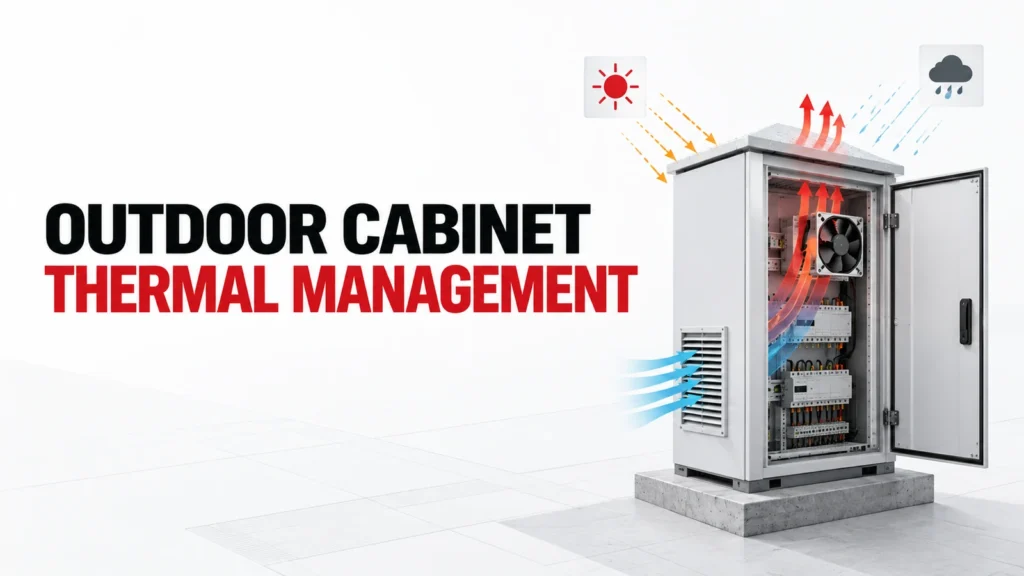
This guide defines outdoor cabinet thermal inputs and solution roles. It does not claim that an indoor-rated air conditioner, fan or heater is suitable outdoors; suitability must be established for the exact product and assembled enclosure.
Karar Alımında Kullanılan Verilere Genel Bakış
| İnceleme alanı | Proje girdisi | Talep edilecek deliller |
|---|---|---|
| SOLAR GAIN | Gerçek çalışma durumunu ve sistem sınırlarını tanımlayın | Onaylanmış sistem çizimi veya görev kaydı |
| DEVICE LOSSES | Arayüz, geometri veya kontrol beklentisinin adını belirtin | Ekipman veya ürünün tam teknik belgesi |
| AMBIENT | Ortam ve kurulum koşulları | Şantiye veya panel çizimi |
| DUTY | Hizmet ve kabul şartlarını açıklayın | Ayrıntılı talimatlar ve test planı |
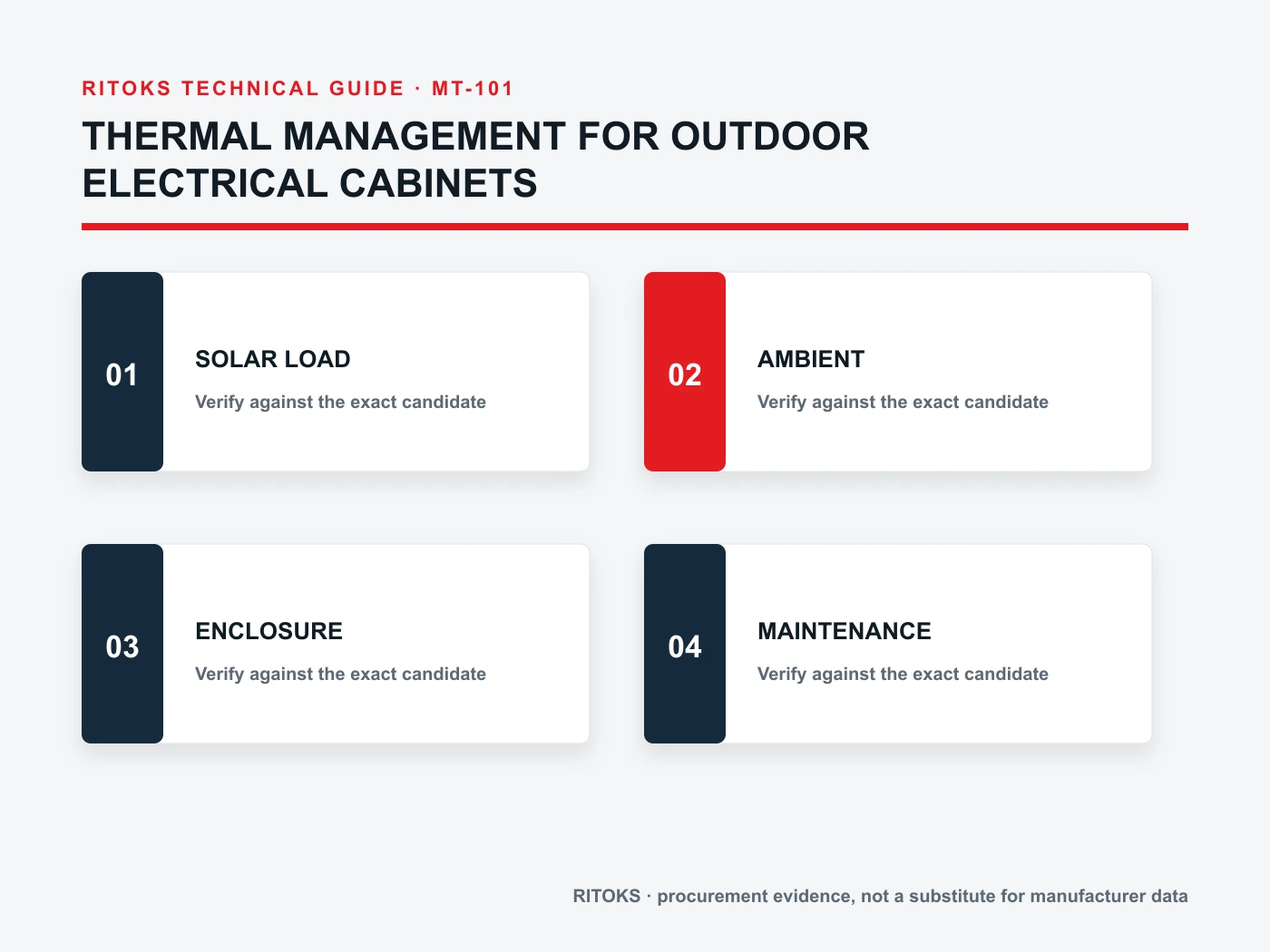
Outdoor exposure changes the problem
An outdoor electrical cabinet sees the heat produced by its own equipment and the conditions surrounding the enclosure. Sunlight, ambient temperature, wind, rain, dust and duty cycle can change across the day and season. A cooling method selected from an indoor cabinet example may not address these combined conditions.
The first deliverable is a site and equipment profile, not a model number. Record cabinet location, orientation, shade, material, dimensions, internal losses and acceptable component temperatures. Identify the limiting operating state so the selected approach is evaluated against a real case rather than a comfortable average.
Account for solar and external heat
Solar gain can warm a cabinet wall and raise the thermal burden, particularly when exposed surfaces and internal components are close. The effect depends on orientation, color, shading and local weather. Request a project-specific assumption or measurement rather than applying a universal percentage to every enclosure.
Nearby process equipment, ground surfaces and trapped air can also affect local ambient. Record the temperature at the cabinet installation, not only a regional weather headline. If the cabinet will be relocated or installed in multiple climates, define a separate design envelope for each case.
Map internal losses and operating states
Create a heat-load list for drives, power supplies, contactors, communication devices and other installed equipment using applicable exact data. Include continuous and intermittent duty, standby states and any future equipment that is actually committed to the design. A device’s electrical input is not necessarily its heat loss inside the cabinet.
Place major heat sources on the layout. Component separation, airflow path and sensors influence local hot spots even when the total loss is unchanged. Where supplier loss data is missing, mark the estimate as provisional and identify the test or document needed to close it.
Choose between exchange and isolation of air
Filtered ventilation exchanges internal and outside air. It may be suitable only when external air conditions and ingress needs allow it, and when the achievable temperature condition meets component limits. A heat exchanger or air conditioner can maintain a more controlled boundary, but each has its own ambient, mounting, drainage, power and maintenance requirements.
Do not treat a cabinet fan as a universal outdoor solution or an air conditioner as an automatic answer. Compare the selected method with dust, water, corrosive exposure and the enclosure’s required protective function. Verify the rating of the assembled installation, including penetrations and accessories.
Separate overheating from condensation control
An enclosure can have a moisture problem when surfaces cool below the relevant dew point, even if it does not overheat. A heater may support condensation control in defined conditions, but it adds heat and requires controls. A cooling device may also have condensate behavior that must be handled. The two objectives should be written separately.
Record humidity conditions, off-cycle periods, ventilation openings and drain strategy. Ask which device handles each operating state and how sensors are placed. Do not infer that a product labeled “heater” or “cooler” solves both problems without a complete control and environmental design.
Check product location and assembly rating
An indoor air conditioner is not made outdoor-suitable by mounting it on an outdoor cabinet. Require the exact device environmental rating, installation orientation, sealing instructions and exposure limits. The same review applies to fans, filters, heaters, thermostats, cable entries and doors.
The enclosure’s protective function belongs to the assembled result. Cutting an opening, adding a cooling unit or changing a gasket can alter that result. Preserve the approved cutout drawing and mounting instructions, then inspect the built cabinet for the same arrangement.
Plan maintenance in the real location
Outdoor cabinets may be remote, elevated or difficult to service. Define filter cleaning, fan replacement, condensate management, sensor checks and access clearance before the equipment is ordered. A method that works in a laboratory but cannot be maintained at the site may not be the right choice.
Where cooling depends on power or moving parts, define alarm and failure response. The project should identify which electrical loads remain active, what the controller does and how the operator learns of a fault. Record the selected behavior in commissioning tests.
Kesin Modele Dayalı Kanıt Dosyası Oluşturun
For the proposed Enclosure Cooling Strategy, create one approval record with the complete order code, the exact datasheet, the relevant drawing, installation instructions and any curve or test report used for the decision. Date each file or record its revision. A product-family page is useful for discovery, but it does not prove that a particular configuration includes an optional feature or meets a system condition.
Her bir gereksinimi, aynı sipariş edilebilir ürünle ilgili kanıtlarla karşılaştırın. Bir varyanttaki ürün ailesi üst sınırını, başka bir varyanttaki devre şeması, aksesuar listesi veya termal eğriyle birleştirmeyin. Çözülmemiş alanları, görünür bir “açıklama” sütununa yazın. Bir tedarikçi bir ikame ürün önerirse, teknik eşdeğerliğini onaylamadan önce ilgili incelemeyi tekrarlayın.
Proje Girdilerini Tedarikçi Faturalarından Ayrı Tutun
Proje ekibi, uygulama kaydının sorumluluğunu üstlenir: kaynak ve yükleme, çalışma durumları, ortam, montaj, kontroller, servis ve kabul kriterleri. Tedarikçi ise önerilen sipariş kodunun ve destekleyici cihaz belgelerinin sorumluluğunu üstlenir. Tarafların hiçbiri, görünüşten veya tanıdık bir soyadından yola çıkarak bir boşluğu doldurmamalıdır. Eksik öğenin bir sorumlusu ve tamamlanma tarihi olması koşuluyla, “veriler henüz mevcut değil” şeklinde bir cevap verilebilir.
Teklifler karşılaştırılırken bu kaydı dondurun. Çalışma koşulu, kabin, kaynak, sayaç, motor veya koruma yapısında herhangi bir değişiklik olması durumunda, güncellenmiş bir girdi formu hazırlayın ve her tedarikçiden aday ürününü yeniden teyit etmesini isteyin. Bu, erken bir teklifin daha sonraki bir tasarım için onay olarak kabul edilmesini önler.
Tedarikçi Tekliflerini Karşılaştırma Yöntemleri
| Teklif edilen ürün | Neler karşılaştırılmalı? | Onay belgesi |
|---|---|---|
| Sipariş edilebilir kapsam | Tam kod ve birlikte verilen aksesuarlar | Kesin fiyat teklifi ve malzeme listesi |
| Elektrik tesisatı | Tüm geçerli çalışma durumları | Kesin derecelendirme, devre veya eğri belgesi |
| Mekanik geçme | Montaj, terminaller ve erişim | Çizim ve kurulum talimatları |
| Hizmet planı | Kontrol ve değiştirme yöntemi | Bakım talimatları |
| Açık kalemler | Varsayımlar, hariç tutmalar ve istisnalar | Yazılı açıklama kaydı |
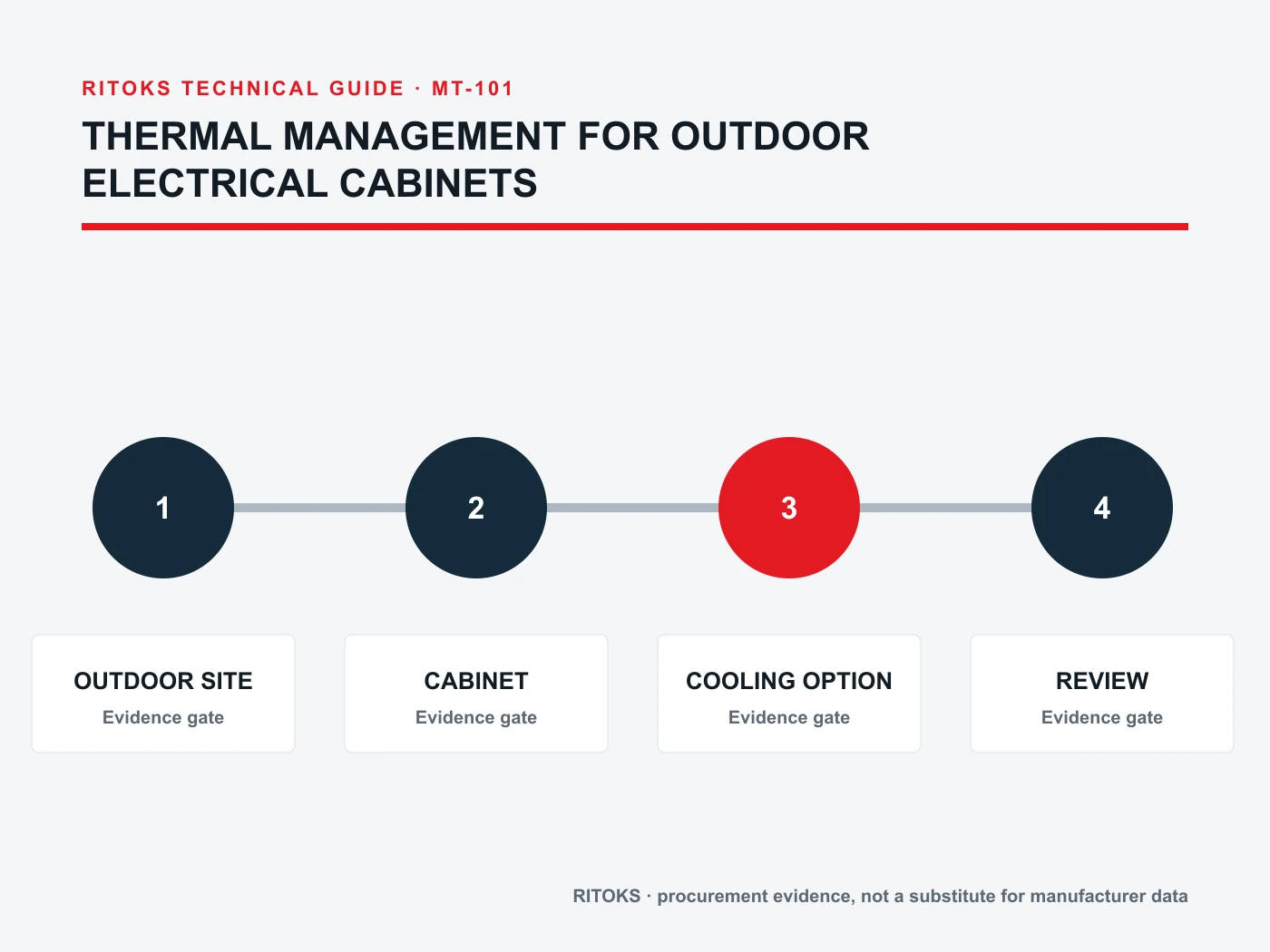
Normalize each Enclosure Cooling Strategy offer to the same application record. A shorter lead time or lower price is meaningful only after the technical scope is comparable. Record whether each supplier included the required accessories, documents and support for commissioning. Keep exceptions explicit, especially when the candidate needs a change to the panel or control design.
Tedarik ve Devreye Alma Kontrol Noktaları
- Sistem sınırlarını, çalışma durumlarını ve kabul kriterlerini teyit edin.
- Bir sipariş kodunu, modelin tam özelliklerini içeren belgelerle karşılaştırarak inceleyin.
- Elektriksel, mekanik, çevresel ve servisle ilgili istisnaları giderin.
- Teklifler arasında sunulan kapsamı ve belge revizyonlarını karşılaştırın.
- Alınan ürünü, onaylanmış kayıtla karşılaştırarak kontrol edin.
- Tamamlanan montajı, projenin onaylanmış prosedürü uyarınca test edin.
Gelen mal kontrolünde, teslim edilen etiket, terminaller, birlikte verilen aksesuarlar ve belgeler, onaylanmış siparişle karşılaştırılarak kontrol edilmelidir. Aynı ürün ailesinden bir yedek parça otomatik olarak kabul edilemez. Devreye alma sırasında, yalnızca bileşen kılavuzunda belirtilemeyen, uygulamaya bağlı işlevleri doğrulayın. Test planında, genel sınırlar belirlemeden, temsili durumlar ve kabul kriterleri belirtilmelidir.
Teklif Talebi Hazırlık Kontrol Listesi
A useful request for quotation on thermal management for outdoor cabinets is concise but complete. Ask for the exact orderable configuration and list unknown values as questions. Do not let the sales description silently answer a technical question that belongs to a calculation, a drawing or a test.
- SOLAR GAIN
- DEVICE LOSSES
- AMBIENT
- DUTY
- INGRESS
- CONDENSATION
- SOĞUTMA
- SERVICE
- Geçerli belge revizyonları
- Miktar, varış yeri ve teslimat kapsamı
Tedarikçiden istisnaları, varsayımları ve isteğe bağlı kalemleri ayrı ayrı belirtmesini isteyin. Teknik açıklama kaydını teklifle birlikte saklayın; böylece satın alma ve mühendislik ekipleri aynı kapsamı inceleyebilsin. Kritik bir girdi hâlâ eksikse, aday ticari açıdan cazip olmaya devam edebilir, ancak teknik onayı askıda kalır.
Sık Sorulan Sorular
Can a Enclosure Cooling Strategy be chosen from one headline rating?
Hayır. Uygulama, kesin konfigürasyon ve ilgili elektriksel, mekanik, termal ve çevresel koşullar birlikte değerlendirilmelidir. Bir katalog başlığı, bir keşif süreci için başlangıç noktasıdır; tam bir onay belgesi değildir.
Bir aile sayfası, kesin bir akrabalık ilişkisini mi yoksa bir bağlantıyı mı kanıtlar?
Hayır. Önerilen sipariş kodunu ve buna ait güncel çizimi, teknik veri sayfasını ve kurulum talimatlarını kullanın. İsteğe bağlı özellikler veya alternatif terminal düzenlemeleri, aynı ürün ailesi içinde farklılık gösterebilir.
Ya tedarikçi istenen değerlerden birini sağlayamazsa?
Bu değeri “çözülmemiş” olarak işaretleyin, bu değeri kimin elde edeceğini belirleyin ve ilgili kararı askıya alın. Sırf satın alma tarihi yaklaşıyor diye bir varsayımı doğrulanmış bir iddiaya dönüştürmeyin.
İncelemeye Nereden Devam Edilmeli?
Şunlara göz atın: Enclosure Cooling Strategy category mevcut ürün ailesi için, ardından şunu inceleyin: ilgili ürün sayfası bir başlangıç noktası olarak. Bu sayfalar ticari kullanım alanını belirtir; uygulamaya uygunluk ise ilgili model belgelerine göre belirlenir. Projeye özgü bir karşılaştırma için, sistem girdilerini ve açık soruları şu adres üzerinden gönderin: RITOKS sorgulama sayfası.
Kanıtları inceledikten sonra başka bir cihaz veya yöntem daha uygun görünüyorsa, değiştirme talebinde bulunmadan önce tasarım özetini güncelleyin. Kayıtları, ilk başta dikkatinizi çeken ürün grubuyla sınırlı tutmayın; nihai devre ve kurulumla bağlantılı olarak tutun.