
Управління тепловим режимом · Технічний посібник
Thermal Management for Outdoor Electrical Cabinets
Thermal Management for Outdoor Electrical Cabinets starts with the system question: Which solar, ambient, ingress and duty conditions change the approach? A useful selection brief connects the equipment duty, installation and receiving system to a specific orderable product. The article below separates project inputs from product evidence so that a familiar product name does not quietly become a technical approval.
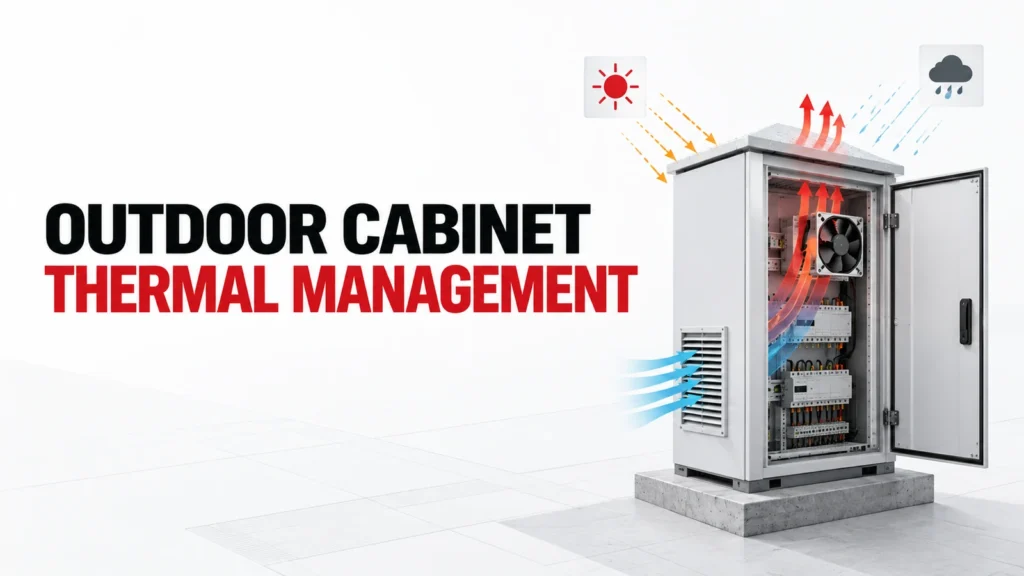
This guide defines outdoor cabinet thermal inputs and solution roles. It does not claim that an indoor-rated air conditioner, fan or heater is suitable outdoors; suitability must be established for the exact product and assembled enclosure.
Короткий огляд даних, що враховуються при прийнятті рішень
| Область огляду | Вхідні дані проекту | Докази, які слід вимагати |
|---|---|---|
| SOLAR GAIN | Визначити фактичний робочий стан та межі системи | Затверджений креслення системи або журнал експлуатації |
| DEVICE LOSSES | Вкажіть інтерфейс, геометрію або очікувані параметри керування | Точна документація щодо обладнання або продукції |
| AMBIENT | Стан навколишнього середовища та умови встановлення | Креслення об’єкта або панелі |
| DUTY | Опишіть вимоги до обслуговування та приймання | Чіткі інструкції та план тестування |
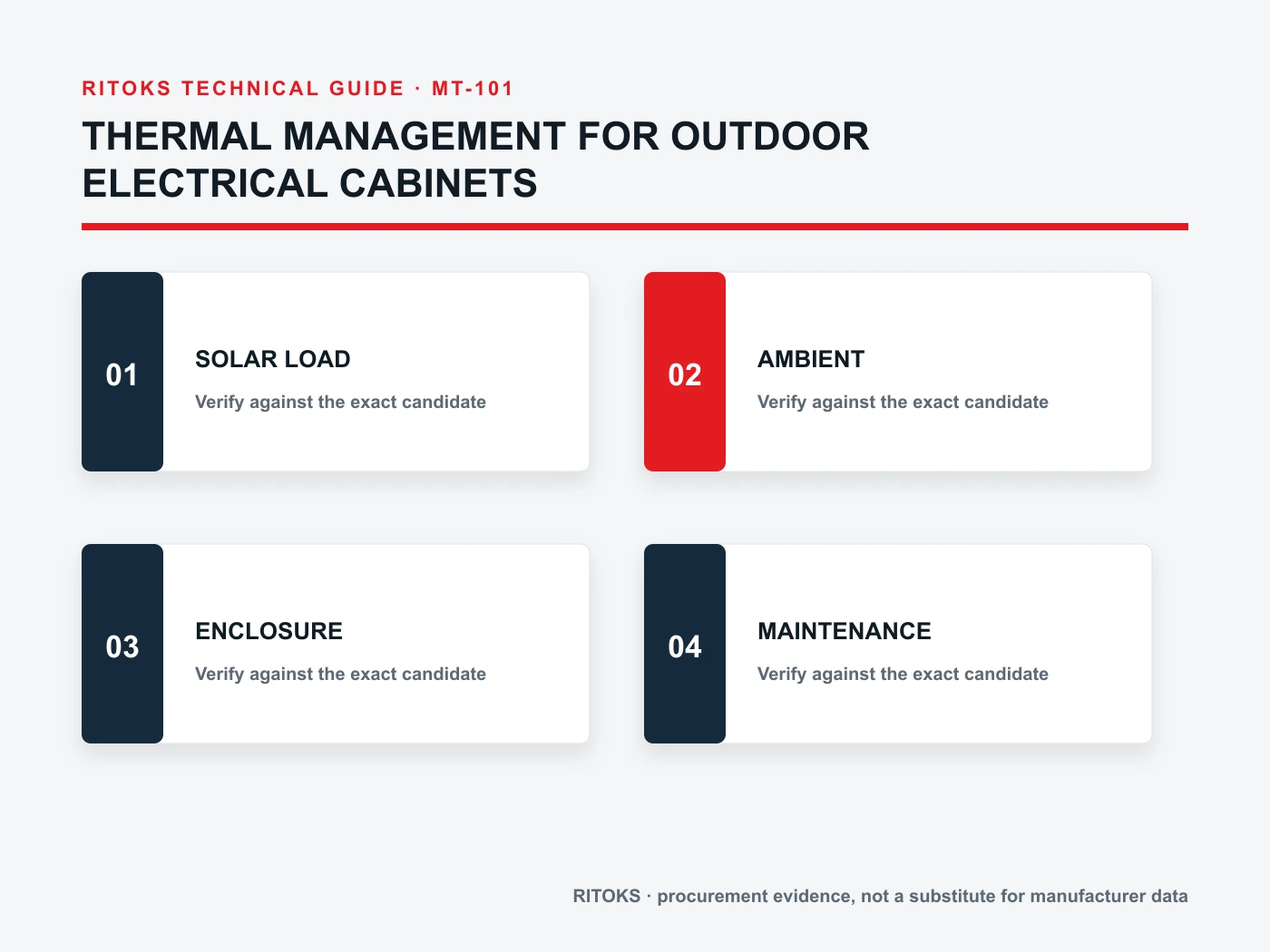
Outdoor exposure changes the problem
An outdoor electrical cabinet sees the heat produced by its own equipment and the conditions surrounding the enclosure. Sunlight, ambient temperature, wind, rain, dust and duty cycle can change across the day and season. A cooling method selected from an indoor cabinet example may not address these combined conditions.
The first deliverable is a site and equipment profile, not a model number. Record cabinet location, orientation, shade, material, dimensions, internal losses and acceptable component temperatures. Identify the limiting operating state so the selected approach is evaluated against a real case rather than a comfortable average.
Account for solar and external heat
Solar gain can warm a cabinet wall and raise the thermal burden, particularly when exposed surfaces and internal components are close. The effect depends on orientation, color, shading and local weather. Request a project-specific assumption or measurement rather than applying a universal percentage to every enclosure.
Nearby process equipment, ground surfaces and trapped air can also affect local ambient. Record the temperature at the cabinet installation, not only a regional weather headline. If the cabinet will be relocated or installed in multiple climates, define a separate design envelope for each case.
Map internal losses and operating states
Create a heat-load list for drives, power supplies, contactors, communication devices and other installed equipment using applicable exact data. Include continuous and intermittent duty, standby states and any future equipment that is actually committed to the design. A device’s electrical input is not necessarily its heat loss inside the cabinet.
Place major heat sources on the layout. Component separation, airflow path and sensors influence local hot spots even when the total loss is unchanged. Where supplier loss data is missing, mark the estimate as provisional and identify the test or document needed to close it.
Choose between exchange and isolation of air
Filtered ventilation exchanges internal and outside air. It may be suitable only when external air conditions and ingress needs allow it, and when the achievable temperature condition meets component limits. A heat exchanger or air conditioner can maintain a more controlled boundary, but each has its own ambient, mounting, drainage, power and maintenance requirements.
Do not treat a cabinet fan as a universal outdoor solution or an air conditioner as an automatic answer. Compare the selected method with dust, water, corrosive exposure and the enclosure’s required protective function. Verify the rating of the assembled installation, including penetrations and accessories.
Separate overheating from condensation control
An enclosure can have a moisture problem when surfaces cool below the relevant dew point, even if it does not overheat. A heater may support condensation control in defined conditions, but it adds heat and requires controls. A cooling device may also have condensate behavior that must be handled. The two objectives should be written separately.
Record humidity conditions, off-cycle periods, ventilation openings and drain strategy. Ask which device handles each operating state and how sensors are placed. Do not infer that a product labeled “heater” or “cooler” solves both problems without a complete control and environmental design.
Check product location and assembly rating
An indoor air conditioner is not made outdoor-suitable by mounting it on an outdoor cabinet. Require the exact device environmental rating, installation orientation, sealing instructions and exposure limits. The same review applies to fans, filters, heaters, thermostats, cable entries and doors.
The enclosure’s protective function belongs to the assembled result. Cutting an opening, adding a cooling unit or changing a gasket can alter that result. Preserve the approved cutout drawing and mounting instructions, then inspect the built cabinet for the same arrangement.
Plan maintenance in the real location
Outdoor cabinets may be remote, elevated or difficult to service. Define filter cleaning, fan replacement, condensate management, sensor checks and access clearance before the equipment is ordered. A method that works in a laboratory but cannot be maintained at the site may not be the right choice.
Where cooling depends on power or moving parts, define alarm and failure response. The project should identify which electrical loads remain active, what the controller does and how the operator learns of a fault. Record the selected behavior in commissioning tests.
Створити файл доказів на основі точної моделі
For the proposed Enclosure Cooling Strategy, create one approval record with the complete order code, the exact datasheet, the relevant drawing, installation instructions and any curve or test report used for the decision. Date each file or record its revision. A product-family page is useful for discovery, but it does not prove that a particular configuration includes an optional feature or meets a system condition.
Порівнюйте кожну вимогу з даними щодо того самого товару, який можна замовити. Не поєднуйте максимальне значення для серії, вказане для одного варіанту, зі схемою, переліком аксесуарів або тепловою кривою іншого варіанту. Поля, щодо яких не отримано відповіді, вкажіть у видимій колонці для уточнення. Якщо постачальник пропонує замінник, повторіть відповідну перевірку перед затвердженням його технічної еквівалентності.
Розділяйте вхідні дані проєкту та рахунки-фактури постачальників
Команда проекту відповідає за документацію щодо застосування: джерело та завантаження, робочі стани, середовище, монтаж, засоби керування, критерії обслуговування та приймання. Постачальник відповідає за запропонований код замовлення та підтверджуючу документацію щодо пристрою. Жодна зі сторін не повинна заповнювати прогалини, роблячи висновки на основі зовнішнього вигляду або знайомого сімейного імені. Корисною відповіддю може бути “дані ще не доступні”, за умови, що відсутній елемент має відповідального та дату завершення.
Зафіксуйте ці дані на час порівняння пропозицій. Якщо відбудуться зміни в режимі експлуатації, шафі, джерелі живлення, лічильнику, двигуні або схемі захисту, видайте оновлений специфікаційний лист і попросіть кожного постачальника ще раз підтвердити свою пропозицію. Це запобігає тому, щоб попередня пропозиція розглядалася як затвердження для подальшого проектування.
Як порівняти пропозиції постачальників
| Товар у пропозиції | Що порівнювати | Докази затвердження |
|---|---|---|
| Область дії, що підлягає упорядкуванню | Повний комплект та аксесуари, що входять до комплекту | Точна кошторис та специфікація матеріалів |
| Електромонтаж | Усі можливі режими роботи | Документ із точними номінальними значеннями, схемою або характеристикою |
| Механічне прилягання | Кріплення, клеми та доступ | Інструкції з монтажу та установки |
| План обслуговування | Метод перевірки та заміни | Інструкції з технічного обслуговування |
| Незавершені питання | Припущення, виключення та винятки | Реєстр письмових роз’яснень |
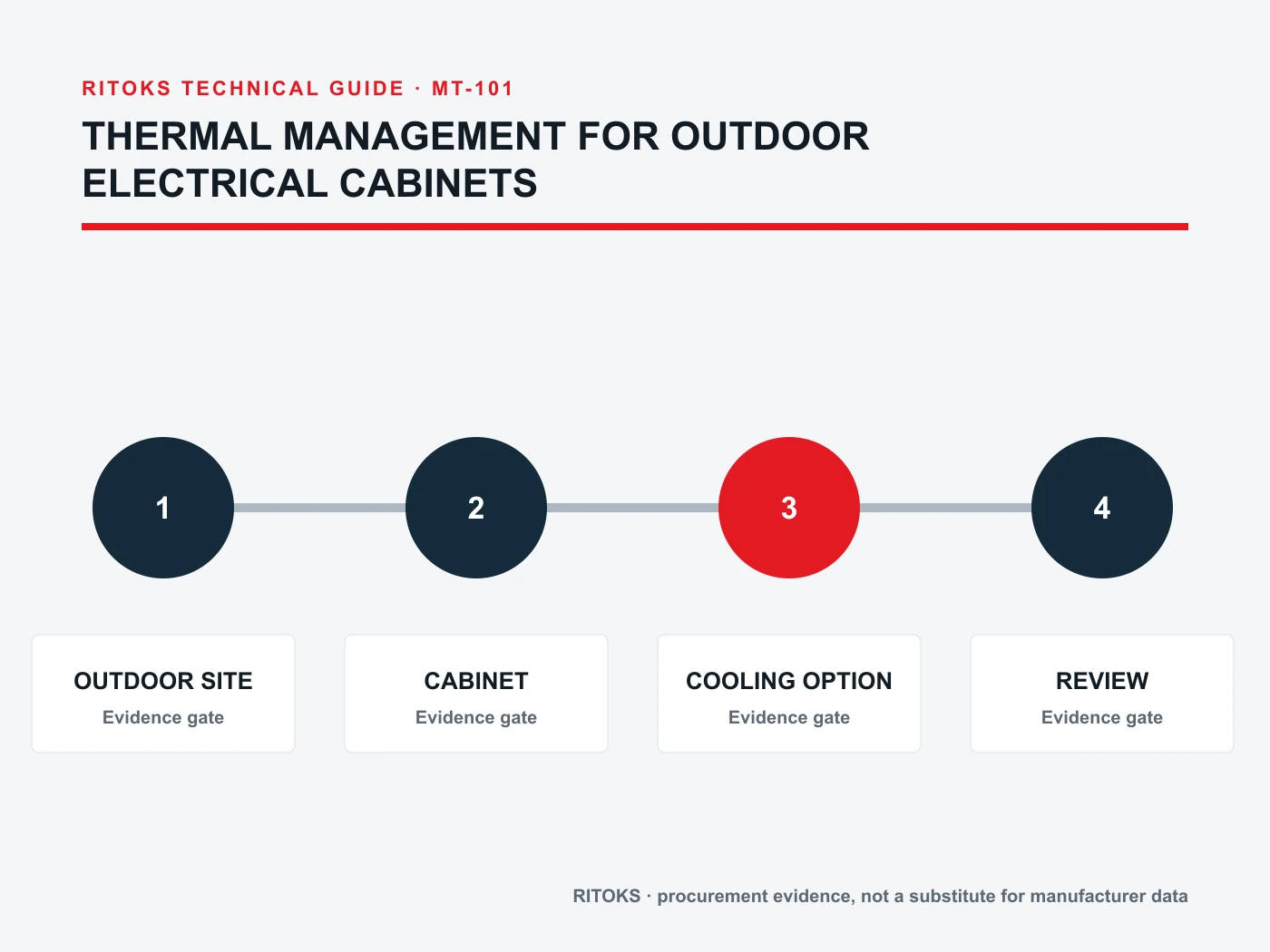
Normalize each Enclosure Cooling Strategy offer to the same application record. A shorter lead time or lower price is meaningful only after the technical scope is comparable. Record whether each supplier included the required accessories, documents and support for commissioning. Keep exceptions explicit, especially when the candidate needs a change to the panel or control design.
Етапи закупівлі та введення в експлуатацію
- Підтвердьте межі системи, робочі стани та критерії прийнятності.
- Порівняти код одного повного замовлення з документацією щодо конкретної моделі.
- Усувайте несправності електричного, механічного, екологічного характеру та пов’язані з обслуговуванням.
- Порівняйте обсяг робіт, що надаються, та зміни в документації у різних пропозиціях.
- Порівняйте отриманий товар із затвердженим записом.
- Проведіть випробування готового вузла відповідно до затвердженої процедури проекту.
Під час вхідного контролю слід перевірити, чи відповідають поставлені етикетки, клеми, комплектуючі та документація затвердженому замовленню. Заміна на виріб того самого сімейства не є автоматично прийнятною. Під час введення в експлуатацію слід перевірити функції, що залежать від конкретного застосування, які неможливо встановити лише на основі технічної документації до компонентів. У плані випробувань слід вказати типові стани та критерії прийнятності, не встановлюючи універсальних обмежень.
Перелік питань для підготовки запиту на пропозицію
A useful request for quotation on thermal management for outdoor cabinets is concise but complete. Ask for the exact orderable configuration and list unknown values as questions. Do not let the sales description silently answer a technical question that belongs to a calculation, a drawing or a test.
- SOLAR GAIN
- DEVICE LOSSES
- AMBIENT
- DUTY
- INGRESS
- CONDENSATION
- ОХОЛОДЖЕННЯ
- SERVICE
- Діючі редакції документів
- Кількість, місце призначення та обсяг поставки
Попросіть постачальника окремо вказати винятки, припущення та необов’язкові позиції. Зберігайте протокол технічних уточнень разом із комерційною пропозицією, щоб відділи закупівель та інженерії розглядали один і той самий обсяг робіт. Якщо все ще бракує важливої інформації, кандидат може залишатися комерційно привабливим, але питання його технічного затвердження залишається відкритим.
Поширені запитання
Can a Enclosure Cooling Strategy be chosen from one headline rating?
Ні. Заявку, точну конфігурацію та відповідні електричні, механічні, теплові та екологічні умови необхідно розглядати в комплексі. Назва в каталозі є лише відправною точкою для вивчення, а не повним документом про затвердження.
Чи є сімейна сторінка доказом безпосереднього зв’язку чи причетності?
Ні. Слід використовувати запропонований код замовлення, а також актуальний креслення, технічні характеристики та інструкцію з монтажу. Додаткові функції або альтернативні варіанти розташування клем можуть відрізнятися в межах однієї серії.
А що, якщо постачальник не зможе надати одне з необхідних значень?
Позначте це значення як «невизначене», визначте, хто його отримає, та призупиніть прийняття відповідного рішення. Не перетворюйте припущення на підтверджене твердження лише тому, що наближається дата придбання.
Де продовжити огляд
Переглянути Enclosure Cooling Strategy category для наявної серії продуктів, а потім перегляньте сторінка з подібними товарами як орієнтовну відправну точку. На цих сторінках вказано комерційне призначення; точні зразки документів визначають придатність застосування. Для порівняння конкретного проєкту надішліть вихідні дані системи та відкриті питання через Сторінка запитів RITOKS.
Якщо після аналізу даних виявиться, що інший пристрій або метод є більш підходящим, внесіть зміни до технічного завдання, перш ніж звертатися з проханням про заміну. Забезпечте відповідність документації остаточній схемі та монтажу, а не лише серії виробів, яка спочатку привернула увагу.