
Solid State Relays for Electronic Switching · Comparison
Zero-Cross vs Random-Turn-On SSRs: Application Boundaries
The difference between zero-cross and random-turn-on solid state relays is not a quality ranking. It is a switching-timing choice that must fit the load, the control objective and the power circuit. A useful comparison therefore starts with what must happen at turn-on, not with a preference for one label.
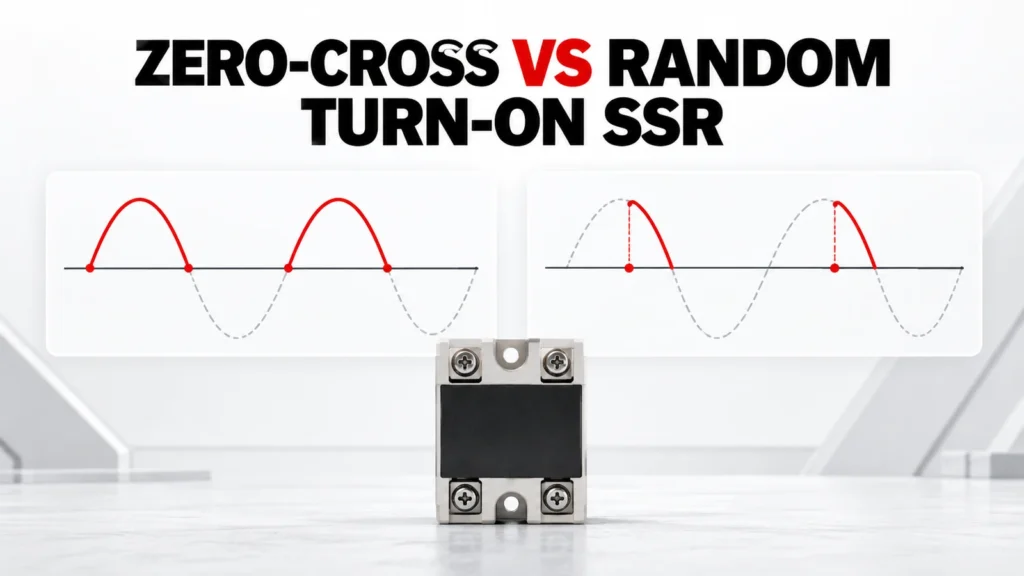
This guide explains the application boundary between zero-cross and random-turn-on AC solid state relay switching. It does not select a relay for an unknown load, state that either switching mode is universally better, or transfer trigger behavior and ratings between product variants.
نظرة عامة على مدخلات القرار
| مدخلات القرار | يجب على المشتري التأكيد | الأدلة المطلوبة |
|---|---|---|
| Load behavior | Resistive, inductive, transformer, lamp or other documented characteristic | Load datasheet and inrush profile |
| Control objective | Cycle-based regulation, phase-related control or simple on/off duty | Control sequence and timing requirement |
| Output circuit | AC output type and permitted operating envelope | Exact SSR datasheet |
| Switching cadence | Expected operations and minimum on/off timing | Machine duty record |
| التصميم الحراري | Loss, mounting surface, airflow and ambient | Exact-model loss data and thermal calculation |

Understand What the Trigger Label Describes
A zero-cross output is intended to begin conduction near a suitable point in the AC waveform after the control input is asserted. A random-turn-on output can respond without waiting for that crossing. The exact behavior, delay and conditions belong to the model datasheet.
These labels describe an output-switching behavior, not the entire relay. The buyer must still verify output type, load compatibility, control input, off-state behavior, thermal limits and mechanical arrangement.
Begin With the Load, Not the Relay
Record the load technology, steady-state current, starting or inrush behavior and any transformer or capacitive input stage. Two loads with the same nominal power can present very different switching conditions.
Ask the load manufacturer or equipment designer for a usable electrical profile. If the load behavior is unknown, mark the SSR selection incomplete rather than treating “resistive” or “inductive” as a guess.
Clarify the Control Objective
Simple temperature control, burst control, rapid cycling and phase-related control do not impose the same timing requirement. State whether the controller merely commands on and off or depends on conduction beginning at a particular point in the waveform.
Confirm that the controller output and the SSR input form a documented interface. Input voltage range, required current, logic polarity and response behavior must all be checked on the exact pair.
Treat Switching Mode and Protection as Separate Decisions
The trigger mode does not by itself solve short-circuit, overload or transient protection. Define the protective architecture for the semiconductor output and verify it through the applicable device and fuse documentation.
Do not infer coordination from a shared current label. Semiconductor protection depends on conditions and evidence that must identify the exact relay, protective device and circuit assumptions.
Complete the Thermal Design
An SSR dissipates heat while carrying load current. The acceptable current therefore depends on junction limits, loss data, thermal interfaces, mounting surface, ambient temperature and airflow.
Use the exact-model curves or loss information to build the thermal calculation. A current headline without its thermal conditions is a catalog-navigation value, not final approval evidence.
Check Off-State and Failure Behavior
Review leakage, minimum load implications, dv/dt susceptibility, isolation information and the expected failure response using the exact documentation. These factors can affect indication circuits, sensitive loads and safe maintenance.
The machine risk assessment should define the required safe state and whether additional isolation or monitoring is needed. Do not assume a semiconductor relay provides a visible or safety isolation function.
إنشاء ملف أدلة بنموذج دقيق
Create one approval record for the proposed Solid State Relay order code. Put each project requirement beside the supplier document that answers it. Preserve the exact datasheet, dimensioned drawing, circuit diagram, performance curve or application note used, including its revision or retrieval date. A category page establishes family context but cannot prove an exact rating, terminal arrangement, optional feature or system combination.
تأكد من أن كل بيان مقبول يصف نفس المنتج القابل للطلب. قد تحتوي العلب المتشابهة على دوائر كهربائية أو أطراف توصيل أو مواد أو برامج ثابتة أو ملحقات مختلفة. لا تقم بدمج الحد الأقصى من أحد المتغيرات، ورسم من متغير آخر، وميزة من متغير ثالث. قم بتمييز الحقول التي لم يتم حسمها بشكل واضح حتى تظل مرئية أثناء المراجعة الهندسية والتجارية.
افصل مدخلات المشروع عن أدلة المنتج
The project team defines the application: source, load, duty, environment, controls, mechanical limits and required functions. The supplier identifies an exact Solid State Relay and supports it with exact documents. Neither side should fill a gap by inference from appearance, a shared family name or one matching headline value.
قم بتجميد سجل الطلب أثناء مقارنة عروض الأسعار. إذا طرأت تغييرات على الدائرة الكهربائية أو الحمل أو ظروف التشغيل أو البيئة أو الغلاف أو الطريقة الحرارية أو الناتج المطلوب، فقم بإصدار سجل منقح واطلب من كل مورد إعادة تأكيد العرض المقدم. وإلا، فقد تكون عروض الأسعار التي تبدو قابلة للمقارنة في ظاهرها تستجيب في الواقع لمتطلبات تقنية مختلفة.
الأخطاء الشائعة في مجال المشتريات
- Selecting Solid State Relay from one headline rating while the application context remains incomplete.
- استخدام مخطط دارة كهربائية أو منحنى أو رسم طرفي أو بيان أداء من طراز مجاور.
- التعامل مع صورة العائلة أو صورة المنتج على أنها دليل تقني دقيق.
- بافتراض إدراج نتيجة متعلقة بملحق أو وظيفة نظام أو تنسيق دون توثيق.
- الموافقة على بديل دون إعادة إجراء المراجعة الكهربائية والحرارية والميكانيكية ومراجعة الأدلة.
يجب سد هذه الثغرات قبل مقارنة السعر ومدة التنفيذ. يجب أن يتمكن المراجع من ربط كل بيان مقبول إما بمتطلبات المشروع أو بالوثيقة المرشحة المحددة. قد يظل العرض مثيرًا للاهتمام من الناحية التجارية رغم عدم اكتماله من الناحية الفنية، لكن الأدلة الناقصة يجب ألا تختفي داخل عرض الأسعار.
كيفية مقارنة عروض الموردين
| نقطة المقارنة | الأدلة المطلوبة | لا تقبل |
|---|---|---|
| الهوية الدقيقة | الرمز الكامل للطلب ووصف المتغيرات | اللقب فقط |
| توافق التطبيقات | رد بشأن مدخلات المشروع المجمدة | بيان عام بشأن الملاءمة |
| الأدلة الفنية | المستندات الحالية للنموذج الدقيق مع التعديلات | لقطة شاشة أو صفحة الطراز المماثل |
| نطاق العمل المنجز | الملحقات والواجهات والوثائق المرفقة | “الحزمة القياسية” غير المحددة” |
| الأسئلة المفتوحة | قائمة الانحرافات الظاهرة والتوضيحات | يُعتبر الصمت موافقة |
| الاستبدال | مراجعة جديدة تتعارض مع جميع المتطلبات | “مماثل” من حيث المظهر |
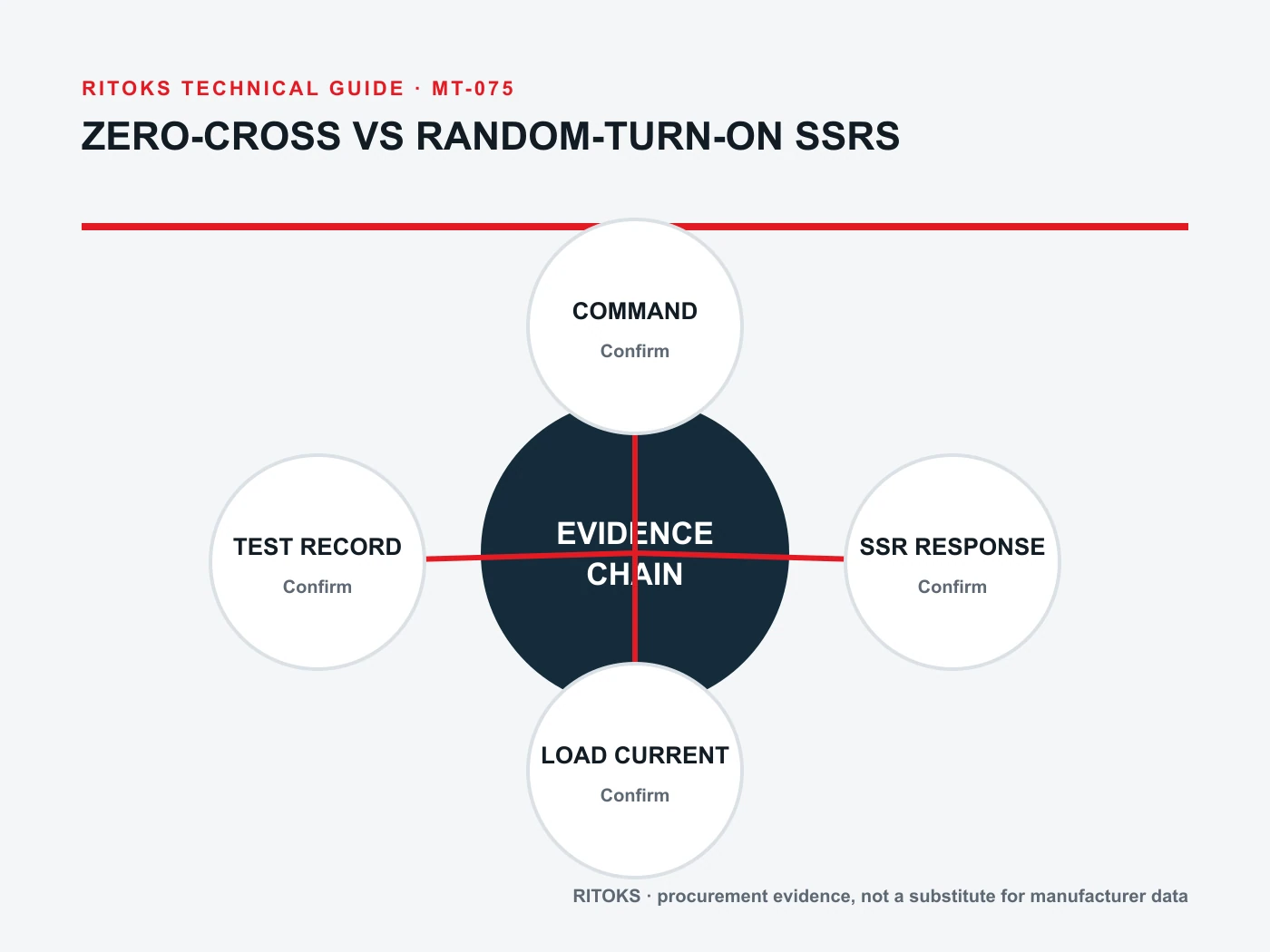
Normalize every Solid State Relay offer to the same application record. Keep document revisions, test conditions, included accessories and open questions beside each value. This makes differences in delivered scope visible and prevents a lower-cost but narrower offer from appearing equivalent to a complete solution.
مسار اتخاذ القرار
- تثبيت بنية التطبيق وحالة التشغيل.
- تسجيل القيود البيئية والحرارية والميكانيكية.
- Identify the required Solid State Relay function without assuming a model.
- اطلب رمز الطلب الكامل والوثائق الداعمة الدقيقة.
- قارن كل مطالبة بشروطها وتعريفاتها.
- يجب حل الانحرافات ومسائل التنسيق قبل الموافقة التجارية.
- قم بأرشفة الأدلة المقبولة مع قائمة المواد النهائية.
أوقف المراجعة عندما تكون إحدى مدخلات التطبيق الأساسية غير معروفة، أو يكون النموذج المذكور غامضًا، أو تكون المطالبة المطلوبة مدعومة فقط من قبل مصنع آخر أو رمز طلب آخر، أو يكون التركيب خارج نطاق الأدلة المتاحة. هذه ثغرات هندسية، وليست تفاصيل تحريرية.
قائمة مراجعة لإعداد طلب عرض الأسعار
A useful RFQ for zero crossing vs random turn on ssr is concise enough to answer and complete enough to prevent silent assumptions. Identify unknown values as questions and require a full orderable code rather than a generic family recommendation.
- Load behavior
- Turn-on objective
- Control method
- Switching cadence
- المسار الحراري
- Output type
- وضع الزناد
- Leakage behavior
- Protection plan
- Exact datasheet
- الكمية، والوجهة، ولغة المستند المطلوبة
اطلب الحصول على أحدث نسخة من ورقة البيانات، والنطاق الدقيق لأي ادعاء يتعلق بالشهادة أو التوافق أو التنسيق أو الأداء. قم بتسجيل الكمية والوجهة بعد البيانات الفنية حتى لا تحجب الشروط التجارية المسائل الهندسية التي لم يتم حلها.
تحويل المهام من قسم الهندسة إلى قسم المشتريات
Engineering approval should identify the exact Solid State Relay code, accepted document revisions, unresolved deviations and the application record used for the decision. Purchasing can then compare commercial offers without silently changing the technical basis. If a supplier proposes another code, different accessory or revised configuration, route it back through the same review instead of treating it as an administrative substitution.
احتفظ بالأدلة المعتمدة مع أمر الشراء وقائمة المواد النهائية. تحتاج فرق الاستلام والإنتاج إلى معلومات كافية للتعرف على العنصر المقبول والتوقف عند ملاحظة أي اختلاف في الملصقات أو ترتيب الأطراف أو الملحقات أو الوثائق. كما يوفر هذا التسليم لفرق الصيانة نقطة انطلاق قابلة للتتبع لاتخاذ قرارات الاستبدال، بدلاً من الاعتماد على صورة فوتوغرافية أو وصف في فاتورة قديمة أو تصنيف عام واحد.
الأسئلة الشائعة
Is zero-cross always better for resistive heating?
It may suit many on/off or burst-control heating duties, but the exact load, controller and model documentation still determine suitability.
Is random turn-on the same as phase-angle control?
No. Random turn-on describes relay response; a complete phase-related control system also requires a suitable controller and documented output behavior.
Can the same heatsink be used for any SSR of the same current?
No. Base losses, mounting, interface and ambient conditions must be calculated for the exact model.
منتجات RITOKS ذات الصلة والإرشادات
توفر هذه الروابط سياقًا منشورًا عن عائلة المنتجات فقط. ولا يُقصد بالرابط السياقي الإشارة إلى قابلية التبادل أو التوافق أو أي تركيبة معتمدة من الأنظمة.
فئة منتجات مرحلات الحالة الصلبة
Published RITOKS Solid State Relay product page
الدليل الفني المنشور ذو الصلة الصادر عن RITOKS
مرجع تقني
المصدر التالي لا يدعم سوى المفهوم الهندسي العام المذكور في هذا الدليل. ولا تنطبق تقييمات منتجاته، ومخططات دوائره الكهربائية، واعتماداته، ونتائج التنسيق الخاصة به على منتجات RITOKS.
Omron, Solid State Relays Technical Guide
Supports general distinctions among SSR switching behavior, load and thermal considerations; exact Omron values do not transfer to RITOKS products.
طلب مراجعة الطراز المحدد
يرجى إرسال متطلبات الطلب، والأسئلة المتعلقة بالمستندات المحددة، والكمية، والوجهة عبر نموذج الاتصال الخاص بشركة RITOKS. يتطلب طلب عرض الأسعار (RFQ) مراجعة الطراز المحدد؛ ولا يُعد هذا الدليل موافقة على أي دائرة كهربائية أو تركيب أو بديل تلقائي.