
Solid State Relays for Electronic Switching · Comparison
Zero-Cross vs Random-Turn-On SSRs: Application Boundaries
The difference between zero-cross and random-turn-on solid state relays is not a quality ranking. It is a switching-timing choice that must fit the load, the control objective and the power circuit. A useful comparison therefore starts with what must happen at turn-on, not with a preference for one label.
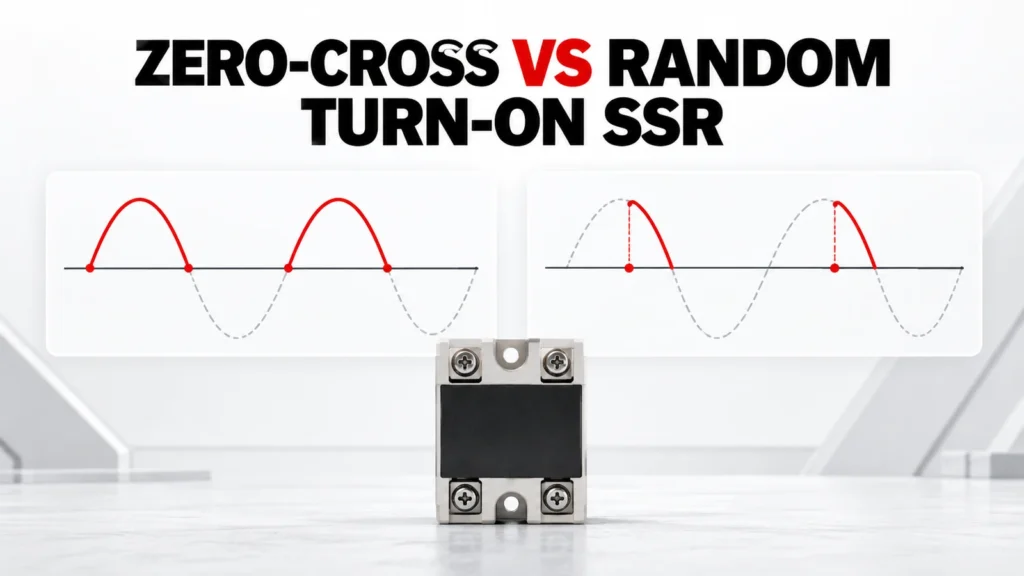
This guide explains the application boundary between zero-cross and random-turn-on AC solid state relay switching. It does not select a relay for an unknown load, state that either switching mode is universally better, or transfer trigger behavior and ratings between product variants.
एक नजर में निर्णय इनपुट्स
| निर्णय इनपुट | खरीदार को पुष्टि करनी होगी | साक्ष्य आवश्यक |
|---|---|---|
| Load behavior | Resistive, inductive, transformer, lamp or other documented characteristic | Load datasheet and inrush profile |
| Control objective | Cycle-based regulation, phase-related control or simple on/off duty | Control sequence and timing requirement |
| Output circuit | AC output type and permitted operating envelope | Exact SSR datasheet |
| Switching cadence | Expected operations and minimum on/off timing | Machine duty record |
| तापीय डिजाइन | Loss, mounting surface, airflow and ambient | Exact-model loss data and thermal calculation |

Understand What the Trigger Label Describes
A zero-cross output is intended to begin conduction near a suitable point in the AC waveform after the control input is asserted. A random-turn-on output can respond without waiting for that crossing. The exact behavior, delay and conditions belong to the model datasheet.
These labels describe an output-switching behavior, not the entire relay. The buyer must still verify output type, load compatibility, control input, off-state behavior, thermal limits and mechanical arrangement.
Begin With the Load, Not the Relay
Record the load technology, steady-state current, starting or inrush behavior and any transformer or capacitive input stage. Two loads with the same nominal power can present very different switching conditions.
Ask the load manufacturer or equipment designer for a usable electrical profile. If the load behavior is unknown, mark the SSR selection incomplete rather than treating “resistive” or “inductive” as a guess.
Clarify the Control Objective
Simple temperature control, burst control, rapid cycling and phase-related control do not impose the same timing requirement. State whether the controller merely commands on and off or depends on conduction beginning at a particular point in the waveform.
Confirm that the controller output and the SSR input form a documented interface. Input voltage range, required current, logic polarity and response behavior must all be checked on the exact pair.
Treat Switching Mode and Protection as Separate Decisions
The trigger mode does not by itself solve short-circuit, overload or transient protection. Define the protective architecture for the semiconductor output and verify it through the applicable device and fuse documentation.
Do not infer coordination from a shared current label. Semiconductor protection depends on conditions and evidence that must identify the exact relay, protective device and circuit assumptions.
Complete the Thermal Design
An SSR dissipates heat while carrying load current. The acceptable current therefore depends on junction limits, loss data, thermal interfaces, mounting surface, ambient temperature and airflow.
Use the exact-model curves or loss information to build the thermal calculation. A current headline without its thermal conditions is a catalog-navigation value, not final approval evidence.
Check Off-State and Failure Behavior
Review leakage, minimum load implications, dv/dt susceptibility, isolation information and the expected failure response using the exact documentation. These factors can affect indication circuits, sensitive loads and safe maintenance.
The machine risk assessment should define the required safe state and whether additional isolation or monitoring is needed. Do not assume a semiconductor relay provides a visible or safety isolation function.
एक सटीक-मॉडल साक्ष्य फ़ाइल बनाएँ
Create one approval record for the proposed Solid State Relay order code. Put each project requirement beside the supplier document that answers it. Preserve the exact datasheet, dimensioned drawing, circuit diagram, performance curve or application note used, including its revision or retrieval date. A category page establishes family context but cannot prove an exact rating, terminal arrangement, optional feature or system combination.
जाँचें कि प्रत्येक स्वीकृत विवरण एक ही ऑर्डर योग्य वस्तु का वर्णन करता है। समान आवासों में विभिन्न सर्किट, टर्मिनल, सामग्री, फर्मवेयर या सहायक उपकरण हो सकते हैं। एक वेरिएंट से अधिकतम, दूसरे से ड्रॉइंग और तीसरे से कोई विशेषता एक साथ न मिलाएँ। अनसुलझे क्षेत्रों को स्पष्ट रूप से चिह्नित करें ताकि वे इंजीनियरिंग और वाणिज्यिक समीक्षा के दौरान दिखाई दें।.
परियोजना इनपुट्स को उत्पाद साक्ष्य से अलग रखें
The project team defines the application: source, load, duty, environment, controls, mechanical limits and required functions. The supplier identifies an exact Solid State Relay and supports it with exact documents. Neither side should fill a gap by inference from appearance, a shared family name or one matching headline value.
जब कोटेशन की तुलना की जा रही हो, तब आवेदन रिकॉर्ड को स्थिर रखें। यदि सर्किट, लोड, ड्यूटी, पर्यावरण, आवरण, थर्मल विधि या आवश्यक आउटपुट बदलता है, तो एक संशोधित रिकॉर्ड जारी करें और प्रत्येक आपूर्तिकर्ता से उम्मीदवार की पुनः पुष्टि करने के लिए कहें। अन्यथा, स्पष्ट रूप से तुलनीय प्रतीत होने वाले कोटेशन विभिन्न तकनीकी आवश्यकताओं का उत्तर दे रहे हो सकते हैं।.
सामान्य खरीद त्रुटियाँ
- Selecting Solid State Relay from one headline rating while the application context remains incomplete.
- एक सर्किट, वक्र, टर्मिनल ड्राइंग या पड़ोसी मॉडल से प्रदर्शन दावे का उपयोग करना।.
- एक पारिवारिक पृष्ठ या उत्पाद की तस्वीर को सटीक तकनीकी साक्ष्य के रूप में मानना।.
- यह मानते हुए कि कोई सहायक उपकरण, सिस्टम फ़ंक्शन या समन्वय परिणाम बिना दस्तावेज़ीकरण के शामिल किया गया है।.
- बिजली, ऊष्मीय, यांत्रिक और साक्ष्य समीक्षा को दोहराए बिना एक प्रतिस्थापन को मंजूरी देना।.
कीमत और लीड टाइम की तुलना करने से पहले इन अंतरालों को सुलझा लें। समीक्षक को प्रत्येक स्वीकृत कथन को या तो परियोजना की आवश्यकता से या सटीक उम्मीदवार दस्तावेज़ से ट्रेस करने में सक्षम होना चाहिए। एक प्रस्ताव तकनीकी रूप से अधूरा होते हुए भी वाणिज्यिक रूप से दिलचस्प बना रह सकता है, लेकिन गायब साक्ष्य को कोटेशन के भीतर छिपाया नहीं जाना चाहिए।.
सप्लायर ऑफ़र्स की तुलना कैसे करें
| तुलना बिंदु | आवश्यक प्रमाण | स्वीकार न करें |
|---|---|---|
| सटीक पहचान | पूर्ण ऑर्डर योग्य कोड और वेरिएंट विवरण | केवल उपनाम |
| आवेदन मिलान | जमे हुए परियोजना इनपुट्स के खिलाफ प्रतिक्रिया | सामान्य उपयुक्तता कथन |
| तकनीकी साक्ष्य | वर्तमान सटीक-मॉडल दस्तावेज़ संशोधन सहित | स्क्रीनशॉट या पड़ोसी-मॉडल पृष्ठ |
| प्रदत्त दायरा | समाविष्ट सहायक उपकरण, इंटरफ़ेस और दस्तावेज़ | अपरिभाषित “मानक पैकेज” |
| खुले प्रश्न | दृश्य विचलन और स्पष्टीकरण सूची | मौन को अनुपालन माना गया |
| प्रतिस्थापन | प्रत्येक आवश्यकता के विरुद्ध ताज़ा समीक्षा | “दिखावट के आधार पर ”समान" |
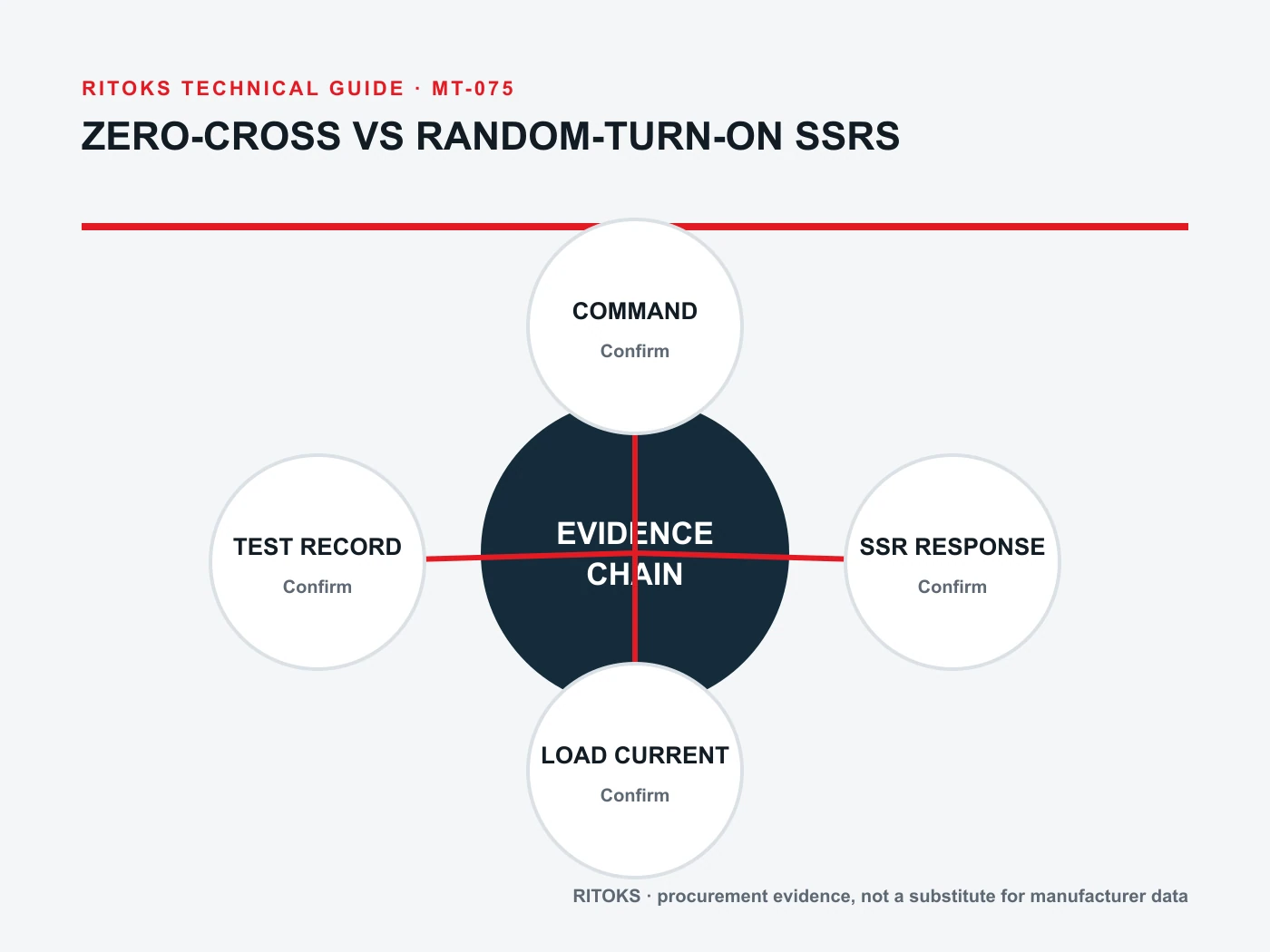
Normalize every Solid State Relay offer to the same application record. Keep document revisions, test conditions, included accessories and open questions beside each value. This makes differences in delivered scope visible and prevents a lower-cost but narrower offer from appearing equivalent to a complete solution.
निर्णय कार्यप्रवाह
- एप्लिकेशन आर्किटेक्चर और संचालन मामले को स्थिर करें।.
- पर्यावरणीय, तापीय और यांत्रिक प्रतिबंधों को दर्ज करें।.
- Identify the required Solid State Relay function without assuming a model.
- पूर्ण ऑर्डर कोड और सटीक सहायक दस्तावेज़ अनुरोध करें।.
- प्रत्येक दावे की उसकी शर्तों और परिभाषाओं के साथ तुलना करें।.
- वाणिज्यिक अनुमोदन से पहले विचलनों और समन्वय संबंधी प्रश्नों को सुलझाएँ।.
- स्वीकृत साक्ष्यों को अंतिम सामग्री सूची के साथ संग्रहीत करें।.
जब कोई महत्वपूर्ण अनुप्रयोग इनपुट अज्ञात हो, उद्धृत मॉडल अस्पष्ट हो, कोई आवश्यक दावा केवल किसी अन्य निर्माता या किसी अन्य ऑर्डर कोड द्वारा समर्थित हो, या स्थापना उपलब्ध साक्ष्यों से परे हो, तो समीक्षा रोक दें। ये इंजीनियरिंग में खामियाँ हैं, संपादकीय विवरण नहीं।.
आरएफक्यू तैयारी चेकलिस्ट
A useful RFQ for zero crossing vs random turn on ssr is concise enough to answer and complete enough to prevent silent assumptions. Identify unknown values as questions and require a full orderable code rather than a generic family recommendation.
- Load behavior
- Turn-on objective
- Control method
- Switching cadence
- तापीय मार्ग
- Output type
- ट्रिगर मोड
- Leakage behavior
- Protection plan
- Exact datasheet
- मात्रा, गंतव्य और आवश्यक दस्तावेज़ की भाषा
वर्तमान डेटाशीट संशोधन और किसी भी प्रमाणन, अनुकूलता, समन्वय या प्रदर्शन दावे के सटीक दायरे का अनुरोध करें। तकनीकी इनपुट्स के बाद मात्रा और गंतव्य दर्ज करें ताकि वाणिज्यिक शर्तें अनसुलझे इंजीनियरिंग प्रश्नों को अस्पष्ट न करें।.
इंजीनियरिंग से खरीद विभाग को हस्तांतरण
Engineering approval should identify the exact Solid State Relay code, accepted document revisions, unresolved deviations and the application record used for the decision. Purchasing can then compare commercial offers without silently changing the technical basis. If a supplier proposes another code, different accessory or revised configuration, route it back through the same review instead of treating it as an administrative substitution.
स्वीकृत प्रमाण को खरीद आदेश और अंतिम सामग्री बिल के साथ रखें। प्राप्ति और उत्पादन टीमों को पर्याप्त जानकारी चाहिए ताकि वे स्वीकृत वस्तु को पहचान सकें और लेबलिंग, टर्मिनल व्यवस्था, सहायक उपकरण या दस्तावेज़ीकरण में भिन्नता होने पर प्रक्रिया रोक सकें। यह हैंडऑफ़ रखरखाव टीमों को प्रतिस्थापन निर्णयों के लिए एक ट्रेस करने योग्य प्रारंभिक बिंदु भी प्रदान करता है, बजाय इसके कि वे केवल एक तस्वीर, पुराने चालान विवरण या एक शीर्षक रेटिंग पर निर्भर रहें।.
अक्सर पूछे जाने वाले प्रश्न
Is zero-cross always better for resistive heating?
It may suit many on/off or burst-control heating duties, but the exact load, controller and model documentation still determine suitability.
Is random turn-on the same as phase-angle control?
No. Random turn-on describes relay response; a complete phase-related control system also requires a suitable controller and documented output behavior.
Can the same heatsink be used for any SSR of the same current?
No. Base losses, mounting, interface and ambient conditions must be calculated for the exact model.
संबंधित RITOKS उत्पाद और मार्गदर्शन
ये लिंक केवल प्रकाशित उत्पाद-परिवार संदर्भ प्रदान करते हैं। एक संदर्भात्मक लिंक परस्पर-विनिमय, अनुकूलता या अनुमोदित प्रणाली संयोजन का दावा नहीं करता।.
सॉलिड स्टेट रिले उत्पाद श्रेणी
Published RITOKS Solid State Relay product page
संबंधित प्रकाशित RITOKS तकनीकी मार्गदर्शिका
तकनीकी संदर्भ
निम्नलिखित स्रोत केवल इस गाइड में वर्णित सामान्य इंजीनियरिंग अवधारणा का समर्थन करता है। इसके उत्पाद रेटिंग, सर्किट आरेख, अनुमोदन और समन्वय परिणाम RITOKS उत्पादों पर लागू नहीं होते।.
Omron, Solid State Relays Technical Guide
Supports general distinctions among SSR switching behavior, load and thermal considerations; exact Omron values do not transfer to RITOKS products.
सटीक-मॉडल समीक्षा का अनुरोध करें
आवेदन की आवश्यकताएँ, सटीक दस्तावेज़ संबंधी प्रश्न, मात्रा और गंतव्य RITOKS संपर्क फ़ॉर्म के माध्यम से भेजें। एक RFQ सटीक मॉडल समीक्षा का अनुरोध करता है; यह मार्गदर्शन किसी सर्किट, स्थापना या स्वचालित विकल्प को अनुमोदित नहीं करता।.