
Solid State Relays for Electronic Switching · Comparison
Zero-Cross vs Random-Turn-On SSRs: Application Boundaries
The difference between zero-cross and random-turn-on solid state relays is not a quality ranking. It is a switching-timing choice that must fit the load, the control objective and the power circuit. A useful comparison therefore starts with what must happen at turn-on, not with a preference for one label.
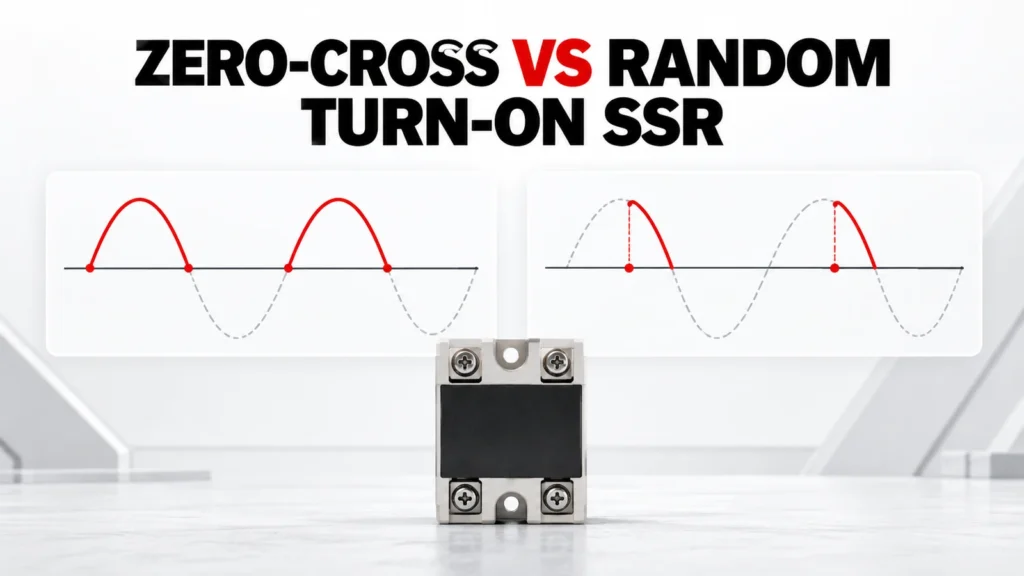
This guide explains the application boundary between zero-cross and random-turn-on AC solid state relay switching. It does not select a relay for an unknown load, state that either switching mode is universally better, or transfer trigger behavior and ratings between product variants.
ข้อมูลพื้นฐานสำหรับการตัดสินใจ
| ข้อมูลสำหรับตัดสินใจ | ผู้ซื้อต้องยืนยัน | หลักฐานที่จำเป็น |
|---|---|---|
| Load behavior | Resistive, inductive, transformer, lamp or other documented characteristic | Load datasheet and inrush profile |
| Control objective | Cycle-based regulation, phase-related control or simple on/off duty | Control sequence and timing requirement |
| Output circuit | AC output type and permitted operating envelope | Exact SSR datasheet |
| Switching cadence | Expected operations and minimum on/off timing | Machine duty record |
| การออกแบบระบบความร้อน | Loss, mounting surface, airflow and ambient | Exact-model loss data and thermal calculation |

Understand What the Trigger Label Describes
A zero-cross output is intended to begin conduction near a suitable point in the AC waveform after the control input is asserted. A random-turn-on output can respond without waiting for that crossing. The exact behavior, delay and conditions belong to the model datasheet.
These labels describe an output-switching behavior, not the entire relay. The buyer must still verify output type, load compatibility, control input, off-state behavior, thermal limits and mechanical arrangement.
Begin With the Load, Not the Relay
Record the load technology, steady-state current, starting or inrush behavior and any transformer or capacitive input stage. Two loads with the same nominal power can present very different switching conditions.
Ask the load manufacturer or equipment designer for a usable electrical profile. If the load behavior is unknown, mark the SSR selection incomplete rather than treating “resistive” or “inductive” as a guess.
Clarify the Control Objective
Simple temperature control, burst control, rapid cycling and phase-related control do not impose the same timing requirement. State whether the controller merely commands on and off or depends on conduction beginning at a particular point in the waveform.
Confirm that the controller output and the SSR input form a documented interface. Input voltage range, required current, logic polarity and response behavior must all be checked on the exact pair.
Treat Switching Mode and Protection as Separate Decisions
The trigger mode does not by itself solve short-circuit, overload or transient protection. Define the protective architecture for the semiconductor output and verify it through the applicable device and fuse documentation.
Do not infer coordination from a shared current label. Semiconductor protection depends on conditions and evidence that must identify the exact relay, protective device and circuit assumptions.
Complete the Thermal Design
An SSR dissipates heat while carrying load current. The acceptable current therefore depends on junction limits, loss data, thermal interfaces, mounting surface, ambient temperature and airflow.
Use the exact-model curves or loss information to build the thermal calculation. A current headline without its thermal conditions is a catalog-navigation value, not final approval evidence.
Check Off-State and Failure Behavior
Review leakage, minimum load implications, dv/dt susceptibility, isolation information and the expected failure response using the exact documentation. These factors can affect indication circuits, sensitive loads and safe maintenance.
The machine risk assessment should define the required safe state and whether additional isolation or monitoring is needed. Do not assume a semiconductor relay provides a visible or safety isolation function.
สร้างไฟล์หลักฐานแบบจำลองที่แม่นยำ
Create one approval record for the proposed Solid State Relay order code. Put each project requirement beside the supplier document that answers it. Preserve the exact datasheet, dimensioned drawing, circuit diagram, performance curve or application note used, including its revision or retrieval date. A category page establishes family context but cannot prove an exact rating, terminal arrangement, optional feature or system combination.
ตรวจสอบให้แน่ใจว่าทุกคำอธิบายที่ได้รับการยอมรับนั้นอธิบายถึงสินค้าที่สามารถจัดลำดับได้เดียวกัน ตัวเครื่องที่คล้ายกันอาจมีวงจร หัวต่อ วัสดุ ซอฟต์แวร์ฝังตัว หรืออุปกรณ์เสริมที่แตกต่างกัน อย่าผสมผสานค่าสูงสุดจากรุ่นหนึ่ง แบบวาดจากอีกรุ่น และคุณสมบัติจากรุ่นที่สาม ให้ทำเครื่องหมายช่องที่ยังไม่ได้รับการแก้ไขอย่างชัดเจน เพื่อให้ช่องเหล่านั้นยังคงปรากฏให้เห็นได้ระหว่างการตรวจสอบทางวิศวกรรมและการตรวจสอบทางการค้า.
แยกข้อมูลนำเข้าของโครงการออกจากหลักฐานของผลิตภัณฑ์
The project team defines the application: source, load, duty, environment, controls, mechanical limits and required functions. The supplier identifies an exact Solid State Relay and supports it with exact documents. Neither side should fill a gap by inference from appearance, a shared family name or one matching headline value.
ให้ระงับบันทึกการเสนอราคาไว้ระหว่างการเปรียบเทียบราคา หากมีการเปลี่ยนแปลงในส่วนวงจร ภาระการทำงาน อัตราการใช้งาน สภาพแวดล้อม ตัวเครื่อง วิธีการจัดการความร้อน หรือกำลังขาออกที่ต้องการ ให้ออกบันทึกที่แก้ไขแล้ว และขอให้ผู้จัดหาแต่ละรายยืนยันใหม่เกี่ยวกับผลิตภัณฑ์ที่เสนอ หากไม่ทำเช่นนี้ ราคาที่ดูเหมือนจะเทียบเคียงกันได้อาจกำลังตอบสนองต่อข้อกำหนดทางเทคนิคที่แตกต่างกัน.
ข้อผิดพลาดที่มักเกิดขึ้นในการจัดซื้อ
- Selecting Solid State Relay from one headline rating while the application context remains incomplete.
- การใช้วงจร รูปเส้นโค้ง แบบวาดขั้วต่อ หรือข้อมูลประสิทธิภาพจากรุ่นที่ใกล้เคียง.
- การถือภาพหน้าครอบครัวหรือภาพผลิตภัณฑ์เป็นหลักฐานทางเทคนิคที่แม่นยำ.
- สมมติว่ามีการรวมอุปกรณ์เสริม ฟังก์ชันของระบบ หรือผลลัพธ์จากการประสานงานไว้โดยไม่มีการบันทึกเอกสารประกอบ.
- การอนุมัติผู้แทนโดยไม่จำเป็นต้องดำเนินการตรวจสอบด้านไฟฟ้า ความร้อน กลไก และหลักฐานซ้ำอีก.
ควรแก้ไขจุดที่ขาดตกบกพร่องเหล่านี้ก่อนที่จะเปรียบเทียบราคาและระยะเวลาการส่งมอบ ผู้ตรวจสอบควรสามารถติดตามทุกข้อความที่ได้รับการยอมรับได้ ทั้งจากข้อกำหนดของโครงการหรือจากเอกสารของผู้สมัครที่เกี่ยวข้องโดยตรง ข้อเสนออาจยังคงน่าสนใจในเชิงพาณิชย์แม้จะยังไม่สมบูรณ์ทางเทคนิค แต่หลักฐานที่ขาดหายไปต้องไม่ถูกลบออกจากใบเสนอราคา.
วิธีเปรียบเทียบข้อเสนอจากผู้จัดหา
| จุดเปรียบเทียบ | หลักฐานที่จำเป็น | อย่ารับ |
|---|---|---|
| ความเท่ากันที่แม่นยำ | รหัสสินค้าและรายละเอียดรุ่นที่สามารถสั่งซื้อได้ครบถ้วน | ชื่อสกุลเท่านั้น |
| การจับคู่แอปพลิเคชัน | การตอบสนองต่อข้อมูลโครงการที่ถูกระงับ | คำชี้แจงความเหมาะสมทั่วไป |
| หลักฐานทางเทคนิค | เอกสารแบบจำลองที่แม่นยำล่าสุด พร้อมข้อมูลการแก้ไข | ภาพหน้าจอหรือหน้าของรุ่นที่ใกล้เคียง |
| ขอบเขตงานที่ส่งมอบ | อุปกรณ์เสริม อินเทอร์เฟซ และเอกสารที่มาพร้อมเครื่อง | “แพ็กเกจมาตรฐาน” ที่ไม่ถูกกำหนด” |
| คำถามที่ยังไม่มีคำตอบ | รายการความคลาดเคลื่อนที่สังเกตได้และคำชี้แจง | ความเงียบถูกถือว่าเป็นการยอมรับ |
| การแทนที่ | การตรวจสอบใหม่ตามทุกข้อกำหนด | “เทียบเท่า” ตามลักษณะภายนอก |
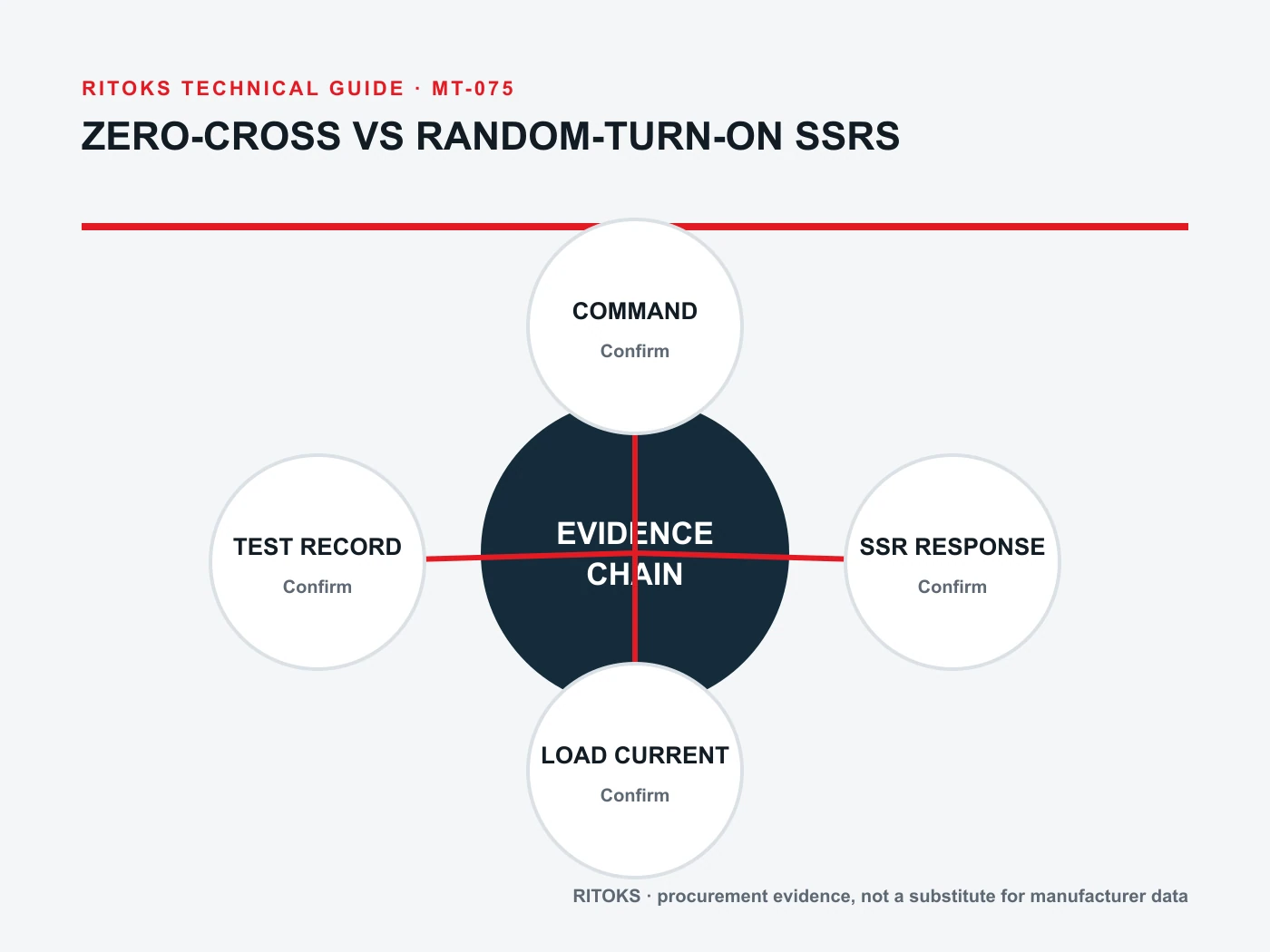
Normalize every Solid State Relay offer to the same application record. Keep document revisions, test conditions, included accessories and open questions beside each value. This makes differences in delivered scope visible and prevents a lower-cost but narrower offer from appearing equivalent to a complete solution.
กระบวนการตัดสินใจ
- กำหนดโครงสร้างสถาปัตยกรรมของระบบและกรณีการใช้งานให้คงที่.
- บันทึกข้อจำกัดด้านสิ่งแวดล้อม ความร้อน และกลไก.
- Identify the required Solid State Relay function without assuming a model.
- ขอรหัสคำสั่งซื้อที่ครบถ้วนและเอกสารประกอบที่ถูกต้อง.
- เปรียบเทียบทุกข้อเรียกร้องกับเงื่อนไขและคำนิยามที่เกี่ยวข้อง.
- แก้ไขข้อผิดพลาดและปัญหาด้านการประสานงานก่อนการอนุมัติเชิงพาณิชย์.
- เก็บหลักฐานที่ได้รับการยอมรับไว้พร้อมกับรายการวัสดุขั้นสุดท้าย.
หยุดการตรวจสอบเมื่อข้อมูลนำเข้าที่สำคัญของแอปพลิเคชันไม่ทราบแน่ชัด แบบจำลองที่อ้างอิงมีความคลุมเครือ ข้อกำหนดที่จำเป็นได้รับการสนับสนุนเพียงจากผู้ผลิตอื่นหรือรหัสคำสั่งซื้ออื่น หรือการติดตั้งอยู่นอกขอบเขตของหลักฐานที่มีอยู่ สิ่งเหล่านี้เป็นช่องว่างทางวิศวกรรม ไม่ใช่รายละเอียดด้านการบรรณาธิการ.
รายการตรวจสอบการเตรียมเอกสารขอเสนอราคา (RFQ)
A useful RFQ for zero crossing vs random turn on ssr is concise enough to answer and complete enough to prevent silent assumptions. Identify unknown values as questions and require a full orderable code rather than a generic family recommendation.
- Load behavior
- Turn-on objective
- Control method
- Switching cadence
- เส้นทางความร้อน
- Output type
- โหมดทริกเกอร์
- Leakage behavior
- Protection plan
- Exact datasheet
- จำนวน จุดหมายปลายทาง และภาษาของเอกสารที่จำเป็น
ขอให้ส่งฉบับล่าสุดของใบข้อมูลทางเทคนิค (datasheet) และขอบเขตที่แน่ชัดของคำรับรองใดๆ เกี่ยวกับการรับรองมาตรฐาน ความเข้ากันได้ การประสานงาน หรือประสิทธิภาพ ให้บันทึกปริมาณและจุดหมายปลายทางหลังจากข้อมูลทางเทคนิค เพื่อไม่ให้เงื่อนไขทางการค้าบดบังคำถามทางวิศวกรรมที่ยังไม่ได้รับการแก้ไข.
การส่งต่องานจากฝ่ายวิศวกรรมไปยังฝ่ายจัดซื้อ
Engineering approval should identify the exact Solid State Relay code, accepted document revisions, unresolved deviations and the application record used for the decision. Purchasing can then compare commercial offers without silently changing the technical basis. If a supplier proposes another code, different accessory or revised configuration, route it back through the same review instead of treating it as an administrative substitution.
เก็บหลักฐานที่ได้รับการอนุมัติไว้พร้อมกับใบสั่งซื้อและรายการวัสดุขั้นสุดท้าย ทีมรับสินค้าและทีมผลิตจำเป็นต้องมีข้อมูลเพียงพอเพื่อระบุสินค้าที่ได้รับการยอมรับ และหยุดกระบวนการเมื่อมีการแตกต่างในส่วนการติดฉลาก การจัดวางอุปกรณ์ปลายทาง อุปกรณ์เสริม หรือเอกสารประกอบ การส่งต่อข้อมูลนี้ยังให้ทีมบำรุงรักษาจุดเริ่มต้นที่สามารถติดตามได้สำหรับการตัดสินใจเปลี่ยนชิ้นส่วน แทนที่จะต้องพึ่งพาภาพถ่าย คำอธิบายในใบแจ้งหนี้เก่า หรือการประเมินระดับเดียว.
คำถามที่มักถูกถาม
Is zero-cross always better for resistive heating?
It may suit many on/off or burst-control heating duties, but the exact load, controller and model documentation still determine suitability.
Is random turn-on the same as phase-angle control?
No. Random turn-on describes relay response; a complete phase-related control system also requires a suitable controller and documented output behavior.
Can the same heatsink be used for any SSR of the same current?
No. Base losses, mounting, interface and ambient conditions must be calculated for the exact model.
ผลิตภัณฑ์และคำแนะนำที่เกี่ยวข้องของ RITOKS
ลิงก์เหล่านี้ให้ข้อมูลเกี่ยวกับกลุ่มผลิตภัณฑ์ที่ได้รับการเผยแพร่เท่านั้น ลิงก์ดังกล่าวไม่ได้ยืนยันว่าผลิตภัณฑ์สามารถใช้แทนกันได้ มีความเข้ากันได้ หรือเป็นการรวมระบบที่ได้รับการอนุมัติ.
หมวดหมู่ผลิตภัณฑ์รีเลย์แบบโซลิดสเตต
Published RITOKS Solid State Relay product page
คู่มือทางเทคนิคของ RITOKS ที่ได้เผยแพร่แล้ว
ข้อมูลอ้างอิงทางเทคนิค
แหล่งข้อมูลต่อไปนี้สนับสนุนเพียงหลักการวิศวกรรมทั่วไปที่ระบุไว้ในคู่มือนี้เท่านั้น การจัดอันดับผลิตภัณฑ์ แผนผังวงจร การรับรอง และผลการประสานงานของแหล่งข้อมูลนี้ ไม่สามารถนำไปใช้กับผลิตภัณฑ์ของ RITOKS ได้.
Omron, Solid State Relays Technical Guide
Supports general distinctions among SSR switching behavior, load and thermal considerations; exact Omron values do not transfer to RITOKS products.
ขอการตรวจสอบแบบจำลองที่แม่นยำ
ส่งข้อกำหนดการสมัคร คำถามเกี่ยวกับเอกสารที่จำเป็น จำนวน และจุดหมายปลายทาง ผ่านแบบฟอร์มติดต่อของ RITOKS การขอใบเสนอราคา (RFQ) ต้องการการตรวจสอบรุ่นที่ถูกต้อง; คู่มือนี้ไม่อนุมัติวงจร การติดตั้ง หรือการแทนที่อัตโนมัติ.