
Ventiladores de refrigeración para armarios · Guía técnica explicativa
Cabinet Airflow Calculation Inputs: Heat Load, Temperature Rise and Restrictions
Cabinet airflow calculation inputs are often reduced to one fan capacity number. That misses the first engineering task: establish how much heat is produced, which ambient air is available and where that air can travel. A fan moves air through a real enclosure with filters, grilles and obstructions, so the useful result differs from an open-bench rating.
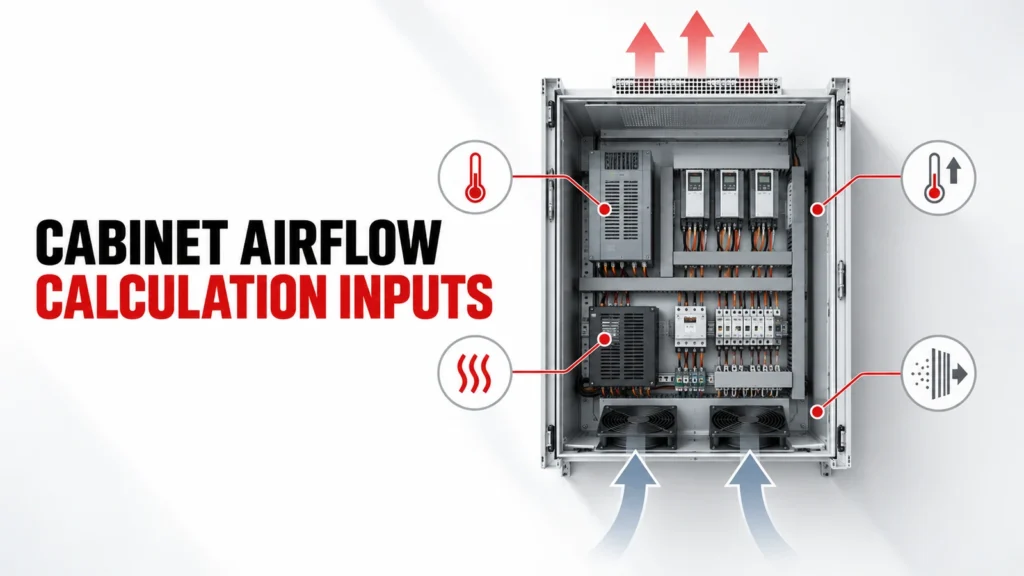
This guide identifies the evidence needed before estimating airflow and comparing fan candidates. It also shows when ventilation is the wrong cooling architecture, such as when ambient air or contamination conditions prevent the intended heat removal.
Resumen de los datos para la toma de decisiones
| Área de revisión | Lo que anota el comprador | Documentación que hay que solicitar |
|---|---|---|
| Carga térmica | Losses by component and operating state | Equipment loss data and duty record |
| Medio ambiente | Ambient range and contamination | Site conditions and enclosure objective |
| Recorrido del aire | Inlet, outlet, filters, obstructions | Layout and cutout drawings |
| Fan operating point | Flow at actual pressure resistance | Exact-model fan curve and system estimate |
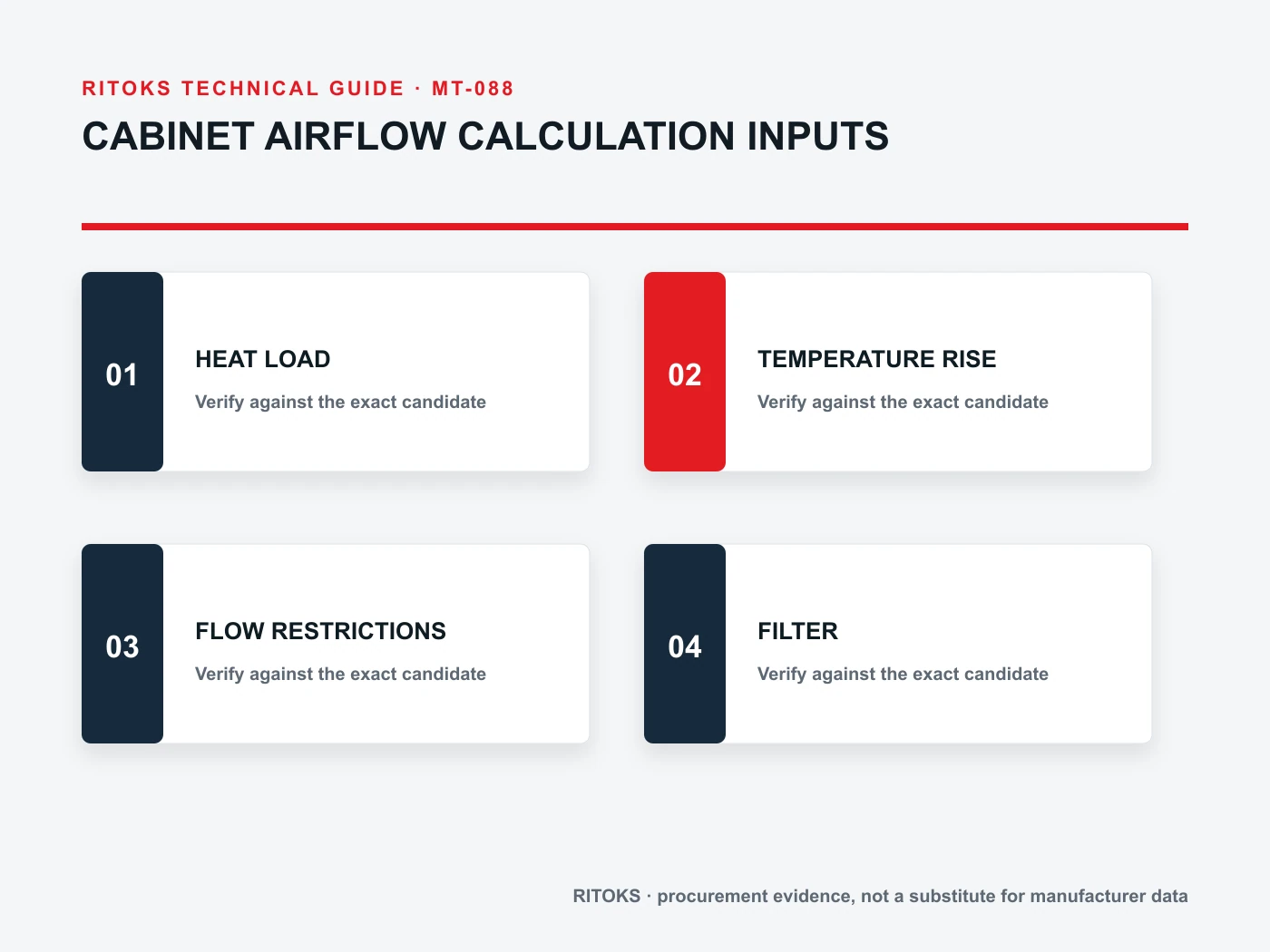
Inventory real heat sources
List the components that dissipate heat inside the enclosure: power devices, supplies, drives, transformers, control electronics and wiring where relevant. Use credible operating states, not only installed nameplate capacity. Some sources do not peak together, while others have short but significant duty periods.
Record the basis for every loss estimate and the load combinations the cabinet will actually see. Unknown heat inputs should remain open assumptions rather than disappearing into an arbitrary fan margin.
Define ambient and internal limits
Ventilation exchanges cabinet air with surrounding air. Document the ambient range at the actual installation, including solar exposure or nearby hot equipment where relevant, and define the acceptable internal condition for the most sensitive installed component.
The air entering the enclosure cannot be cooler than the surrounding source without an active cooling method. If ambient approaches or exceeds the required internal limit, adding fan capacity alone may not solve the problem.
Draw the path from inlet to outlet
Show where air enters, how it crosses the heat sources and where it leaves. Separate a clear path from a short circuit in which fresh air exits before reaching the critical equipment. Wiring ducts, shelves and component placement can redirect flow.
A useful drawing marks inlet and outlet height, guards, filters, internal barriers and service doors. It lets the design team discuss hot spots and maintenance access before choosing a frame size.
Account for restriction, not only free air
Filters, louvers, grilles and narrow passages impose pressure resistance. A fan curve describes how available flow changes with pressure. Therefore a free-air figure is not the delivered airflow through a finished cabinet.
Ask for an exact-model performance curve and estimate the resistance of the assembled path. Revisit the estimate when filter media, outlet geometry or cabinet layout changes; otherwise the selected operating point may shift.
Consider filter condition over time
A clean filter is not the only operating condition. Dust loading changes resistance and service needs. Define the contamination expected at the site, an inspection method and the replacement element.
Do not invent a fixed maintenance interval from a product category name. The first inspection schedule should reflect actual exposure and be refined from recorded condition and temperature behavior.
Choose fan direction and control deliberately
Whether the fan supplies or extracts air influences pressure direction and leakage paths. The choice also affects where filtered air enters and how it reaches heat sources. Specify any thermostat, alarm or speed control requirement as a separate feature to verify.
Review the supply voltage, wiring and control sequence with the electrical designer. Avoid assuming that a fan family includes monitoring outputs or variable-speed control unless the exact order code confirms them.
Validate the finished cabinet
The estimate narrows candidates; the built cabinet provides the final evidence. Check representative duty states, ambient conditions when possible, internal temperature locations, flow obstructions and alarm behavior.
Document the installed fan, filter, cutouts, control settings and test conditions. If a hot spot remains, trace the airflow path and heat input before simply increasing nominal fan size.
Crear un archivo de pruebas con un modelo exacto
A category or product-family page helps locate relevant options; it does not by itself approve one variant. For cabinet ventilation, keep the full proposed order code, current datasheet, terminal or mounting drawing, operating instructions and any project calculation together. Read the conditions attached to each rating or function. If the evidence belongs to a neighboring model, request the correct document instead of carrying the claim across.
El equipo del proyecto es responsable de los datos de entrada del sistema y de los criterios de aceptación. El proveedor es responsable de la documentación acreditativa del artículo ofrecido. En la revisión técnica, indica junto a cada requisito obligatorio el documento y la revisión exactos que lo cumplen. Marca los campos que falten como «pendientes», «condicionales» o «no compatibles». De este modo, se crea una decisión trazable y se evita que un valor nominal favorable oculte una conexión o una condición de instalación incompatible.
Compara todas las ofertas
| Artículo | Dato en la comparación | Motivo |
|---|---|---|
| Artículo disponible para pedido | Código completo, variante y accesorios incluidos | Evita las suposiciones a nivel familiar |
| Coincidencia de aplicaciones | Respuesta por escrito a cada aportación al proyecto | Mantiene visibles las excepciones |
| Documentación | Ficha técnica, plano, instrucciones y revisiones | Enlaces relacionados con el artículo ofrecido |
| Puntos pendientes | Propietario y fecha límite para la aclaración | Evita la aceptación tácita |
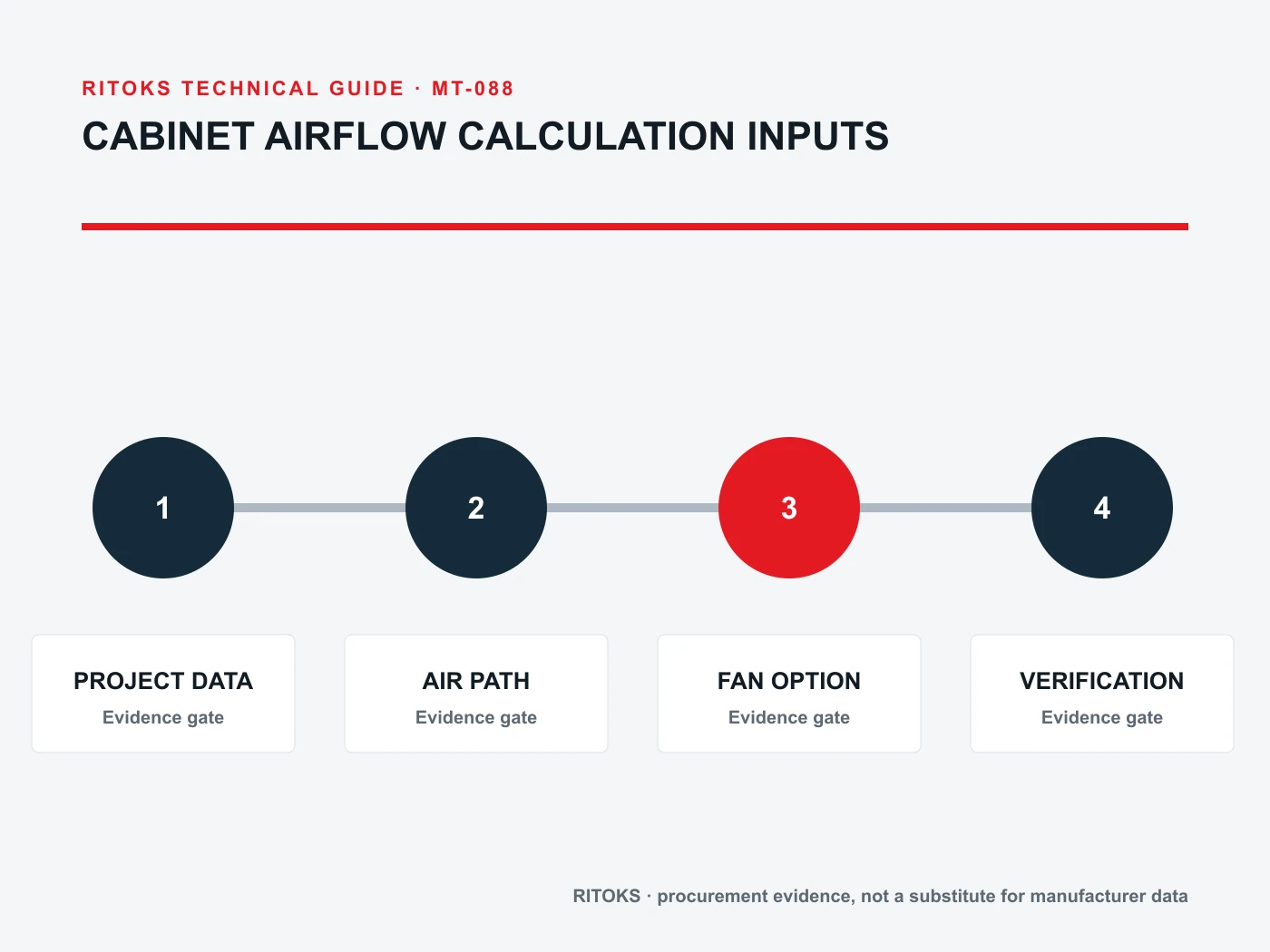
Utiliza el mismo pliego de condiciones para cada presupuesto. Las condiciones comerciales, como el precio y el plazo de entrega, se pueden comparar una vez que se haya estandarizado el alcance técnico. No consideres que los accesorios omitidos, las potencias no especificadas o una hipótesis de cableado sin resolver equivalen a una oferta documentada. Si se propone una alternativa, pregunta qué datos cambian y repite la revisión correspondiente.
Revisión de la instalación y la recepción
Antes de la instalación, compruebe que la etiqueta suministrada, el código completo y los accesorios coincidan con el registro homologado. Compare los terminales, el montaje, el acceso a los conductores y cualquier orientación indicada con las instrucciones exactas. Un producto que parezca físicamente similar a la versión homologada puede tener, no obstante, una configuración eléctrica, una opción de control o unos criterios de ensayo diferentes.
Planifica una comprobación de la instalación final que aborde los riesgos reales del proyecto. Esto puede implicar comprobar el cableado según el esquema aprobado, la respuesta funcional, las mediciones en condiciones de funcionamiento representativas y la confirmación de cualquier función de comunicación o alarma. Registra las condiciones y los resultados. El plan de aceptación debe basarse en la documentación de la aplicación y en las pruebas aportadas por el proveedor, no en una lista de comprobación genérica.
Lista de comprobación para la solicitud de presupuesto
- Identify the circuit, equipment and location that cabinet ventilation must serve.
- Adjunta el esquema del sistema y los estados de funcionamiento que definen la aplicación.
- Record heat sources and its source document.
- Record ambient range and its source document.
- Record target condition and its source document.
- Record duty cycle and its source document.
- Confirm the exact-model evidence for inlet filter.
- Confirm the exact-model evidence for flow path.
- Confirm the exact-model evidence for system resistance.
- Confirm the exact-model evidence for hot spots.
- Solicita el código de pedido completo, los accesorios, los planos y la revisión de la ficha técnica.
- Pregunta por las exclusiones, las hipótesis, los sustitutos y los aspectos técnicos pendientes de resolver.
La solicitud de presupuesto debe ser lo suficientemente concreta como para que un proveedor pueda responderla sin tener que inventarse los valores que faltan del proyecto. Si aún se desconoce algún dato esencial, indícalo como una pregunta e identifica quién lo determinará. No conviertas una suposición en una calificación, una declaración de conformidad o un método de instalación aprobado.
¿Qué influye en la decisión?
A decision can change when the source arrangement, load behavior, environment, installation geometry or required function changes. Revisit the selected cabinet ventilation whenever one of those inputs moves outside the approved brief. Recheck the order code and the exact evidence affected by the change; do not rely on a previous approval for a circuit that now asks the component to do different work.
Mantén un breve historial de revisiones del pliego de condiciones del proyecto, la respuesta del proveedor y la lista de excepciones aceptadas. Este registro ayuda a los departamentos de ingeniería, compras y puesta en marcha a trabajar con la misma versión. Resulta especialmente útil cuando se revisa un presupuesto, se ofrece un producto sustitutivo o cambia el diseño del cuadro eléctrico tras la primera comparación.
Cuestiones que deben resolverse antes de la aprobación
Ask who owns each remaining technical question for the proposed cabinet ventilation. The buyer should confirm the system inputs and installation constraints; the supplier should confirm the exact item, included options and applicable documentation. Put the answer and document revision beside the question. An unanswered point should remain visible in the comparison rather than being converted into an assumed feature.
Cuando un presupuesto ofrezca una alternativa, solicita una explicación por escrito sobre los cambios en el circuito, el montaje o las especificaciones de rendimiento. Revisa cualquier nuevo plano con el ingeniero del proyecto y deja constancia de si el cambio propuesto es aceptable. Una sustitución constituye una nueva decisión técnica, aunque parezca equivalente desde el punto de vista comercial. Esto es especialmente importante cuando varios proveedores utilizan denominaciones de familia similares para configuraciones diferentes.
Preguntas frecuentes
Can a free-air rating be used as cabinet airflow?
No. The installed filter and cabinet path create resistance, so review the exact fan curve and system operating point.
Will a larger fan always lower cabinet temperature?
Not necessarily. Ambient conditions, heat load and whether air reaches hot components determine the result.
When should I consider closed-loop cooling?
Review another method when outdoor air cannot meet the target condition or must be kept out of the enclosure.
Páginas relevantes de RITOKS
Para obtener información sobre la familia de productos, consulta Carcasa y gestión térmica. Las páginas de productos publicadas relacionadas incluyen: Fd Cabinet Filter Fan Electrical Enclosures, Industrial Ac Axial Cooling Fan 60 250mm, 12038 Ac Axial Cooling Fan 110v 220v 380v. Utiliza los documentos correspondientes al modelo exacto actual a la hora de comparar un artículo propuesto.
Para solicitar un presupuesto específico para su aplicación, Envía el resumen del proyecto a RITOKS junto con los diagramas y las preguntas abiertas anteriores.