
Kaappien jäähdytyspuhaltimet · Tekninen selostus
Cabinet Airflow Calculation Inputs: Heat Load, Temperature Rise and Restrictions
Cabinet airflow calculation inputs are often reduced to one fan capacity number. That misses the first engineering task: establish how much heat is produced, which ambient air is available and where that air can travel. A fan moves air through a real enclosure with filters, grilles and obstructions, so the useful result differs from an open-bench rating.
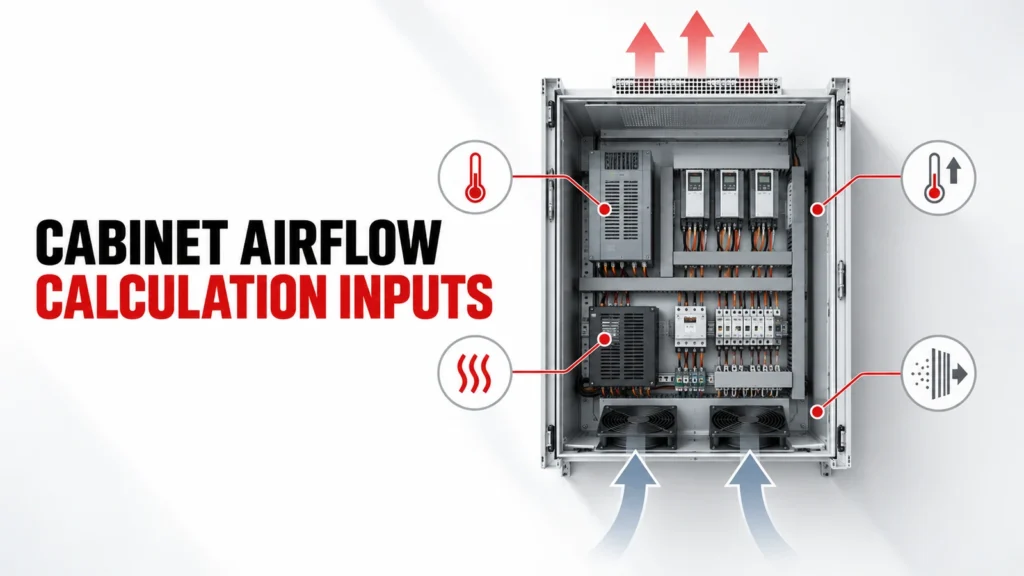
This guide identifies the evidence needed before estimating airflow and comparing fan candidates. It also shows when ventilation is the wrong cooling architecture, such as when ambient air or contamination conditions prevent the intended heat removal.
Päätöksenteon lähtökohdat lyhyesti
| Arviointialue | Mitä ostaja kirjaa ylös | Pyydettävät todisteet |
|---|---|---|
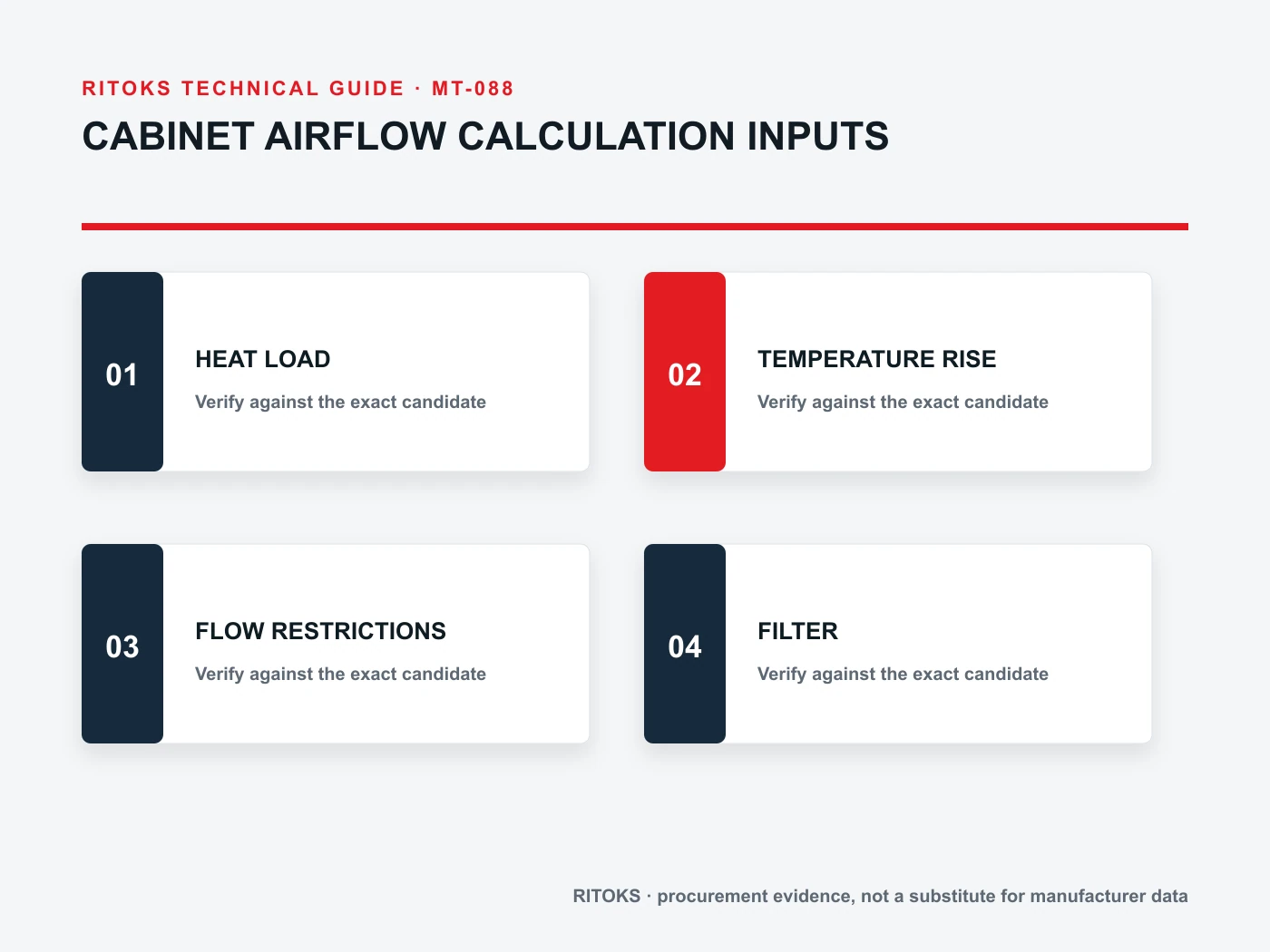
| Lämpökuorma | Losses by component and operating state | Equipment loss data and duty record |
| Ympäristö | Ambient range and contamination | Site conditions and enclosure objective |
| Ilmavirtausreitti | Inlet, outlet, filters, obstructions | Layout and cutout drawings |
| Fan operating point | Flow at actual pressure resistance | Exact-model fan curve and system estimate |
Inventory real heat sources
List the components that dissipate heat inside the enclosure: power devices, supplies, drives, transformers, control electronics and wiring where relevant. Use credible operating states, not only installed nameplate capacity. Some sources do not peak together, while others have short but significant duty periods.
Record the basis for every loss estimate and the load combinations the cabinet will actually see. Unknown heat inputs should remain open assumptions rather than disappearing into an arbitrary fan margin.
Define ambient and internal limits
Ventilation exchanges cabinet air with surrounding air. Document the ambient range at the actual installation, including solar exposure or nearby hot equipment where relevant, and define the acceptable internal condition for the most sensitive installed component.
The air entering the enclosure cannot be cooler than the surrounding source without an active cooling method. If ambient approaches or exceeds the required internal limit, adding fan capacity alone may not solve the problem.
Draw the path from inlet to outlet
Show where air enters, how it crosses the heat sources and where it leaves. Separate a clear path from a short circuit in which fresh air exits before reaching the critical equipment. Wiring ducts, shelves and component placement can redirect flow.
A useful drawing marks inlet and outlet height, guards, filters, internal barriers and service doors. It lets the design team discuss hot spots and maintenance access before choosing a frame size.
Account for restriction, not only free air
Filters, louvers, grilles and narrow passages impose pressure resistance. A fan curve describes how available flow changes with pressure. Therefore a free-air figure is not the delivered airflow through a finished cabinet.
Ask for an exact-model performance curve and estimate the resistance of the assembled path. Revisit the estimate when filter media, outlet geometry or cabinet layout changes; otherwise the selected operating point may shift.
Consider filter condition over time
A clean filter is not the only operating condition. Dust loading changes resistance and service needs. Define the contamination expected at the site, an inspection method and the replacement element.
Do not invent a fixed maintenance interval from a product category name. The first inspection schedule should reflect actual exposure and be refined from recorded condition and temperature behavior.
Choose fan direction and control deliberately
Whether the fan supplies or extracts air influences pressure direction and leakage paths. The choice also affects where filtered air enters and how it reaches heat sources. Specify any thermostat, alarm or speed control requirement as a separate feature to verify.
Review the supply voltage, wiring and control sequence with the electrical designer. Avoid assuming that a fan family includes monitoring outputs or variable-speed control unless the exact order code confirms them.
Validate the finished cabinet
The estimate narrows candidates; the built cabinet provides the final evidence. Check representative duty states, ambient conditions when possible, internal temperature locations, flow obstructions and alarm behavior.
Document the installed fan, filter, cutouts, control settings and test conditions. If a hot spot remains, trace the airflow path and heat input before simply increasing nominal fan size.
Laadi tarkka mallipohjainen todistusaineistotiedosto
A category or product-family page helps locate relevant options; it does not by itself approve one variant. For cabinet ventilation, keep the full proposed order code, current datasheet, terminal or mounting drawing, operating instructions and any project calculation together. Read the conditions attached to each rating or function. If the evidence belongs to a neighboring model, request the correct document instead of carrying the claim across.
Projektitiimi vastaa järjestelmän syöttötiedoista ja hyväksymiskriteereistä. Toimittaja vastaa tarjotun tuotteen todisteista. Merkitse teknisessä tarkastelussa jokainen pakollinen vaatimus sen asiakirjan ja version viereen, joka vastaa sitä. Merkitse puuttuva kenttä avoimeksi, ehdolliseksi tai tuottamattomaksi. Näin päätös on jäljitettävissä ja estetään, että suotuisa nimellisarvo peittää yhteensopimattoman kytkentä- tai asennusehdon.
Vertaa kaikkia tarjouksia
| Tuote | Tietue vertailussa | Syy |
|---|---|---|
| Tilattava tuote | Täydellinen koodi, malli ja mukana toimitettavat lisävarusteet | Estää perhekohtaisia oletuksia |
| Sovelluksen yhteensopivuus | Kirjallinen vastaus kuhunkin hankkeeseen liittyvään palautteeseen | Pitää poikkeukset näkyvissä |
| Dokumentaatio | Tuoteseloste, piirros, ohjeet ja versiohistoria | Tarjottuun tuotteeseen liittyvät vaatimukset |
| Avoimet kysymykset | Omistaja ja selvennyksen määräaika | Välttää hiljaista suostumusta |
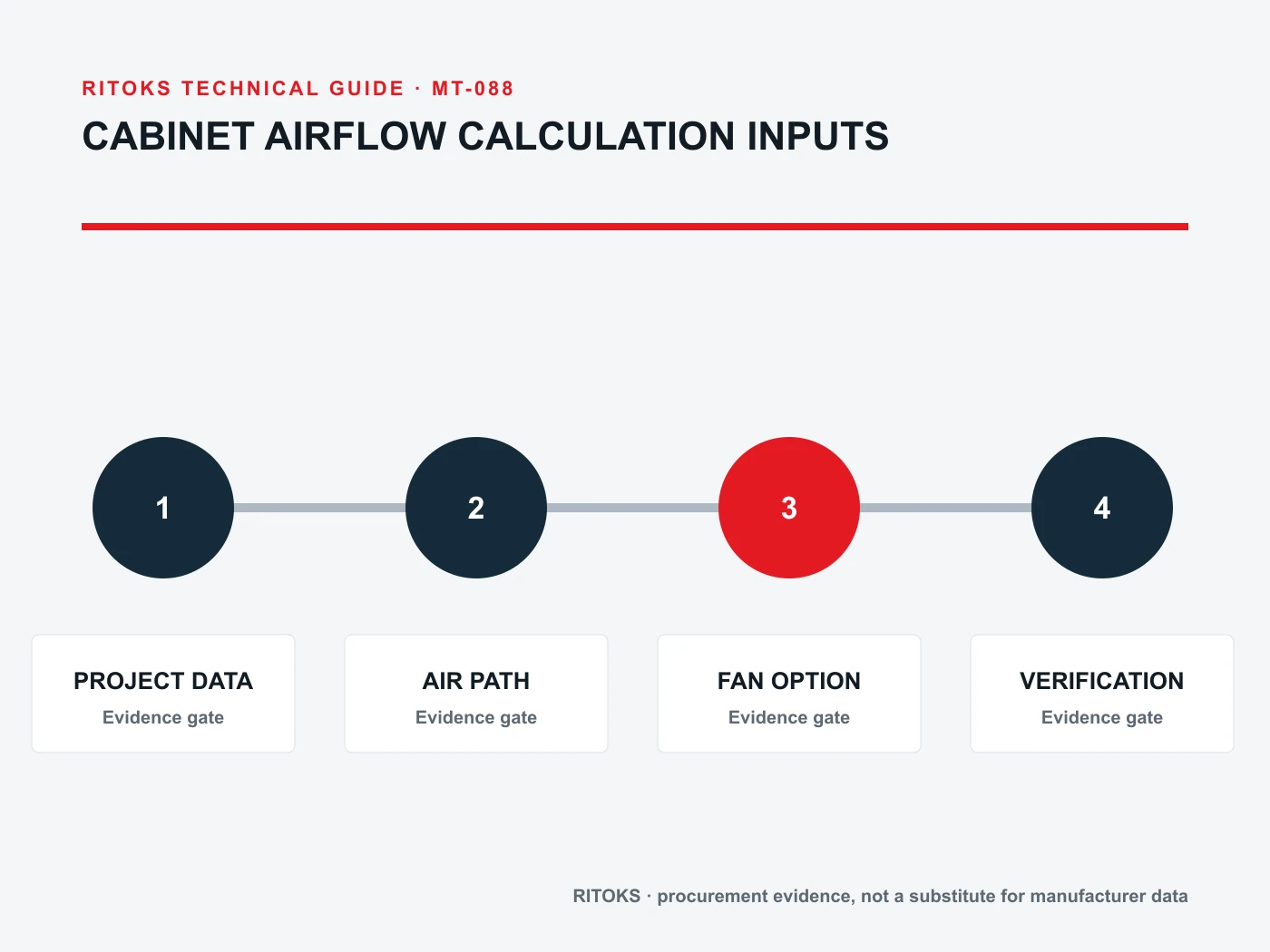
Käytä samaa projektikuvausta jokaisessa tarjouksessa. Kaupallisia ehtoja, kuten hintaa ja toimitusaikaa, voidaan verrata keskenään, kun tekninen laajuus on yhdenmukaistettu. Älä pidä pois jätettyjä lisävarusteita, tukemattomia nimellisarvoja tai ratkaisematonta johdotusoletusta vastaavina dokumentoidun tarjouksen kanssa. Jos ehdotetaan vaihtoehtoa, kysy, mitkä tiedot muuttuvat, ja toista kyseiset tarkastukset.
Asennuksen tarkastus ja hyväksyntä
Varmista ennen asennusta, että toimitetut tarrat, täydellinen koodi ja lisävarusteet vastaavat hyväksyttyä tietuetta. Vertaa liittimiä, kiinnitystä, johtimien liitäntöjä ja mahdollisia ilmoitettuja asennussuuntia tarkkoihin ohjeisiin. Tuote, joka näyttää ulkoisesti samankaltaiselta kuin hyväksytty versio, voi silti poiketa sähköisiltä ominaisuuksiltaan, ohjausvaihtoehdoiltaan tai testausperusteiltaan.
Suunnittele lopputarkastus, jossa käsitellään hankkeen todellisia riskejä. Tähän voi kuulua johdotuksen tarkastus hyväksytyn kaavion perusteella, toiminnallinen reagointi, mittaukset edustavissa käyttötiloissa sekä viestintä- ja hälytysominaisuuksien toimivuuden varmistaminen. Kirjaa olosuhteet ja tulokset muistiin. Hyväksymissuunnitelman tulisi perustua sovellukseen ja toimittajan toimittamiin todisteisiin, ei yleiseen tuotetarkistuslistaan.
Tarjouspyyntöjen tarkistuslista
- Identify the circuit, equipment and location that cabinet ventilation must serve.
- Liitä mukaan järjestelmäpiirros ja käyttötilat, jotka määrittelevät sovelluksen.
- Record heat sources and its source document.
- Record ambient range and its source document.
- Record target condition and its source document.
- Record duty cycle and its source document.
- Confirm the exact-model evidence for inlet filter.
- Confirm the exact-model evidence for flow path.
- Confirm the exact-model evidence for system resistance.
- Confirm the exact-model evidence for hot spots.
- Pyydä tilauksen täydellinen koodi, lisävarusteet, piirustukset ja tuotetiedotteen versio.
- Kysy poikkeuksista, oletuksista, korvaavista ratkaisuista ja ratkaisemattomista teknisistä seikoista.
Tarjouspyyntö tulisi laatia riittävän tarkasti, jotta toimittaja voi vastata siihen ilman, että sen tarvitsee keksiä puuttuvia projektitietoja. Jos jotakin olennaista tietoa ei vielä tiedetä, merkitse se kysymykseksi ja ilmoita, kuka sen määrittelee. Älä muuta oletusta arviointikriteeriksi, vaatimustenmukaisuusväitteeksi tai hyväksytyksi asennusmenetelmäksi.
Mikä vaikuttaa päätökseen
A decision can change when the source arrangement, load behavior, environment, installation geometry or required function changes. Revisit the selected cabinet ventilation whenever one of those inputs moves outside the approved brief. Recheck the order code and the exact evidence affected by the change; do not rely on a previous approval for a circuit that now asks the component to do different work.
Pidä lyhyt muutoshistoria projektikuvauksesta, toimittajan vastauksesta ja hyväksyttyjen poikkeusten luettelosta. Tämän kirjanpidon avulla suunnittelu-, hankinta- ja käyttöönottotiimit voivat työskennellä saman version pohjalta. Se on erityisen hyödyllistä, kun tarjousta tarkistetaan, tarjotaan korvaavaa tuotetta tai paneelin suunnittelu muuttuu ensimmäisen vertailun jälkeen.
Ennen hyväksyntää ratkaistavat kysymykset
Ask who owns each remaining technical question for the proposed cabinet ventilation. The buyer should confirm the system inputs and installation constraints; the supplier should confirm the exact item, included options and applicable documentation. Put the answer and document revision beside the question. An unanswered point should remain visible in the comparison rather than being converted into an assumed feature.
Kun tarjouksessa esitetään vaihtoehto, pyydä kirjallinen selitys muutetusta piiristä, asennuksesta tai suorituskykyperusteista. Tarkista uudet piirustukset yhdessä projekti-insinöörin kanssa ja kirjaa muistiin, voidaanko ehdotettu muutos hyväksyä. Korvaava tuote on uusi tekninen ratkaisu, vaikka se vaikuttaisikin kaupallisesti vastaavalta. Tämä on erityisen tärkeää silloin, kun useat toimittajat käyttävät samankaltaisia tuoteryhmänimityksiä eri kokoonpanoille.
Usein kysytyt kysymykset
Can a free-air rating be used as cabinet airflow?
No. The installed filter and cabinet path create resistance, so review the exact fan curve and system operating point.
Will a larger fan always lower cabinet temperature?
Not necessarily. Ambient conditions, heat load and whether air reaches hot components determine the result.
When should I consider closed-loop cooling?
Review another method when outdoor air cannot meet the target condition or must be kept out of the enclosure.
Aiheeseen liittyvät RITOKS-sivut
Tuoteperheen taustatietoja on kohdassa Kotelo ja lämmönhallinta. Asiaan liittyvät julkaistut tuotesivut ovat seuraavat: Fd Cabinet Filter Fan Electrical Enclosures, Industrial Ac Axial Cooling Fan 60 250mm, 12038 Ac Axial Cooling Fan 110v 220v 380v. Käytä heidän nykyisiä, tarkkoja mallikuvauksiaan, kun vertaat ehdotettua tuotetta.
Jos haluatte sovelluskohtaisen tarjouksen, lähetä projektikuvaus RITOKSille edellä esitettyjen kaavioiden ja avoimien kysymysten avulla.