
พัดลมระบายความร้อนสำหรับตู้ · คำอธิบายทางเทคนิค
Cabinet Airflow Calculation Inputs: Heat Load, Temperature Rise and Restrictions
Cabinet airflow calculation inputs are often reduced to one fan capacity number. That misses the first engineering task: establish how much heat is produced, which ambient air is available and where that air can travel. A fan moves air through a real enclosure with filters, grilles and obstructions, so the useful result differs from an open-bench rating.
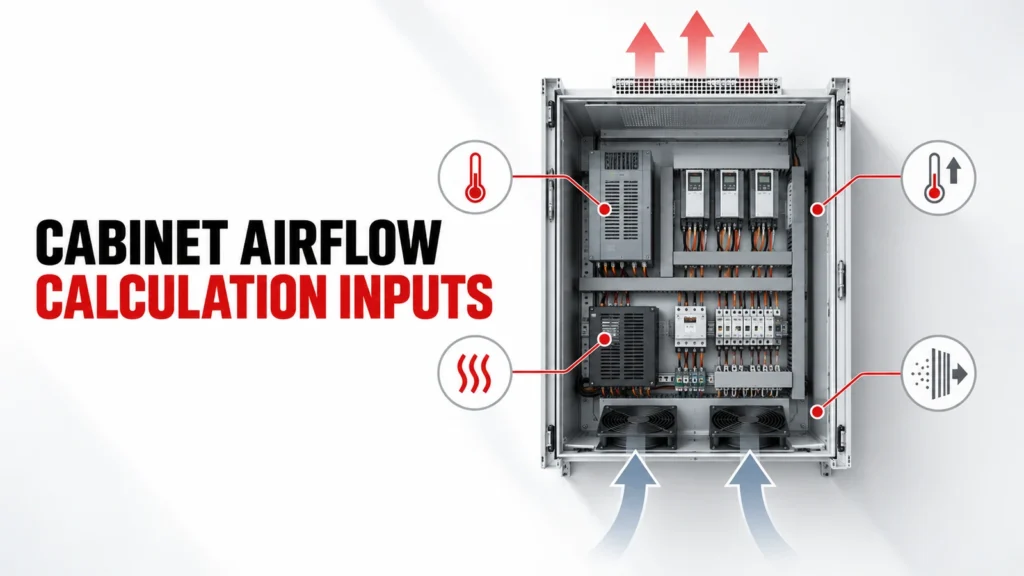
This guide identifies the evidence needed before estimating airflow and comparing fan candidates. It also shows when ventilation is the wrong cooling architecture, such as when ambient air or contamination conditions prevent the intended heat removal.
ข้อมูลพื้นฐานสำหรับการตัดสินใจ
| พื้นที่รีวิว | ข้อมูลที่ผู้ซื้อบันทึกไว้ | หลักฐานที่จำเป็นต้องขอ |
|---|---|---|
| ภาระความร้อน | Losses by component and operating state | Equipment loss data and duty record |
| สิ่งแวดล้อม | Ambient range and contamination | Site conditions and enclosure objective |
| เส้นทางอากาศ | Inlet, outlet, filters, obstructions | Layout and cutout drawings |
| Fan operating point | Flow at actual pressure resistance | Exact-model fan curve and system estimate |
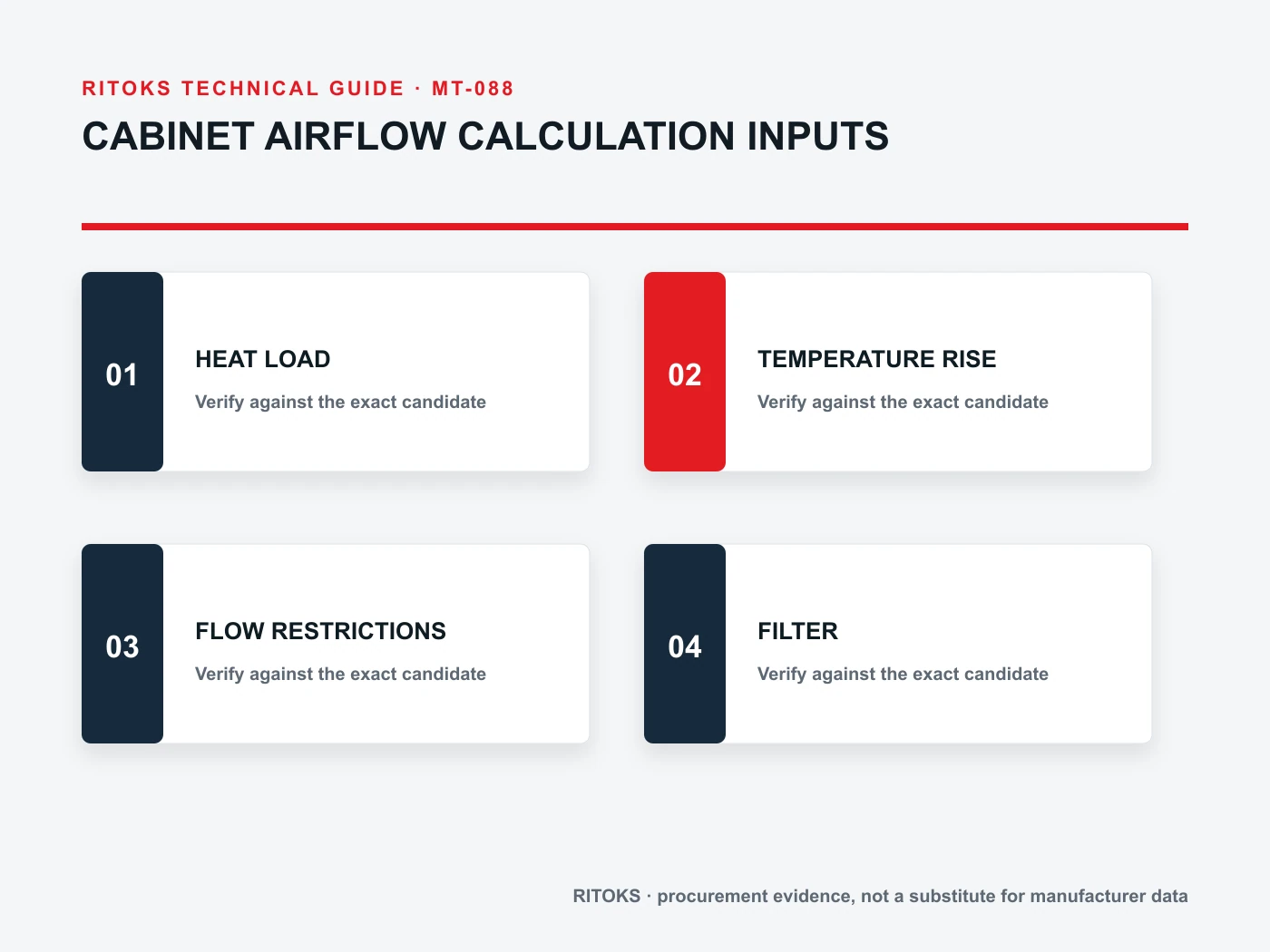
Inventory real heat sources
List the components that dissipate heat inside the enclosure: power devices, supplies, drives, transformers, control electronics and wiring where relevant. Use credible operating states, not only installed nameplate capacity. Some sources do not peak together, while others have short but significant duty periods.
Record the basis for every loss estimate and the load combinations the cabinet will actually see. Unknown heat inputs should remain open assumptions rather than disappearing into an arbitrary fan margin.
Define ambient and internal limits
Ventilation exchanges cabinet air with surrounding air. Document the ambient range at the actual installation, including solar exposure or nearby hot equipment where relevant, and define the acceptable internal condition for the most sensitive installed component.
The air entering the enclosure cannot be cooler than the surrounding source without an active cooling method. If ambient approaches or exceeds the required internal limit, adding fan capacity alone may not solve the problem.
Draw the path from inlet to outlet
Show where air enters, how it crosses the heat sources and where it leaves. Separate a clear path from a short circuit in which fresh air exits before reaching the critical equipment. Wiring ducts, shelves and component placement can redirect flow.
A useful drawing marks inlet and outlet height, guards, filters, internal barriers and service doors. It lets the design team discuss hot spots and maintenance access before choosing a frame size.
Account for restriction, not only free air
Filters, louvers, grilles and narrow passages impose pressure resistance. A fan curve describes how available flow changes with pressure. Therefore a free-air figure is not the delivered airflow through a finished cabinet.
Ask for an exact-model performance curve and estimate the resistance of the assembled path. Revisit the estimate when filter media, outlet geometry or cabinet layout changes; otherwise the selected operating point may shift.
Consider filter condition over time
A clean filter is not the only operating condition. Dust loading changes resistance and service needs. Define the contamination expected at the site, an inspection method and the replacement element.
Do not invent a fixed maintenance interval from a product category name. The first inspection schedule should reflect actual exposure and be refined from recorded condition and temperature behavior.
Choose fan direction and control deliberately
Whether the fan supplies or extracts air influences pressure direction and leakage paths. The choice also affects where filtered air enters and how it reaches heat sources. Specify any thermostat, alarm or speed control requirement as a separate feature to verify.
Review the supply voltage, wiring and control sequence with the electrical designer. Avoid assuming that a fan family includes monitoring outputs or variable-speed control unless the exact order code confirms them.
Validate the finished cabinet
The estimate narrows candidates; the built cabinet provides the final evidence. Check representative duty states, ambient conditions when possible, internal temperature locations, flow obstructions and alarm behavior.
Document the installed fan, filter, cutouts, control settings and test conditions. If a hot spot remains, trace the airflow path and heat input before simply increasing nominal fan size.
สร้างไฟล์หลักฐานแบบจำลองที่แม่นยำ
A category or product-family page helps locate relevant options; it does not by itself approve one variant. For cabinet ventilation, keep the full proposed order code, current datasheet, terminal or mounting drawing, operating instructions and any project calculation together. Read the conditions attached to each rating or function. If the evidence belongs to a neighboring model, request the correct document instead of carrying the claim across.
ทีมโครงการเป็นผู้รับผิดชอบข้อมูลนำเข้าของระบบและเกณฑ์การรับมอบ ส่วนผู้จัดหาเป็นผู้รับผิดชอบหลักฐานของสินค้าที่เสนอ ในการตรวจสอบทางเทคนิค ให้วางข้อกำหนดที่จำเป็นแต่ละข้อไว้ข้างเอกสารและฉบับแก้ไขที่ตรงกับข้อกำหนดนั้นอย่างแม่นยำ ให้ทำเครื่องหมายช่องที่ขาดข้อมูลว่าเป็น "เปิด" "มีเงื่อนไข" หรือ "ไม่รองรับ" การทำเช่นนี้จะสร้างการตัดสินใจที่สามารถติดตามได้ และป้องกันไม่ให้ค่าหัวข้อที่ดูดีไปปกปิดความไม่สอดคล้องกันในด้านการเชื่อมต่อหรือเงื่อนไขการติดตั้ง.
เปรียบเทียบข้อเสนอทั้งหมด
| รายการ | บันทึกในการเปรียบเทียบ | เหตุผล |
|---|---|---|
| สินค้าที่สามารถสั่งซื้อได้ | รหัสเต็ม รุ่น และอุปกรณ์เสริมที่มาพร้อม | ป้องกันการสมมติในระดับครอบครัว |
| การจับคู่แอปพลิเคชัน | คำตอบเป็นลายลักษณ์อักษรต่อข้อมูลนำเข้าของแต่ละโครงการ | ทำให้ข้อผิดพลาดยังคงปรากฏอยู่ |
| เอกสารประกอบ | ใบข้อมูลทางเทคนิค, แบบวาด, คู่มือการใช้งาน และฉบับแก้ไข | ลิงก์ที่อ้างอิงถึงสินค้าที่เสนอขาย |
| ประเด็นที่ยังไม่ได้ข้อสรุป | เจ้าของและวันที่ครบกำหนด เพื่อขอชี้แจง | หลีกเลี่ยงการยอมรับอย่างเงียบๆ |
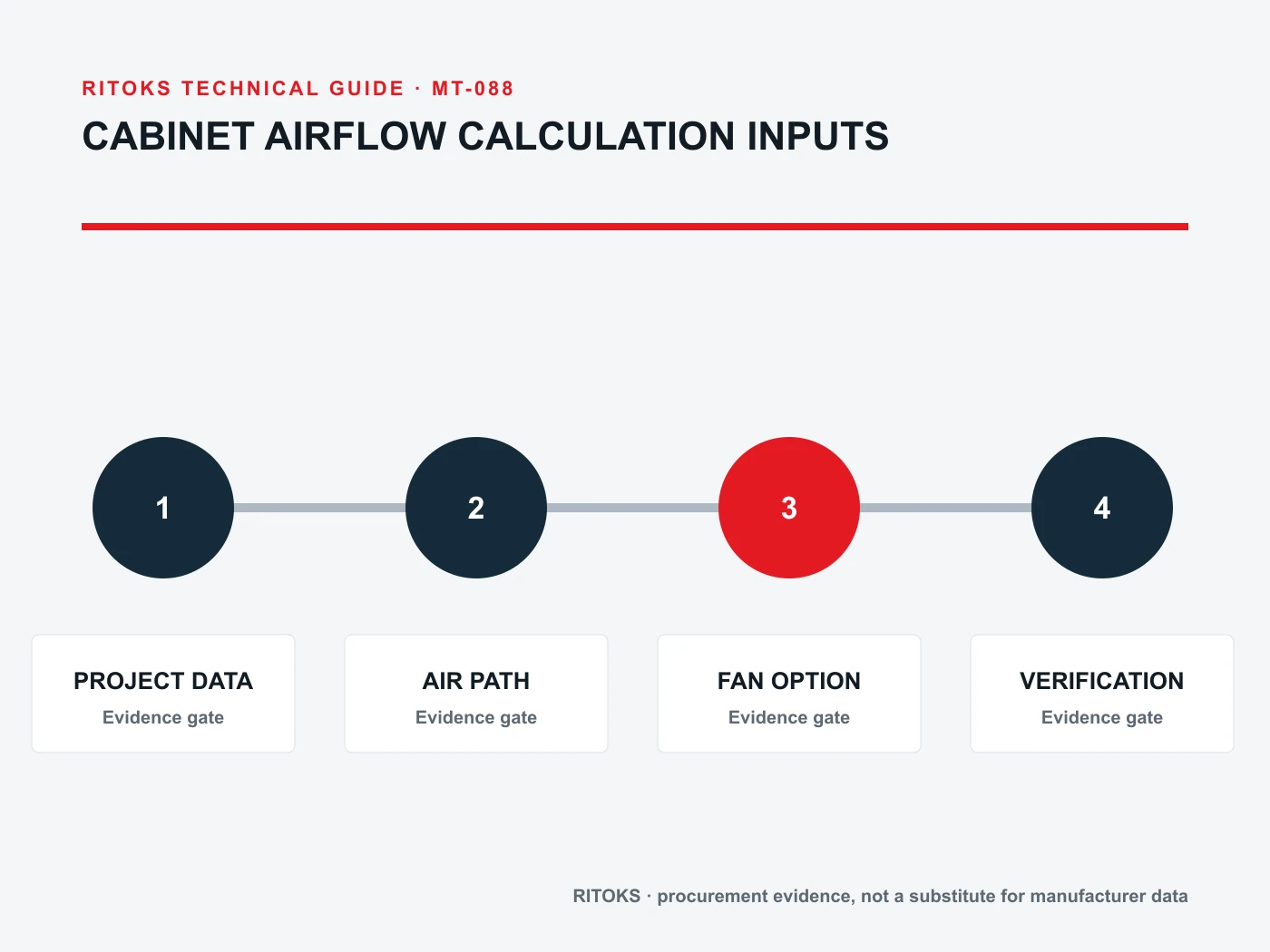
ใช้เอกสารสรุปโครงการเดียวกันสำหรับทุกใบเสนอราคา เงื่อนไขทางการค้า เช่น ราคาและระยะเวลาการผลิต สามารถเปรียบเทียบกันได้เมื่อขอบเขตทางเทคนิคได้รับการปรับให้เป็นมาตรฐานแล้ว อย่าถือว่าอุปกรณ์เสริมที่ถูกละเว้น ค่าพารามิเตอร์ที่ยังไม่ได้รับการสนับสนุน หรือสมมติฐานการเดินสายไฟฟ้าที่ยังไม่ได้รับการแก้ไข เป็นข้อเสนอที่เทียบเท่ากับข้อเสนอที่มีเอกสารรองรับ หากมีข้อเสนอทางเลือก ให้สอบถามว่าข้อมูลใดที่เปลี่ยนแปลงไป และดำเนินการตรวจสอบส่วนที่ได้รับผลกระทบซ้ำอีกครั้ง.
การตรวจสอบการติดตั้งและการรับมอบ
ก่อนการติดตั้ง โปรดตรวจสอบให้แน่ใจว่าฉลาก รหัสครบถ้วน และอุปกรณ์เสริมที่ส่งมาตรงกับข้อมูลที่ได้รับการอนุมัติ เปรียบเทียบขั้วต่อ วิธีการติดตั้ง การเข้าถึงตัวนำ และทิศทางที่ระบุไว้กับคำแนะนำอย่างละเอียด ผลิตภัณฑ์ที่มีลักษณะทางกายภาพคล้ายกับรุ่นที่ได้รับการอนุมัติ อาจมีการกำหนดค่าทางไฟฟ้า ตัวเลือกการควบคุม หรือเกณฑ์การทดสอบที่แตกต่างออกไป.
วางแผนการตรวจสอบตามสภาพจริงที่มุ่งเน้นไปที่ความเสี่ยงที่แท้จริงของโครงการ ซึ่งอาจรวมถึงการตรวจสอบการเดินสายไฟฟ้าตามแผนผังที่ได้รับการอนุมัติ การตรวจสอบการทำงาน การวัดค่าในสภาพการทำงานที่เป็นตัวแทน และการยืนยันการทำงานของระบบสื่อสารหรือระบบเตือนภัยทุกประเภท ให้บันทึกสภาพและผลการตรวจสอบไว้ แผนการรับมอบงานควรอิงจากข้อมูลของระบบและหลักฐานจากผู้จัดหา ไม่ใช่จากรายการตรวจสอบทั่วไป.
รายการตรวจสอบคำขอเสนอราคา
- Identify the circuit, equipment and location that cabinet ventilation must serve.
- แนบแผนภาพระบบและสถานะการทำงานที่กำหนดการใช้งานของระบบ.
- Record heat sources and its source document.
- Record ambient range and its source document.
- Record target condition and its source document.
- Record duty cycle and its source document.
- Confirm the exact-model evidence for inlet filter.
- Confirm the exact-model evidence for flow path.
- Confirm the exact-model evidence for system resistance.
- Confirm the exact-model evidence for hot spots.
- ขอให้ส่งรหัสคำสั่งซื้อฉบับเต็ม อุปกรณ์เสริม แบบวาด และฉบับปรับปรุงของใบข้อมูลทางเทคนิค.
- สอบถามเกี่ยวกับข้อยกเว้น สมมติฐาน สิ่งทดแทน และประเด็นทางวิศวกรรมที่ยังไม่ได้รับการแก้ไข.
เอกสารขอเสนอราคา (RFQ) ต้องมีความชัดเจนเพียงพอเพื่อให้ผู้จัดหาสามารถตอบได้โดยไม่ต้องต้องคาดการณ์ค่าโครงการที่ยังขาดอยู่ หากข้อมูลสำคัญใดยังไม่ทราบ ให้ระบุไว้เป็นคำถามและชี้แจงว่าใครจะเป็นผู้กำหนดค่าดังกล่าว อย่าเปลี่ยนสมมติฐานให้กลายเป็นเกณฑ์การประเมิน ข้ออ้างว่าสอดคล้องกับข้อกำหนด หรือวิธีการติดตั้งที่ได้รับการอนุมัติ.
ปัจจัยใดที่ส่งผลต่อการตัดสินใจ
A decision can change when the source arrangement, load behavior, environment, installation geometry or required function changes. Revisit the selected cabinet ventilation whenever one of those inputs moves outside the approved brief. Recheck the order code and the exact evidence affected by the change; do not rely on a previous approval for a circuit that now asks the component to do different work.
เก็บประวัติการแก้ไขแบบสั้นของเอกสารโครงการ คำตอบจากผู้จัดหา และรายชื่อข้อยกเว้นที่ได้รับการอนุมัติไว้ การบันทึกนี้ช่วยให้ฝ่ายวิศวกรรม ฝ่ายจัดซื้อ และฝ่ายรับมอบงานสามารถทำงานจากเวอร์ชันเดียวกันได้ ซึ่งมีประโยชน์เป็นพิเศษเมื่อมีการแก้ไขใบเสนอราคา มีการเสนอสินค้าทดแทน หรือการออกแบบแผงควบคุมมีการเปลี่ยนแปลงหลังจากขั้นตอนการเปรียบเทียบครั้งแรก.
ข้อสงสัยที่ต้องแก้ไขก่อนการอนุมัติ
Ask who owns each remaining technical question for the proposed cabinet ventilation. The buyer should confirm the system inputs and installation constraints; the supplier should confirm the exact item, included options and applicable documentation. Put the answer and document revision beside the question. An unanswered point should remain visible in the comparison rather than being converted into an assumed feature.
เมื่อใบเสนอราคาเสนอทางเลือกอื่น ให้ขอคำอธิบายเป็นลายลักษณ์อักษรเกี่ยวกับวงจร การติดตั้ง หรือเกณฑ์ประสิทธิภาพที่เปลี่ยนแปลงไป ตรวจสอบแบบใหม่ร่วมกับวิศวกรโครงการ และบันทึกว่าการเปลี่ยนแปลงที่เสนอมาสามารถยอมรับได้หรือไม่ การแทนที่ถือเป็นข้อตัดสินใจทางเทคนิคใหม่ แม้จะดูเหมือนมีค่าเทียบเท่ากันในเชิงพาณิชย์ก็ตาม สิ่งนี้สำคัญเป็นพิเศษเมื่อมีผู้จัดหาหลายรายใช้ชื่อตระกูลผลิตภัณฑ์ที่คล้ายกันสำหรับการกำหนดค่าที่แตกต่างกัน.
คำถามที่มักถูกถาม
Can a free-air rating be used as cabinet airflow?
No. The installed filter and cabinet path create resistance, so review the exact fan curve and system operating point.
Will a larger fan always lower cabinet temperature?
Not necessarily. Ambient conditions, heat load and whether air reaches hot components determine the result.
When should I consider closed-loop cooling?
Review another method when outdoor air cannot meet the target condition or must be kept out of the enclosure.
หน้า RITOKS ที่เกี่ยวข้อง
สำหรับข้อมูลเกี่ยวกับกลุ่มผลิตภัณฑ์ โปรดดู ระบบปิดผนึกและการจัดการความร้อน. หน้าผลิตภัณฑ์ที่เกี่ยวข้องที่ได้รับการเผยแพร่แล้ว ได้แก่ Fd Cabinet Filter Fan Electrical Enclosures, Industrial Ac Axial Cooling Fan 60 250mm, 12038 Ac Axial Cooling Fan 110v 220v 380v. ให้ใช้เอกสารรุ่นที่ตรงกันในปัจจุบันของผลิตภัณฑ์นั้นเมื่อเปรียบเทียบกับสินค้าที่เสนอ.
หากต้องการใบเสนอราคาสำหรับโครงการเฉพาะ, ส่งเอกสารสรุปโครงการไปยัง RITOKS พร้อมกับแผนภาพและคำถามที่ยังไม่มีคำตอบข้างต้น.