
Wentylatory chłodzące do szaf · Objaśnienie techniczne
Cabinet Airflow Calculation Inputs: Heat Load, Temperature Rise and Restrictions
Cabinet airflow calculation inputs are often reduced to one fan capacity number. That misses the first engineering task: establish how much heat is produced, which ambient air is available and where that air can travel. A fan moves air through a real enclosure with filters, grilles and obstructions, so the useful result differs from an open-bench rating.
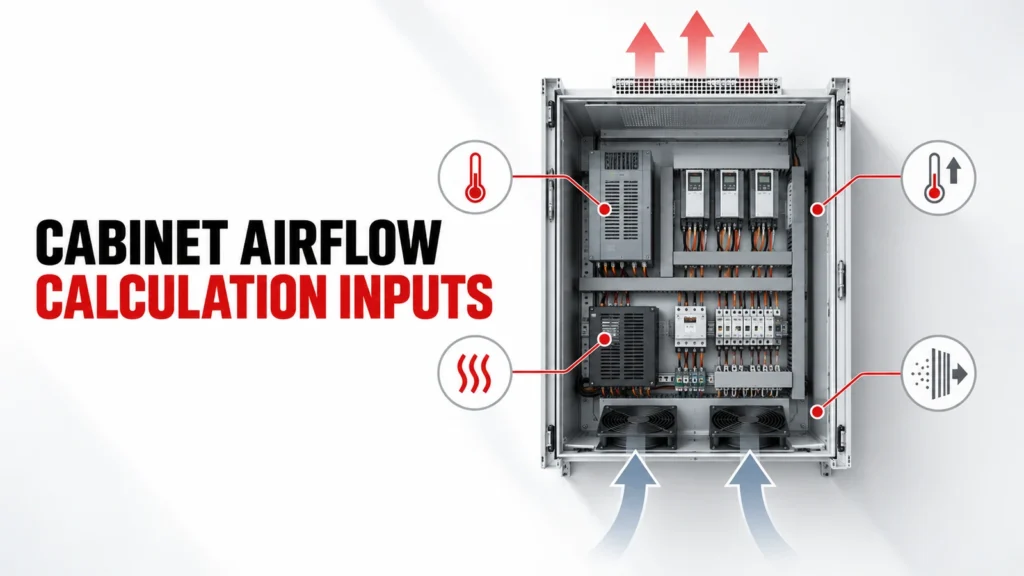
This guide identifies the evidence needed before estimating airflow and comparing fan candidates. It also shows when ventilation is the wrong cooling architecture, such as when ambient air or contamination conditions prevent the intended heat removal.
Podsumowanie danych wejściowych do decyzji
| Obszar przeglądu | Co odnotowuje nabywca | Dokumenty, o których udostępnienie należy wystąpić |
|---|---|---|
| Obciążenie cieplne | Losses by component and operating state | Equipment loss data and duty record |
| Środowisko | Ambient range and contamination | Site conditions and enclosure objective |
| Ścieżka przepływu powietrza | Inlet, outlet, filters, obstructions | Layout and cutout drawings |
| Fan operating point | Flow at actual pressure resistance | Exact-model fan curve and system estimate |
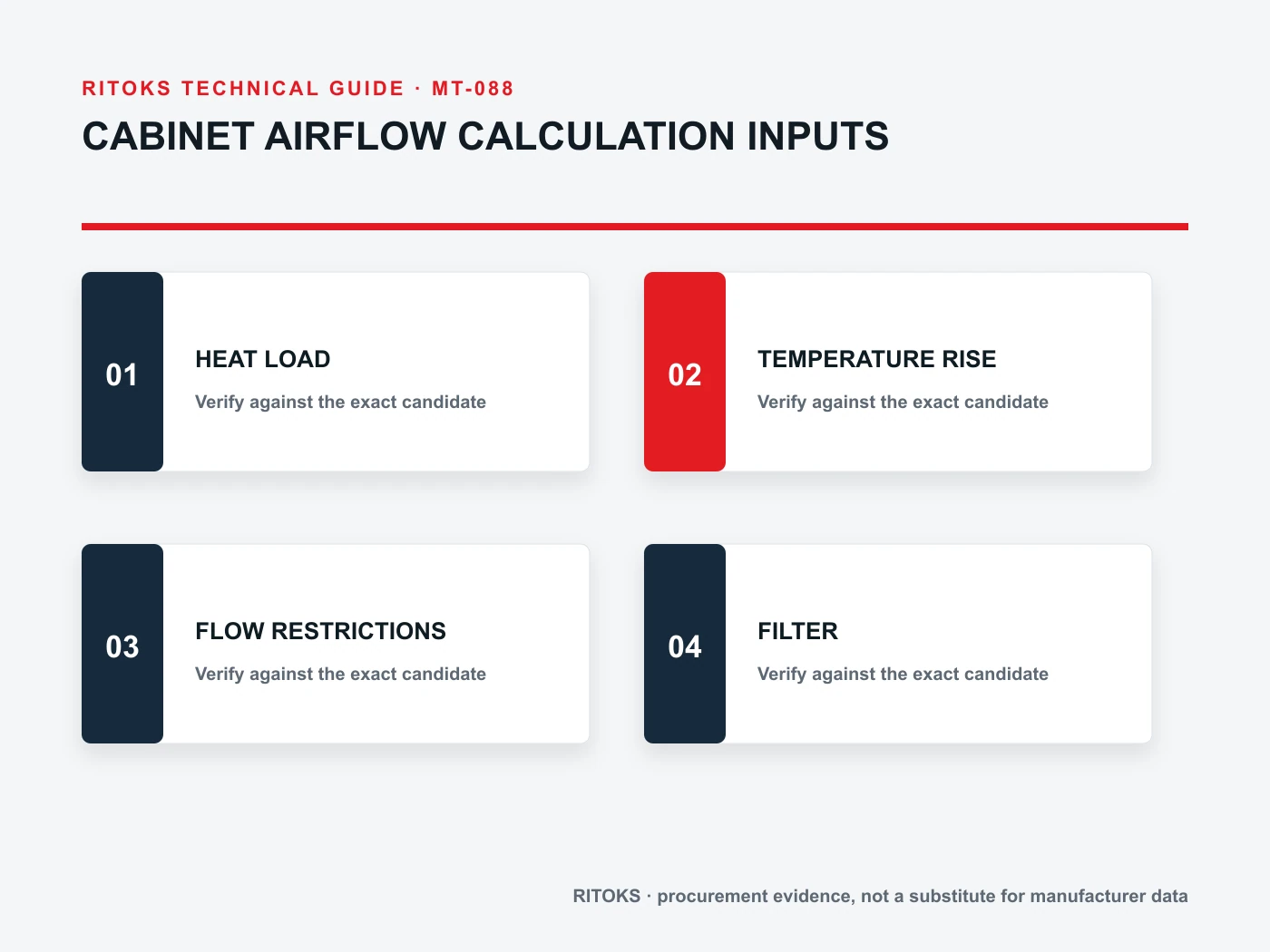
Inventory real heat sources
List the components that dissipate heat inside the enclosure: power devices, supplies, drives, transformers, control electronics and wiring where relevant. Use credible operating states, not only installed nameplate capacity. Some sources do not peak together, while others have short but significant duty periods.
Record the basis for every loss estimate and the load combinations the cabinet will actually see. Unknown heat inputs should remain open assumptions rather than disappearing into an arbitrary fan margin.
Define ambient and internal limits
Ventilation exchanges cabinet air with surrounding air. Document the ambient range at the actual installation, including solar exposure or nearby hot equipment where relevant, and define the acceptable internal condition for the most sensitive installed component.
The air entering the enclosure cannot be cooler than the surrounding source without an active cooling method. If ambient approaches or exceeds the required internal limit, adding fan capacity alone may not solve the problem.
Draw the path from inlet to outlet
Show where air enters, how it crosses the heat sources and where it leaves. Separate a clear path from a short circuit in which fresh air exits before reaching the critical equipment. Wiring ducts, shelves and component placement can redirect flow.
A useful drawing marks inlet and outlet height, guards, filters, internal barriers and service doors. It lets the design team discuss hot spots and maintenance access before choosing a frame size.
Account for restriction, not only free air
Filters, louvers, grilles and narrow passages impose pressure resistance. A fan curve describes how available flow changes with pressure. Therefore a free-air figure is not the delivered airflow through a finished cabinet.
Ask for an exact-model performance curve and estimate the resistance of the assembled path. Revisit the estimate when filter media, outlet geometry or cabinet layout changes; otherwise the selected operating point may shift.
Consider filter condition over time
A clean filter is not the only operating condition. Dust loading changes resistance and service needs. Define the contamination expected at the site, an inspection method and the replacement element.
Do not invent a fixed maintenance interval from a product category name. The first inspection schedule should reflect actual exposure and be refined from recorded condition and temperature behavior.
Choose fan direction and control deliberately
Whether the fan supplies or extracts air influences pressure direction and leakage paths. The choice also affects where filtered air enters and how it reaches heat sources. Specify any thermostat, alarm or speed control requirement as a separate feature to verify.
Review the supply voltage, wiring and control sequence with the electrical designer. Avoid assuming that a fan family includes monitoring outputs or variable-speed control unless the exact order code confirms them.
Validate the finished cabinet
The estimate narrows candidates; the built cabinet provides the final evidence. Check representative duty states, ambient conditions when possible, internal temperature locations, flow obstructions and alarm behavior.
Document the installed fan, filter, cutouts, control settings and test conditions. If a hot spot remains, trace the airflow path and heat input before simply increasing nominal fan size.
Stwórz plik dowodów oparty na modelu dokładnym
A category or product-family page helps locate relevant options; it does not by itself approve one variant. For cabinet ventilation, keep the full proposed order code, current datasheet, terminal or mounting drawing, operating instructions and any project calculation together. Read the conditions attached to each rating or function. If the evidence belongs to a neighboring model, request the correct document instead of carrying the claim across.
Zespół projektowy odpowiada za dane wejściowe systemu i kryteria odbioru. Dostawca odpowiada za dokumentację potwierdzającą zgodność oferowanego produktu. Podczas przeglądu technicznego należy przyporządkować każde obowiązkowe wymaganie do konkretnego dokumentu i wersji, które je spełniają. Brakujące pole należy oznaczyć jako otwarte, warunkowe lub nieobsługiwane. Pozwala to na śledzenie podjętych decyzji i zapobiega sytuacji, w której korzystna wartość nominalna maskuje niezgodność połączenia lub warunków instalacji.
Porównaj pełne oferty
| Pozycja | Wpis w zestawieniu porównawczym | Powód |
|---|---|---|
| Produkt dostępny w sprzedaży | Pełny kod, wariant i dołączone akcesoria | Zapobiega wyciąganiu wniosków na poziomie rodziny |
| Zgodność aplikacji | Pisemna odpowiedź na każdy wkład w projekt | Zapewnia widoczność wyjątków |
| Dokumentacja | Arkusz danych technicznych, rysunek, instrukcje i aktualizacje | Powiązania z oferowanym przedmiotem |
| Kwestie do rozstrzygnięcia | Właściciel i termin, w którym należy udzielić wyjaśnień | Pozwala uniknąć milczącej zgody |
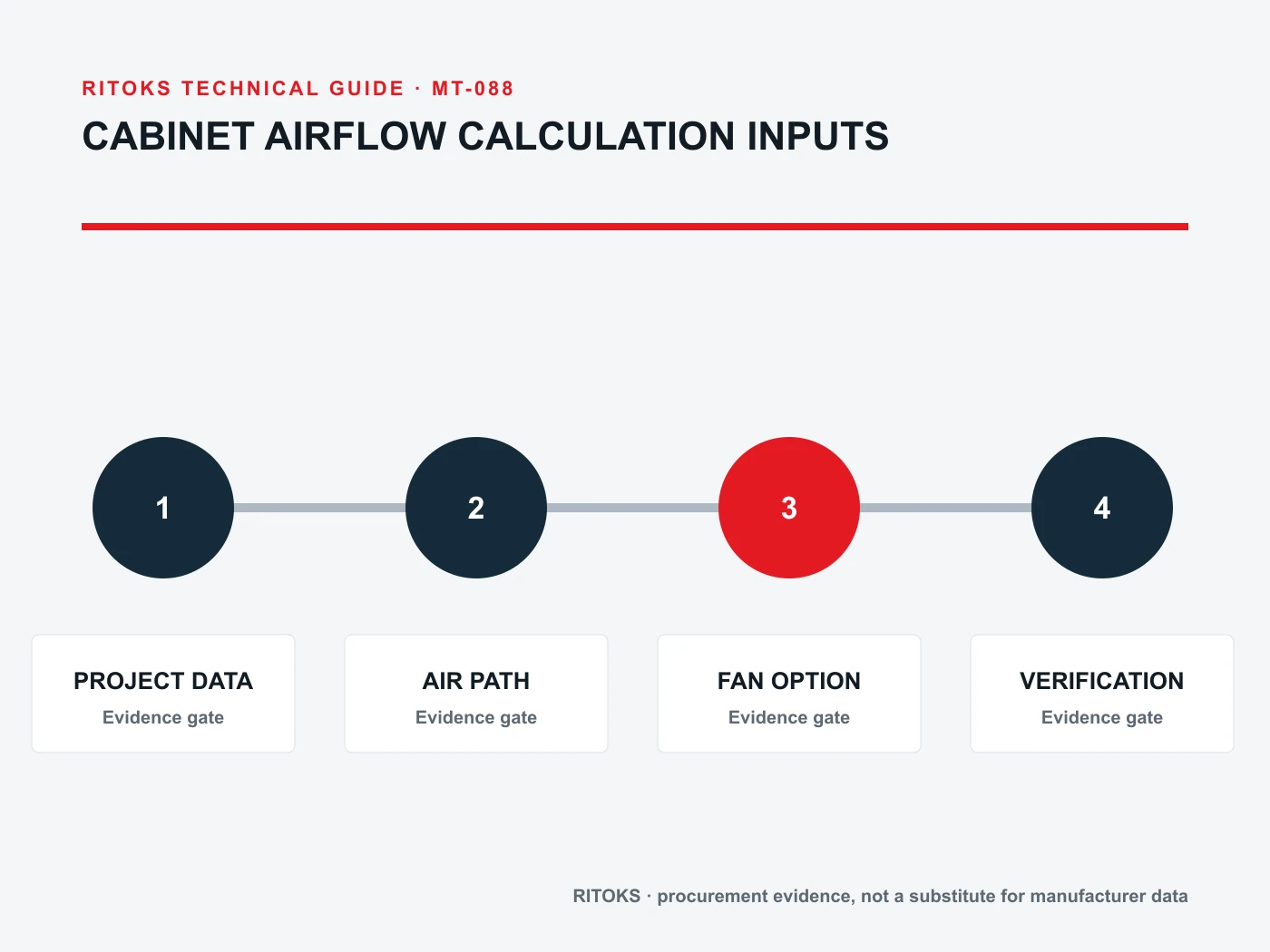
W każdej ofercie należy stosować ten sam opis projektu. Warunki handlowe, takie jak cena i czas realizacji, można porównać dopiero po ujednoliceniu zakresu technicznego. Nie należy traktować pominiętych akcesoriów, niepotwierdzonych parametrów technicznych ani nierozstrzygniętych założeń dotyczących okablowania jako równoważnych z udokumentowaną ofertą. Jeśli zaproponowano alternatywę, należy zapytać, które dane wejściowe ulegają zmianie, i powtórzyć przegląd elementów, których to dotyczy.
Przegląd instalacji i odbioru
Przed montażem należy sprawdzić, czy dostarczona etykieta, pełny kod i akcesoria są zgodne z zatwierdzoną dokumentacją. Należy porównać zaciski, sposób montażu, dostęp do przewodów oraz wszelkie określone orientacje z dokładnymi instrukcjami. Produkt, który wygląda podobnie do wersji zatwierdzonej, może mimo to mieć inną konfigurację elektryczną, opcję sterowania lub podstawę testową.
Należy zaplanować kontrolę zgodności z projektem wykonawczym, która uwzględni rzeczywiste zagrożenia związane z projektem. Może to obejmować sprawdzenie zgodności okablowania z zatwierdzonym schematem, testy funkcjonalne, pomiary w reprezentatywnych warunkach eksploatacyjnych oraz weryfikację działania wszelkich funkcji komunikacyjnych i alarmowych. Należy odnotować stan i wyniki. Plan odbioru powinien opierać się na dokumentacji aplikacji i dowodach dostawcy, a nie na ogólnej liście kontrolnej.
Lista kontrolna dotycząca zapytania ofertowego
- Identify the circuit, equipment and location that cabinet ventilation must serve.
- Należy dołączyć rysunek schematu systemu oraz stany pracy, które określają zastosowanie.
- Record heat sources and its source document.
- Record ambient range and its source document.
- Record target condition and its source document.
- Record duty cycle and its source document.
- Confirm the exact-model evidence for inlet filter.
- Confirm the exact-model evidence for flow path.
- Confirm the exact-model evidence for system resistance.
- Confirm the exact-model evidence for hot spots.
- Proszę o przesłanie pełnego kodu zamówienia, akcesoriów, rysunków oraz aktualnej wersji karty katalogowej.
- Zapytaj o wyjątki, założenia, rozwiązania zastępcze oraz nierozstrzygnięte kwestie techniczne.
Zapytanie ofertowe powinno być na tyle szczegółowe, aby dostawca mógł na nie odpowiedzieć bez konieczności domyślania się brakujących danych dotyczących projektu. Jeśli jakaś istotna informacja nie jest jeszcze znana, należy oznaczyć ją jako pytanie i wskazać, kto ją ustali. Nie należy traktować założenia jako kryterium oceny, oświadczenia o zgodności ani zatwierdzonej metody montażu.
Co wpływa na podjęcie decyzji
A decision can change when the source arrangement, load behavior, environment, installation geometry or required function changes. Revisit the selected cabinet ventilation whenever one of those inputs moves outside the approved brief. Recheck the order code and the exact evidence affected by the change; do not rely on a previous approval for a circuit that now asks the component to do different work.
Należy prowadzić krótką historię zmian dotyczącą opisu projektu, odpowiedzi dostawcy oraz listy zaakceptowanych wyjątków. Dokumentacja ta ułatwia działom inżynierii, zaopatrzenia i uruchomienia pracę w oparciu o tę samą wersję. Jest to szczególnie przydatne w przypadku zmiany oferty, zaproponowania zamiennika lub modyfikacji projektu szafy sterowniczej po pierwszym porównaniu.
Kwestie do wyjaśnienia przed zatwierdzeniem
Ask who owns each remaining technical question for the proposed cabinet ventilation. The buyer should confirm the system inputs and installation constraints; the supplier should confirm the exact item, included options and applicable documentation. Put the answer and document revision beside the question. An unanswered point should remain visible in the comparison rather than being converted into an assumed feature.
Jeśli w ofercie pojawia się alternatywne rozwiązanie, należy poprosić o pisemne wyjaśnienie dotyczące zmian w obwodzie, sposobie montażu lub założeniach eksploatacyjnych. Należy przeanalizować każdy nowy rysunek wraz z inżynierem projektu i odnotować, czy proponowana zmiana jest akceptowalna. Zastąpienie danego elementu stanowi nową decyzję techniczną, nawet jeśli wydaje się równoważne pod względem handlowym. Ma to szczególne znaczenie w sytuacjach, gdy wielu dostawców stosuje podobne oznaczenia serii dla różnych konfiguracji.
Najczęściej zadawane pytania
Can a free-air rating be used as cabinet airflow?
No. The installed filter and cabinet path create resistance, so review the exact fan curve and system operating point.
Will a larger fan always lower cabinet temperature?
Not necessarily. Ambient conditions, heat load and whether air reaches hot components determine the result.
When should I consider closed-loop cooling?
Review another method when outdoor air cannot meet the target condition or must be kept out of the enclosure.
Odpowiednie strony serwisu RITOKS
Aby zapoznać się z informacjami dotyczącymi rodziny produktów, zobacz Obudowa i zarządzanie temperaturą. Powiązane opublikowane strony produktów obejmują: Fd Cabinet Filter Fan Electrical Enclosures, Industrial Ac Axial Cooling Fan 60 250mm, 12038 Ac Axial Cooling Fan 110v 220v 380v. Podczas porównywania proponowanego produktu należy korzystać z aktualnych dokumentów dotyczących dokładnie tego samego modelu.
Aby otrzymać ofertę dostosowaną do konkretnego zastosowania, prześlij brief projektowy do firmy RITOKS wraz z powyższymi schematami i otwartymi pytaniami.