
Enclosure Air Conditioners for Control Cabinets · Technical Explainer
Closed-Loop Enclosure Cooling: What It Means
Understand closed-loop enclosure cooling, its separation from ambient air exchange and the evidence needed before selection. A useful buyer review connects the project requirement to one exact orderable product and preserves the evidence used for approval.
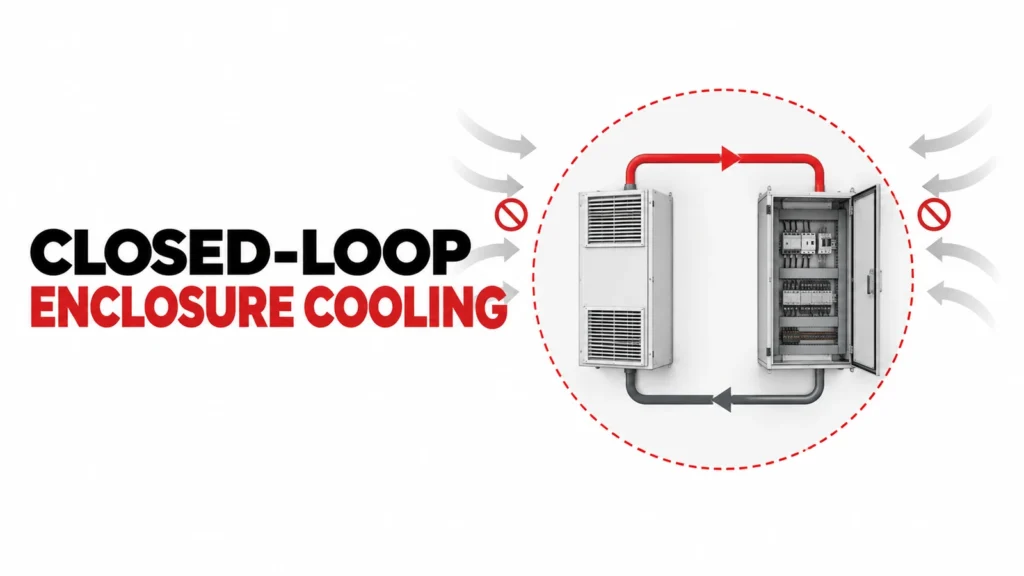
This explainer defines closed-loop enclosure cooling at an architectural level. It does not calculate cooling capacity, promise a sealing or ingress result, or claim that every enclosure air conditioner isolates internal and ambient air in the same way.
ข้อมูลพื้นฐานสำหรับการตัดสินใจ
| ช่องสำหรับความคิดเห็น | ผู้ซื้อต้องกำหนด | หลักฐานที่จำเป็นต้องขอ |
|---|---|---|
| Internal circuit | Cabinet air recirculation and component temperature objective | System design and equipment documentation |
| External circuit | Ambient-side heat rejection and installation clearance | Exact installation manual |
| Thermal load | Component losses and other heat inputs | Project heat-loss schedule |
| ขอบเขต | Openings, door condition, cable entries and enclosure construction | Enclosure inspection record |
| สิ่งแวดล้อม | Ambient temperature, contamination, humidity and service access | Site conditions and maintenance plan |
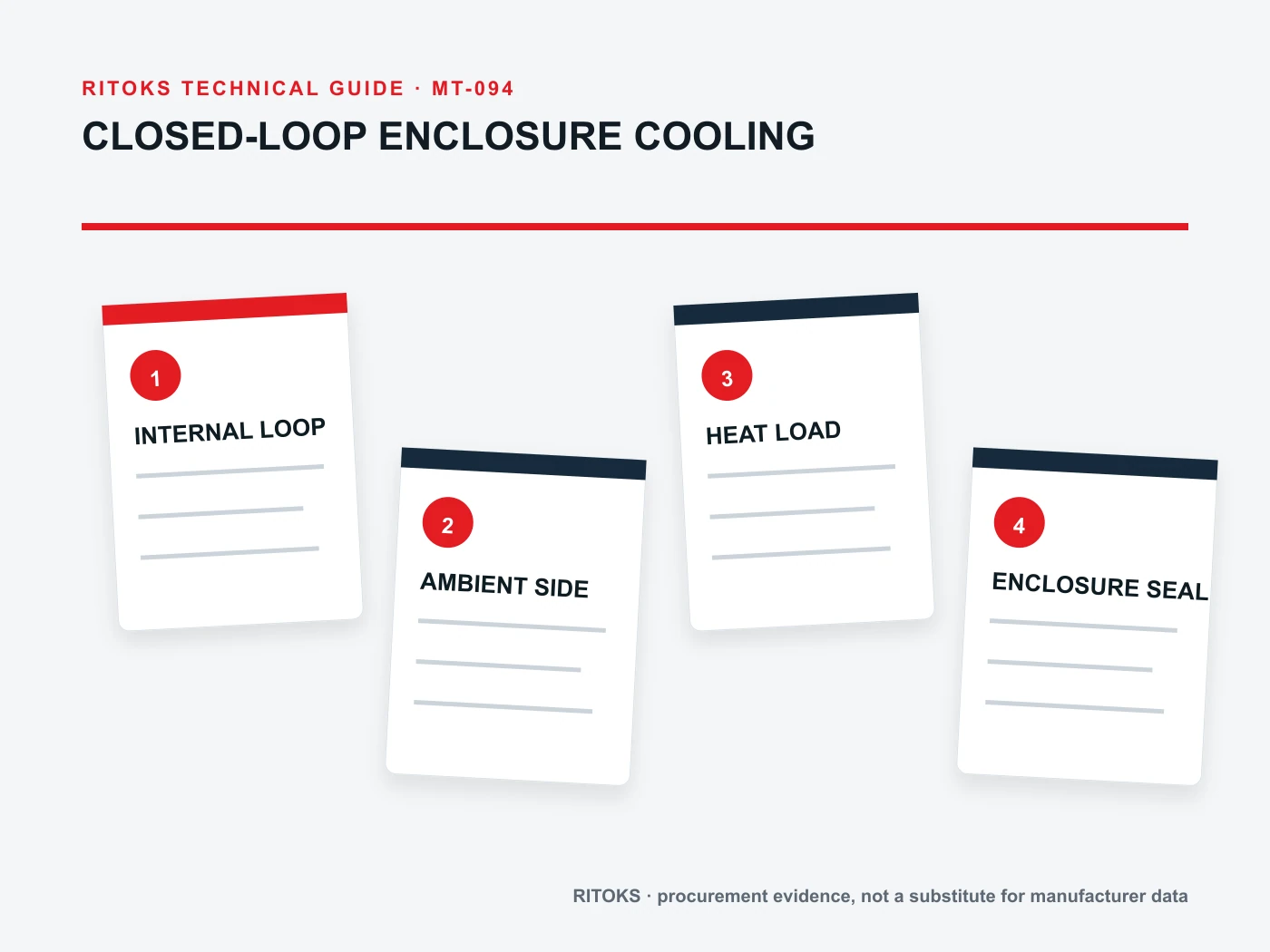
The Loop Refers to Air Separation
Closed-loop enclosure cooling generally describes an architecture in which cabinet air is recirculated through a cooling device while heat is rejected through a separate ambient-side path. The intent is different from bringing outside air directly through the enclosure. The exact construction and separation still depend on the selected equipment.
The phrase does not mean that the entire cabinet is automatically sealed, contamination-proof or moisture-proof. Cable entries, doors, gaskets, drains and installation workmanship remain part of the boundary. Ask what the exact product does and what the complete enclosure achieves.
Why Ambient-Air Ventilation Is Different
A filter fan or open ventilation path exchanges cabinet air with the surrounding environment. That can be effective when ambient air is suitable and the target cabinet temperature can remain above ambient. Closed-loop cooling instead uses a heat-transfer system intended to avoid direct process-air exchange through the cooling circuit.
These architectures should not be compared from airflow and cooling-capacity headlines as if they were equivalent units. Start from the environmental boundary, allowable temperature and heat load, then evaluate the suitable method.
Map the Internal and External Thermal Paths
Inside the cabinet, heat leaves components, mixes into the internal air and reaches the cooling device. On the ambient side, the device rejects that heat to its surroundings. Obstructed internal circulation or inadequate external clearance can undermine the intended performance even when the equipment is correctly rated.
Record equipment placement, hot spots, internal obstructions and the route available for recirculated air. Separately record wall spacing, ambient-air access and rejected-heat effects. The two paths need different installation evidence.
Calculate From Heat Load and Conditions
Cooling selection begins with component losses and other heat inputs, the required internal temperature, ambient conditions and enclosure surface behavior. A cabinet size alone is not a heat-load calculation. Use a documented engineering method and exact product performance data at the relevant conditions.
Do not treat a nominal capacity in a product title as a universal delivered result. Capacity can depend on temperature conditions and installation details. The quotation should show the selection basis and keep all assumptions visible.
Protect the Enclosure Boundary During Installation
A closed-loop concept can be defeated by unmanaged openings, damaged seals or installation details that create unwanted air exchange. Review door gaskets, cable entries, mounting cutouts, drainage and service penetrations as part of the enclosure system.
The cooling-unit drawing should define its mounting interface and required clearances. Any sealing, condensate or drainage provisions must come from the exact installation instructions. Avoid generic field modifications that are not supported by those documents.
Plan Maintenance on Both Sides of the Boundary
Closed-loop equipment still needs inspection and service. Ambient-side surfaces can collect dirt, and internal circulation paths can become obstructed. The maintenance plan should define access, cleaning, alarm response and the conditions that trigger further investigation.
Keep maintenance claims precise. The absence of a direct ventilation filter does not mean maintenance-free operation. Ask the supplier for the exact schedule and preserve it with the cabinet documentation.
สร้างไฟล์หลักฐานแบบจำลองที่แม่นยำ
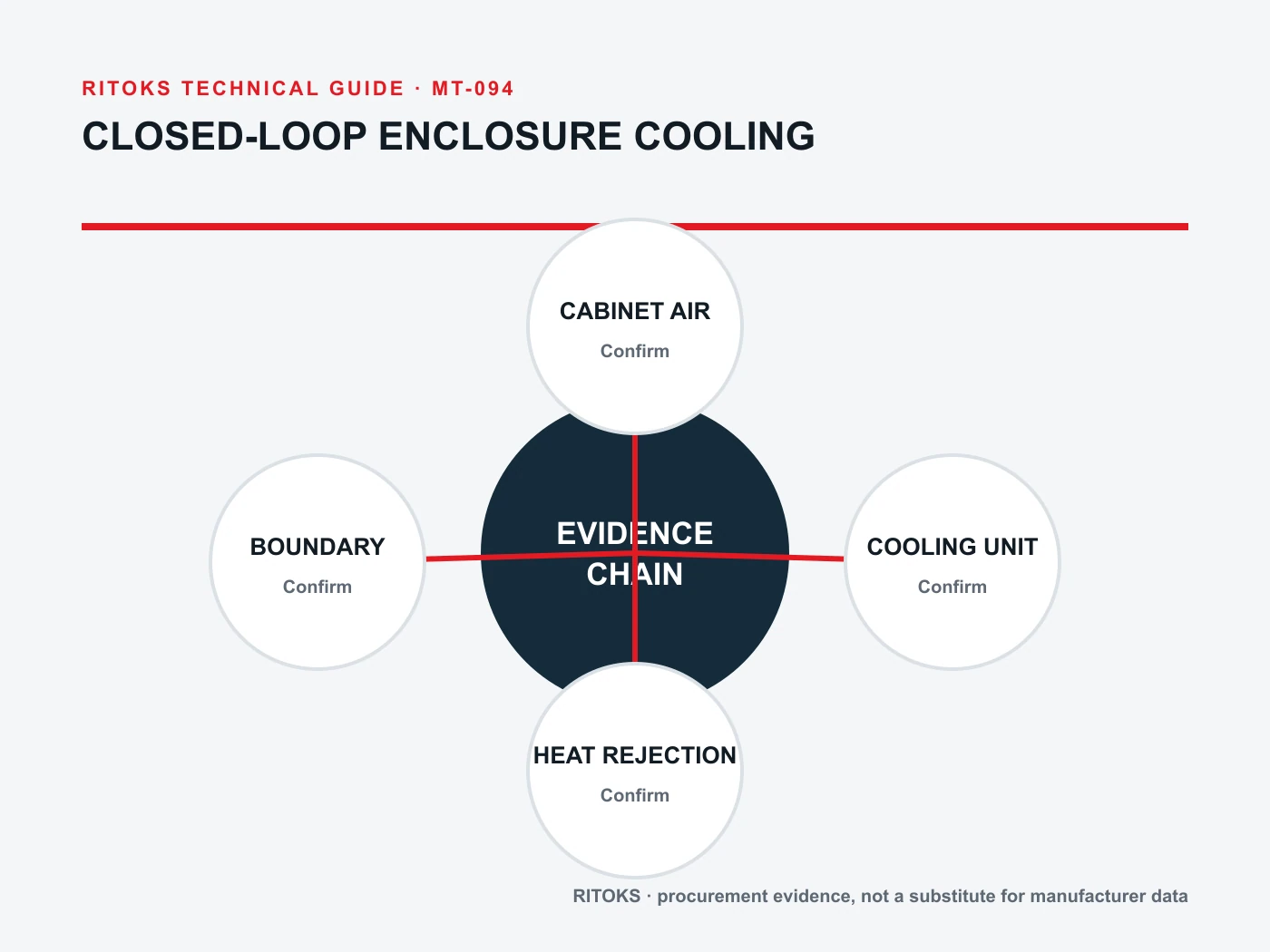
Create one approval record for the proposed Enclosure Air Conditioner order code. Put each project requirement beside the supplier document that answers it. Preserve the exact datasheet, drawing, table, instruction or selection output used, including its revision or retrieval date. A category page can establish family context, but it cannot prove an exact rating, terminal arrangement or system combination.
ตรวจสอบให้แน่ใจว่าทุกข้อความที่ได้รับการอนุมัติอธิบายถึงสินค้าที่สามารถจัดลำดับได้เดียวกัน ตัวเครื่องที่คล้ายกันอาจมีวงจร แหล่งจ่ายไฟ ขั้วต่อ อุปกรณ์เสริม หรือฟังก์ชันที่แตกต่างกัน อย่าผสมผสานค่าสูงสุดของตระกูลจากรุ่นหนึ่ง แผนผังจากอีกรุ่น และคุณสมบัติเสริมจากรุ่นที่สาม ให้ทำเครื่องหมายช่องที่ยังไม่ได้รับการแก้ไขอย่างชัดเจน เพื่อให้ช่องเหล่านั้นยังคงปรากฏให้เห็นในขั้นตอนการตรวจสอบเชิงพาณิชย์.
แยกข้อมูลนำเข้าของโครงการออกจากหลักฐานของผลิตภัณฑ์
ทีมโครงการจะกำหนดรายละเอียดของระบบ ได้แก่ แหล่งจ่าย, ปริมาณโหลด, ภาระการทำงาน, สภาพแวดล้อม, ระบบควบคุม, ข้อจำกัดทางกล และฟังก์ชันที่จำเป็น ผู้จัดหาจะระบุเครื่องปรับอากาศแบบตู้ (Enclosure Air Conditioner) ที่ตรงตามข้อกำหนด และสนับสนุนด้วยเอกสารที่ครบถ้วนและถูกต้อง ทั้งสองฝ่ายไม่ควรเติมช่องว่างด้วยการสันนิษฐานจากลักษณะภายนอก ชื่อตระกูลที่เหมือนกัน หรือค่าหลักที่ตรงกันเพียงค่าเดียว.
ให้ระงับบันทึกคำขอเสนอราคาไว้ระหว่างการเปรียบเทียบราคา หากมีการเปลี่ยนแปลงในโครงสร้างระบบ แหล่งที่มา ปริมาณงาน สภาพแวดล้อม ตัวเครื่อง หรือผลลัพธ์ที่ต้องการ ให้ออกบันทึกที่แก้ไขแล้ว และขอให้ผู้จัดหาแต่ละรายยืนยันผู้เสนอราคาที่ได้รับการคัดเลือกอีกครั้ง มิฉะนั้น ราคาที่ดูเหมือนจะเปรียบเทียบกันได้อาจกำลังตอบสนองต่อข้อกำหนดทางเทคนิคที่แตกต่างกัน.
ข้อผิดพลาดที่มักเกิดขึ้นในการจัดซื้อ
Avoid selecting a Enclosure Air Conditioner from one headline value while the application context remains incomplete. Do not use a circuit, curve, terminal drawing or performance claim from a neighboring model. A product photograph and a family page can support discovery, but neither is exact technical evidence.
นอกจากนี้ อย่าสมมติว่าอุปกรณ์เสริม ฟังก์ชันการสื่อสาร บทบาทการป้องกัน หรือผลลัพธ์ที่ประสานงานกันนั้นถูกรวมอยู่ด้วย เว้นแต่จะระบุไว้ในใบเสนอราคาและเอกสารรุ่นที่ถูกต้อง การใช้ผลิตภัณฑ์ทดแทนต้องผ่านกระบวนการตรวจสอบด้านโครงสร้างทางกายภาพ ค่ากำหนด การติดตั้ง และหลักฐาน เช่นเดียวกับผลิตภัณฑ์ต้นแบบ.
วิธีเปรียบเทียบข้อเสนอจากผู้จัดหา
Normalize every Enclosure Air Conditioner offer to the same application record. Keep document revisions, stated conditions, included accessories and open questions beside each value. This makes differences in delivered scope visible and prevents a lower-cost but narrower offer from appearing equivalent to a complete solution.
หยุดการเปรียบเทียบเมื่อข้อมูลนำเข้าของแอปพลิเคชันสำคัญยังไม่ทราบแน่ชัด แบบจำลองที่อ้างอิงมีความคลุมเครือ ข้อกำหนดที่จำเป็นได้รับการสนับสนุนเพียงจากผู้ผลิตอื่นหรือรหัสคำสั่งซื้ออื่น หรือการติดตั้งอยู่นอกขอบเขตของหลักฐานที่มีอยู่ สิ่งเหล่านี้เป็นช่องว่างทางวิศวกรรม ไม่ใช่รายละเอียดด้านการบรรณาธิการ.
การควบคุมการแก้ไขและการแทนที่
Give the approved Enclosure Air Conditioner record a revision identifier and keep it with the project file. If the supplier changes the order code, accessory, firmware, drawing or stated operating condition, identify the change before accepting it. A substitution is a new technical proposal even when its price, housing or product-family name looks familiar.
ทำซ้ำเฉพาะการตรวจสอบที่ได้รับผลกระทบเท่านั้น แต่ไม่ต้องยกเลิกการตรวจสอบดังกล่าว ตรวจสอบให้แน่ใจว่าผู้สมัครที่ได้รับการปรับปรุงยังคงสอดคล้องกับใบสมัครที่ถูกระงับไว้ เอกสารที่อ้างอิงทั้งหมดเป็นส่วนหนึ่งของใบสมัครนั้น และทุกข้อยกเว้นที่ยังไม่ได้รับการแก้ไขมีผู้รับผิดชอบ ขั้นตอนการควบคุมการเปลี่ยนแปลงเล็กๆ นี้ช่วยป้องกันไม่ให้การคัดเลือกที่ผ่านการตรวจสอบทางเทคนิคถูกแทนที่ด้วยผลิตภัณฑ์เชิงพาณิชย์ที่เทียบเท่าแต่ยังไม่ผ่านการตรวจสอบ.
กระบวนการตัดสินใจ
- ให้บันทึกสถานะของแอปพลิเคชันและระบบไว้ก่อนที่จะเลือกรหัสแคตตาล็อก.
- ระบุฟังก์ชันที่แน่นอนและทุกอินเทอร์เฟซที่จำเป็นต้องมีหลักฐาน.
- ขอรหัสคำสั่งซื้อหนึ่งชุดที่ครบถ้วน พร้อมด้วยใบข้อมูลทางเทคนิคและแบบวาดล่าสุด.
- กำหนดให้แต่ละข้อกำหนดของโครงการสอดคล้องกับคำชี้แจงของผู้ผลิตแต่ละราย.
- บันทึกความคลาดเคลื่อน อุปกรณ์เสริม การแก้ไขเอกสาร และคำถามที่ยังไม่ได้รับการแก้ไข.
- ให้ดำเนินการทบทวนซ้ำทุกครั้งที่มีการเปลี่ยนแปลงในแอปพลิเคชันหรือผลิตภัณฑ์ที่เสนอ.
Use this workflow as a procurement and evidence discipline. It does not replace qualified design, installation instructions or the responsible engineer's approval for the Enclosure Air Conditioner application.
รายการตรวจสอบการเตรียมเอกสารขอเสนอราคา (RFQ)
A practical closed loop enclosure cooling should be concise enough for a supplier to answer and complete enough to prevent silent assumptions. Identify unknown values as questions rather than allowing them to become undocumented selections.
- Internal circuit: Cabinet air recirculation and component temperature objective.
- External circuit: Ambient-side heat rejection and installation clearance.
- Thermal load: Component losses and other heat inputs.
- Boundary: Openings, door condition, cable entries and enclosure construction.
- Environment: Ambient temperature, contamination, humidity and service access.
- รหัสผลิตภัณฑ์ที่ถูกต้อง อุปกรณ์เสริมที่มาพร้อม และเวอร์ชันของเอกสาร
- ปริมาณ จุดหมายปลายทาง การอนุมัติที่จำเป็น และขอบเขตทางธุรกิจ
ขอให้ระบุขอบเขตที่ชัดเจนของข้อเรียกร้องใดๆ ที่เกี่ยวข้องกับการจัดประเภท ความเข้ากันได้ การประสานงาน หรือประสิทธิภาพ ให้บันทึกปริมาณและจุดหมายปลายทางไว้หลังจากข้อมูลทางเทคนิค เพื่อไม่ให้เงื่อนไขทางการค้าบดบังปัญหาทางวิศวกรรมที่ยังไม่ได้รับการแก้ไข.
คำถามที่มักถูกถาม
Does closed-loop cooling make an enclosure airtight?
No. The complete enclosure boundary and installation details must be evaluated separately.
Can closed-loop cooling reduce temperature below ambient?
Some architectures may, but the exact capability must be verified from product data at the stated conditions.
Is a filter fan a closed-loop device?
No. A filter-fan system normally exchanges enclosure air with ambient air.
ผลิตภัณฑ์และคำแนะนำที่เกี่ยวข้องของ RITOKS
ลิงก์เหล่านี้ให้ข้อมูลเกี่ยวกับกลุ่มผลิตภัณฑ์เท่านั้น ลิงก์ดังกล่าวไม่ได้ยืนยันว่าผลิตภัณฑ์สามารถใช้แทนกันได้ มีความเข้ากันได้ หรือเป็นการรวมระบบที่ได้รับการอนุมัติ.
หมวดหมู่ผลิตภัณฑ์เครื่องปรับอากาศแบบติดตั้งในตู้
เครื่องปรับอากาศแบบติดตั้งภายในอาคาร EP-A
เอกสารอ้างอิงทางเทคนิค
แหล่งข้อมูลจากผู้ผลิตเหล่านี้สนับสนุนเพียงหลักการวิศวกรรมทั่วไปที่อธิบายไว้ด้านล่างเท่านั้น การจัดอันดับผลิตภัณฑ์ แผนผังวงจร การรับรอง และผลการประสานงานของพวกเขานั้น ไม่สามารถนำไปใช้กับผลิตภัณฑ์ของ RITOKS ได้.
Rittal, คู่มือระบบทางเทคนิค: การระบายความร้อนด้วยอากาศรอบตัว
Supports enclosure heat-load, temperature-difference and air-exchange concepts. Rittal formulas and product values apply only under their stated conditions.
Rittal, RiTherm การวางแผนระบบควบคุมอุณหภูมิ
Supports treating enclosure climate control as a documented heat-load and environmental calculation. It does not size a RITOKS product.
ขอการตรวจสอบแบบจำลองที่แม่นยำ
ส่งข้อกำหนดการสมัคร คำถามเกี่ยวกับเอกสารที่จำเป็น จำนวน และจุดหมายปลายทาง ผ่านแบบฟอร์มติดต่อของ RITOKS การขอใบเสนอราคา (RFQ) ต้องการการตรวจสอบรุ่นที่ถูกต้อง; คู่มือนี้ไม่อนุมัติวงจร การติดตั้ง หรือการแทนที่อัตโนมัติ.