
Enclosure Air Conditioners for Control Cabinets · Technical Explainer
Closed-Loop Enclosure Cooling: What It Means
Understand closed-loop enclosure cooling, its separation from ambient air exchange and the evidence needed before selection. A useful buyer review connects the project requirement to one exact orderable product and preserves the evidence used for approval.
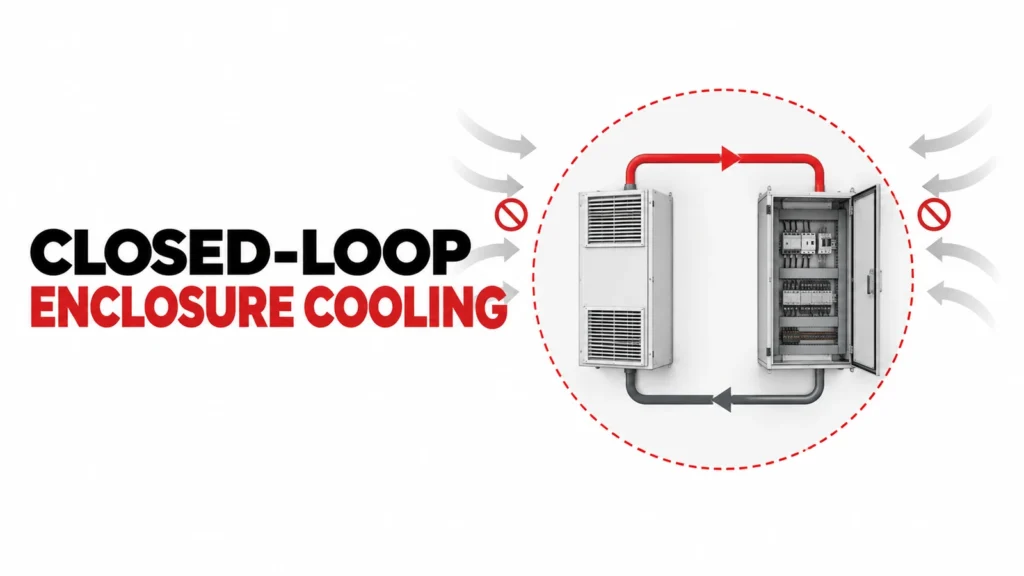
This explainer defines closed-loop enclosure cooling at an architectural level. It does not calculate cooling capacity, promise a sealing or ingress result, or claim that every enclosure air conditioner isolates internal and ambient air in the same way.
نظرة عامة على مدخلات القرار
| حقل المراجعة | يجب على المشتري تحديد | الأدلة المطلوب تقديمها |
|---|---|---|
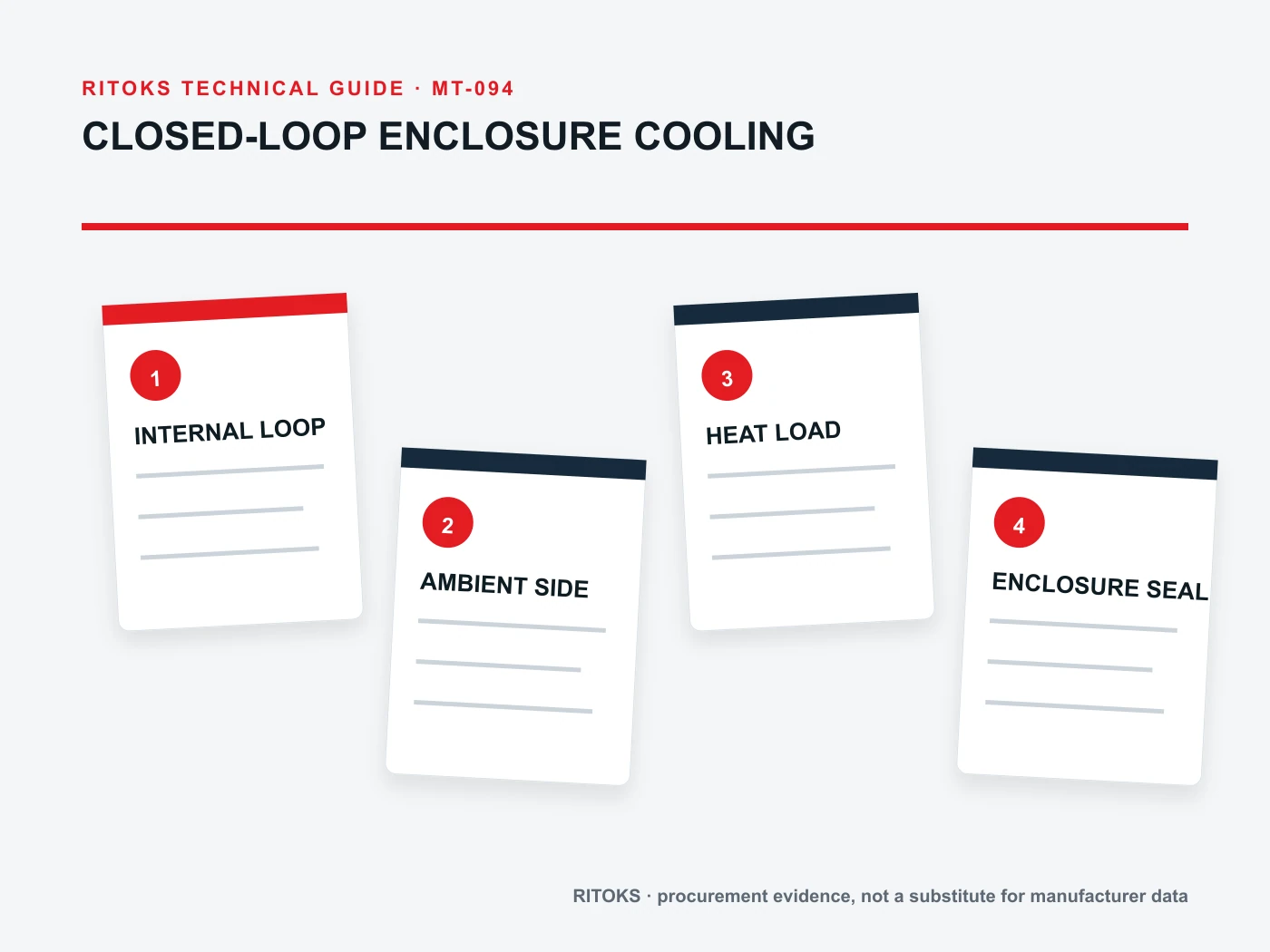
| Internal circuit | Cabinet air recirculation and component temperature objective | System design and equipment documentation |
| External circuit | Ambient-side heat rejection and installation clearance | Exact installation manual |
| Thermal load | Component losses and other heat inputs | Project heat-loss schedule |
| الحدود | Openings, door condition, cable entries and enclosure construction | Enclosure inspection record |
| البيئة | Ambient temperature, contamination, humidity and service access | Site conditions and maintenance plan |
The Loop Refers to Air Separation
Closed-loop enclosure cooling generally describes an architecture in which cabinet air is recirculated through a cooling device while heat is rejected through a separate ambient-side path. The intent is different from bringing outside air directly through the enclosure. The exact construction and separation still depend on the selected equipment.
The phrase does not mean that the entire cabinet is automatically sealed, contamination-proof or moisture-proof. Cable entries, doors, gaskets, drains and installation workmanship remain part of the boundary. Ask what the exact product does and what the complete enclosure achieves.
Why Ambient-Air Ventilation Is Different
A filter fan or open ventilation path exchanges cabinet air with the surrounding environment. That can be effective when ambient air is suitable and the target cabinet temperature can remain above ambient. Closed-loop cooling instead uses a heat-transfer system intended to avoid direct process-air exchange through the cooling circuit.
These architectures should not be compared from airflow and cooling-capacity headlines as if they were equivalent units. Start from the environmental boundary, allowable temperature and heat load, then evaluate the suitable method.
Map the Internal and External Thermal Paths
Inside the cabinet, heat leaves components, mixes into the internal air and reaches the cooling device. On the ambient side, the device rejects that heat to its surroundings. Obstructed internal circulation or inadequate external clearance can undermine the intended performance even when the equipment is correctly rated.
Record equipment placement, hot spots, internal obstructions and the route available for recirculated air. Separately record wall spacing, ambient-air access and rejected-heat effects. The two paths need different installation evidence.
Calculate From Heat Load and Conditions
Cooling selection begins with component losses and other heat inputs, the required internal temperature, ambient conditions and enclosure surface behavior. A cabinet size alone is not a heat-load calculation. Use a documented engineering method and exact product performance data at the relevant conditions.
Do not treat a nominal capacity in a product title as a universal delivered result. Capacity can depend on temperature conditions and installation details. The quotation should show the selection basis and keep all assumptions visible.
Protect the Enclosure Boundary During Installation
A closed-loop concept can be defeated by unmanaged openings, damaged seals or installation details that create unwanted air exchange. Review door gaskets, cable entries, mounting cutouts, drainage and service penetrations as part of the enclosure system.
The cooling-unit drawing should define its mounting interface and required clearances. Any sealing, condensate or drainage provisions must come from the exact installation instructions. Avoid generic field modifications that are not supported by those documents.
Plan Maintenance on Both Sides of the Boundary
Closed-loop equipment still needs inspection and service. Ambient-side surfaces can collect dirt, and internal circulation paths can become obstructed. The maintenance plan should define access, cleaning, alarm response and the conditions that trigger further investigation.
Keep maintenance claims precise. The absence of a direct ventilation filter does not mean maintenance-free operation. Ask the supplier for the exact schedule and preserve it with the cabinet documentation.
إنشاء ملف أدلة بنموذج دقيق
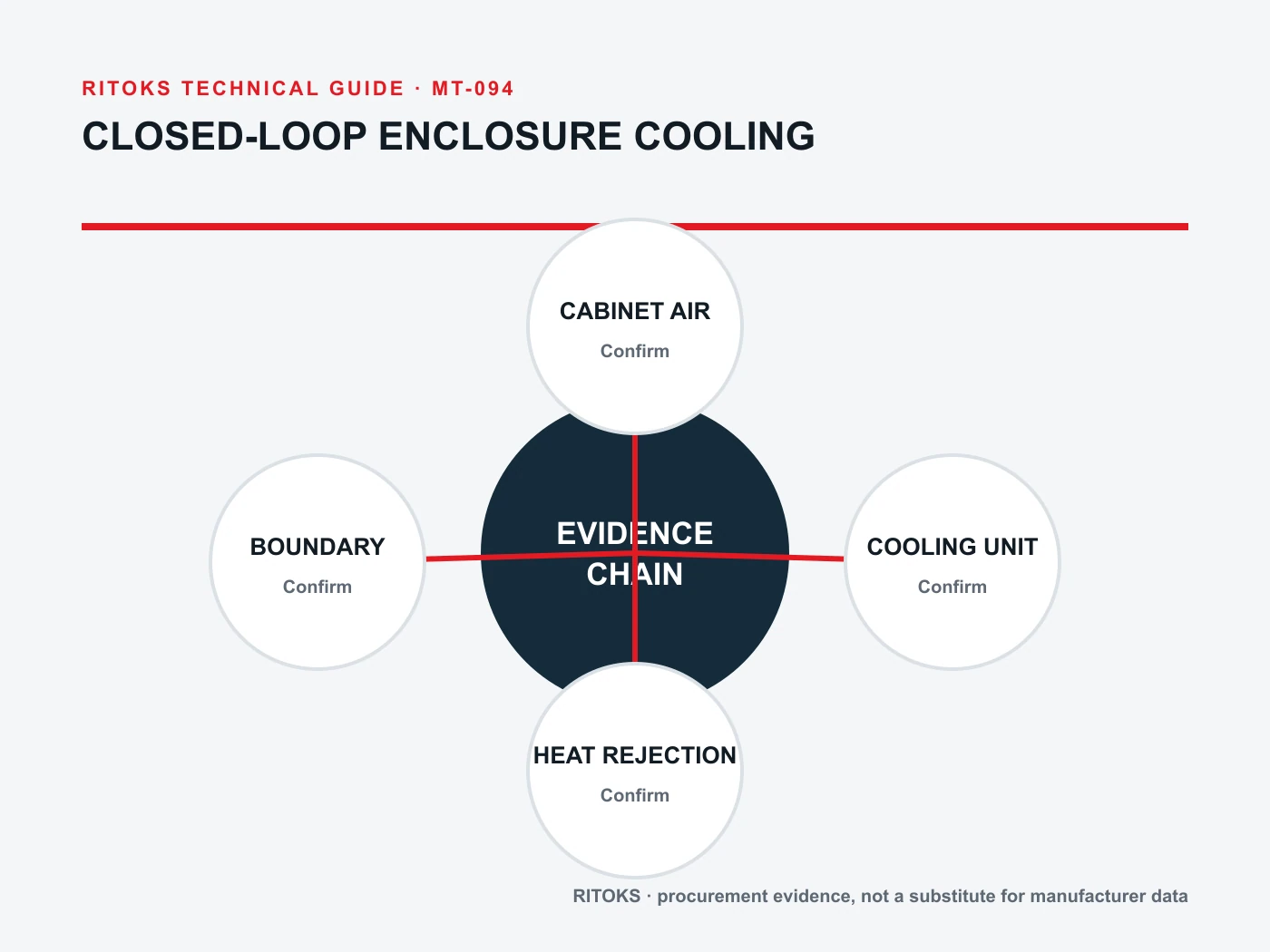
Create one approval record for the proposed Enclosure Air Conditioner order code. Put each project requirement beside the supplier document that answers it. Preserve the exact datasheet, drawing, table, instruction or selection output used, including its revision or retrieval date. A category page can establish family context, but it cannot prove an exact rating, terminal arrangement or system combination.
تأكد من أن كل بيان مقبول يصف نفس العنصر القابل للطلب. قد تحتوي العلب المتشابهة على دوائر كهربائية أو مصادر طاقة أو أطراف توصيل أو ملحقات أو وظائف مختلفة. لا تقم بدمج الحد الأقصى للعائلة من أحد المتغيرات، ومخطط من متغير آخر، وميزة اختيارية من متغير ثالث. قم بتمييز الحقول التي لم يتم حلها بشكل واضح حتى تظل مرئية في المراجعة التجارية.
افصل مدخلات المشروع عن أدلة المنتج
يقوم فريق المشروع بتحديد مواصفات التطبيق: المصدر، والحمل، والوظيفة، والبيئة، وأجهزة التحكم، والحدود الميكانيكية، والوظائف المطلوبة. ويقوم المورد بتحديد وحدة تكييف الهواء المخصصة للغلاف بدقة، ويدعم ذلك بالوثائق الدقيقة. ولا ينبغي لأي من الطرفين سد أي ثغرة بالاستدلال من المظهر، أو الاسم المشترك للعائلة، أو مطابقة قيمة رئيسية واحدة.
قم بتجميد سجل الطلب أثناء مقارنة العروض السعرية. وفي حال حدوث أي تغيير في البنية أو المصدر أو الحمل أو البيئة أو الغلاف أو المخرجات المطلوبة، قم بإصدار سجل منقح واطلب من كل مورد إعادة تأكيد العرض المقدم. وإلا، فقد تكون العروض السعرية التي تبدو قابلة للمقارنة في ظاهرها تستجيب في الواقع لمتطلبات تقنية مختلفة.
الأخطاء الشائعة في مجال المشتريات
Avoid selecting a Enclosure Air Conditioner from one headline value while the application context remains incomplete. Do not use a circuit, curve, terminal drawing or performance claim from a neighboring model. A product photograph and a family page can support discovery, but neither is exact technical evidence.
كما يجب تجنب الافتراض بأن أي ملحق أو وظيفة اتصال أو دور حمائي أو نتيجة منسقة مدرجة في العرض ما لم ترد في وثائق عرض الأسعار ووثائق الطراز الدقيق. ويتطلب البديل نفس التوبولوجيا، والقدرة المقننة، وطريقة التركيب، ومراجعة الأدلة، تمامًا مثل الخيار الأصلي.
كيفية مقارنة عروض الموردين
Normalize every Enclosure Air Conditioner offer to the same application record. Keep document revisions, stated conditions, included accessories and open questions beside each value. This makes differences in delivered scope visible and prevents a lower-cost but narrower offer from appearing equivalent to a complete solution.
توقف عن المقارنة عندما تكون إحدى مدخلات التطبيق الحاسمة غير معروفة، أو عندما يكون الطراز المذكور غامضًا، أو عندما يكون الادعاء المطلوب مدعومًا فقط من قبل مصنع آخر أو رمز طلب آخر، أو عندما يقع التثبيت خارج نطاق الأدلة المتاحة. فهذه ثغرات هندسية، وليست تفاصيل تحريرية.
التحكم في التعديلات والاستبدالات
Give the approved Enclosure Air Conditioner record a revision identifier and keep it with the project file. If the supplier changes the order code, accessory, firmware, drawing or stated operating condition, identify the change before accepting it. A substitution is a new technical proposal even when its price, housing or product-family name looks familiar.
أعد إجراء الفحوصات المتأثرة فقط، ولكن لا تتنازل عنها. تأكد من أن الطلب المعدل لا يزال يستجيب للطلب «المجمد»، وأن كل وثيقة مشار إليها تنتمي إليه، وأن جميع الاستثناءات المفتوحة لها مسؤول. تمنع هذه الخطوة الصغيرة في مراقبة التغييرات استبدال طلب تم مراجعته تقنيًّا بنظير تجاري لم تتم مراجعته.
مسار اتخاذ القرار
- قم بتجميد سجل التطبيق والنظام قبل اختيار رمز الكتالوج.
- حدد الوظيفة بالضبط وكل واجهة تتطلب دليلاً.
- يرجى طلب رمز طلب واحد كامل مع ورقة البيانات والرسومات الحالية الخاصة به.
- قم بربط كل متطلب من متطلبات المشروع ببيان محدد صادر عن الشركة المصنعة.
- تسجيل الانحرافات، والملحقات، ومراجعات الوثائق، والمسائل التي لم يتم حلها.
- يجب إعادة المراجعة كلما طرأت تغييرات على التطبيق أو المنتج المقترح.
Use this workflow as a procurement and evidence discipline. It does not replace qualified design, installation instructions or the responsible engineer's approval for the Enclosure Air Conditioner application.
قائمة مراجعة لإعداد طلب عرض الأسعار
A practical closed loop enclosure cooling should be concise enough for a supplier to answer and complete enough to prevent silent assumptions. Identify unknown values as questions rather than allowing them to become undocumented selections.
- Internal circuit: Cabinet air recirculation and component temperature objective.
- External circuit: Ambient-side heat rejection and installation clearance.
- Thermal load: Component losses and other heat inputs.
- Boundary: Openings, door condition, cable entries and enclosure construction.
- Environment: Ambient temperature, contamination, humidity and service access.
- رمز المنتج الدقيق، والملحقات المرفقة، وإصدار الوثائق
- الكمية، والوجهة، والموافقات المطلوبة، والنطاق التجاري
اطلب تحديد النطاق الدقيق لأي ادعاء يتعلق بالتصنيف أو التوافق أو التنسيق أو الأداء. قم بتسجيل الكمية والوجهة بعد البيانات الفنية حتى لا تحجب الشروط التجارية المسائل الهندسية التي لم يتم حلها.
الأسئلة الشائعة
Does closed-loop cooling make an enclosure airtight?
No. The complete enclosure boundary and installation details must be evaluated separately.
Can closed-loop cooling reduce temperature below ambient?
Some architectures may, but the exact capability must be verified from product data at the stated conditions.
Is a filter fan a closed-loop device?
No. A filter-fan system normally exchanges enclosure air with ambient air.
منتجات RITOKS ذات الصلة والإرشادات
توفر هذه الروابط معلومات حول فئة المنتج فقط. ولا يُقصد من الرابط السياقي الإشارة إلى قابلية التبادل أو التوافق أو أي تركيبة معتمدة للنظام.
فئة منتجات مكيفات الهواء المدمجة
مكيفات الهواء الداخلية من طراز EP-A
المراجع الفنية
لا تدعم مصادر الشركات المصنعة هذه سوى المفاهيم الهندسية العامة الموضحة أدناه. ولا تنطبق تصنيفات منتجاتها ومخططات دوائرها الكهربائية واعتماداتها ونتائج التنسيق الخاصة بها على منتجات RITOKS.
ريتال، كتالوج الأنظمة التقنية: التبريد باستخدام الهواء المحيط
Supports enclosure heat-load, temperature-difference and air-exchange concepts. Rittal formulas and product values apply only under their stated conditions.
ريتال، تخطيط أنظمة التحكم في المناخ RiTherm
Supports treating enclosure climate control as a documented heat-load and environmental calculation. It does not size a RITOKS product.
طلب مراجعة الطراز المحدد
يرجى إرسال متطلبات الطلب، والأسئلة المتعلقة بالمستندات المحددة، والكمية، والوجهة عبر نموذج الاتصال الخاص بشركة RITOKS. يتطلب طلب عرض الأسعار (RFQ) مراجعة الطراز المحدد؛ ولا يُعد هذا الدليل موافقة على أي دائرة كهربائية أو تركيب أو بديل تلقائي.